Be A Blessing

After the accident that took the life of my mother and threatened to take my father’s as well, I was bombarded with a myriad of emotions and decisions. Life as I knew it changed in the blink of an eye. Along with the shock of the tragedy was the responsibility that followed. It was months before Daddy healed from his wounds and even then, he was ready to give up from time to time. 

I tried not to borrow trouble, for each day has enough trouble of its own, but I did (and do) like to plan ahead. Thoughts rushed through my mind of situations I might face, and I wanted a plan of action in the event that happened. Though Daddy had not mentioned driving, one day, I said, “Daddy, if you want to drive again, we will go look for a car. It’s okay if you want to drive, but I don’t you going any further than our little town.” My brother brought one of his vehicles over but it just sat in the carport. Daddy never mentioned driving. (One of my previous thoughts had been, “What am I going to do if Daddy wants to drive and I have to hide his keys?”) I made Daddy’s appointments on my days off. For the ones not available on those days, I made other arrangements of transportation for him.
I pondered the situation, and his lack of desire to drive. A first thought might be that he was afraid to drive again, but I didn’t sense fear. It was then that I came to a conclusion. If Daddy drove, he would maintain a sense of independence, but what would he forfeit? Aha! That was the key! He didn’t want to be by himself. If someone else took him to appointments, to pastors’ meetings, out to eat, to visit, to the store, etc., he would have someone to talk to – someone to spend time with him. That was not a forfeiture but a blessing.

While working in a public office for many years, I saw customers come in, some on a daily basis, just to have coffee and chat with employees and other people coming through the doors. I received phone calls from customers who asked some insignificant question just to have someone to talk to. Often, someone asked the question, “Why do they come in every day and just hang around?” 

If you run across someone like that, remember, they might just be a bit lonely, and just maybe, you might be the blessing.

Who knows? That might be you one day. 
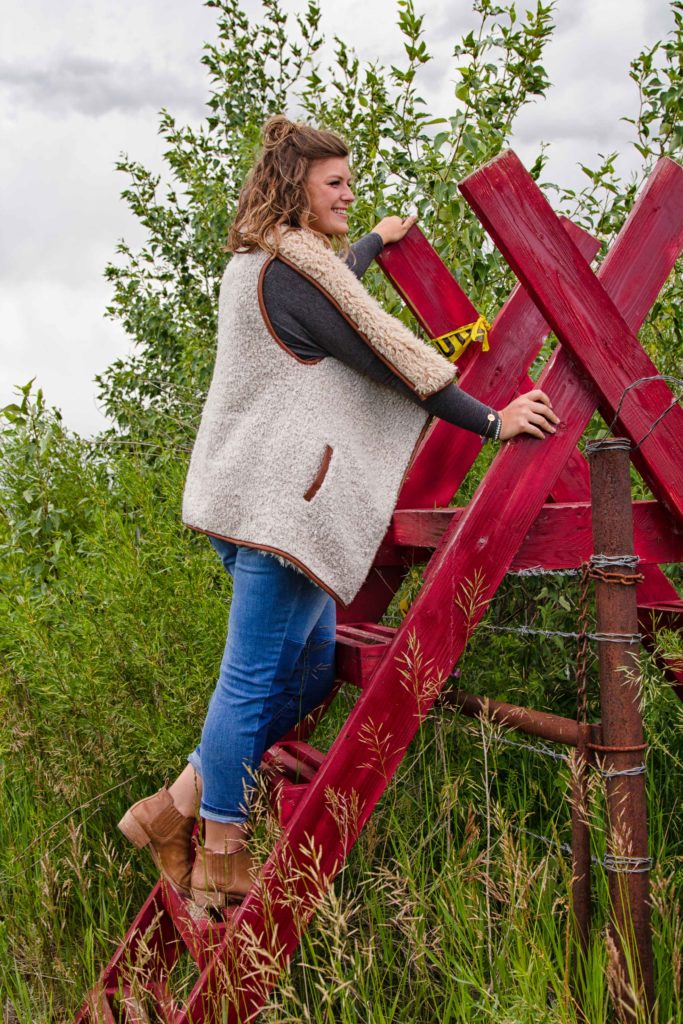
The Garden

by Guest Author, my dad

There was a piece of ground free from rocks just immediately past the long machine shed. It set in the little swale below the barn. This had the best soil around but most of it was on the wrong side of the line fence. And so it came to pass in those days that Ward and Parker put up a deer proof eight foot high woven wire fence around a garden plot that hung into the National Forest like an appendix. There was no gate into the garden. (Perhaps they feared the deer would learn how to open it.) Instead of having a gate, the garden fence had a stile, about five steps up and over it.[1]

The good soil was amply enriched from the manure piles beside the cow barn. Two Rhubarb plants sat at one corner of the garden, and a cluster of horseradish sat on the other side.  Horseradish would clear your sinuses and bring tears to your eyes when you ground it. The Uncles couldn’t raise horseradish because the goats pawed the roots out of the ground. When they ate it, it curled their hair.

Most years the last spring frost came the first week of June and the first killing freeze came the first week in September. Mother loved green beans, but most years frost got more than she did. Daddy wanted cabbage, cauliflower and tomatoes. He started the plants in a hotbed – which was a covered pit kept warm by decaying horse manure. He could always raise good cabbages and cauliflower. In Melville they could raise good tomatoes, cucumbers, pumpkins, corn and squash. Our tomatoes were still green when the frost came. We pulled up the vines and hung them upside down in the barn or in the root cellar. In October we could go to the barn or cellar and pick red tomatoes that were as good as the wintertime tomatoes we get in the grocery store. Cabbage heads went to the cellar. So did carrots, beets, and potatoes.

In those days all Montana peas were English peas. And we had a bountiful supply of carrots, peas, and head lettuce. 

 I had a 4-H Club garden project. In High School I sold lettuce to Churchill and Amery’s for ten and twelve cents a head.

Down the valley, below the fence, acres and acres of fire burned trees commanded the valley. Their skeletons stood, tree after tree, line after line, east of the fence and across the valley and over the mountains. They left a waste land, a casket for dead trees, and a place where even the slightest wind moaned like the spirit of God trying to breathe life into the stark white forest. But a little patch of ground, with water and care, claimed hope and bounty once again.


[1] This was high enough that the pig couldn’t jump over it, but the housewife could climb over and cook supper for the chief gardener.

Cry Wolf!

The elderly man sat quietly in his chair with a stack of Alaska magazines beside him. We walked in unnoticed at first. When he finally realized we were there, he looked up and upon seeing his nephew, he flashed a big smile. Slowly, as if willing his tall frame to stand erect, he pushed himself upward. Soon, he was almost to full height, the height of a giant of a man. His curly gray unkempt hair that at one time looked like a big black Brillo pad, rested atop a weathered, wrinkled face accentuating his black eyes and the distinguishable Spanish features of his mother.

Before us stood a man larger than life. Though he had no children of his own, the kids gravitated to him. He was gentle in his speech and in the way he cared for the little ones with fierce loyalty. His protection of the kids, his family, and his neighbors, and their livelihood, was just as fierce. 

Visiting Uncle Barney was one of the first things on our list and one of the highlights. Walking into his house was like walking into a museum. Glass cases were filled with relics of his younger days. My nose prints and fingerprints joined those of others who had peered into the see-through treasure chest. Antlers, guns, and pelts of mule deer and the infamous gray timber wolf Snowslide hung on his wall. Each item had a story – and what a story!

Only one word was needed to be rewarded with a fascinating, almost unbelievable, tale. Daddy knew that word, “Wolf!” He spoke louder, “Wolf!” The flood gates of adventure and intrigue opened and stories of wolf days were unleashed. Though the old Government Trapper had dull ears and clouded eyes, his memory was sharp. The shroud lifted from his eyes, and they began to sparkle. He didn’t miss any details as he began to talk. Uncle Barney’s words mounted us on the back of his saddle as we joined him in the chase. Now he was the hunter again, retracing the trails of memories to capture the elusive predators. We were entranced, a mesmerized audience drawn into the pursuit.

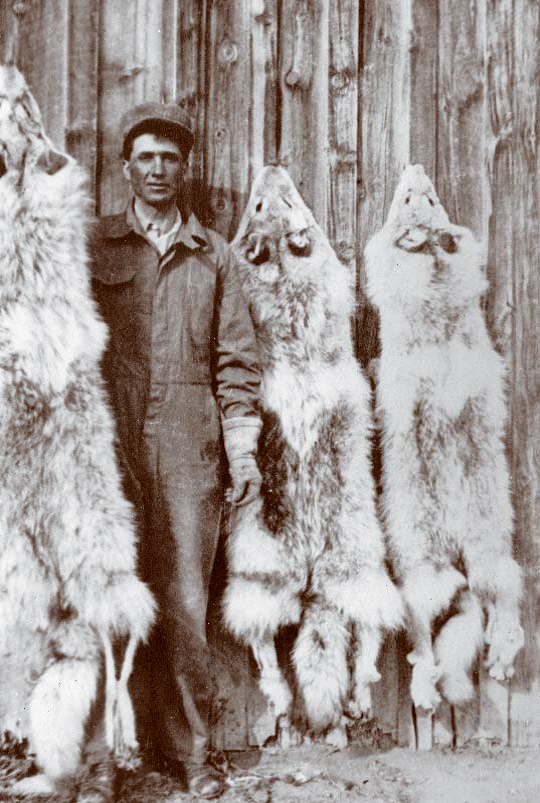
Tale after tale followed as he told of Snowslide, the gray timber wolf that killed sixteen head of sheep in one night at one ranch, slaughtering forty-three at another ranch the next week, thirteen at another, then turned to killing calves; Old Cripple Foot, queen of the Little Belts that killed sheep for sport and then began taking down cows – three large Herefords in one week (that she didn’t eat) on the American Fork Ranch, aka “The Ghost”; and her mate and pups; Killer – the wolf that killed for pleasure, killing at least fifteen dogs in two years that were brought in to rid the ranchers of the wolf; Old Crazy Mountain Wallis, aka Loofer Wolf that easily split a dog pack, and along with another wolf killed 60 head cattle on the American Fork Ranch valued at $30,000; Lefty, of Ft. McGinnis, so named because she was missing her front left foot from a trap, and when she was taken, an old granddad wolf adopted her pups.

Some raise their eyebrows thinking it a great injustice. Uncle Barney said, “From my experience wolves didn’t kill sheep unless they were hungry or wanted revenge.” What could a wolf do with sixteen sheep in one night? That was not for food, it was for pure sport and revenge. In 1915, Barney was hired by the Bureau of Biological Survey as a Predatory Animal Trapper. His job was to end the predation plague that spread throughout the ranches in Montana. He was to rid them of stock killing bears, bobcats, coyotes, and wolves. Government Hunter Brannin was hailed as a hero and the stockmen rejoiced as the wolves were removed from their herds. Some of the captured wolf pups were sent to the State Fair, or to a wolf sanctuary in the East.

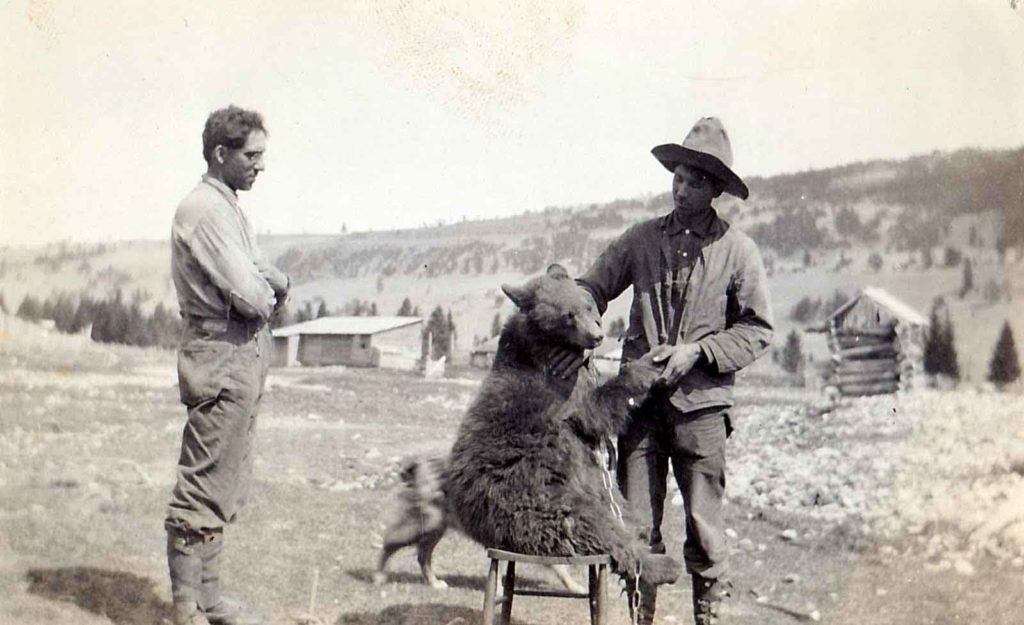
Many of Uncle Barney’s exploits are contained in various newspaper articles, government documents, family stories, and various books. There are other tales of goats in the Crazies, taming bears, helping raise kids, stocking creeks and lakes with upwards of 850,000 live trout and eye eggs in the Crazy Mountains, and then… there’s Alaska…

If you cry wolf, you might just get a wild tale…

Digging in My Roots

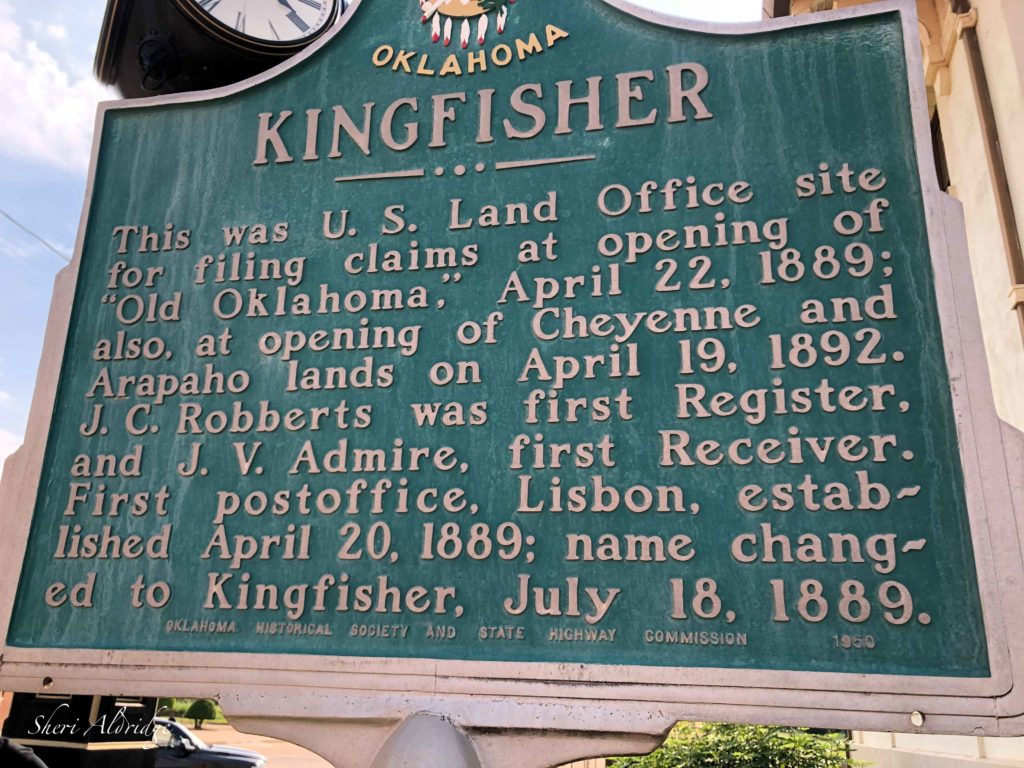
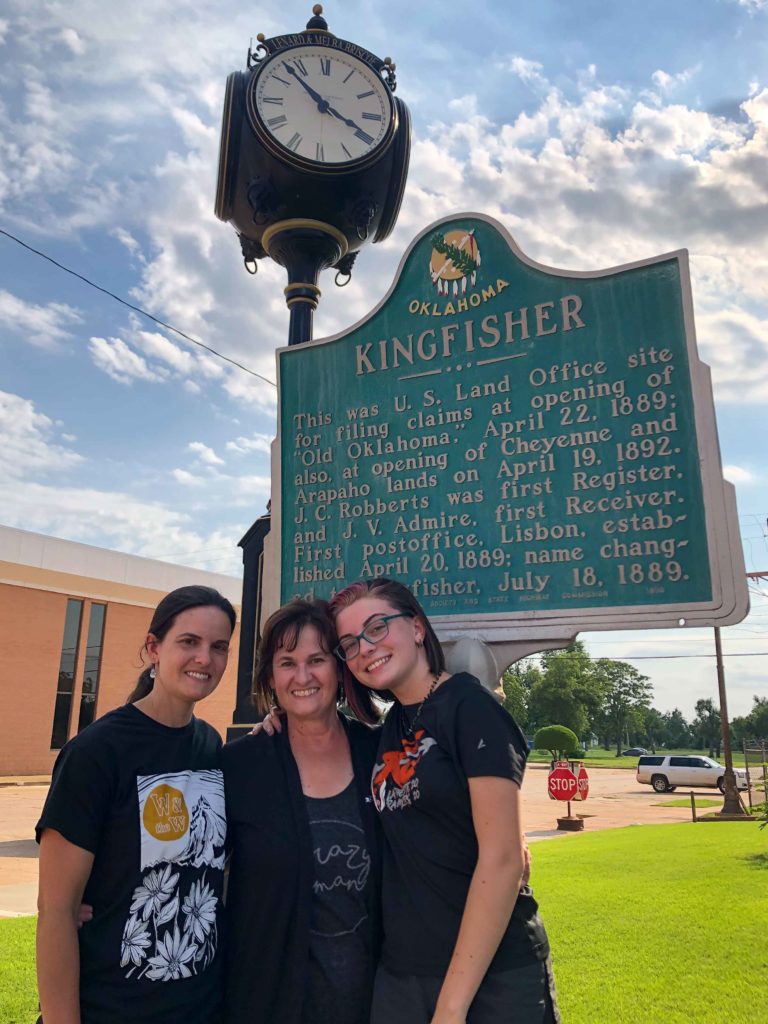
I stood in front of the sign that displayed the name, “Kingfisher.” To most that holds little or no importance even in light of the history it contains. To me, it is a place that connects a lifeline to my heritage, that of the great pioneers forging West for a place to call home.

In April 1889, thousands of pioneers rushed through Oklahoma Territory to stake a homestead claim. The McNeil wagon raced across the prairie leaving a trail of dust whirling behind. A stake was pounded in the ground and the three-year process of “proving” the homestead began. You may have read their account in a previous post. Once a homestead was proven, it was then registered. 

You see, the little town of Kingfisher was the location where the pioneers in the area registered their claim. Stopping at this exact location may have been of little significance to others, maybe even with a hint of annoyance, but I knew if we blew through town without stopping, I would regret it. I may never pass that way again. 

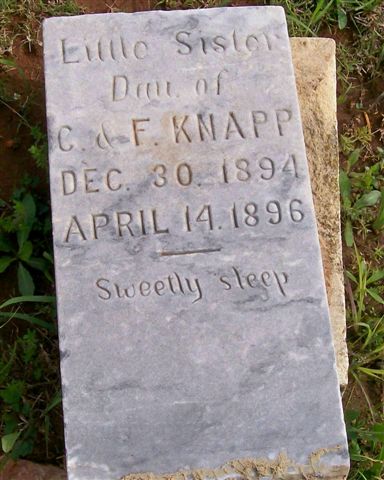
Not only did the McNeil family claim a homestead in the area, but also the man who became the patriarch of the Knapp family – my great grandfather. Here in Oklahoma Territory, Charles Knapp set his stake in the ground and married the daughter of the determined, fearless McNeil lady who rushed west with her family. Here, the lives of Charles & Florence joined together resulting in seven children. One of the children, a girl, remains, for she rests in a little cemetery not too far from Kingfisher.

As I stood on that very spot, possibly where my great grandparents and my great great grandmother had walked, I envisioned the scene from the past as homesteaders came holding their papers of proof verified by testimonies of neighbors and friends. They left with a big smile and documents in their hand that gave them clear title to the land they had worked tirelessly to improve and make a home.

Some 20+ years later, the family loaded their wagons and once again started a long trek to claim a homestead, but this time in the wide-open prairies of Montana. That’s another story! 

The branches of my family tree extend from roots secured by my ancestors. Roots travel deep and stretch in all directions. They provide a foundation for the limbs that spread beyond, upward and outward. Some folks have no idea of the treasures that are hidden among the branches, twigs and leaves. I don’t want to miss those seemingly insignificant moments of the past that help ensure our heritage continuing into the next generation.

What extends beyond your roots – or do you know even know where your roots are planted?

Charlie’s Mule

a preacher’s tale of my dad’s

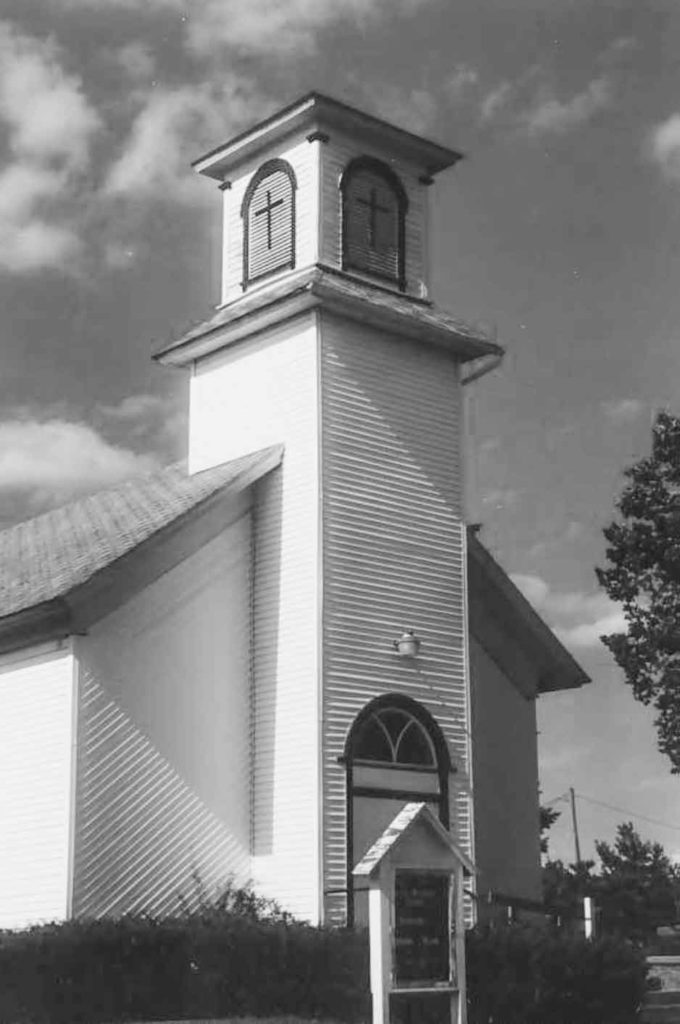
Charlie lived across the field, 100 yards. One of his grandsons was quite a football player of the same name. Charlie had a mule. It was summer. Hot. No air conditioning in the little white church. Doors open. Windows open. Charlie’s mule got out and decided to visit the church yard. Charlie came after the mule. He didn’t want him to use the church for a barn or a shady place. Figured that would disrupt the congregation.

“Sometimes we need a social dispensation.”

“Whoa mule!”

One bald headed gentleman had his chin on his chest so that his head reflected the light. He jerked his head up. “Whoa there mule!” The mule trotted behind the church to the cemetery.

“Get out of that place, mule!” Charlie trotted around behind him. The mule ambled around the church again, back on the other side and past the front door. “Don’t go in there mule! Those are white folks.” The mule paused and went on. By this time the people had lost the sermon.  It was just as well, I’d lost it too, and when the mule went back across the road with Charlie after him, I got hold of another part – and nobody missed it.

Another Important Holiday

The Fourth of July has always been a day of celebration for our family. 

When I was a kid, we had family reunions on the Fourth. We loaded up in the car and drove to Aunt Leone’s where there was always a pile of food stretched out on tables under the big shade trees, and a pile of kids to match. Cousins and more cousins showed up along with aunts, uncles, and grandparents.

After a time of playing on the old grist stones, playing ball with cow patty bases, and listening to the old timers tell their old tales, it was time for watermelon. My granddad always picked out a watermelon or two just for the occasion. It was not a quick choice. He turned the watermelon, inspecting all sides and the stem end. Then came the real test. He would lodge his middle finger behind his thumb, and then release the trigger, “Thump.” A “thump” sound was what he wanted to hear. If it made a “thud” sound, he would place the watermelon back and grab another. As a side note, when I was nearing the time of delivery of my children, I asked him to do the watermelon test to see if I was about ripe for delivery. His method worked!

There were other Fourth of July celebrations when we were away from our Southern home. Those family gatherings were at Aunt Barbara’s house. Food was stretched out under the old willow trees in the back yard. Not only did we celebrate the holiday, but we also celebrated Aunt Ellen’s birthday. My daddy declared that was “another important holiday,” and Aunt Barbara always made her famous cinnamon rolls for her sister’s birthday on the Fourth.

Here are some Fourth of July stories from my dad’s memories as a little boy:

Another Important Holiday

The Fourth of July is Sister Ellen’s birthday. We celebrate it every year.

Sometimes three carloads of friends come up to have a picnic.  They always bring a watermelon. We make ice cream in our rebuiltice cream freezer.  The porcupines ate the outside of the old freezer because it tasted salty. Daddy made a new outside out of boards.  After the picnic he hides the rebuilt freezer in the closet where the porcupines won’t find it.

Some years we don’t have a picnic. Instead, we go to town and watch a parade. Men who had been soldiers march in the parade. A retired army Colonel tells them how to march, and the city band marches in front of them.

When I get big, I will watch a parade without having to peek between someone’s knees to see it.

The Fourth of July is important.  That is the day when American leaders signed the Declaration of Independence and told GeneralGeorge Washing to go chase the British soldiers back to their boats. You should always remember the Fourth of July for that.

I have to remember it because it is my sister’s birthday.

New Memories Meet the Old

I looked out the window. The neighbors’ house was completely dark. It was the middle of the night in the early morning hours. Well, I guess I couldn’t call the neighbors to see if they wanted to leave early for our adventure. I was up so figured everybody else should be, too.

In the quiet of the night, I could almost hear my dad say in a whispered voice, “Are you girls awake? Do you want to leave early?” Back then, we were usually wide awake and already dressed before our feet hit the floor. As became our custom, we always left earlier than planned because none of us could sleep. But that was when I was a kid! I’m no longer a kid – well, in age at least. And yet, even after all these years, the night before we are to leave on a trip, I can’t sleep.

So, here we are on the road. 

I looked out the back window but all I could see was a loaded U-Haul trailer attached to our big Ram. I still look through my childhood’s eyes, but instead of seeing a big truck, I see a ’57 Dodge with me laying in the back window. And just like my childhood, I am still amazed at the shining golden wheat and lush green corn fields in flat wide country. 

Today as we approached the Midwest, we took some country roads and slid by the skirt tails of St. Louis. Many areas along the rivers were flooded. We cross over small creeks about the size of an irrigation ditch, swollen dark muddy rivers, and larger rivers like the Tennessee, Ohio, Mississippi, and Missouri Rivers. Our road took us through Boonville, which is where my great grandfather, one of his sisters, aunts, uncles, and cousins began their wagon train trip. They journeyed along sections of the Oregon Trail as they made their way to Montana, and endured many hardships. Who knows? We may have traveled some of the same road.

We took a short cut and bypassed Kansas City altogether. Daddy would have been proud. Our route was akin to some of his shortcuts. The ride down Missouri country back roads was definitely a bonus. We drove through some gorgeous farmland. Our road led through some old small towns that looked like great places to explore. One of the towns we went through had all but folded up its streets as abandoned buildings overgrown with trees and weeds, and broken windows baring glass teeth shards barely hung on the frames. I wondered what those little towns were like in their heyday when life roamed the streets as families went in and out of stores along main street and teens gathered in front of drive-ins. Sorting through my memories, I knew what some of them were once like.

Somehow, I think no matter how old I get, I will still be that little girl filled with wide-eyed wonder.

Our adventure continues – new memories to be made – old memories to share. 

Innocent Love

Black and white arms grasped each other and wrapped around the couple who had just exchanged their wedding vows. A black arm released the others and raised upward to join the prayers that drifted as a sweet fragrance toward heaven. 

The wedding was the sweetest I had ever witnessed. When the bride made her entrance, the groom beamed and flashed a smile that became a permanent fixture. He had a moment to see his betrothed previously when they had their “first look.” He was in awe of her and told her she was gorgeous. At the ceremony as the two stood together before the officiants and attendants, she focused her eyes toward the sound of his voice. Had she been able to see his eyes upon her, she would have witnessed the same adoration the guests saw. 

An innocent look of love was the main attraction all evening. After the ceremony when the music began to play, the call for the first dance was made. As the newlyweds made their way to the dance floor, the groom quietly told the bride just to sway back and forth with the music. He would lead her. He would be her eyes. As others made their way to the dance floor, he told her every detail and who joined in the dance. He led her gently and treated her as a priceless jewel – a queen.

You see, the two were more than just another couple. Though the bride was visually impaired, at the age of twenty-one, she moved to a large city and lived on her own. She worked at the same job for 20+ years, making her way alone and often unseen by thousands of seeing eyes. Yet, she never gave up. The groom had his own obstacles to overcome. He, too, managed to be a faithful and hard worker and have a place of his own. My admiration for both of them is unmeasured.

But there is more to this story. It’s a story of family. For years, their families prayed for God to send them someone special, someone to love, a forever friend, and someone to call their own.  I was honored to be part of their special day and am so thankful that they were given the gift of pure innocent love.

It Was Worth It All

Sheer exhaustion pulled the man to his feet and dragged him to his bedroom. His shoulders sagged under an unseen weight. He pulled back the covers as anguish and shock slid between the sheets, spent emotions falling to the floor.

It had happened so quickly. It seemed as if thirty-five years spiraled into a spinning vortex. The whirlwind tossed memories round and round. And then, as quickly as it spun, it came to a stop – a dreaded sudden stop.

Loneliness swept over the tired figure of a man who lay still and depleted of strength. He fell into a semblance of sleep and woke with the realization that it had not been just a bad dream. No, it was real.

Now what? Could he go through the motions demanded of the day and the days ahead? Would the pain ever ease?

Everywhere he looked, he saw her – or glimpses of her. He had tried to give her the things she wanted. Sure, they had moments of disagreement, as every couple on their journey of marriage. Their years together had been worth it all. The companionship and love shared through joys and tears had been spent well. He would willingly pay the price again.

He no longer stepped over the oxygen lifeline she had sometimes used. He no longer would go to town to grab her favorite burger to satisfy her taste. He no longer would relinquish the tv remote to her control. He no longer would discuss the world’s events or laugh with her over the antics and pictures of the grandkids.

Where did the time go? It too, had been swallowed into the whirlpool that spun out of control as it consumed the last grain of sand in the hourglass. One marriage ended with “until death do us part.” 

Just a couple of days before, another couple stood on the brink of marriage. A ceremony filled with tender, sweet, innocent love was performed before witnesses as newlyweds began their life’s journey together. They made that same vow, “until death do us part.” The course of life continues – one marriage closes a chapter – another begins.

Though we don’t understand why things happen as they do, it is a blessing to close a chapter filled with love and devotion and know, “it was worth it all.”

Beckhams

A tale from preacher Buck

The Beckhams were retired country folks. They lived near the sleepy southern village of Concord for most of their 58 years of married life. Mr. Beckham was pushing eighty, but he stood straight and tall without an ounce of extra weight. He worked an acre of crowder peas and corn with some squash and tomatoes on the side. Evelyn Beckham was a small, gray haired lady who did a lot of canning and gave most of it away because she didn’t want to see anything going to waste. They were a grand couple.

The road to Beckham seemed two miles long going out and a half a mile long coming back. The dirt road ran by the house which sat a car parking and a half from the ditch bank. The front porch rested on three-foot pillars and the Beckhams often sat on the porch in a matched pair of rocking chairs. But this sultry day Mr. Beckham was not in sight, just his wife. Evelyn Beckham was talking to a young man, whom I recognized as an insurance salesman. As he rose from Mr. Beckham’s rocker she said, “I’m sorry, maybe you can catch my husband home some other time.”

I stepped out of the car and spoke to the salesman as he left.

“I’ll call back,” the young man shouted through his opened car window.

“I’ll warn my husband,” the lady of the house replied.  Then she turned to me.  “Come in, Preacher,” she said.  “We’ll go inside.  Mr. Beckham will be glad to see you.”

I sat in a chair across from the kitchen door.  “I’ll get you a glass of tea.”  Mrs. Beckham stepped into the kitchen and spoke to an unseen occupant.  “It’s the preacher,” she said.  “You can come out now.”

There was a rustle in the corner at the kitchen table which was covered with a red checked oil cloth that nearly touched the floor.  Two long shoes pushed back from under the table cloth.  A pair of long legs followed as Mr. Beckham backed out from under the table.

“Almost got me,” he said.  “Next time warn me sooner.”

Some years later I called on some parishioners in a large house on a busy street in Augusta, Georgia.  I thought I heard a television playing as I got out of the car.  However, when I walked across the porch everything was quiet.

I knocked on the front door.  No one answered.

The next Sunday in church a little boy told me, “Come see us again preacher.  The last time the house was a mess and we weren’t home.”