Have you ever opened your mouth and unexpected words erupted from your lips? Have you ever gotten your syllables twisted and the wrong words came out? Were you shocked when you realized what you actually said? Did you glance around quickly to see if anyone noticed? Yep, they noticed!
In my many years of customer service working with the public, I have seen lots of things along the way and quite a variety of people, including those in the workplace. I have also heard things that brought shock, laughter, and surprise.
Twenty plus years ago, our institution offered a new deposit product for our Senior Citizens. It became one of our most popular accounts.
One day, an elderly gentleman on the other side of ninety-years-old shuffled in and approached one of our Customer Service Representatives to inquire about establishing an account. The employee explained all the benefits that came with the account. Being hard of hearing, the old man said, “Heh? What did you say?” The lady repeated the benefits, one of which was “free checks.” He said, “Heh? What did you say?” She yelled, “You get free sex with that.”
The world stopped as her words echoed all the way through the building. Immediately my wide eyes met those of my co-worker who sat closest to me. We tried to contain our surprise and our laughter with no avail. I was laughing so hard, I had to get up from my desk and go to the back. When the lady who misspoke realized what she said, she grinned just a bit but didn’t miss a beat. Of course, the man, though he made no indication that he truly heard what she said, told her, “I’ll take that account.” We figured if he really cashed in on the benefits, he would die of a heart attack.
For those who didn’t hear, word soon spread to employees and the public, to which they asked, “She said what?” Not long ago, one of our older customers asked if we still offer the same benefits with that account. I said, “No,” she doesn’t work here anymore.
The day arises and shakes off the night as the sun erupts through the eastern sky
Through country roads and little towns laden with historic treasures Stories beg to be told toothless men sitting on wayside benches
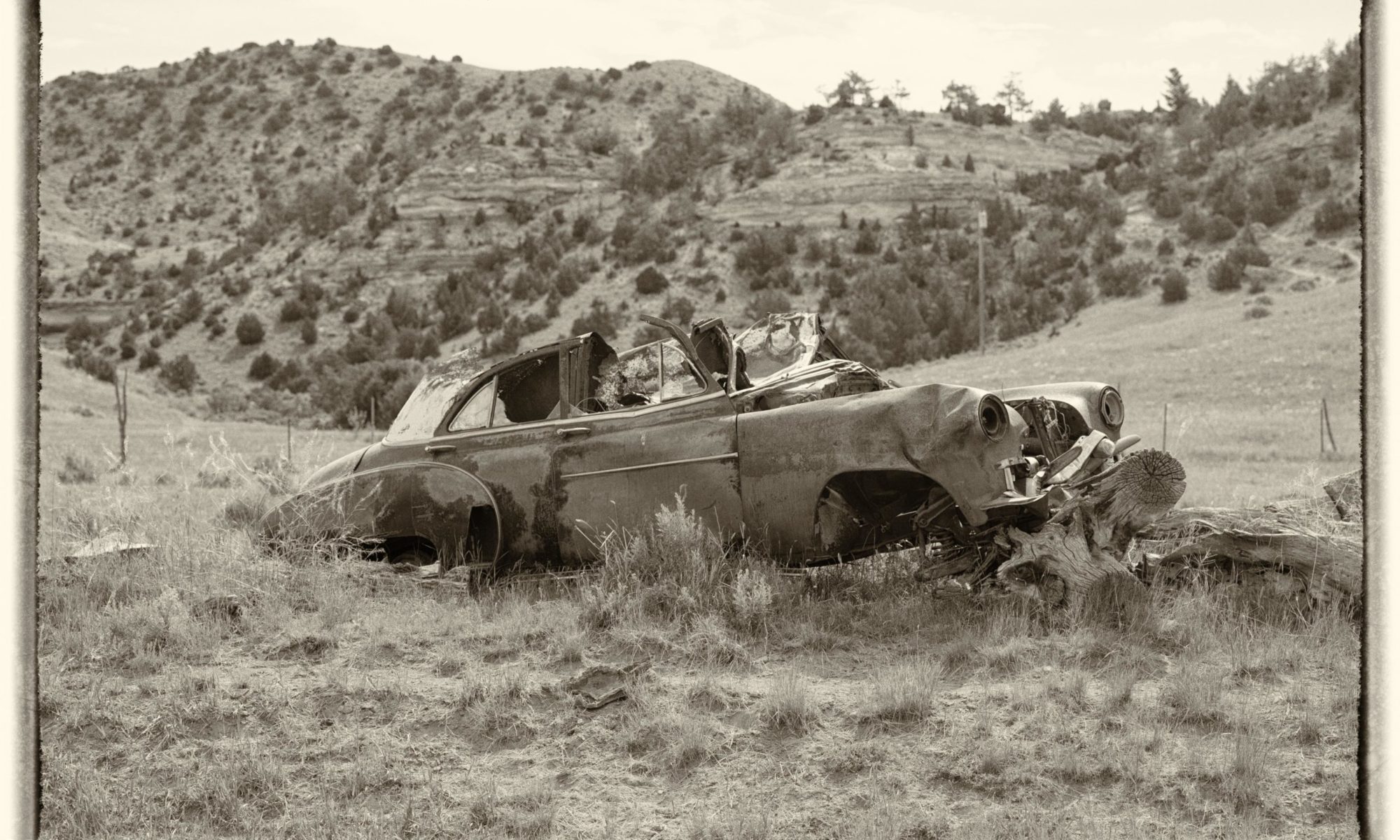
Drinking tea from quaint shops tales sparked by forsaken barns shattered glass and fallen timbers
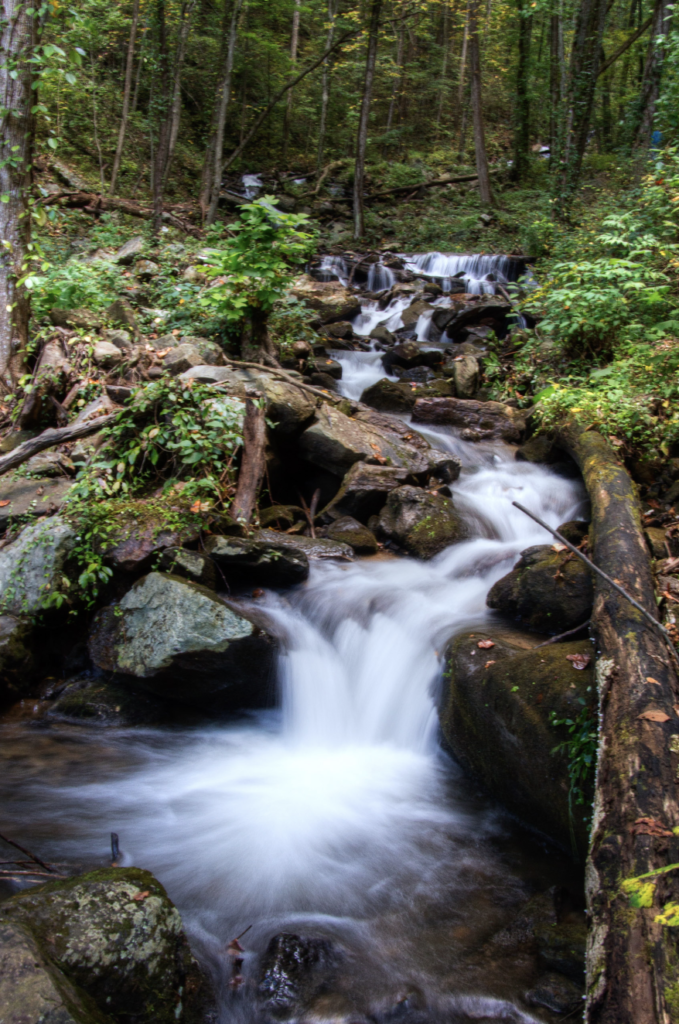
Rolling hills through southern mountains dense forests with water falling from rocky mountainsides streams cut a path deep into the earth
Fields in open valleys impatiently wait for the coming summer seeds placed within her warm bosom impregnated to bring forth new life
a blanket spread among wildflowers the colors of the evening sky paint a brilliant sunset from her pallet of oils twinkling stars scattered against the darkening canvas
By my guest author, my dad. I ran across this poem he wrote that speaks to the heart in various seasons of life.
It is night. The bats have left their caverns. The moonless hills are filled with danger. And Saul’s armies stalk the valleys.
The shepherd huddles in a cave. A boy beside him weeps in fear. There is loneliness There is homesickness. Agony, trial, and danger.
The night is dark, will morning come? Will the shepherd hear the laughter Of home, his brothers and sisters? Or will the soldiers that hunt him Rob his parents of this ‑ their son?
Across the hills other shepherds wait. Their glowing fires defy the night. Their laughter mocks pain, and fear, and danger. But, here, the damp den in the mountain Is devoid of merriment.
An angry stream pours by the cave. Its waters are turbulent ‑ like the heart. The cataract gushes through steep canyon walls That form a valley of death in a night of despair.
Somewhere men rest in comfort. But here a boy weeps in hunger. A shepherd seeks courage for a single hour. And a guard stares intently at the black maw of the valley.
You and I, the weeping boy, and the man who guards Can see no hope in the loneliness, In the homesickness, In the agony and danger.
But another man, Strengthened by trial is not defeated. His lips move to pay homage To the God who watches in the midst of danger. “The LORD is my shepherd,” the hunted man says. “I shall not want …”
And hunger knots his stomach And fears stalk through the night. But the words spring to his lips While the faint light in the east promises dawn.
The sheep posed for this pastoral photo beside an irrigation ditch in Montana
The first time I remember seeing a Native American Indian was when we took a trip to North Carolina when I was a little girl. I was fascinated at the old Indian who stood in front of a store dressed in buckskin and wore some sort of headdress. I know I stared at him, but I had never seen anyone like him before. He looked tall, regal and wise in the lore of his culture. I guessed he was an Indian Chief. That image was etched into my memory.
When we traveled out west, my brothers tried to scare me by telling me that Indians would jump from behind the rocks and scalp me. I rarely believed anything my brothers told me, and that time was no different. It seems that we always went through at least one Indian Reservation. I kept my eyes opened not because of what my brothers said but because I was intrigued. We would stop at the general store, pick up a trinket or two and get a drink. Of course, the highlight was seeing the Indian people. History produced a certain romanticism of the Native Americans, some depicted as noble, some as savage. Even at that young age I thought the treatment towards the Indians was a great injustice.
Stories of Native Americans were nothing new to us. We grew up with stories of Indians intertwined with the lives of my family. My granddad told tales of Indians following alongside his family’s wagons trailing from Oklahoma to Montana. The Indian braves were just as fascinated with the travelers as the travelers were with them. When my great grandfather and others gathered around the evening campfire and played their fiddles and other instruments, some of the Indians joined them. As the old fiddle tunes were played, Indians moved in rhythm with the music and danced around the flames that licked the night sky. They attempted to coerce my aunt to join in their merriment. One Indian brave tried to work a trade for Old Bill, my granddad’s horse, but he would not make the deal.
My great aunts and uncles and my grandmother passed down tales of when their family lived in New Mexico during the time of Apache raids. Those living on small ranches and farms were more afraid of the white men on the large ranches who tried to strong-arm them into selling their lands and herds. One of my favorite stories was that of my great grandmother who claimed to be an Indian Princess on one occasion when Apache braves rode up to their house on the ranch. Upon seeing her little blue-eyed blonde-haired boy, they threatened to bash in the little “gringo’s” head. Her quick thinking and claim as Chief Victorio’s daughter saved those at her home that day as well as offering a hedge of protection for their ranch.
My grandmother was a supporter of St. Labre Indian School in Ashland, Montana. We stopped there on occasion during our trips west, and visited the campus, museum, and gift shop. My father continued to support them after my grandmother’s death.
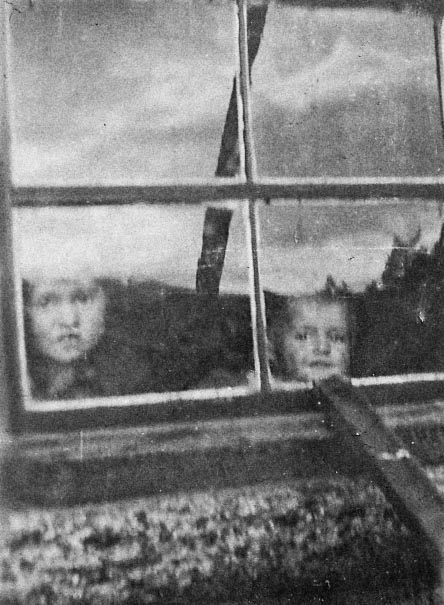
Even now when traveling across a reservation, I feel like an outsider, a stranger looking through a window, just passing through.
I remember my first long trip to the Northwest. That was an unforgettable experience for several reasons. For one, the car was jam packed with kids, so I rode in the back window for a good bit of the trip. Of course, I was the one who fit that space best. That was memorable enough, but it also offered a great view of the sky and the landscape. The changing scenery fascinated me. The further west we went, I noticed big black spots that moved over the open countryside. I soon discovered those dark patches were shadows from the clouds.
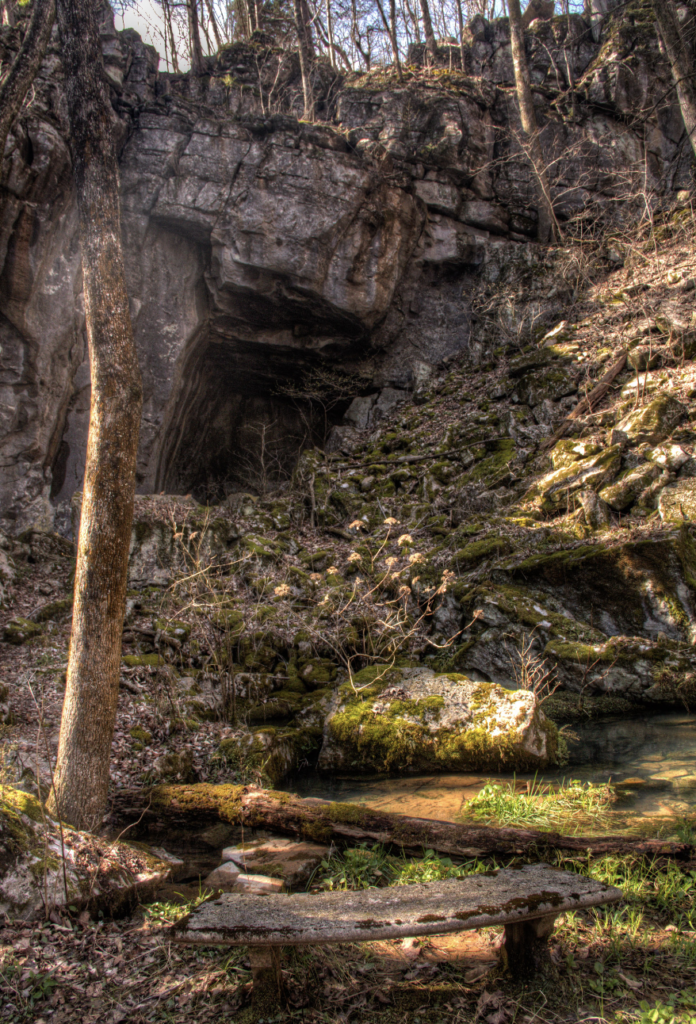
Somewhere along our westward road, in Missouri, we took a side trip to visit Crystal Cave. We went into the dank, musty, dark cave. I sensed darkness lurking in the far recesses and corners, yet the darkness could not snuff out the lights that illuminated our path. As we went further into the belly of the cavern, it opened up into a big room. It may have been just a little girl’s imaginary recollections, but I remember rickety wooden steps that went down, down, down. Our guide told us stories of the Indians who one time frequented the cave. My imagination took over as I noticed drawings on the cave walls and thought of what it would be like in complete darkness. I was scared! My daddy picked me up and carried me. It did not matter how dark the cave was or how unsteady the path, I felt safe in his arms.
On our journey of life, we often experience dangerous days and stormy dark nights that threaten to expel the light. Those times may cast shadows, but they do not rule over the day. The weight of darkness can be thick, and oppressing. Yet, a ray of light ever so small penetrates the black of night and shatters the obsidian shroud that closes in around us.
Even little knobby kneed kids do some growing up before they are out of the first grade. Take Mary Jane for instance. She was our kid sister who was born ten years after the rest of us.
“Mary, Maary!’ Mother was calling Mary Jane.
The wind whispered through the fir trees behind the house. A rooster called his harem to a worm he’d scratched from the ground. But no answer came from my six-year-old sister. Not that it mattered. She was bad medicine to a teen-ager. Besides, she always showed up in time for supper.
“Call the dog,” Ellen said.
For being another girl, and two years older than I was, Ellen was pretty smart.
Mother called again. “Jerry.”
Our collie was named after some guy Ellen thought was cute.
“Here, Jerry.”
“Yap. Yap,” the dog answered from behind the hen house. At eating time, he didn’t need to be called twice.
Jerry materialized loping down the hill. Like Ellen predicted, baby sister was behind him, and Gangly Legs was following her. Gangly Legs was a bum lamb. Sheep can get mixed up. But, when it came to confusion, this one was a champion. He didn’t even know he was a sheep. He thought that he was a brother to a collie dog and that Mary Jane was his mother. Imagine having a stringy haired kid for a mother! How mixed up can something get?
Of course a bum lamb is mixed up to start with. You see, a bum is a lamb so ugly that his mother won’t claim him. Or, at least, that’s what I told Little Sister when Uncle Gus brought the lamb to her.
Mary didn’t accept what I said. “Ugly, nothing!” she retorted. “Uncle Gus said he was a twin, and, besides, you wish he’d have brought him to you.”
She fastened a floppy nipple on a pop bottle and fed the motherless lamb some milk. Old Gangly Legs clung to the bottle and worked his jaws overtime. He bumped with his nose when the milk didn’t come fast enough to please him, which was all the time. His legs shook and he panted and chewed. His stomach puffed up like a balloon. Flop, flop, flop – he wiggled his tail steadily, and when the milk was gone he ran over to Jerry, grabbed one of his ears and chewed on it. His tail kept time with is jaws.
“Look,” Mary Jane squealed. “He’s still hungry.”
Fortunately for the dog, the hunger dissipated, and both lay down on the lawn.
“He thinks he’s a dog,” I said.
“He knows what he is. He’s a cute lamb.” Mary stomped into the house.
I guess in a way she was right for a skinny legged six-year-old. Anyway, Little Sister had a lamb to raise. The critter thrived on the attention he received. One thing for sure, he was lucky. Lots of lambs would die if someone didn’t take special care of them.
Like I told Mary, “A mother sheep will just walk away and leave a lamb if she doesn’t like his looks.” Sometimes a ewe (lady sheep) will give birth to two or three lambs and have only enough milk for one. Besides, some old ewes just give up and die right after they’ve had a young one. Like I said – a long necked lamb would make any smart mother kick the bucket. Luckily Gangly Legs had Mary Jane for a mother, and she wasn’t in any danger. She thought that the lamb was beautiful.
He thought he was a dog and spent his spare time jumping in and out of the doghouse and chewing on Jerry’s ears. That year we had a crazy place guarded by a dog-eared dog.
“If he chewed on me, I’d bite him,” I said.
“That’s because you’re not as nice as Jerry,” Mary Jane answered.
But who wants to be nice if a chewed ear is the reward you get?
Summer changed to fall. The stupid lamb was still around – all eighty pounds of him. He wasn’t gangly anymore, but he still thought he was a dog. Even Mother said that if he’d only eat dog food he’d probably take to running cars. But one day all that changed. That was the day Uncle Gus’ sheep flock ran away.
The sheep had crawled through the fence before. But this day, when they got out, they made a beeline for our house. Old Jerry barked three panicked yelps and made a dive for the doghouse. I guess he thought his ears were gone for sure. Instead of following him, Gangly Legs stood staring at the sheep as they filed into the yard.
A stupid faced old ewe and a plump lamb stepped away from the others. The ewe walked up to Gangly Legs. She smelled his nose as if to say, “You’re my long lost lamb. You’d better come home.”
The plump lamb bumped Gangly with his head. “Brother, I’m tougher than you are.”
Knobby kneed Mary Jane stared big-eyed as her pet nuzzled against the old ewe and started nibbling on her ear.
“See,” Mary Jane said. “He knew he was a sheep all the time.”
I started to explain that Gangly probably thought that the sheep was another dog, but just then Uncle Gus came walking up the road. He was looking for his sheep.
“Come on woolies,” he said.
The stupid flock turned and followed him home.
Gangly Legs went with them. For a minute I thought that Mary Jane was going to lose her cool. She puffed up like a bullfrog ready to explode as she watched her lamb go. Then she stared me straight in the eye. “I raised the biggest lamb of the whole bunch,” she said. Then it came to me that maybe a six-year-old can think some grown up thoughts – like a mother thinks when her children grow up and leave home……I don’t know. But for a few minutes my little sister looked big and seemed super smart for a skinny, knobby kneed girl.
Daddy peeked in the door of every shop as we walked down the street. He stopped in front of the Senior Center, peered through the window, and opened the door. A big grin filled his face. He was sure to find some old friends there! Wrinkled faces turned his direction, eyes shining as they met each other’s gaze. He talked with them as if he had known them all of his life, though some were newcomers to the area by forty-plus years. Many he knew when he went in, others he knew by the time he walked out.
Our next stop was the nursing facility. I walked beside him down the long hallways as he looked through every opened doorway and spoke or waved to those inside the rooms. Immediately he went into “preacher mode”. We stopped in front of a closed door and he rapped on the door with one of his preacher’s knocks that I had seen many times. A man opened the door, looked straight at me, and said, “You must be a Brannin.” I was the one who grinned then. Soon the two were trading stories from another era with wild tales of ranch life in Melville and the Crazy Mountains. We said our goodbyes and continued our search down the corridor.
Looking through one doorway, Daddy suddenly stopped. There he was – one of Daddy’s old school buddies – Paul Westervelt! What a reunion! They talked of school days, friends and family. It seemed as if the scales of time fell and transformed to two old friends into teenagers. I felt privileged to have been allowed to slip into their world.
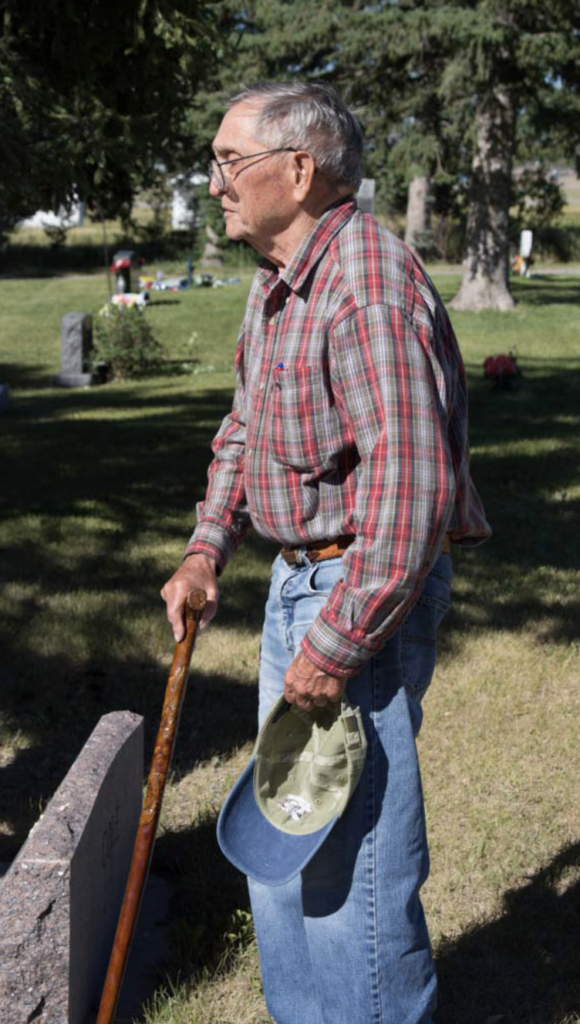
There was one more stop to make. Though Daddy had been able to visit a few of his schoolmates and acquaintances, there were others he wanted to see. That led us to Mountain View Cemetery where most of his old buddies were to be found. Daddy pointed out various tombstones, explaining who lay in the ground. He brought them to life as he shared fond memories and humorous stories and exploits of their youth. Each time we made the visit to town, more and more of his friends and family had made the move to the same hallowed ground.
As the years progressed, I knew Daddy’s time was getting shorter and there really would be “one last time” to make the trip home. It became more evident as his body faded. His last few months were filled with stories and remembrances as he reminisced about days gone by. He also had a few “visitations” from visitors who came in the night. Some folks who had been gone for years looked in his room and said, “Come on,” and motioned from the doorway. A few were bold enough to enter the room and stand by his bed as if to urge him to follow. One of his friends to visit was Paul Westervelt. No, he really wasn’t there physically, but Daddy saw him and heard his voice, “Are you about ready to go?” The morning after the “visitation”, Daddy told me, “I had a visitor last night,” and he told me of his vision.
Earlier this year, my daughter, grandson and I were able to attend a family funeral at Melville. After the service, an elderly gentleman came up to me and said he had known my Daddy. I said, “What’s your name?” He said, “I am Paul Westervelt. I’m the last one of my graduating class.” My whole face lit up. I said, “I have to tell you a story. You visited my dad shortly before he died.” And then, his face lit up. Somehow, I felt we had come full circle and I was the link, the old friend. There was great satisfaction in that brief moment.
I found out today that daddy’s old buddy left this world just a few days ago. That news made me even more thankful that we had a chance to visit in Melville.
I guess the two schoolmates are really visiting now!
The air felt heavy. A light drizzle spotted the windshield but billowing gray clouds looked like they would burst open at any moment and release a deluge. I turned into the cemetery to visit my parents’ grave and made sure all the date plates were still in place and the flowers unfaded. I ran my hand over the edge of the tombstone engraved with stalks of wheat. Sheaves of wheat denote someone has lived a long fruitful life. It is also representative of the “first fruits”, with the promise of more to come. That was a message of hope, a hope of seeing them again on the day we will be reunited. Somehow, I always felt shortchanged, thinking they both died prematurely. I turned to go and said my goodbyes for another time.
As I drove away, I told Daddy (who wasn’t beside me), “But, you were supposed to move to Montana with me.” A wave of loneliness washed over me. Well, it was not so much loneliness as it was a missing-my-daddy moment. At one time, I thought he was invincible. For twelve years after the passing of my mother, Daddy was my sidekick. He occupied the passenger seat of the car. We took many day trips and visited all kinds of places. We still had many miles to travel and many things to enjoy, but I am so thankful for the years I had a companion to share the scenic drives and visit with people we didn’t know and some that we did.
A 70’s mellow tune came over the radio. The artist sang words of the death of his father, and later his mother, “I cried and cried all day, alone again, naturally.” The tears were not the kind that people cry in their beer to drown their sorrows but the kind that comes from a heart of loneliness and loss of someone dear.
Whenever Daddy and I went on an outing, or a doctor’s visit, his favorite place to eat was Steak & Shake. Don’t ask me why – I don’t know. Sometimes I didn’t even ask him where he wanted to go, I just went someplace else. But, today, I drove into Steak & Shake and got a Daddy sized snack. When I pulled around the building, I saw the most beautiful roses – variegated peach and creamy yellow. Daddy would have liked them. I couldn’t help but smile. I told the girl who waited on me how gorgeous the flowers were and said, “They have brightened my day!” As I ate my snack of salty fries, I thought of the many hours spent with my sidekick. A salty tear escaped, and I wondered if it had fallen on my fries and added some extra flavor.
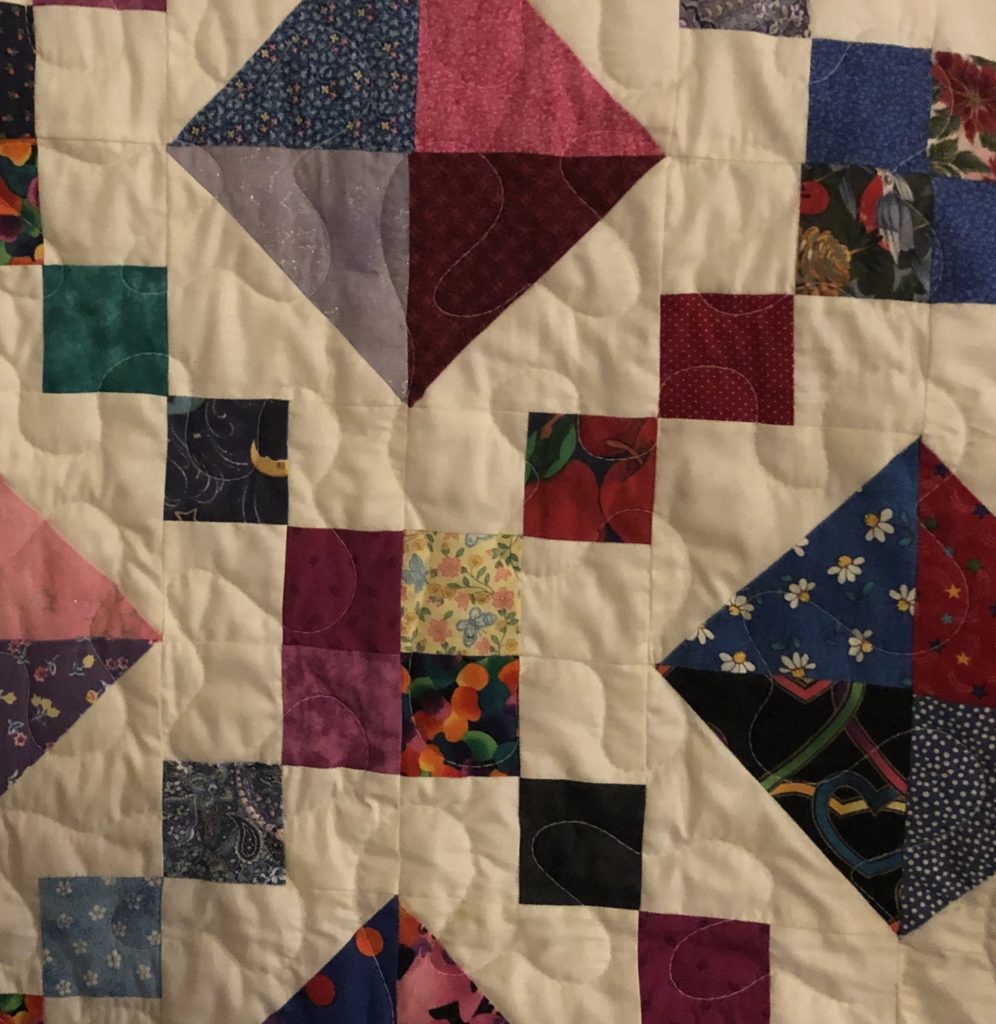
My destination was the quilt shop. I browsed a bit longer than usual, running my hand along many of the bolts of fabric, pausing to consider the textures and vivid colors. I thought of my mother who could piece a quilt together in her mind, each color complementing the other to complete her masterpiece.
The ride home was bittersweet. Mama would have asked if I knew where I was, but would have enjoyed the outing, and Daddy would have loved the back roads through the pastoral scenes on the countryside. What a blessing to have been granted many years to share those mountain trails, back roads and bolts of color.
Blue sky pushed its way through the masses of gray. The sun shone on the bright yellow field, making the flowers neon bright. I gathered the sheaves of memories, held them close and made my way home.
jit·ney /ˈjitnē/. noun. 1. a bus or other vehicle carrying passengers for a low fare.
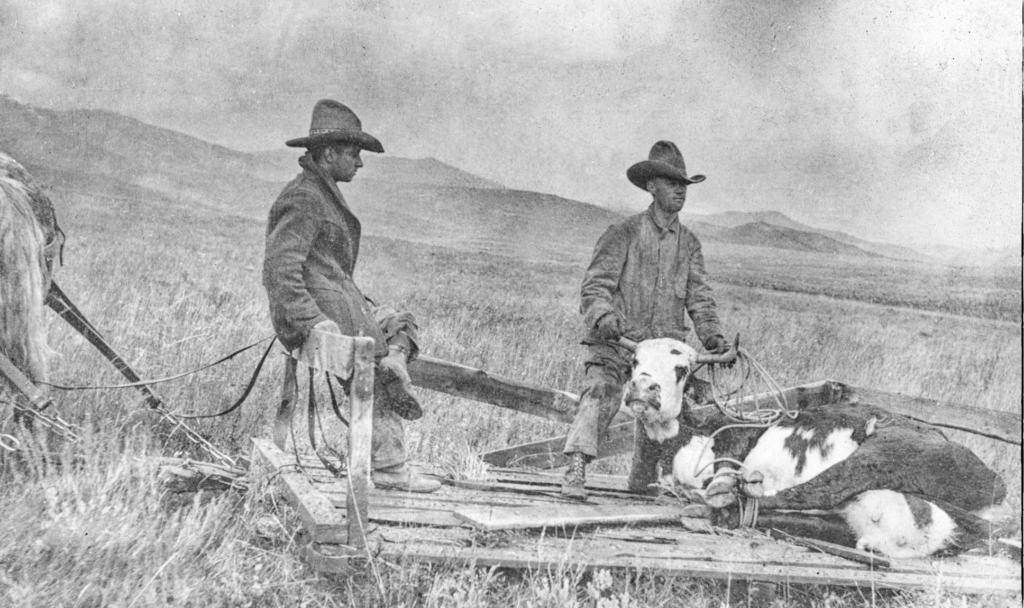
Jitney was a buckskin mare, sired by a Mustang, small, tough, and fast. She was acquired in a trade with Stampede Hoyem for two of Ward and Parker’s cows. I’d say that was a good trade. Stampede’s given name was Otto, the brother of the future second husband of Babe.
Babe’s brother, Sid, and Otto “Stampede”
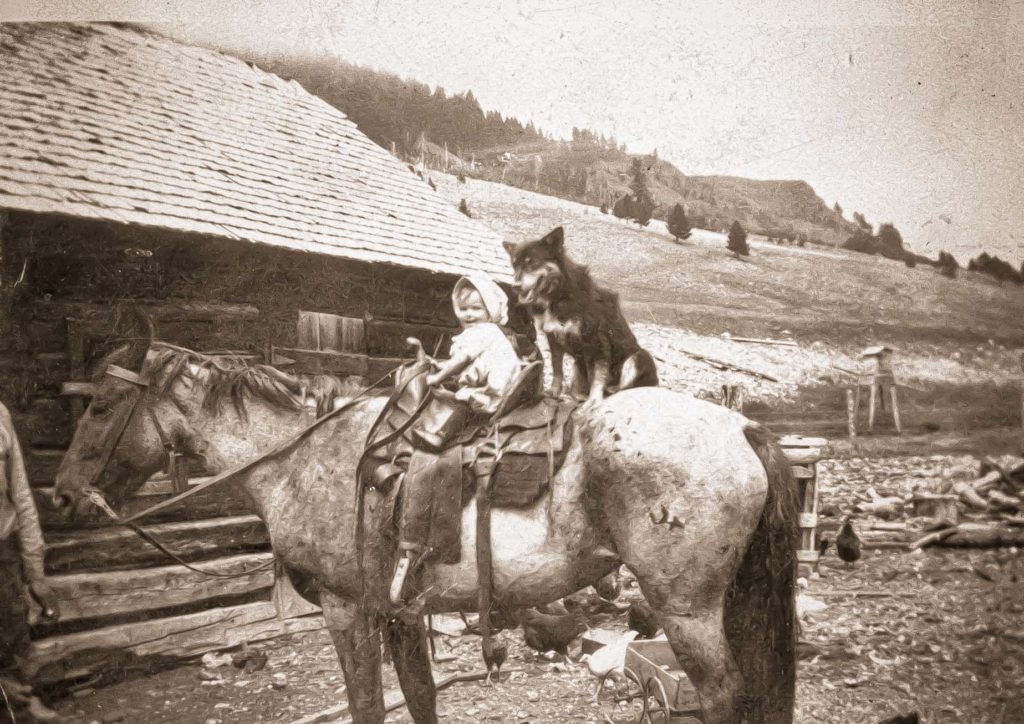
As can be inferred by his name, Stampede rode the buckskin at full speed. Jitney was trained to go fast and run against the best. She was also gentle with the kids and tolerated a load being placed on her back. It wasn’t unusual for her to carry a few grown ladies and several kids hanging off her back from mane to tail, all at the same time. To the little kids, Jitney was more than part of the family, they considered her as a grandmother, protector and best friend.
One day when little Buck was about five years old, he followed his dad up a hill to a meadow where the horses grazed. There was a young stallion that had made its way into the pasture. Jitney looked up, and saw the little boy coming toward the horses. The boy walked her way to hug her leg and rub her head. That set the stallion off. He glared at little Buck and charged. Jitney was close by and nickered. I guess he was sending a warning that there was trouble. The boy’s father came to the rescue. Both Jitney and Poppy were heroes that day.
One day Jitney could carry her cargo of kids and the next she could win a race against real rodeo horses. On the Fourth of July celebration at Two Dot, Jitney was entered into the Ladies’ horse race. She took the prize. The buckskin was then entered in two more races, one with Buddy Brannin and the other with Jim Brannin as jockeys. Both won. When the cowboy race was announced, the judges wouldn’t allow Jitney to race because she had won too many races already.
Buck’s brother, sister, and dog
Jitney and Babe were praised for their famous ride the day of the Sweet Grass Canyon fire in June of 1919. The buckskin mare flew like the wind at a nudge from Babe. Jitney could run in fierce competition or haul a load of kids. If Jitney wasn’t available to ride, the little kids found substitutes. Cousin Kitty served as little Buck’s bucking bronc. For a short period of time Jimmy Hicks filled that role as well.
Jitney stood still while kids piled on her back for a ride. She certainly lived up to the meaning of her name: “a bus or other vehicle carrying passengers for a low fare.”
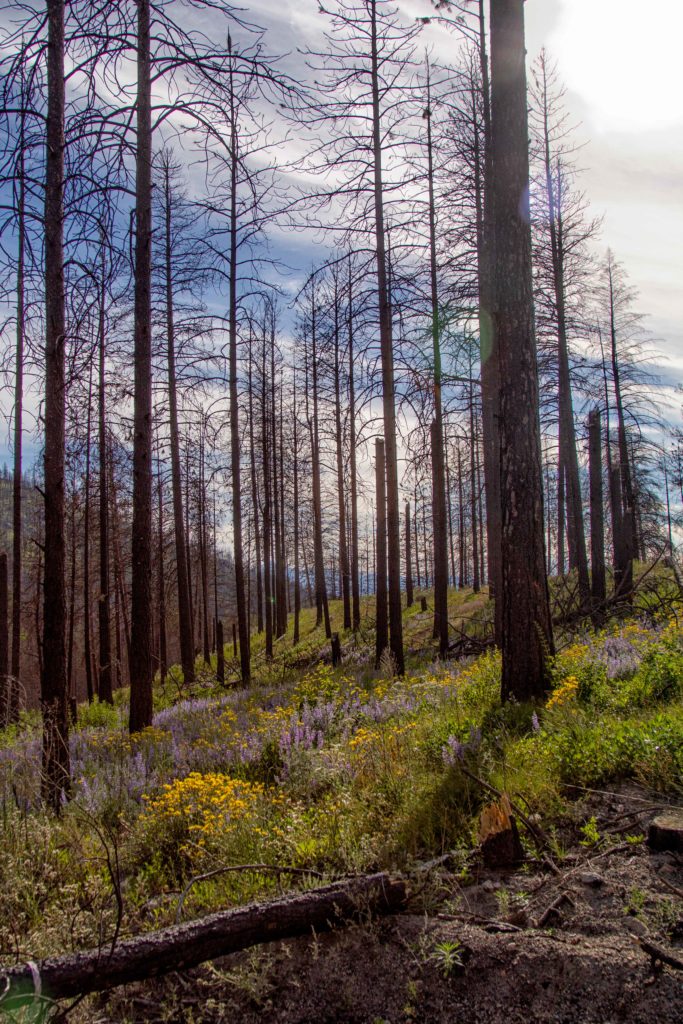
Blackened skeletons with scraggly outstretched arms stood in eerie silence, the dull smoky gray sky gasping for a breath of fresh air. Instead of the wildflowers of June dotting the meadows and mountainside, white ashes lay at the feet of the burned trees amid toppled charred trunks, branches, and smoldering stumps. There was no sign of life, no animals foraged in the scorched undergrowth. The fire that left a path of destruction was put to death before it consumed everything.
Two kids, Loyd Rein and Benny Green, had spotted the column of smoke while riding in the Olson field. Fire! They galloped to tell Indian Charlie and Gordon Langston who were working on the fence line. By the time they got to the Brannin Ranch, Babe had already pulled the saddle off Jitney and was riding bareback over the hills to the nearest phone, eight miles over land, thirteen by road. Jitney flew like the wind, her black mane and tail blowing in the breeze as Babe urged the buckskin mare on. Neither let up until they reached their destination and made the call for help. Word spread like wildfire and neighbors, firefighters, and family came.
The endurance and speed of Jitney was a perfect match with the true grit and sheer determination of bareback Babe. They were a team. Babe’s quick thinking and action saved the day. The fire was put to death before it consumed everything, but not before leaving a path of destruction on the landscape evidenced for years to come. Not only did the land look bleak and desolate but also their livelihood as Ward and Parker returned from the battlefields of World War I to a fire ravaged land.
Babe, third from left
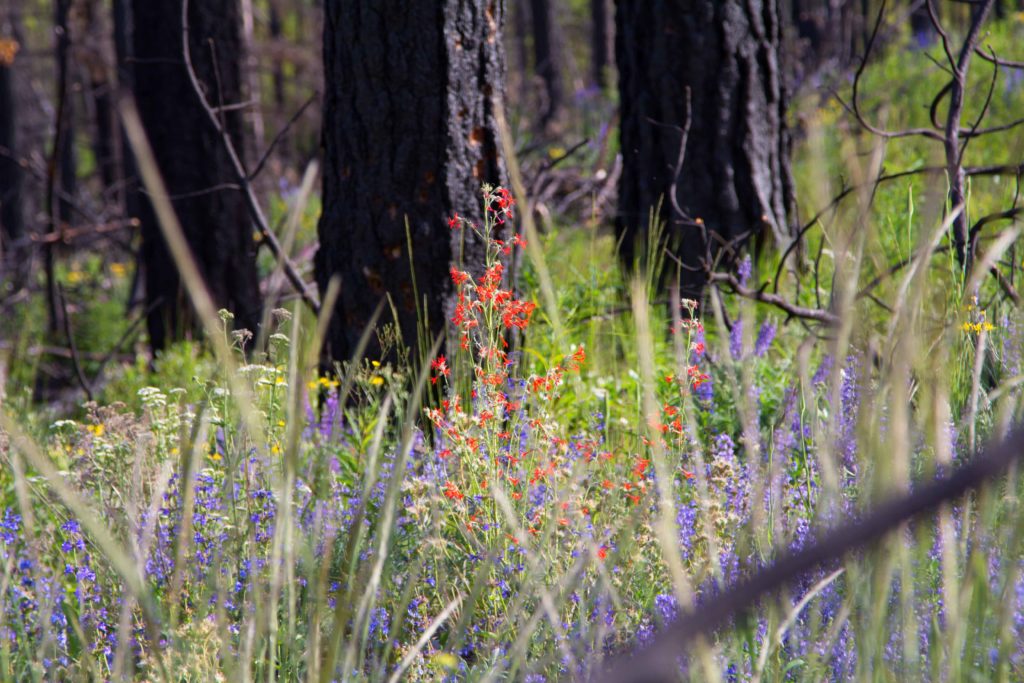
The fire brought destruction to the land, but the families and their homes were safe. Not only was the property of those who lived in Sweet Grass Canyon affected, but also that of the Forest Service. There was a glimmer of hope as new life emerged from the floor of the forest. Virgin growth rose from the ashes. Seeds burst open from the heat and brought forth flowers, trees and various grasses.
You might think the burned forest was not good for the sawmill business at Ward and Parker, but the trees that survived the extreme heat and did not turn to ashes were salvaged. The Forest Service allowed the sawmillers to harvest the trees on National Forest property. Fire killed timber was well cured. The heat from the fire hardened the sap within the trees. They would not twist or bow. Ward & Parker had their work cut out for them. The same fire that destroyed some of the trees made others stronger. The dried cured logs were sold and used for ranch houses, barns and outbuildings. Some of those logs still stand within a few buildings in Sweet Grass County.
I have come to the conclusion that this is a great life lesson. Often, we are not much different than the forest. We sometimes face fire in our lives. Those times of trial can either consume us or they can make us stronger. Our world may seem bleak as we stand in the ashes, not realizing that instead of being devoured, we have been made stronger.
May the heat from the fire on your mountain bring new growth, endurance and strength. You never know what beauty will emerge.