“Bring me back something.” That’s what I told Daddy every time he had to travel out of town for a conference or meeting of some kind. I didn’t care what it was, just as long as I got something.
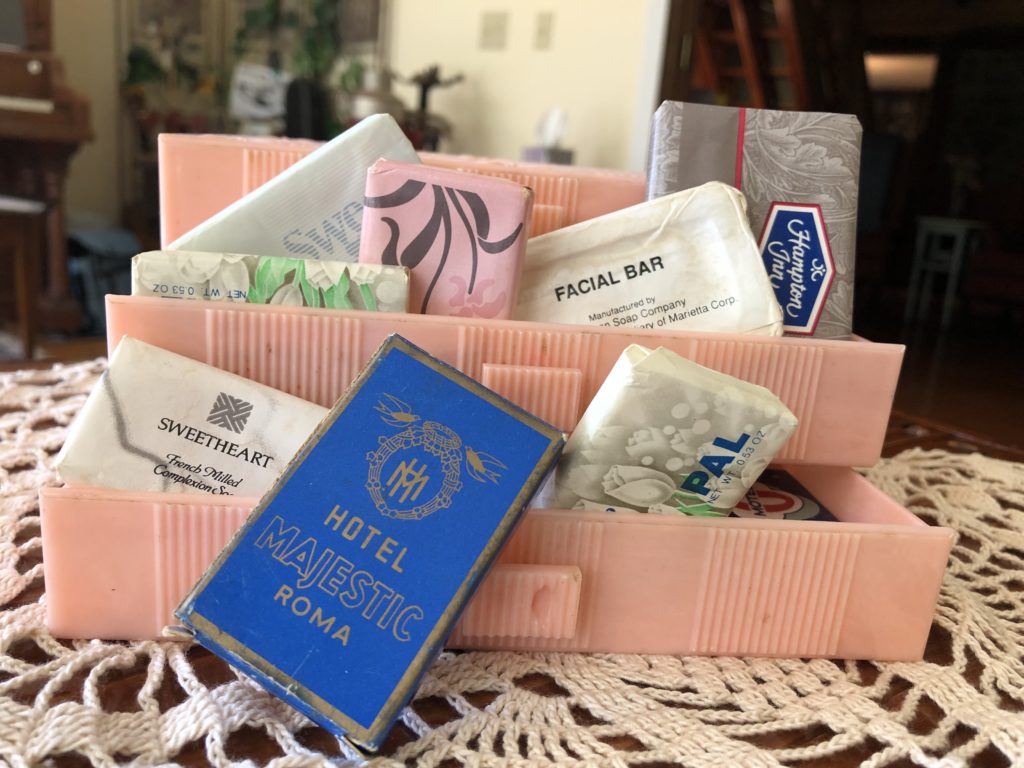
As soon as he got home, I’d run to meet him, “Did you bring me something?” I wiggled and waited impatiently for him to unpack his suitcase. Sure enough, tucked away in the pocket was a special gift for me – a bar of soap. Yep, that’s what it was every time. You would have thought he gave me a million dollars.
The bar of soap was always from the hotel or the place he stayed. I would grin from ear to ear, hold the bar of soap close and run off to my room to hide the treasure in my jewelry box.
That may have been a silly little thing to most kids, but to me it was a never-ending game. Even when I was grown with kids and grandkids of my own, he would bring me a bar of soap from his adventures. Some of the soap ended up going on adventures with me. Other soaps are still tucked away in my jewelry box. Once in a while I get my bars of gold out, show them to my grandkids and tell them about my special gifts from the past.
You know? Those little bars of soap didn’t cost him a dime yet knowing that he always thought of me while he was away is priceless. It always brings a smile to my face and sometimes a tear to my eyes as I think of the joy that was given to a scrawny little girl in that one small sliver of soap.
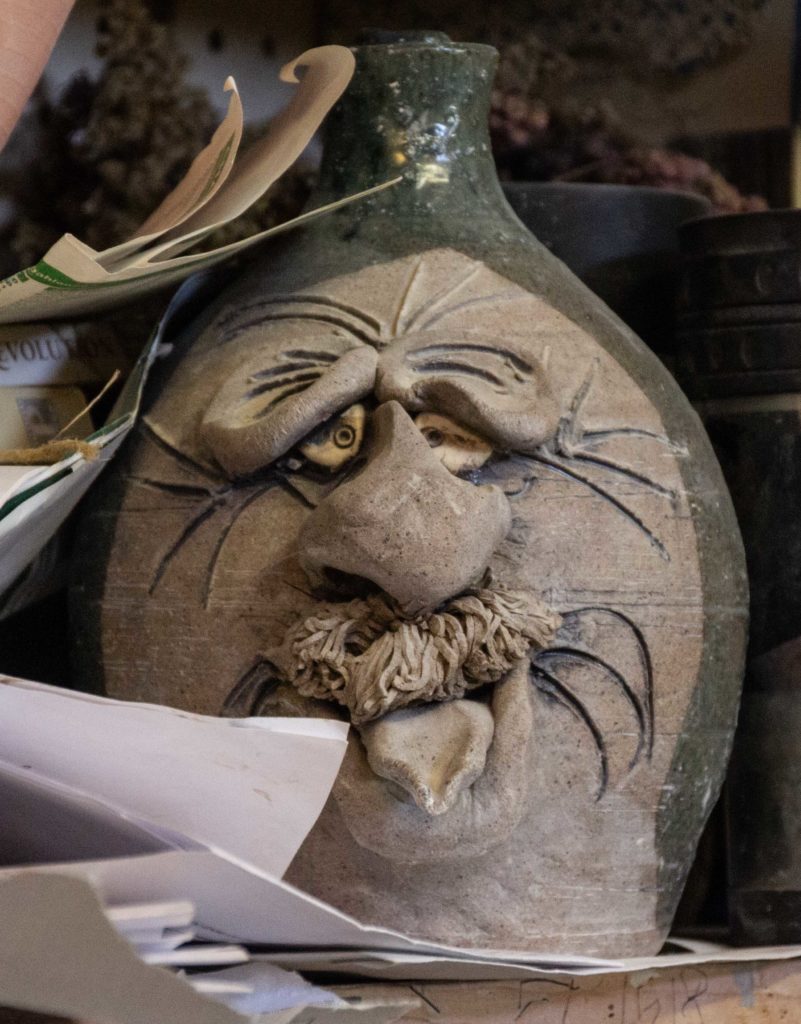
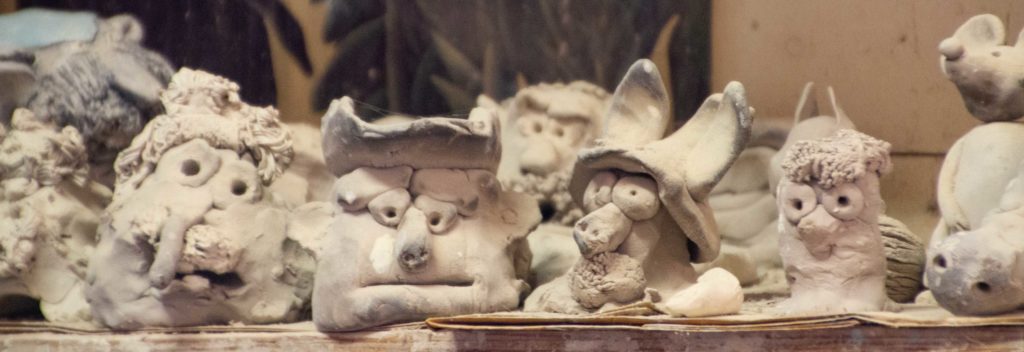
I walked into the little shop A layer of dust coated the door Earthen faces peered from laden shelves Dusty footprints on the floor
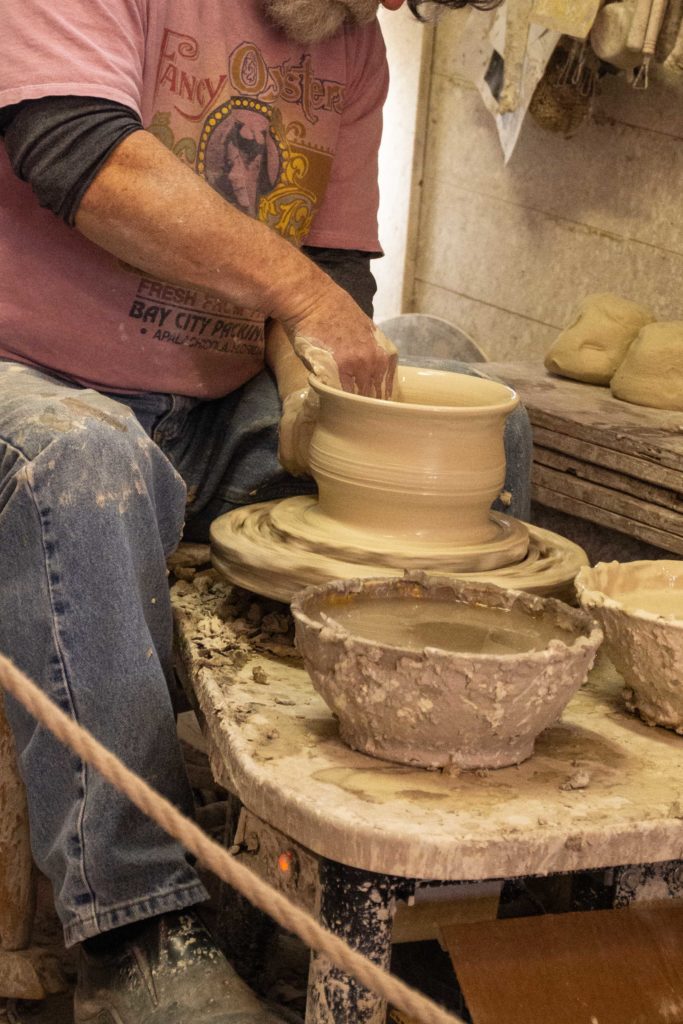
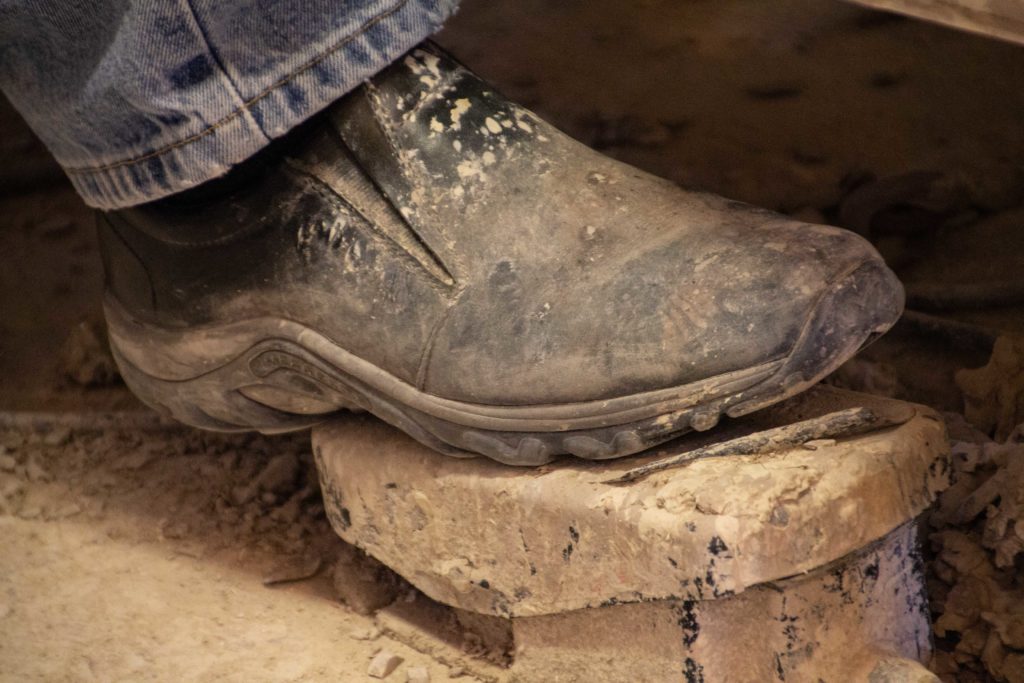
The bearded man sat on his stool In front of the potter’s wheel That spun as his boot rose and fell As he formed the clay with skill
He lovingly stroked the earthen dough In his hands gentle and strong He shaped a unique work of art As the wheel hummed its song
He dampened his fingers to smooth the edge Then pushed back his stool to stand The wheel stood still as he lifted the bowl – The work of the Master’s Hand
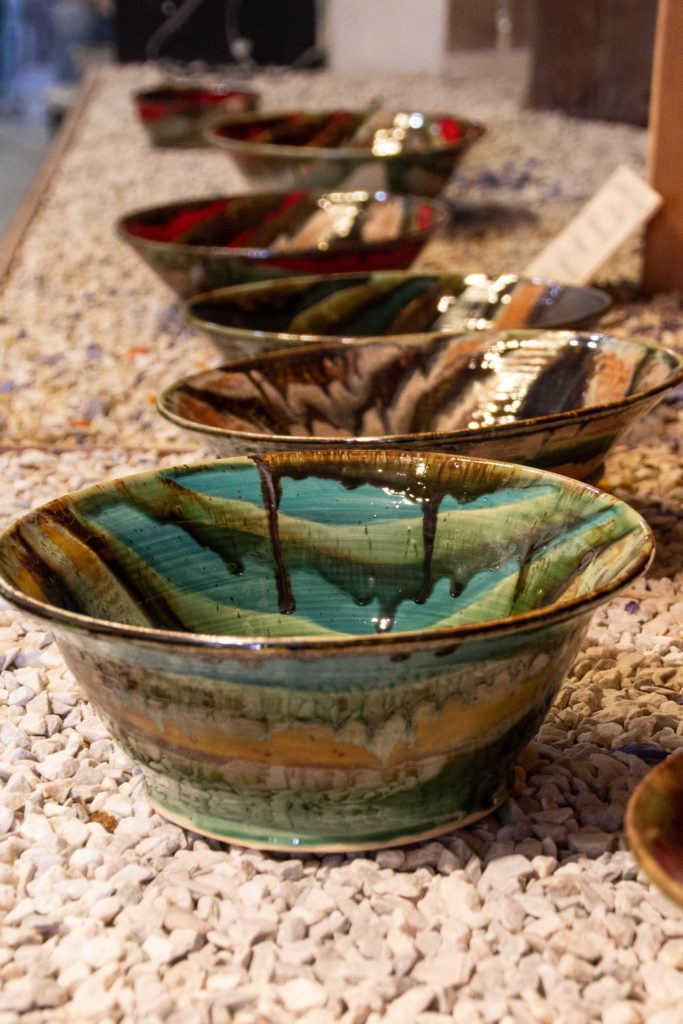
A lot of folks collect mementos of their trips and adventures. Some people take home t-shirts, magnets, stickers, shot glasses, post cards, seashells, spoons, and thimbles, among other things. I have even carried back a bag of dirt. When I was a kid, I always managed to stash a favorite rock or even a bag of rocks. I’ve expanded my horizons and now collect pottery made in the areas I visit.
Each piece is more than just a trinket. It is a memory. The platter and bowl I picked up in New Smyrna Beach, Florida during my sister trip are reminders of lighthouses, beaches, seafood, sunsets, kayaking, an island rookery, laughter, manatees, Spanish moss, lots of good food and fun. A bowl from the Art Walk in Sequim, Washington holds memories of cousins, rain forests, hikes, mountains, lakes, scenic photos, cliffs, sounds of ocean echoes in caves, and ferries. The bowl from North Carolina tells of a surprise trip with “the girls.” It brings to mind waterfalls, the Biltmore Estate, ghost hunting, cold rain, friends, little towns, Madison’s Restaurant, winding mountain roads, and a wintery Segway ride.
Unique bowls from Alaska remind me of the fulfillment of a childhood dream come true to visit there with my dad. My husband and I were able to take that trip with my dad, aunt and cousins on an Alaskan Cruise plus a four-day inland tour to Denali.
Two pieces from the Brad Walker Pottery Shop in Dahlonega, Georgia, brings the sound of laughter. “The girls” and I have passed through there many times on our “Destination Unknown” trips. We’ve hiked, explored, gone off road to climb mountains and stick our feet in mountain streams. We have eaten at many delicious places, stayed in lodges and cabins, zip-lined through the trees, shopped in quaint little towns, rode horses, slept in a tack room, visited fudge shops, and many other things.
While traveling through Montana, we have gone through little towns and followed roadside signs that say, “Pottery Shop.” We came across Basin Creek Pottery in Basin, Montana, one of those towns that can easily be missed if you blink twice. The artist gathers his own clay and makes his own paints with natural minerals found in the mountains. The pottery I got from there is a long, narrow and shallow dish that is perfect for crackers. It holds memories of Ghost Towns, a bumpy ride through the wilderness and chasing elusive outlaws. Firehole Pottery is another great little pottery shop off the beaten path between Belgrade and Bozeman. I have several pieces from there that all remind me of the mountains and visits with Maud and my grandson.
The bowl with the indented swirl in the middle is from Penn Cove Pottery shop in Coupeville, Washington on Whidbey Island. Various artists display their works of art, each unique. It was hard to make my choice. I ended up with two bowls. They remind me of island life, tall bridges over glacial waters, coastal towns, boats, seashores lined with rocks, green rivers and lakes, massive chains from sunken ships and other items washed up on the beach, squawks of sea birds and the deep sad tones of foghorns in the distance.
Another shop, Fat Elk Trading Company, in Packwood, WA, was small, but it had lots of pottery as well as other items. The pieces I selected were different than any I have seen elsewhere. They bring an old memory from a trip long ago to Mt. Rainier National Park as well as more recent memories of traveling in the shadow of Mt. Rainier and of sharing a meal of burgers at Cliff Topper just down the street.
Every piece of pottery I have collected holds a special place in my remembrances. Not only do I use them to serve up Sunday Dinner, but I also use them to serve up memories.
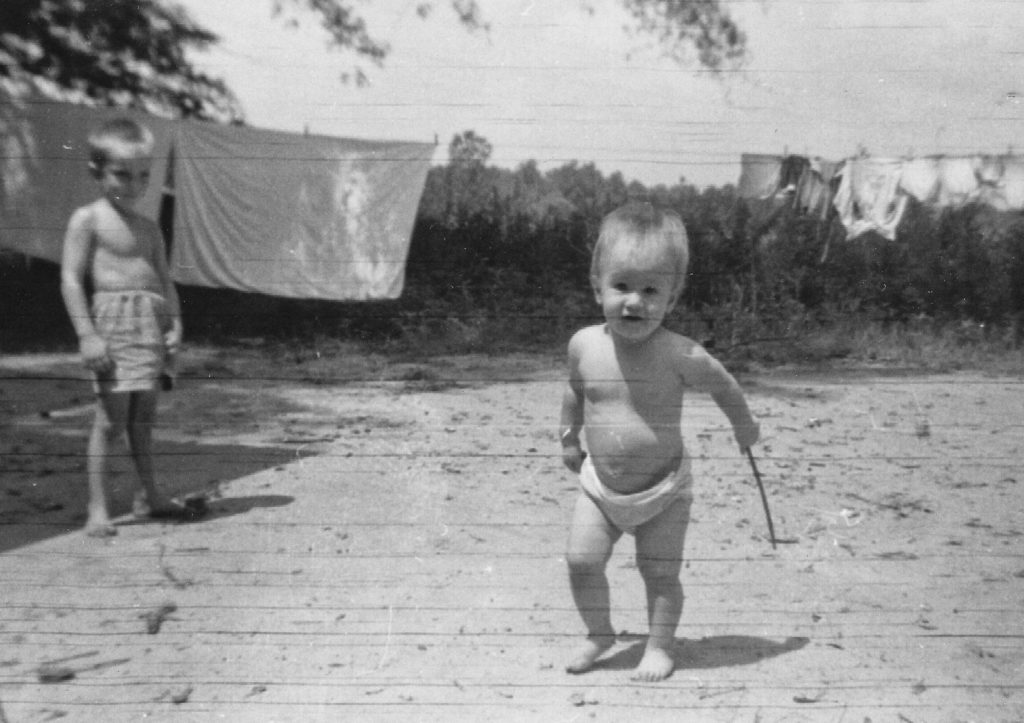
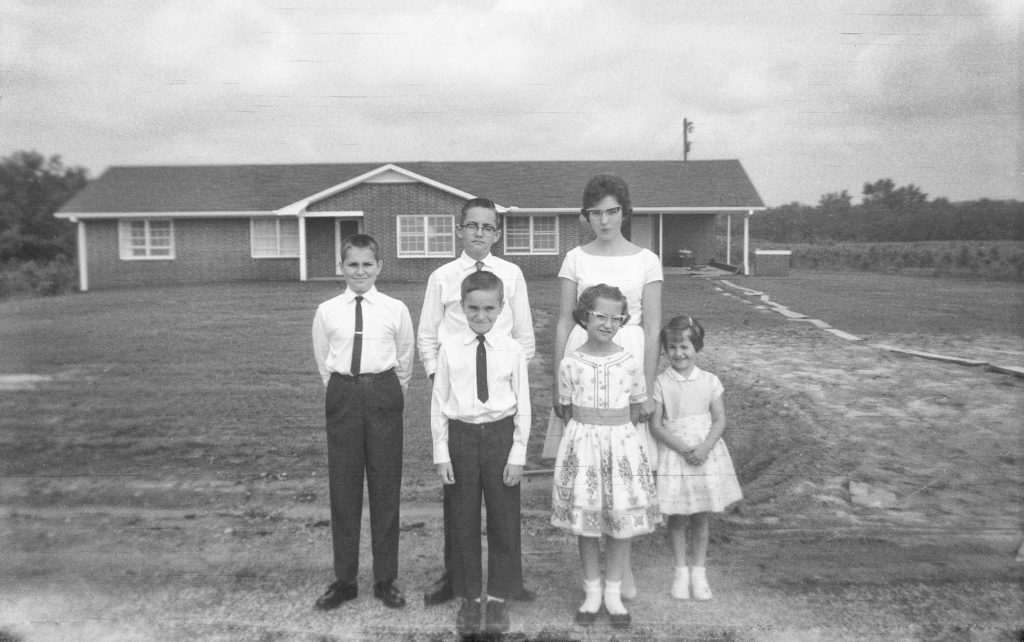
I don’t remember much about the day of my birth. In fact, I don’t remember anything about it at all. The first time my brother saw me, he said, “Take her back. She doesn’t have any hair or teeth.” They didn’t take me back but took me to my first home.
We lived out in the country along a narrow dirt road not far from my grandparents in a tar-papered share cropper’s three-room house. By the time I came along, the house had been improved. Before my folks and brothers and sisters moved in, it was abandoned except for the mice and possums that fed on the oats that were piled on the floor. It might seem like ten dollars a month rent would be a bargain, but I’m not so sure. Pillars of fieldstone under the corners and centers of each side of the house kept it off the ground. A screened porch on the back of the house also served as a pantry. The yard was red Georgia clay.
My brother, sister and two cousins playing
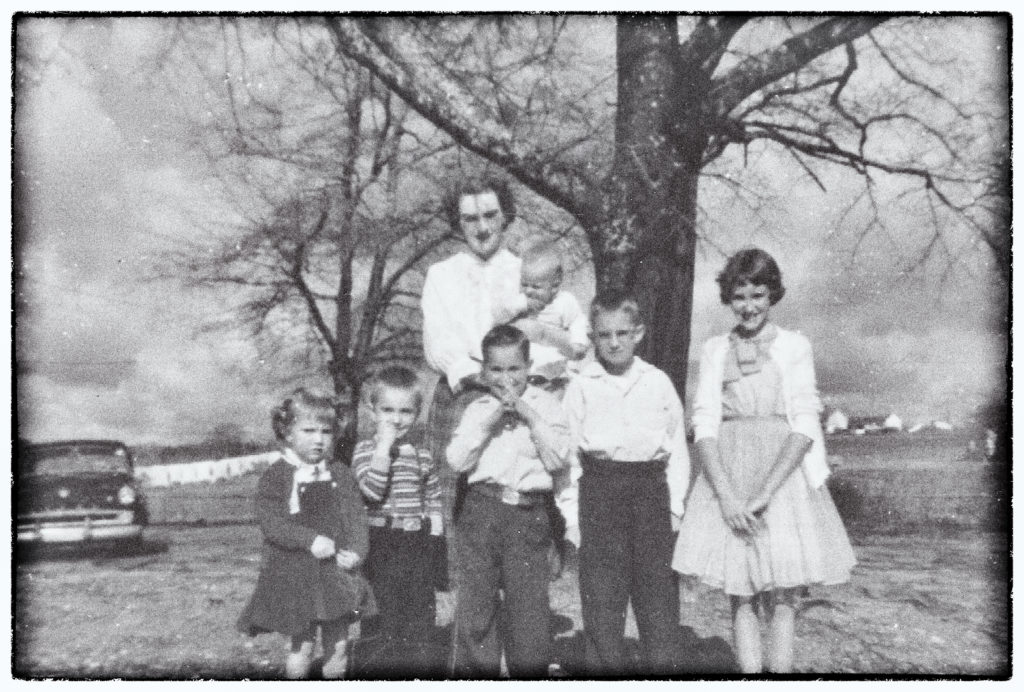
My brothers and sisters by the tar paper house
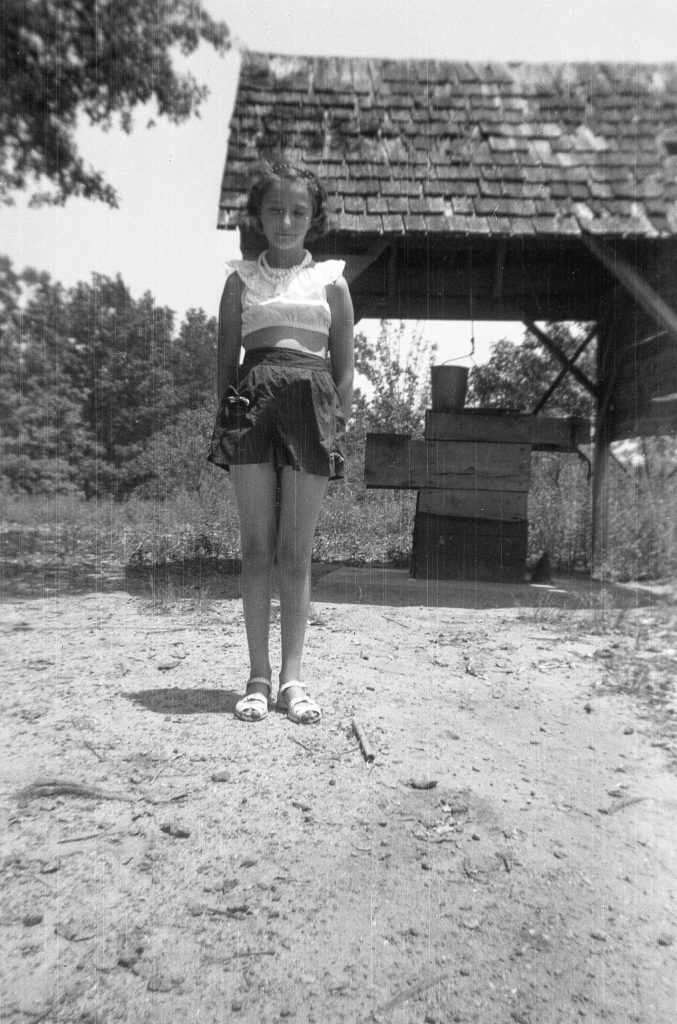
My oldest sister and the well
The house was covered in rolled tar paper that mimicked red bricks. An outhouse served as the private restroom. The house was bare when they moved in. Shelves had to be built in the kitchen. Sweeping the floor was easy enough. Mama just swept the dirt between the cracks in the floor. They bought a “square” which was a piece of linoleum to put on the floor. It stopped some of the wind that whistled up through the cracks. If the wind blew hard, someone had to stand on the flooring before the door could be opened. A corner of the linoleum could be lifted up, and we could see the chickens under the house. Daddy told about the time a man knocked on the door one morning and asked if he could catch the big possum that he saw run under the house. Mama was quick to oblige. She certainly wasn’t going to throw a possum in the pot! In the winter, water drawn from the well would be frozen solid by morning. The big round ice cube was rolled to the stove to be melted for the day’s needs. A small coal heater was purchased to provide a bit of warmth in the cold months.
Me and my brother who wanted to send me back
My heart aches as I think of my mother’s devotion and sheer determination as she looked at that rundown old shack with five children by her side – one just a baby. She didn’t have the personality nor the time to feel sorry for herself or moan and groan about the situation. I can almost see her square her shoulders, take a deep breath, and then start working to make the tar paper shack into a home. I joined the family almost two years later. As meek and meager as those days were, there was also abundance – abundance of family, good neighbors and church family who remained friends for years.
My memories of the tar-paper house are more from seeing the house after we moved. We would pass by on the way to visit my grandparents. The house stood there for several years with very little change. As we would go by the abandoned house, I could see kids playing in the yard with white sheets waving in the breeze in stark contrast to the red clay yard. The stories I heard of the time we lived there came to life in my imagination. I have a newfound admiration for my mother as I think of the sacrifices she made. The tar-paper house was certainly not a castle, but I am convinced that my mother deserves a crown and all the honor fit for a queen.
My Grandmother was a unique individual with some wonderful traits. She was a good cook. When she knew we were coming, she would make some of my favorite things to eat. It was often roast beef with mashed potatoes and brown gravy, homemade noodles with tomatoes, and homemade bread. She would pull out a quart jar of home canned thick sliced 14-day pickles that would about take my breath away and make me pucker. They were my favorite. Sometimes she would even open a jar of pickled peaches, each decorated with a clove belly button.
She crocheted, knitted and sewed. Many of the clothes my sister and I wore, especially in the summer, were made by my grandmother. She made us shorts with tops that matched, some trimmed with rick rack or lace. When I got a doll, it was well dressed in fancy homemade clothes (including undies) and crocheted dresses. She stayed in touch with family through her letters written in her impeccable handwriting. My grandmother was a good neighbor, a poet, and is said to have been an extraordinary horsewoman. My daddy said she could grab a chicken, ring its neck, have it plucked and ready for the frying pan by the time she made it to the house.
All of those things she did for others spoke volumes. We may not have been told, “I love you,” in words, but we were shown by her acts of service.
Among her admirable qualities were other not-so-admirable characteristics. For one thing, she was, well, stingy. I would ask her for a recipe, but when she gave it to me, she just happened to leave out ingredients or vital instructions. When I wanted her to teach me how to read crocheting instructions and to knit, she balked. I finally gave her no choice and told her, “One day you won’t be here anymore, and I want your legacy to live on. Tell me what I need to get, and you can to teach me.”
She was a Two-Square Grandma. We were only allowed to use two squares of toilet paper when we did our job. Now tell me, could you wipe your tush with just two measly squares? I couldn’t, and I had a tiny hiney. She must have remembered the days of rationing. Now I know why my granddad went outside to water the bushes or snuck off to the little house to use the unmonitored facility.
When my dad got to where he had to have help with his bathroom duties, I realized that he, too, suffered from a toilet paper phobia (acartohygieiophobia). He would take one square at a time, fold it in fourths and take one little wipe. Of course, that wasn’t enough to finish the job so he would tear off one more square and do the same thing. I’d come along behind (literally), grab a wad and finish the job. I told him, “Daddy, you can use more than one square at a time.” I think that Two-Square Grandma got hold of him, too!
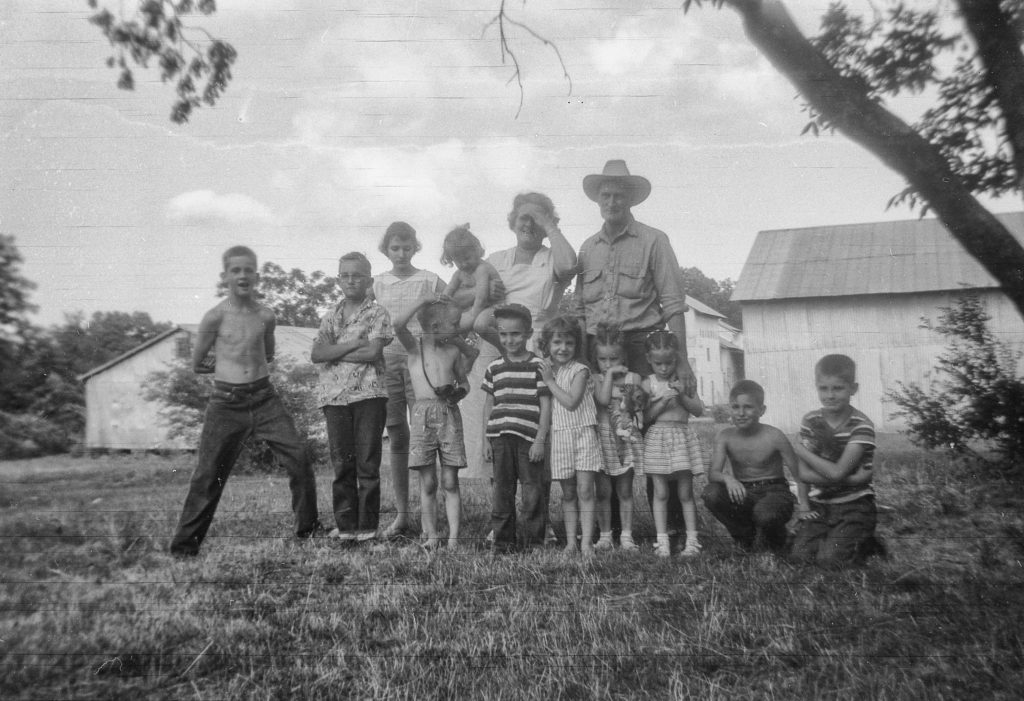
My grandparents with some of their grandkids. My grandmother is holding me.
I was fortunate to have two grandmothers growing up. Today is the birthday of my grandmother called “Gommie” by her grandkids.
Just the thought or mention of her name brings a plethora of emotions and memories. It brings memories of curling up next to her on the sofa whether sitting quietly or being rewarded with a story, lumpy gravy, a trip to her beloved mountains, a visit to her cabin and “Gommie’s Lake,” a place of refuge, a place of safety, a peaceful place.
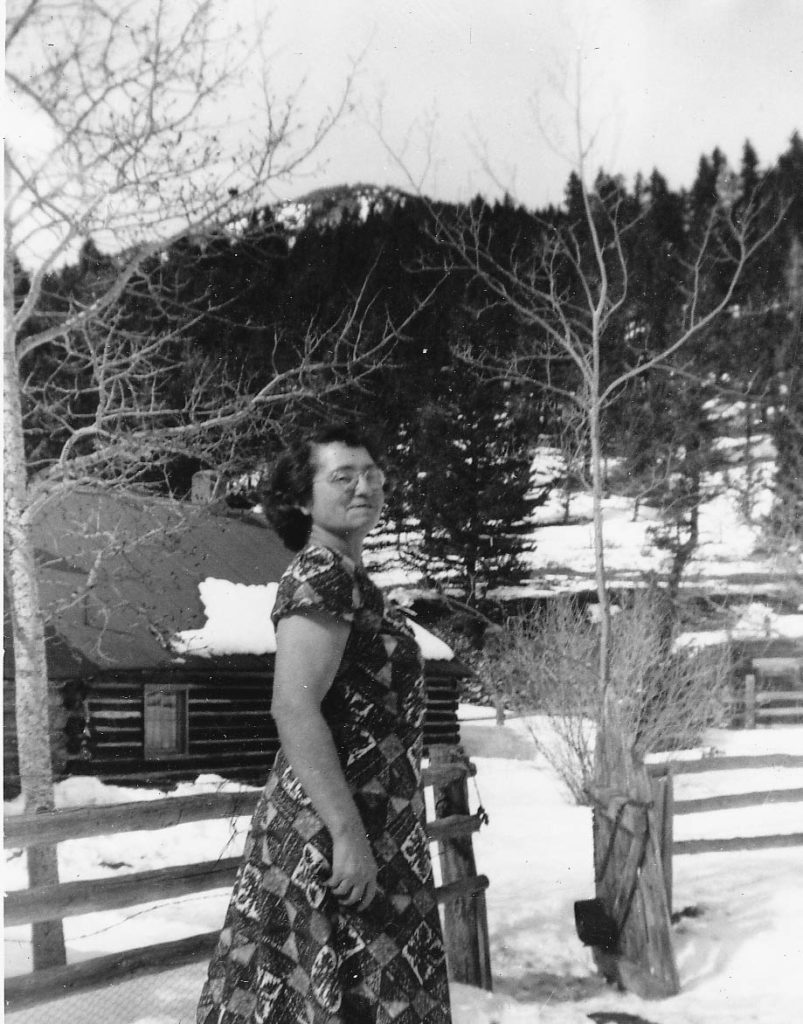
She was the family historian. People of all ages would gravitate to her house. Everyone was accepted into her home. In her younger days, she was a horse wrangler and a horse midwife for her brother on the ranch. She was a lady who could box your ears or dunk a sassy mouthed kid in a bucket of water. She could make the kids walk a fine line or play with them like a kid herself. “Babe,” as she was called by many, was a beloved girl at any age who was endeared to family and lifelong friends. She was a good neighbor and could throw together a meal in no time for whoever showed up at her dinner table.
Gommie & Poppy 1916
Gommie, 1922
When she married my English grandfather, she didn’t know much about cooking. Poppy’s partner, Ernest, taught her to cook. One day she made biscuits. After they had set out for a while, she saw a mouse in the kitchen, picked up a biscuit and threw it. It hit the mouse and killed it.
One time on a trip to Montana, Daddy stopped in Wall, South Dakota in late afternoon. He decided we’d drive on through, so he wanted to call Gommie and tell her we’d be in about 1 a.m. He went to the pay phone but discovered he had no change so made a collect call. Gommie answered. The operator said, “You have a collect call from Mr. Ward.” She said, “I don’t want no damn ford!” and slammed down the phone.
She was like a mama bear to any who dared mess with her kids or grandkids, yet she was a soft squishy teddy bear who offered a snuggly resting place. Her black dancing eyes spoke volumes. They could pierce a proud tongue, and one look could shoot arrows that stopped unacceptable behavior in its tracks. Those same eyes, black and soft, could penetrate the very depths of the soul and warm the coldest of hearts. Gommie did not live by idle words. Before she spoke, she asked herself, “Is it true, is it kind, is it necessary?”
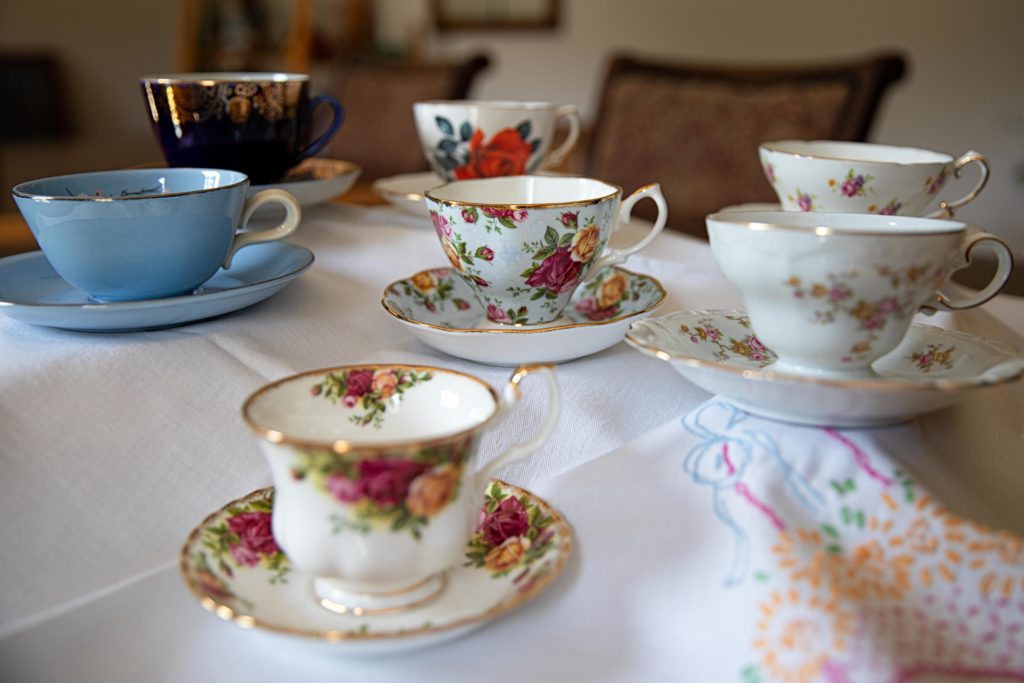
When we visited her place, we had hot tea every day. We got to pick the tea cup of our choice and use as much sugar and cream as we wanted. I was always extra careful not to break any of her fine china. That love of hot tea and the memories that linger are now shared with my own grandchildren.
A poem by C R Gibson, we know as Gommie’s Creed, reflects her character and convictions:
I have wept in the night at my shortness of sight that to others’ needs made me blind.
But I never have yet had a twinge of regret for being a little too kind.
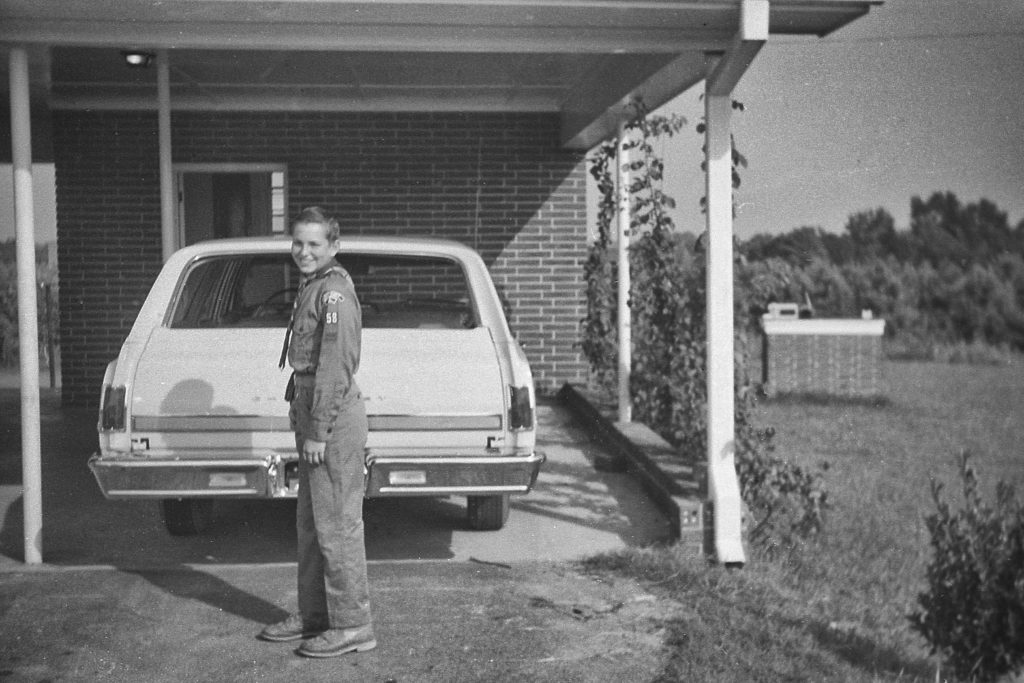
The growth of young pine trees grew to one side and the back of the brick parsonage. That was our playground. The trees were limber enough to use as catapults. We’d pull the top of a tree down, climb aboard and launch. It was a relatively short flight and sometimes ended in a crash landing. The trees weren’t big enough to choke out the undergrowth. Blackberry vines along with other thorn bushes and broom straw grew unrestrained. The lingering heat from summer helped to make the broom straw dry and combustible.
Us kids in front of parsonage
We often made forts out of broom straw and sticks. One day we were out playing, and two of my brothers devised a brilliant plan. They would take turns starting a fire and see which one could let it burn the longest before putting it out. My sister, just two years older than me, and I were with them playing in the growth of trees and brush. One brother lit a match to ignite the broom straw then proceeded to stomp it out. The next one took his turn. He let it burn a little bit longer before stomping it out. The fires burned longer each time as the game continued.
When it was my youngest brother’s turn again, he lit a fire and waited and waited and waited. The fire spread quickly. He stomped and stomped. My other brother and sister started stomping. I was little, and I was barefooted. I just watched. When it was apparent the fire was out of control, they took off running to the house. I was scared to death. I froze in my steps. I could not move. One of brothers came back for me. He grabbed me up under his arm and headed to the house. He was my hero!
By the time I got to the house, Mama already knew what was going on. She got on the phone to call for help. About that time, a neighbor was coming down the road on his tractor. He came to the rescue and started cutting a fire break. Mama said, “You girls go make some cookies.” Mama’s response to anything was to stay busy. I’m sure she wanted to take our minds off the fire. I was scared, and she knew it. She went outside, and my sister and I made cookies. I kept going to the door looking out the window to make sure the fire wasn’t coming any closer.
My hero!
Other neighbors came and helped. I wanted to see what was going on, but at the same time I thought our house would burn down. I just knew the fire would come into the yard, creep up to the house and burn it to ashes. Thanks to our neighbors, it wasn’t long before everything was under control. I rested a bit easier and was thankful for them and for my hero!
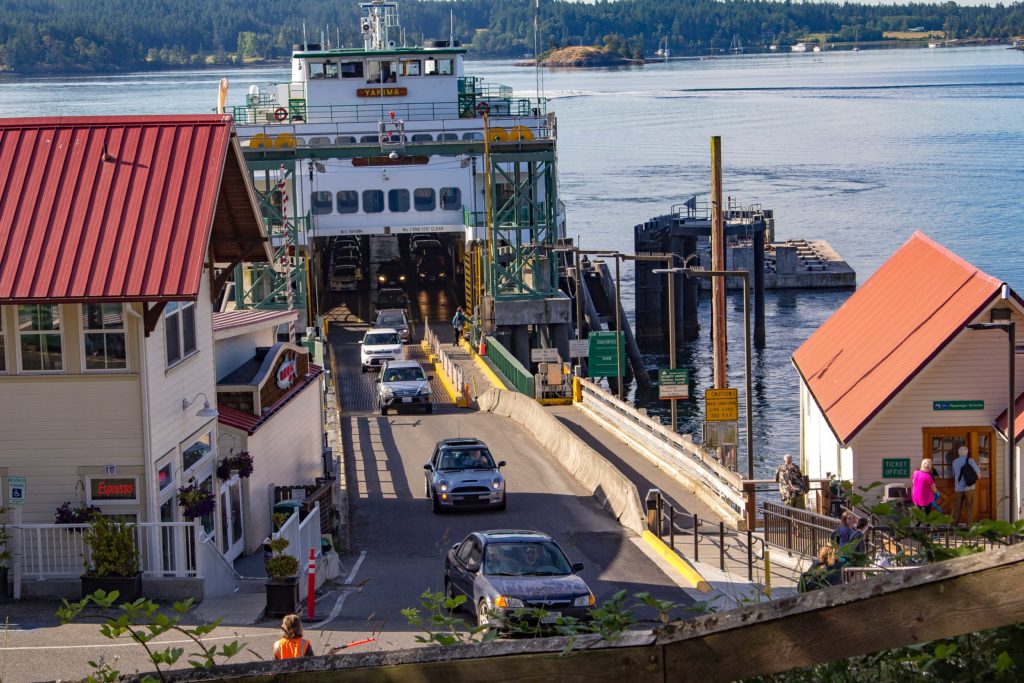
“Please return to your cars for boarding.” At that announcement, folks hurried back to their cars. A dad guided a little girl with one hand as he precariously juggled newly purchased items in his other hand. A mom followed with two little ones, guiding them through the maze of vehicles. Families, shoppers, and sightseers wove in and out of the string of cars. It wasn’t long before the line began to move except for the cars devoid of their passengers who would soon be rushing to make the 8:40 AM crossing. One by one, foot passengers, bicycles and motorized vehicles filled the bowels of the open-ended ferry. A lady ran down the ramp just as it was preparing to lift from the deck. “Can I get on?” A worker unlatched the gate for which the lady was grateful.
One of the smaller ferries in the area
Orcas Island
Car doors slammed like dominos, one after the other, sending a resounding hollow echo through the belly of the ferry. Many of the cars were abandoned again, and passengers made their way to the upper decks. I was no exception. Instead of sitting, I headed out on the open deck at one end of the ferry so I could see the fascinating scenes around me. Looking across the open water, I felt the wind and salty mist on my face. The strong smell of the ocean filled my nostrils. Sea birds ducked their heads under water in search of their next meal. Seagulls squawked and flew closer to the shore. The wake from the ferry rocked small boats as we passed. The mainland grew larger as the island we had left behind got smaller and smaller. I felt as if I had stepped into a different and timeless world. The hands of the clock stood still for just a few moments in time.
Island life is foreign to me. Some people make the commute to and from the mainland every day. If they make the trip twice daily, the short distance across the water can take three to four hours out of their day. As I considered their daily trek, I thought, “Hmmmm. Maybe that’s not so bad.” If they want to get to the other side, they have little choice but to take that daily reprieve just to be still or read or take a stroll as the rest of the world passes them by.
As the ferry neared the mainland, people scrambled to get back to their vehicles. Soon the sound of engines coming to life was heard. Passengers hurried off the ramp going about their business as that moment in time passed, and the clock started ticking once again.
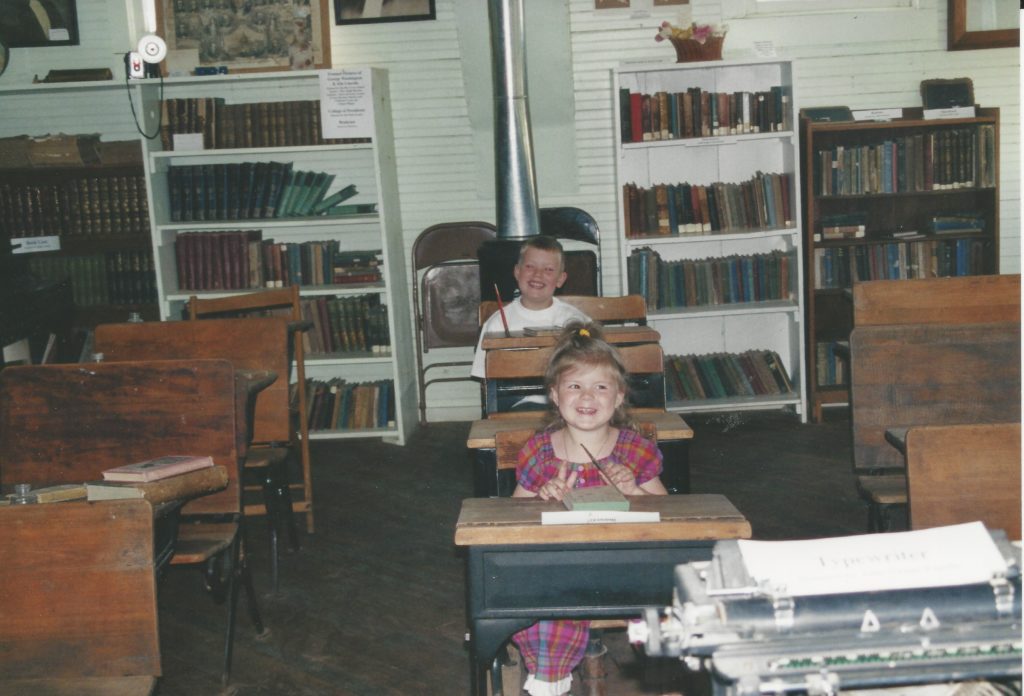
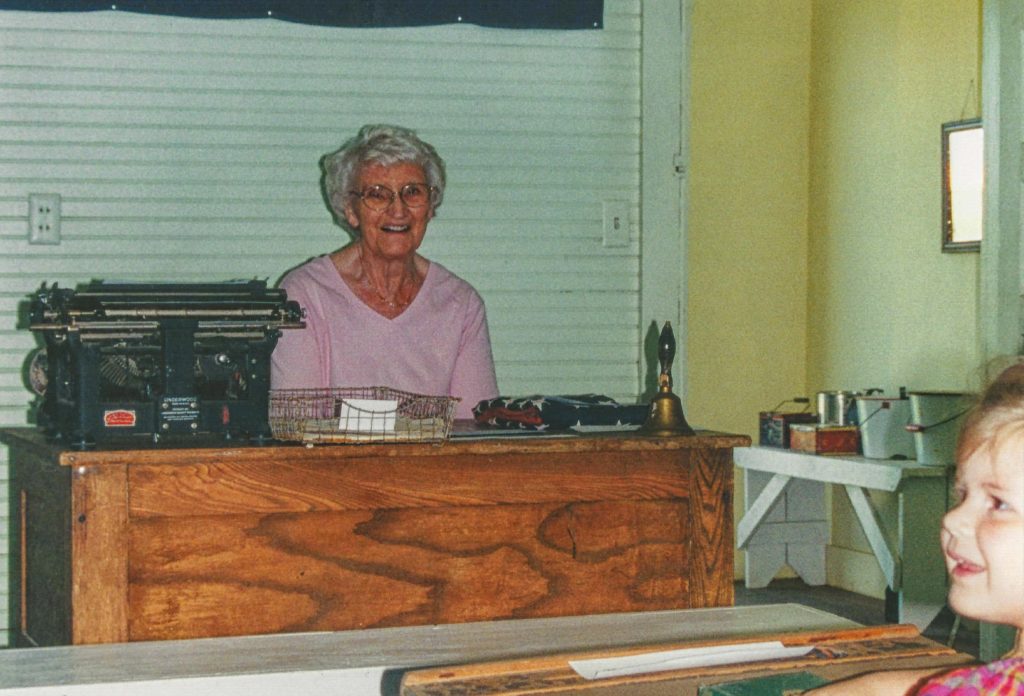
The teacher arose from her chair behind the desk. She had a ruler in hand as she walked toward the board and pointed to a specific location on the map. There were only two students sitting in their desks in the one-room schoolhouse. I watched from the back of the room. I was amazed at the transformation that came over this lady as she stood in front of the room. That lady was my mother, and the students were two of her great grandchildren. When we first stepped into the furnished old schoolhouse beside Garfield County Museum, I told the kids to sit in the desks, and Grandma Buck would be their teacher.
the students
the teacher
Years before, my mother taught in a one-room schoolhouse near Barber on the Montana prairie. She received her teaching certificate shortly out of high school. She had gained some experience teaching while still in high school when she substituted for a teacher, Leona Manning, who was on leave from the Grey Cliff School. Teaching was really nothing new to her. It was in her blood. When she was just a youngster in the first grade, she went home from school every day and taught her little sister everything she had learned that day. Her sister started school the next year but was automatically promoted to the next grade because she already knew everything the second-year students knew.
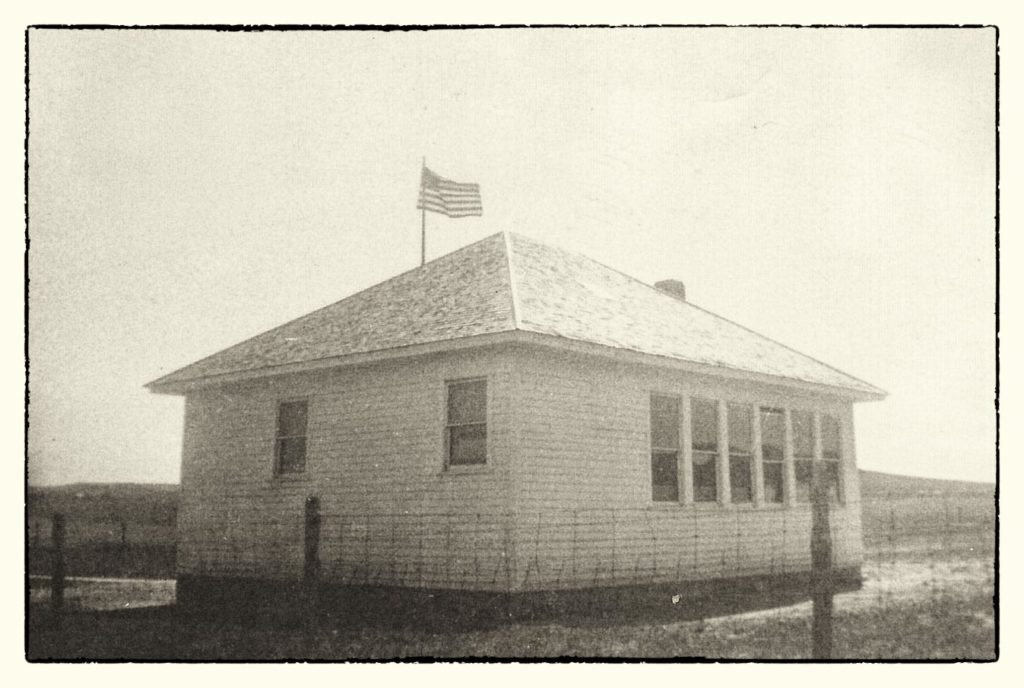
The back of Cavill School
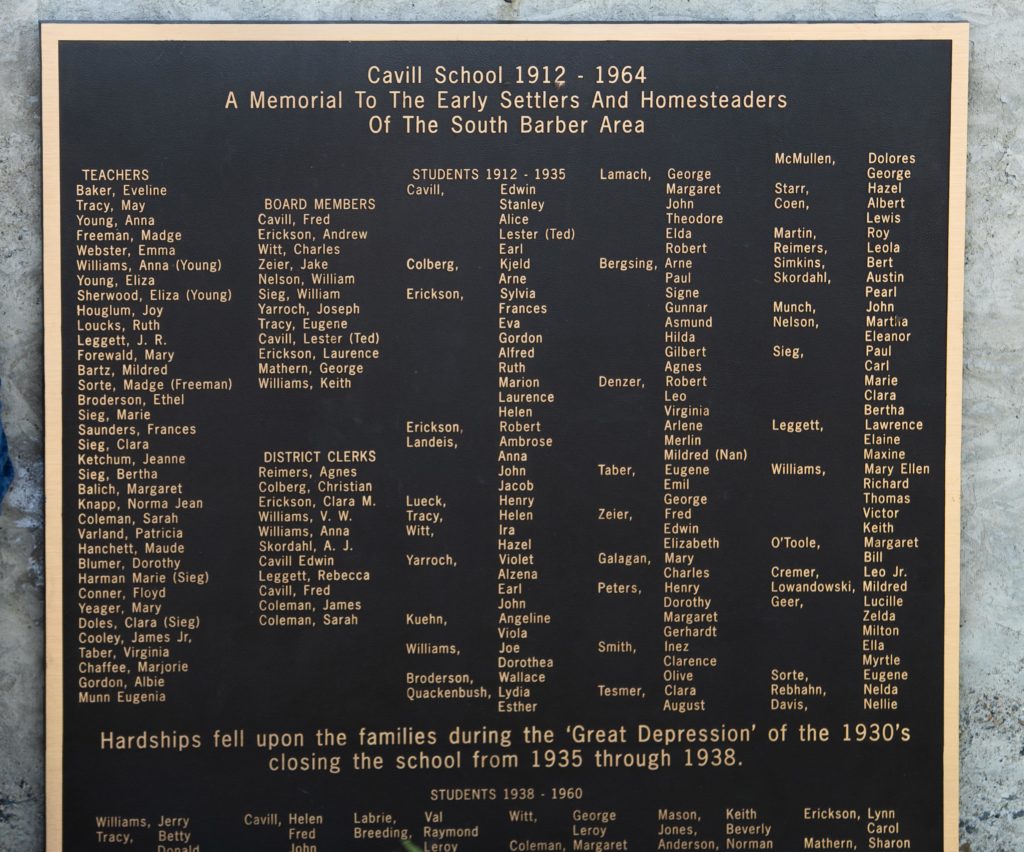
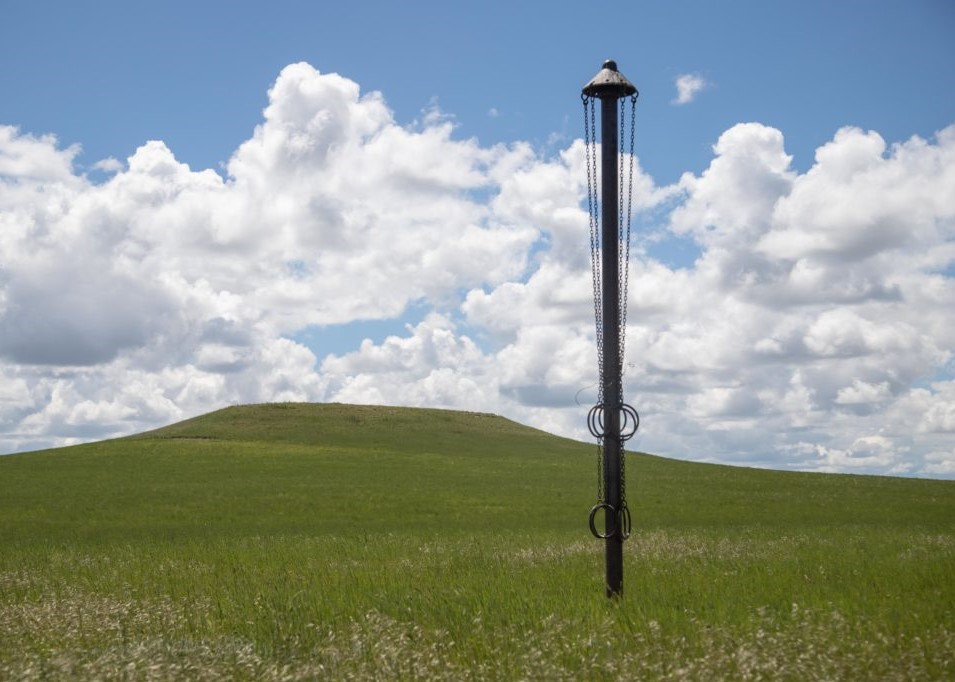
Teaching in a one-room schoolhouse was a bit different though. This pioneer teacher served as custodian, principal, counselor, nurse and athletic director. There were lesson plans to prepare for her 13 students in 7 grades. She was responsible to teach reading, writing, spelling, arithmetic, history, geography, grammar and other academics. The fire had to be started in the stove every morning to have the school warm for the students. If weather permitted, they had recess outside. One piece of playground equipment still stands at the site where Cavill School once stood. I can almost see children laughing and playing around the Giant Stride, running so fast their feet would leave the ground. I remember visiting the Cavill family and Cavill School when I was small. Not long after, the school was torn down. Since then a plaque has been erected to commemorate the teachers and the students. The school was named in honor of the Cavill family who were the first settlers in the community. Fred Cavill was on the school board and was responsible for acquiring the teacher. Mama lived in the three-room teacherage beside the schoolhouse. On weekends she would stay with the Cavills or visit the Sherods.
Giant Stride
When my parents married, my mother had to give up her position at Cavill School. She continued her teaching profession even though it was just for one little girl who lived in the mountains. It wasn’t long before she taught her own children when they came of school age. She continued to receive pay as teacher of the mountain school.
My mother beside Cavill School; the seven stall horse barn is behind.
Seeing my mother in front of the classroom was like stepping back in time. I saw my mother transform into a young schoolteacher. Her eyes lit up and twinkled as her countenance changed. It was evident that she had a love for teaching and learning. Sunlight fell on my mother’s face as the door of the little schoolhouse closed behind us. Was that a twinkle that lingered in her eyes? Though the encounter with the young schoolteacher had been brief, it seemed that my mother walked with a lighter step.