We were sad to say goodbye to Aunt Betty but were anxious to be on the road again. It wasn’t long before we were seeing the vineyards of Napa Valley. Rows of lush green grape vines seemed to stretch for miles over the California hills. It was a stark contrast to adjoining uncultivated land that was harsh and dry. We drove through the famous valley and toured one of the wineries. It was fascinating to see the fermenting process and barrels of wine aging in the cellar.
A short distance beyond, we merged onto Scenic Highway 101 that runs for 1540 miles along the Pacific Coast from the Golden Gate to the tip of Washington. The highway passes through the world’s tallest preserves of old growth redwood trees, some of which reach 300-350 feet high. They are unlike the massive thick-trunked redwoods in Sequoia and Yosemite National Parks in the Sierra Nevada Mountains. There are 31 redwood state and national parks. There are even three live redwoods you can drive through.
Driving through Redwood National Park is like going through an enchanted realm. The road winds through clusters of redwood groves. Giants that rise straight and tall are kings in this Redwood kingdom. They make cars look like toys and people look like ants. The redwoods fight for survival, drawing life from the fallen. In one of the Redwood groves, we saw twelve trees growing out of one downed tree.
Coastal Redwood trees
We hiked one of the trails at The Trees of Mystery in Klamath and saw the Cathedral Tree which is made up of nine trees growing out of one with their tall spires that reach to the sky, Elephant Tree and various other sites. When we returned to the museum and gift shop located at the parking area, we heard someone say “hello” to the girl with the brown flannel shirt. That was me! I looked around and didn’t see anyone it could be. Well, no one except Paul Bunyan, and 50-foot statues don’t talk – or do they? Apparently, there was someone inside Paul Bunyan. Babe the Blue Ox stood next to giant lumberjack, but he didn’t say a word.
The coast of Northern California is gorgeous. Charming coastal towns invite travelers to explore their shops and dine in view of the Pacific Ocean. Crescent City is one of the towns where we stopped. Effects from the tsunami of 1964 could still be seen.
Further north high rocky cliffs jut out over the ocean. There is really no way to really describe the jagged shoreline. Waves crashed against the cliff walls and echoed like dominoes tumbling along the beach.
My mother was a fabricholic. Her addition was so severe, my father hesitated to encourage her in even the smallest manner. He would, on occasion, take her for a quick fix and would sit and watch people as he sat impatiently by the door of the fabric store. Mama walked down every row and satisfied her compulsion to touch every bolt of fabric. I think my father felt a bit guilty for being an enabler of her addition, but it was for his welfare to indulge her a bit.
At least once a year, in July, I gave my mother a birthday gift certificate redeemable for lunch and a trip to the fabric store. The closer we got to the store, the more excited she was. Even before she walked into the store, she already had her eye set on something. She was free to feel as much fabric as she wanted. Every piece of material she saw was analyzed with a touch of her fingers. Every color imaginable drew her gaze as she created quilts in her mind. Her selections were made, and she was happy.
Daddy got the day off all by himself. He could make his split pea soup green muffins for lunch if he liked and climb on the roof with no one to scold him. I thought it was little sacrifice for me to give him a reprieve. Besides, it wasn’t so bad following behind Mama down the rows. I could reach out both arms and feel the fabric on both sides all the way down the row.
Hmmm.. I’m starting to twitch and I think I’m getting an itch…….
Though California has a lot of people, there are still large portions of untamed wilderness and treasures of nature worth more than gold. From the golden sands of the desert to the fields of golden poppies, to golden sunsets over the Pacific Ocean, to the Golden Gate Bridge, to the abandoned ghost towns of the gold rush era, the state is full of wonder.
Our car did require a bit of maintenance along the way. It was a minor expense but that’s why we had our emergency fund. It was a short drive from Santa Monica to Santa Barbara which was our home for the next few days. Our visit there was a good one. We had good food and it was always fun to see Aunt Ellen. Though we didn’t get to see her often, we heard stories of her almost weekly. We got to spend some time with Indian Charlie, aka Willie, aka Billy, and his family. We visited them in their home and shared a picnic on the beach for Aunt Ellen’s birthday on July 4. That called for us going into the Pacific. It was very cold, and the seaweed wrapped around our legs like a giant sea monster grabbing us trying to pull us under the waves. That was enough for us to remain on the beach lined with seaweed. We also visited family of our current mayor who was living in the area. Downtown was just a short walk, so we went into town, visited Aunt Ellen, took in a movie and other sights.
Another cousin was next along our path for a one-night visit before we headed into the Sierra Nevada Mountains and to Martinez where we stayed with Aunt Betty. While there, we made an overnight trip into San Francisco and stayed with a former student of my favorite teacher. He worked nights and slept during the day. With a guide of places for us to visit, we crammed as much into the day as we could. Morrison’s Planetarium, Japanese Tea Gardens, Botanical Gardens, Fisherman’s Wharf, Golden Gate Bridge and Lombard Street, the curviest street in San Francisco, were a few of our destinations. Just a note – cable cars have no respect for vehicles or persons. Sister tried to outrun one. It’s a wonder we even survived. Our host said it wasn’t safe for us to take in China Town by ourselves, so he was our guide. We ate at an authentic Chinese Restaurant, visited little shops and saw lots of interesting sights. San Francisco was probably the most diverse melting pot in the state. We saw people of every kind, color, religion, and race.
Golden Gate Bridge, San Francisco
We also made a trip into Yosemite National Park and to see the Giant Sequoias. Yosemite is in bear country. All through our campground were signs. We were very cautious about not leaving even a small morsel of food in our camp site. The park was absolutely breathtaking. Just seeing Half Dome standing tall and seemingly impregnable is worth the trip. We took various hikes in the park. One hike was to Mirror Lake. We packed a lunch and hiked up the trail. As we got closer to the lake, I noticed reflections through the trees. When we reached the end of the trail, it was evident what caused the reflections – cars. There was a parking lot! We could have driven there. We needed the exercise anyway. Our picnic lunch was very tasty after the hike and the view was wonderful. After a semi-dip in the lake, we headed back to the campground. We camped there for two nights and headed back to Martinez for a couple more days before heading off again, stopping to experience the Giant Sequoias. Unless you stand under one of them, it’s hard to imagine just how big they are. I think majestic is the best way to describe these ancient giants.
That’s not the end of this tale. More to follow……….
It wasn’t hard to drive away from the Grand Canyon. We had seen so many fascinating less traveled places, we weren’t willing to fight the crowd to see the canyon. We did stop and take one picture. Now don’t be alarmed. I certainly would never belittle one of the Seven Natural Wonders of the World. After all, there aren’t many places you go and see signs that say, “Mountain Lion Crossing.” That has to count for something! The canyon is 277 miles long and averages 10 miles wide. It is definitely a wonder! I’ve been back to the Grand Canyon on other occasions. It is a magnificent canyon full of mystery and color. Every crevasse and fold of the cliff walls hold hidden secrets and are full of intrigue and adventure. That area of the country – Northern Arizona and Southern Utah with their red rimmed cliffs and canyons – is a “must see.”
The Grand Canyon
We made camp somewhere in the dark that seemed to come earlier that night. The next morning, the heat pounded down. There was no relief without clouds in the sky to block the sun’s rays. It was a hot and dusty non-eventful day headed west. We arrived at the campground in Needles, California, just over the state line. As we pulled into our camp site, we both saw blue water. The first thing we did was jump in the pool. Ahhh – what a relief. That was our first opportunity for that! Our dry flaky skin cried out, “Thank you! Thank you!” It was time to get another bottle or two of lotion! We wondered if our skin would ever be moisturized again.
One thing that amazed me in our travels was not just the changing scenery, but also the changing building materials. Adobe homes with red Spanish Tile roofs were common in the desert areas. Spacious sprawling one level adobe homes with stone floors looked inviting to offer a cool place to enter on a hot day. The yards were landscaped with plants suitable for that climate – Yucca, various cacti, succulents, drought tolerant grasses and flowers and stones, lots of stones. Those homes were gorgeous and perfectly suited for the climate and landscape.
There was more desert in front of us as we turned the car toward the Pacific Coast. We made a quick stop and took a short hike in Joshua Tree National Park. If I had expected to see trees like in the Southeast, I would have been deeply disappointed. The trees looked like something in a Dr. Seuss tale. They were scrubby and misshaped and looked like they could sure use a drink.
As we drove further west, the traffic increased. Soon there was a mass of cars filled with drivers speeding and swerving like madmen. I began to feel claustrophobic as cars surrounded us at top speeds and pushed us forward. The closer we got to Los Angeles, the more people we saw. It seemed there were as many people on the roads as there were the grains of sand we had seen in the desert. I was about to opt for the desert.
Santa Monica was our first stop to visit family. We stayed with cousins Anna and Kitty and their cat that sat in their plates on the dining room table and ate off the counter in the kitchen. They instructed us in the “proper” way to make a bed. While there, we took in some of the usual tourist highlights. We visited Universal Studios. When we went in the entrance to the studios, we were greeted by Jaws hanging by the gate. His mouth was opened wide with sharp teeth reflecting the sun. The movie had been released days before. It was interesting to see movie sets and hear how many of the special effects are created. We went to Grauman’s Chinese Theater on the historic Hollywood Walk of Fame and saw handprints and footprints of some of the movie stars. There were even a few horse hoof imprints.
Cousins
More cousins
Another cousin took us sailing on the Pacific. It was fun, but I didn’t wear that shade of green very well! It was definitely different than sailing on Lake Hartwell. One of my favorite tourist stops was the LaBrea Tar Pits. It was like stepping into the Ice Age – without the ice. There were displays of mammoths trapped in the tar and accounts of expeditions that led to the discovery. Bubbling tar spat and sputtered as it rose to the top of the ground. That took me back to when I was a kid popping tar bubbles with my bare feet on the hot road. We could have spent more time there, but our journey awaited.
From New Mexico into Arizona we visited dwellings in the cliffs of natives who survived harsh conditions in this dry western beautiful land. We still had more places to see. Our desert trek continued as we turned northeast from Flagstaff.
One site on our list of places to visit was Meteor Crater. It was created during the time the land was inhabited by wooly mammoths and giant ground sloths. A meteor hit the earth traveling at approximately 29,000 mph, the impact similar to a nuclear bomb blast. We grew up hearing stories of our Great Grandparents’ trek from New Mexico to Montana in 1895-96. Some of the roads we traveled were along the same route. When the family passed near Meteor Crater in 1895, Uncle Ed and Uncle Dolph took a side road to see the sight. So did we! It was quite impressive.
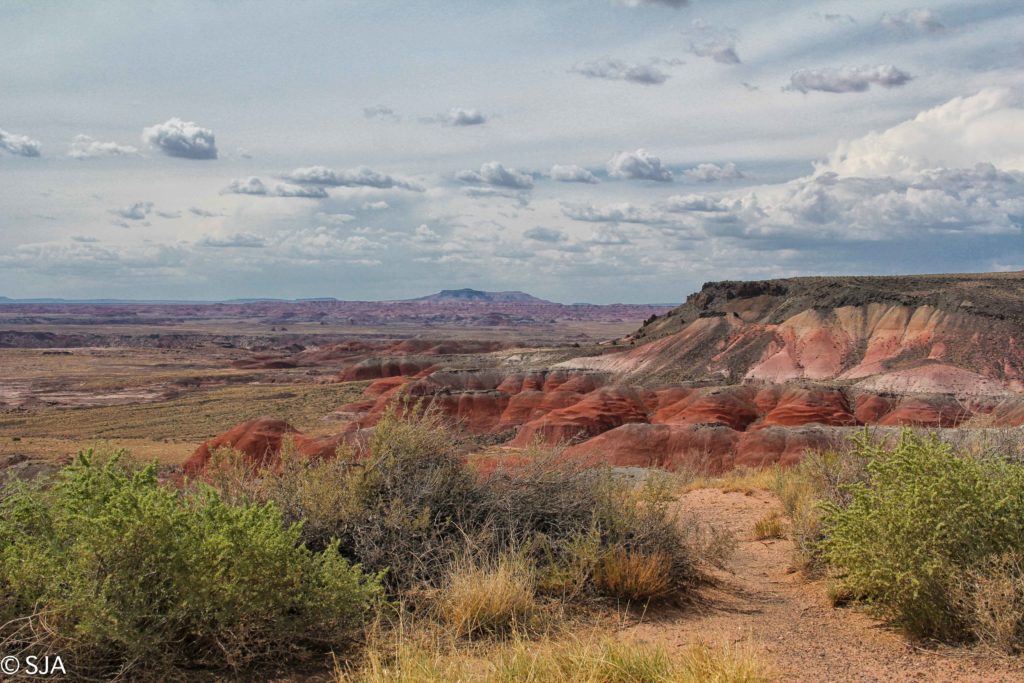
As we drove further, desert rose to small hills. We entered the realm of ancient trees turned to stone, the Petrified Forest. A series of events made conditions right to create stone from wood. Fallen trees and branches were buried by flooded river sediments and blanketed with volcanic ash. Trees went through the process of petrification, wood turning to stone. Some of the petrified trees are colorful and contain various crystals of a myriad of colors, showing off the grain of the wood. I can’t even imagine how all the forces of nature came together to form such a work of art. Adjoining the Petrified Forest is the Painted Desert. The various hues and colors stretch for miles as mounds of soft pastel shades, and formations of colorful strata seems to erupt from the barren ground. These preserved areas were favorites of my mother, second only to the Badlands, which she called “God’s Cathedral.”
Petrified Forest
Painted Desert
We rode further into another unique landscape like we had not seen before – Canyon deChelly National Monument. The canyons were cut from streams flowing from the Chuska Mountains. What a fascinating place! Steep red sandstone cliffs stood as regal sentries on these Navajo tribal lands. The towering red walls seemed to form a barrier of protection for the Navajo families who still inhabit their tribal home. Canyon walls that protect the dwellings in the cliffs looked like freshly polished red cedar, exposing every grain of the rich red tones. The ruins from the Native Americans who lived here continue to be preserved. On the canyon floor surrounded by the cliffs was a hogan, a traditional dwelling of the Navajo people. That piqued my interest. The hogan was round and covered with red mud. It traditionally opens to the east to get the morning sun and to receive good blessings. The canyon is one of the longest continuously inhabited landscapes in North America.
Spruce House, Mesa Verde National Park
We entered New Mexico again and drove north through the Navajo Nation into Southwest Colorado to Mesa Verde National Park. The park was established in 1906 to preserve the heritage of the ancestral Pueblo people who lived in the area for over seven hundred years. There are nearly five thousand archaeological sites protected in the park, including at least six hundred cliff dwellings. Theses ancients’ homes are some of the best preserved in the United States. Just standing there looking high in the cliffs at the homes of these ancient Cliff Dwellers brought a sense of awe. I tried to imagine them descending ladders through the roofs to their homes. Pueblo women laid vegetables out to dry in the sun while some ground corn into meal. They harvested wild plants to add to their diet that included squash, maize, beans and wild game. The women also wove baskets and made pottery.
Sleeping Ute Mountain
The view from Mesa Verde was spectacular in every direction. In the distance the Sleeping Ute Mountain rested lazily seemingly unconcerned that the ancient people had gone. We made our way to Four-Corners which is the quadripoint where Arizona, Colorado, New Mexico and Utah meet. A dirt devil blew across the desert kicking up dust and debris. We enjoyed the performance as the miniature tornado twirled and danced with the desert grasses.
By the time we reached the Grand Canyon, we were hot and tired. The roads and canyon were infested with tourists. We could take no more! We took a picture and drove on, skirting around travelers, dodging cars and finally breathing a sigh of relief as we left the colorful canyon and millions of people behind.
I thought I was alone in my quirk of ordering tomato juice at least once per flight. When I mentioned it to my daughter, she got a funny look and said my son-in-law does the same thing. That piqued my curiosity. There had to be an explanation. Why else would someone order tomato juice in the sky but not on the ground? Howbeit, when I travel on the ground for long distances, I sometimes will get a small can or glass of tomato juice at least once. If I buy juice at home, I never drink it all because it just doesn’t taste the same.
After asking Google about this strange compelling urge, I discovered a few things. It turns out that science is involved. Scientists say that the altitude and the high noise level both have an effect on our taste buds. At 30,000 feet, the juice appears more acidic and has a mineralic taste. It’s refreshing.
So what will you order when the flight attendant rolls the drink cart down the aisle scraping your elbow? I’ll have tomato juice please with two ice cubes – just enough to cool it.
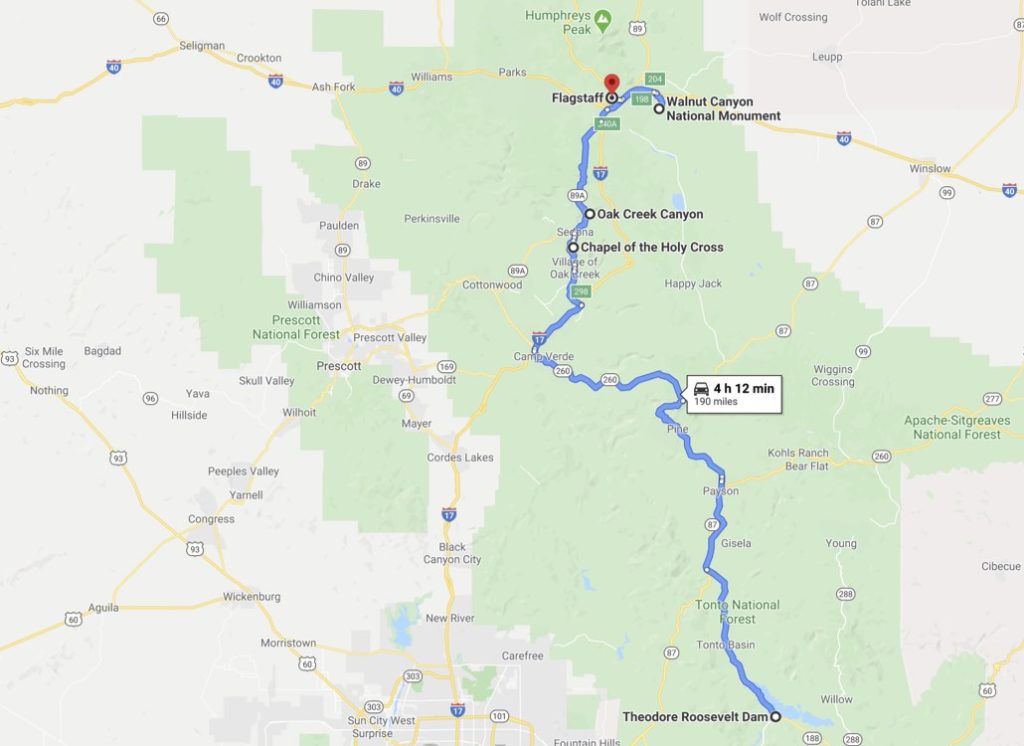
We caught a last glimpse of the blue waters of Theodore Roosevelt Lake in our rear-view mirror as we continued our drive through the desert. Our road took us north to the KOA campground in Camp Verde, Arizona. That was one barren place, no trees, just scrubby vegetation at the edge of the campground. We found our tent site, which was just like all of them, unloaded the camp gear and attempted to set up our tent. That was useless! The ground was as hard as cement. We pounded a tent peg partway into the ground but not deep enough to hold. More than one tent peg was bent at the attempt. The ground was just too stubborn. We folded the tent and packed it away. As had become our camp routine, after we set up the tent (or in this case didn’t), we cooked our supper on the Coleman stove on the picnic table. One good thing about the KOA campgrounds – they had showers and most had laundry facilities. After a shower to wash off the day, we crawled into the car to sleep for the night.
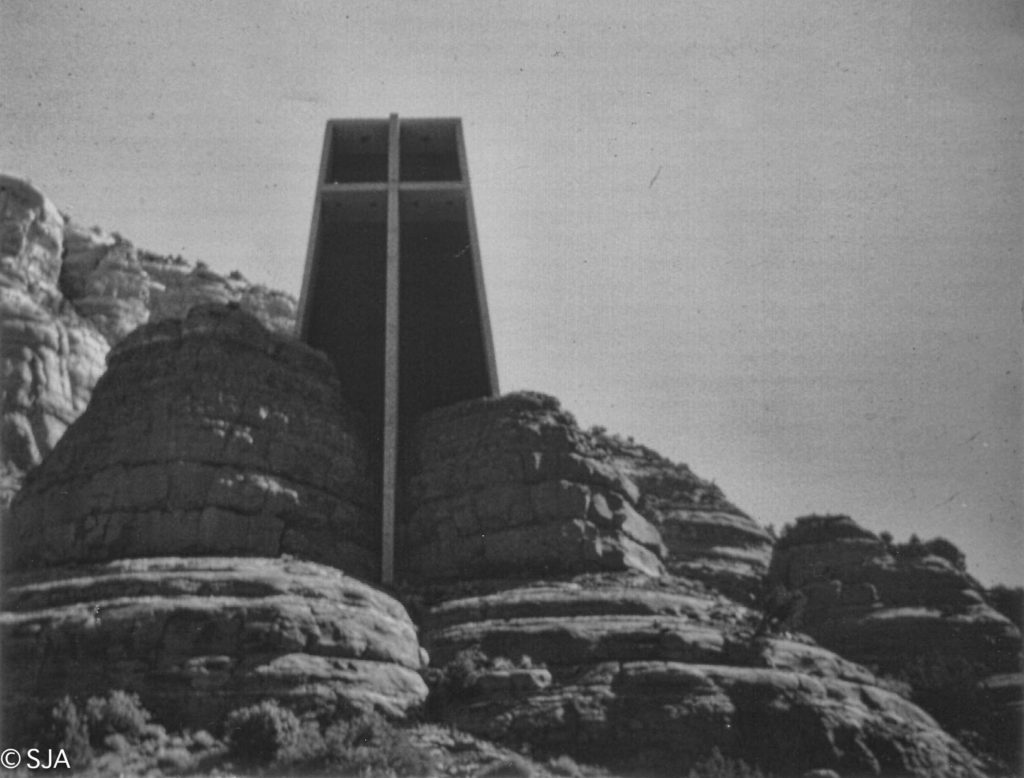
I was glad for morning to come. Sleeping stretched out on the ground would have been more comfortable than being folded up like an accordion in the cramped back seat. After fixing some breakfast we were off to spend the day exploring parts of Arizona. Driving past cacti and desert grasses, we saw red cliffs rise out of the wilderness. The desert town of Sedona, Arizona is surrounded by red rock buttes and pine forests. There in the middle of the red buttes and cliffs above Sedona stood a cross framed by walls around a window of glass. Chapel of the Holy Cross served as a beacon and beckoned travelers to enter the refuge for a moment of spiritual reflection. It offered a cool, quiet, peaceful resting place.
Chapel of the Holy Cross
Just beyond Sedona is Oak Creek Canyon, a smaller cousin of the Grand Canyon. The twelve-mile-long canyon is a river gorge cut into the Colorado Plateau in the Coconino National Forest. It is a popular tourist destination that offers hiking trails, a swimming hole and fishing. We hiked into the canyon to enjoy the scenery and a bit of the rich history of the area.
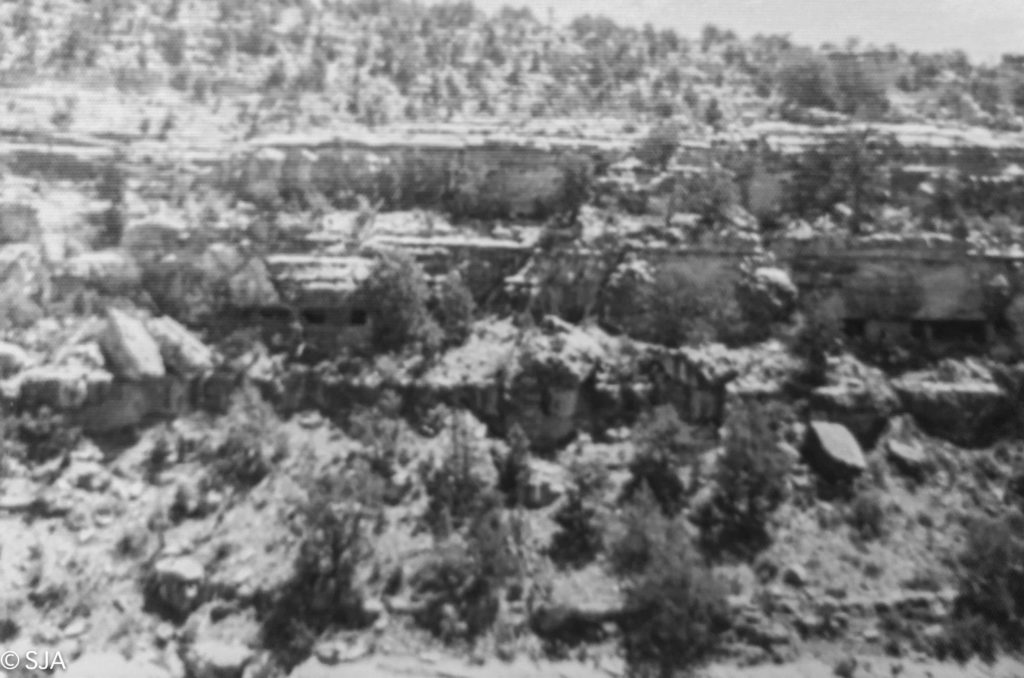
Further up the road near Flagstaff is Walnut Canyon National Monument. This canyon was once home to the Sinagua, an ancient people who possibly came from the Mogollon culture. Sinagua means “without water” in Spanish, acknowledging that they were able to live in this arid region. When the Sinagua left the area, over 80 cliff dwellings were abandoned. Being able to walk down the trail and see into their dwellings gave us a glimpse into their lives. We also received a greater appreciation for the people who survived this rugged place and harsh conditions to live in the canyon. The Sinagua Indians were able to grow maize, beans and squash as well as harvest plants and animals from the land and streams.
I know the picture’s blurry – it’s old – but you can see some of the dwellings in the cliffs of Walnut Canyon
Leaving behind remnants of the past, we drove on to Flagstaff, ready for a good night’s sleep. We set up camp, had our supper, and crawled into our sleeping bags. As sleep came, there was a deep satisfaction of the history we had shared and the unique beauty we had seen. What would tomorrow bring? Each day had been an adventure and there was more to come.
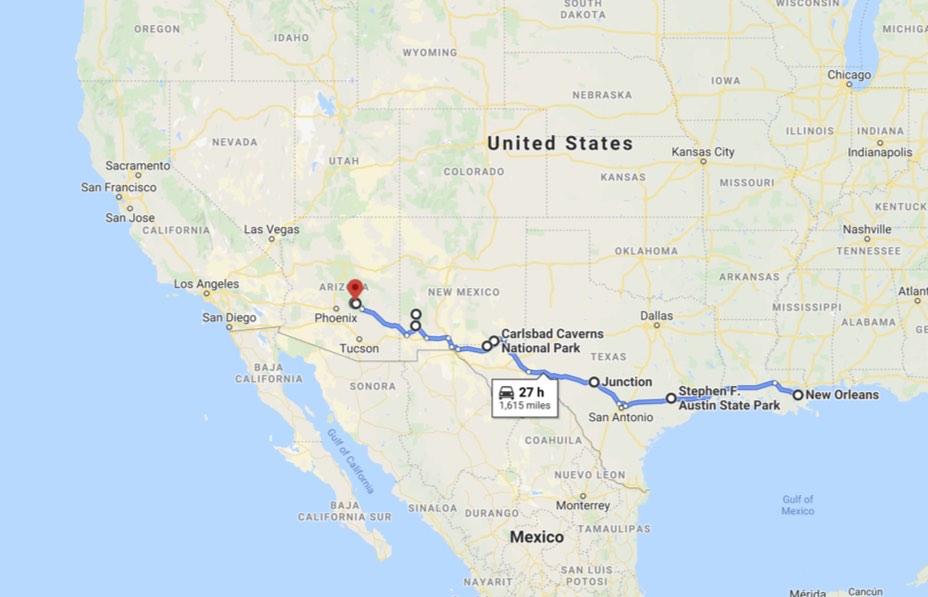
Our first campsite in Texas was in Stephen Austin State Park. Some Hispanic families camped nearby. We gathered up enough players for a ball game. It’s a good thing we took our ball and gloves, huh? Later, we pulled out the guitar and sang around the fire. In the night, we were awakened to a rustling and scraping noise. We flashed our lights through the tent flap. There on the picnic table was a raccoon. We caught him in the act. Spaghetti sauce was on his mouth and his long-nailed claws held a handful of stringy spaghetti. He had popped the lid to the Tupperware bowl and helped himself. No leftovers tomorrow night! We also saw an armadillo, the first I’d ever seen, waddling by the edge of our campsite.
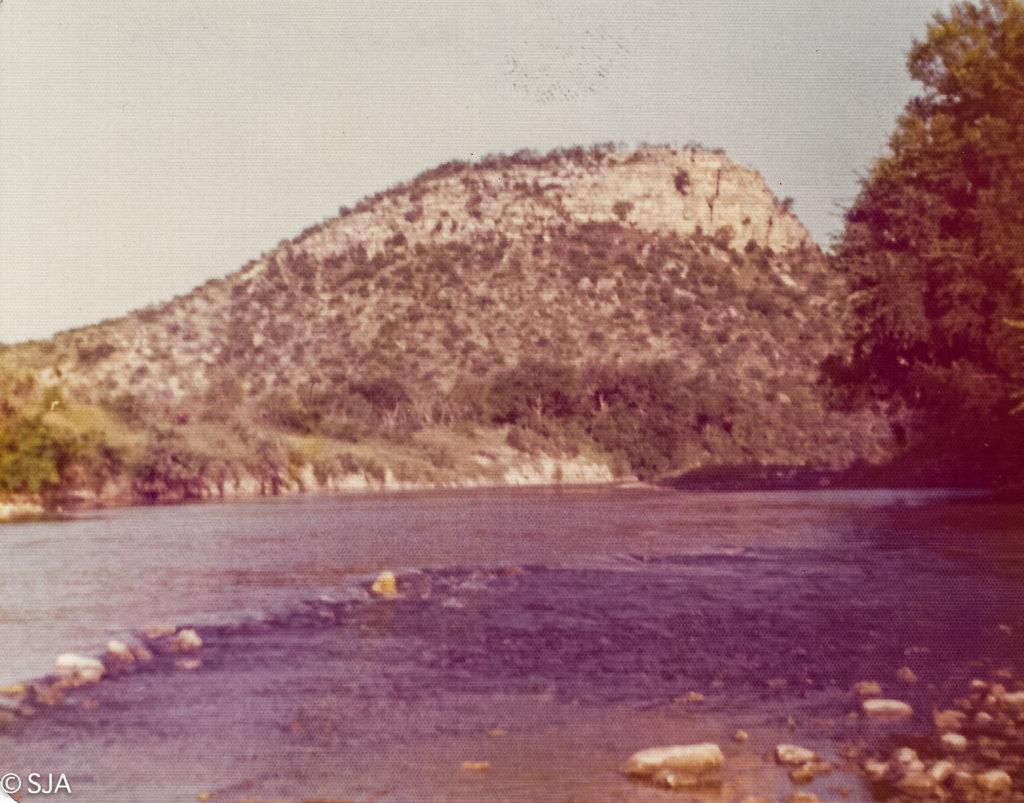
Junction, Texas campsite
The drive through the Texas’ arid, virtually treeless landscape was hot and dusty, and we were tired and dirty. We camped at Junction then made our way to Carlsbad, New Mexico. Hidden in the depths of the Guadalupe Mountains below the Chihuahun Desert along the Texas/New Mexico border are Carlsbad Caverns, the most famous of the 119 caves in the park. Below the surface are a series of 83 individual caves and a maze of stalactites and stalagmites. In the Big Room, at 750 feet, is the Underground Lunchroom built I 1928, two years before Carlsbad Caverns became a National Park. A new room, named Halloween Hall, was discovered in 2013 and was full of bat bones.
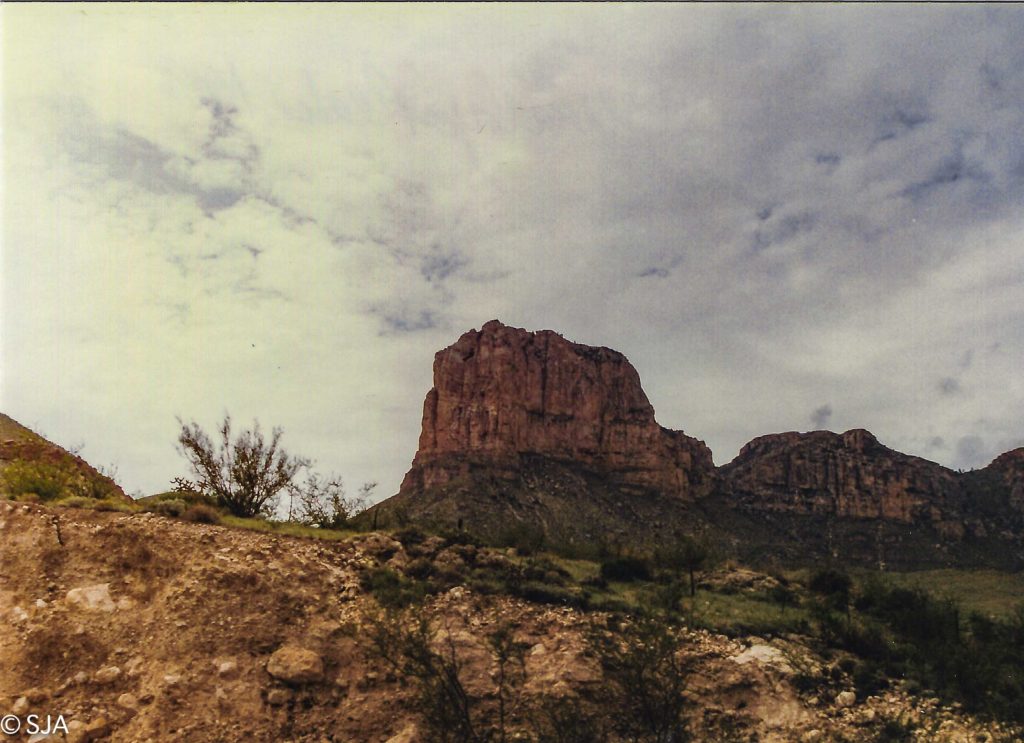
Guadalupe Mountains
We left the caverns and made a stop at Guadalupe Mountains National Park. We took a short hike up one of the trails and decided not to venture too far because the Park Ranger and all the posted signs gave scary warnings about all the rattlesnakes in that area. The Ranger said repeatedly, “This is rattlesnake country.” We imagined hearing rattles with every step. Besides, we wanted to make it to our campground in El Paso, Texas in a timely manner, so we drove on. After a hot, dusty day, and getting camp set up, we decided to just open a can of chili and heat it for our supper. We had to laugh when we read the side of the can, “Made in Augusta, Georgia.”
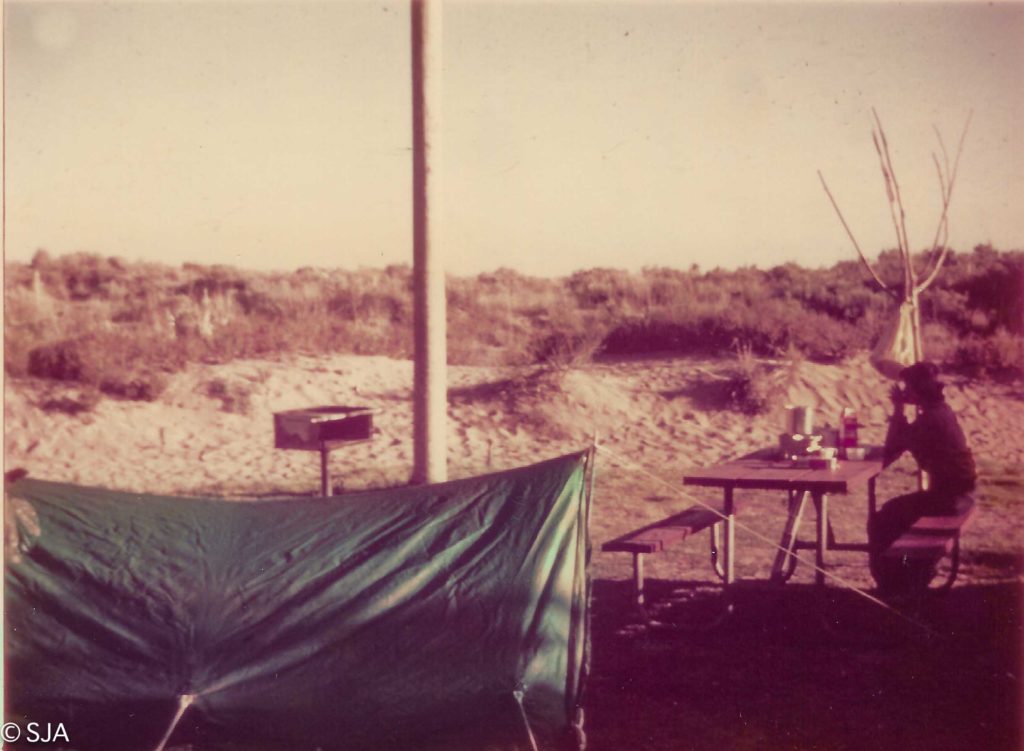
El Paso, Texas KOA, sister sitting at table eating chili from Augusta, GA
The landscape changed again as we neared Silver City, New Mexico and the Mimbres Mountains with their rugged unique beauty. We stayed in the KOA Campground at Silver City for two nights. This campground was one of only two places where we were unable to get our tent staked. Well, actually, we got the tent set up, but the wind was so fierce, it blew it down repeatedly. We did manage to bend a couple of the metal stakes. One of the campers who used the KOA as a summer home while mining for gems in the area saw our dilemma and offered us a place to stay. We accepted and didn’t have to worry about getting sand out of our teeth or blowing away.
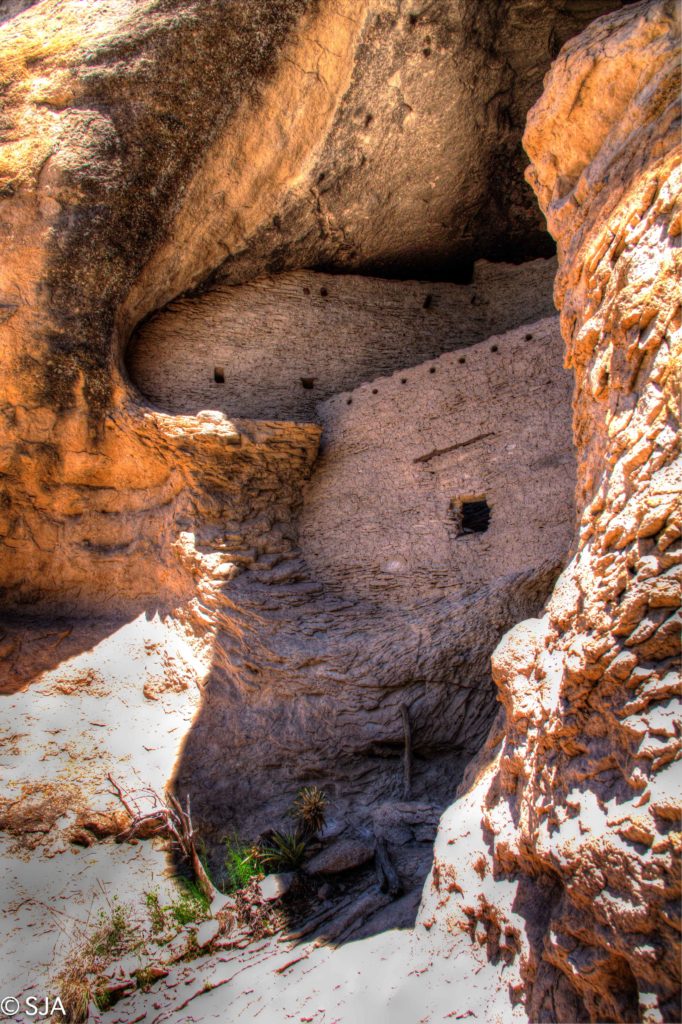
Since we arrived in Silver City on the weekend, the library and County offices were closed. Our intention was to do some family research. At that time, our knowledge was somewhat limited as to specific areas in which our great grandparents had lived. We did a bit of exploring and made a trip to the Gila Cliff Dwellings that rise above the Gila River. It was fascinating to see how the Mogollon people lived and built their homes in the cliffs. We saw remnants of their life, such as the areas in which they ground grain for their food and fragments of pottery they made and used every day. The view was spectacular from their perch on the side of the cliffs.
Gila Cliff Dwellings
As we left Silver City, our host gave us a hand drawn map with suggested stops off the “tourist trap” route. Because of that, we drove through Apache National Forest. I didn’t see many trees in the forest except for a few that were scrubby and twisted. We stopped at Tonto National Monument, at the edge of the Sonoran Desert in Arizona, and explored the two Salado Indian cliff dwellings. The desert country was filled with large Saguaro cacti and desert vegetation. The unexpected view from that vantage point looked across Roosevelt Lake with mountains in the background and a saddle shaped ridge lined with cacti in the foreground.
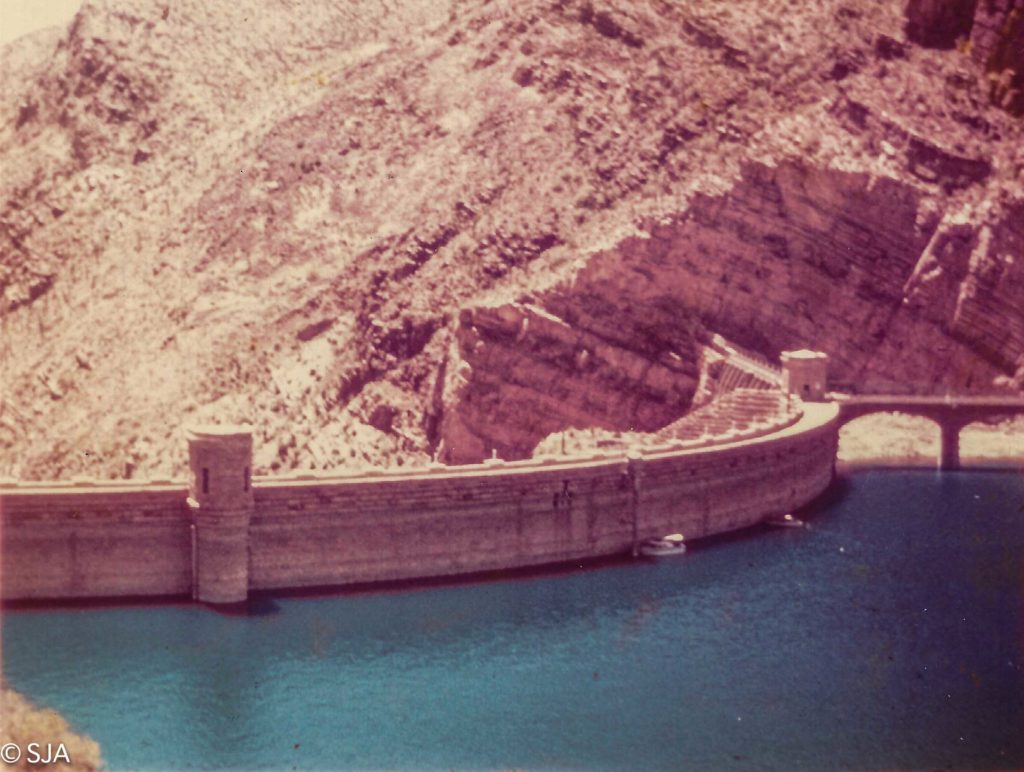
Roosevelt Dam
As we drove on from there, we went around a curve and there below us, Roosevelt Dam came into view. A note from history gives this description, “With a huge American flag draped over its parapets, President Theodore Roosevelt pressed a button that released a jet of water down the canyon from America’s newest Progressive-era technological marvel. The date was March 18, 1911, and a thousand onlookers witnessed this historic event, the likes of which the American West, or perhaps America at large, had never seen—the dedication of the world’s highest, stone masonry, gravity dam.” The whole scene was gorgeous with piercing blue Roosevelt Lake as the backdrop. As we drove further, we found the tourists and locals enjoying the lake as well with boating, skiing, and picnicking.
As we continued our westward adventure taking our dry flaky skin with us, the lake got smaller in the rear-view mirror. The first order of business was to buy some lotion at our next stop.
The beat-up old car was packed to the gills. The tent, camping gear, cooler filled with food, hiking boots, guitar, frisbee, ball and gloves were loaded, among other things. Our backpacks doubled as suitcases. We said our goodbyes. As we pulled out of the driveway on June 14, a wave of reserved anticipation washed over me. I didn’t think to imagine what washed over our mom at the same time.
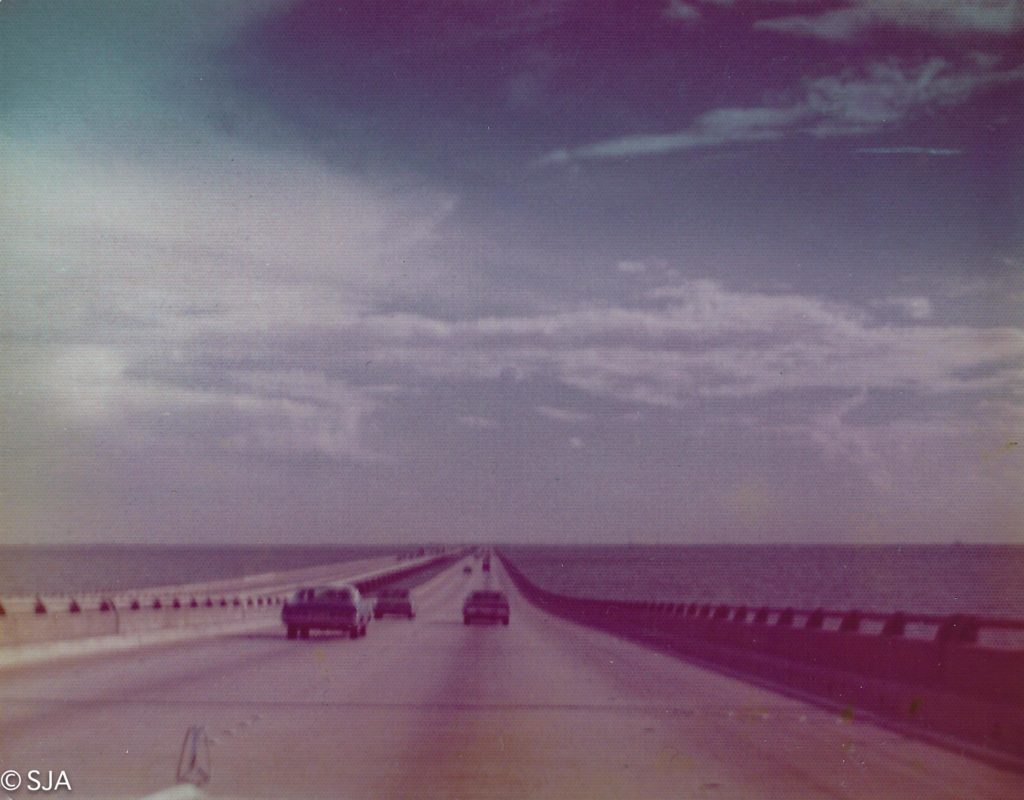
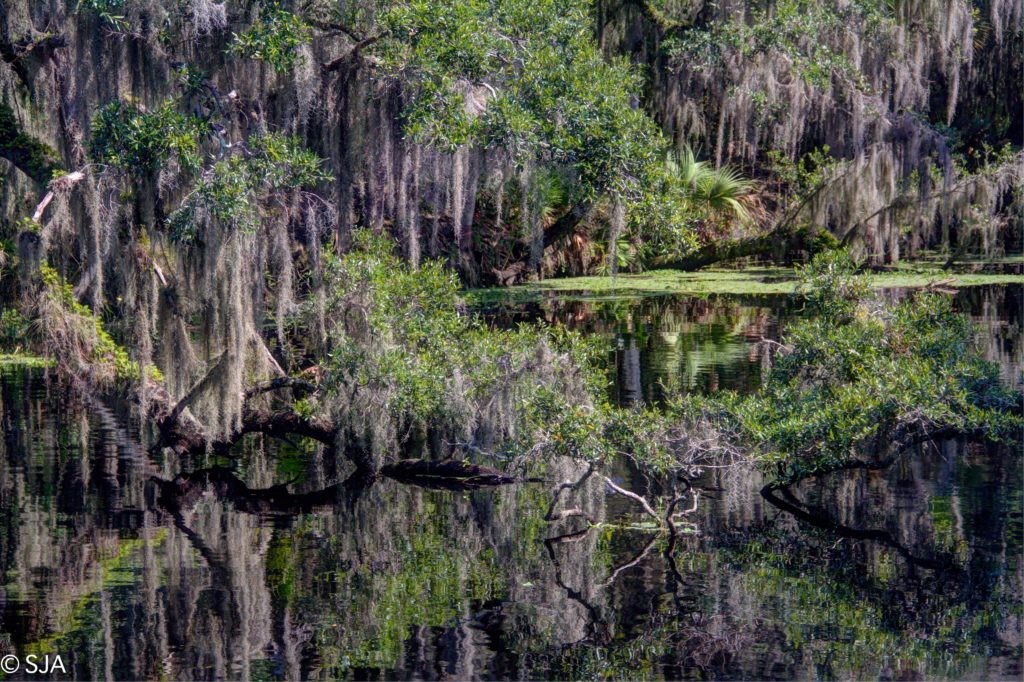
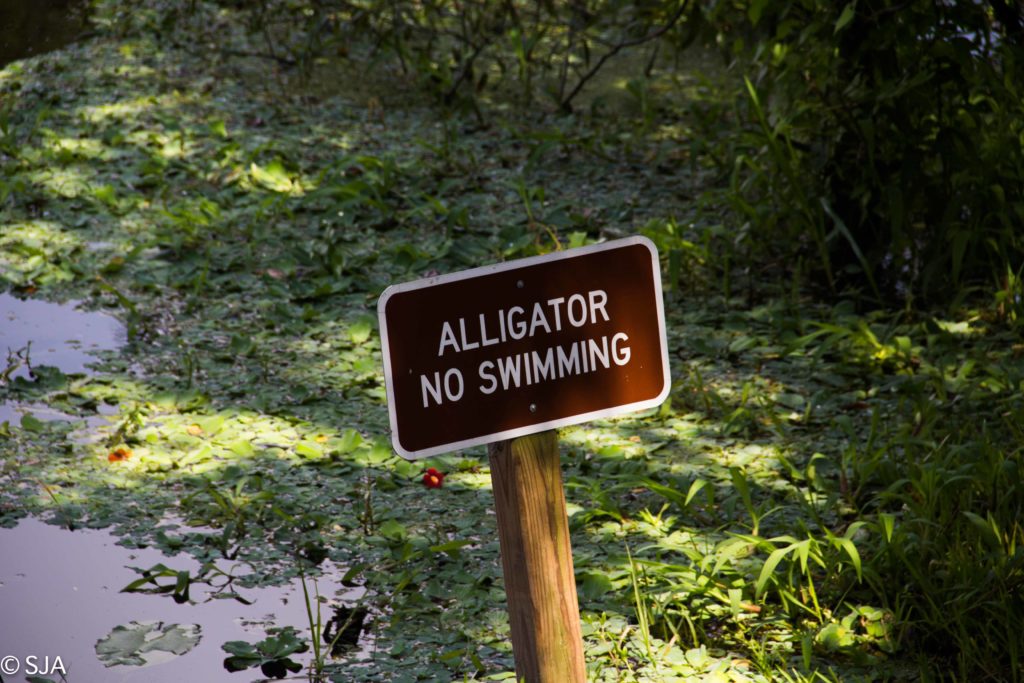
We drove southwest toward our first scheduled stop. The closer we got, the flatter the landscape and the thicker the air. We drove through swamps, bayous, waterways and over long bridges. Cypress trees were draped with Spanish Moss and long-legged cranes walking lazily through water black as steeped tea. That seemed to set the mood for the laid-back atmosphere reflected in the locals, matching their thick Cajun accents and the humidity that hung heavy in the air. The smell of stagnant swamps that teemed with life mingled with the smell of salt water from the Gulf.
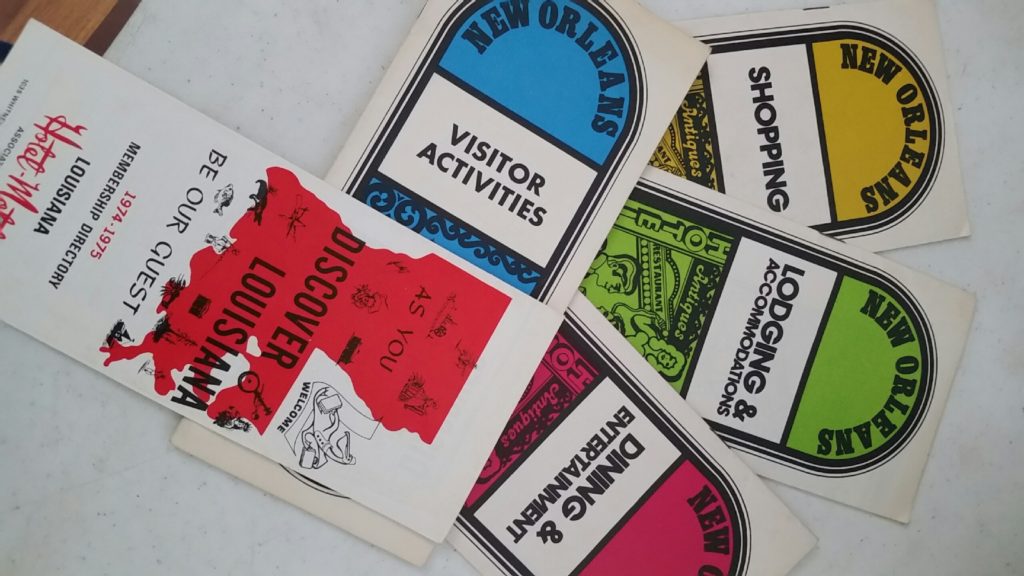
We arrived in New Orleans and checked into the campground. The lady that managed the campground invited us to have supper with her family. I suspect that she was watching out for us, imagining her own children traveling across the country without parental supervision. After all, we looked younger than our 18 and 20 years. We accepted her invitation and were rewarded with fresh crawfish and other Cajun delicacies. It was delicious and gave us a taste of a culture completely foreign to us. Our two-night stay gave us plenty of time to explore the area. We drove down Bourbon Street at night with doors locked only stopping at red lights. The street looked like a human swamp teeming with life. A sea of people strolled along the sidewalks and gathered in front of bars and restaurants. They were quite colorful in their garments as diverse as the people themselves. Jazz bands and one-man bands performed along the street. During the daytime, we visited the French Quarter. We people-watched, browsed through little eclectic shops, stopped at various street venders, and ate at a restaurant complete with peanut hulls on the floor. On the way back to our campsite, we got on the wrong bus and had to get off and walk back to the campground in the drizzling rain. That night, it poured. It’s a good thing we waterproofed our waterproof tent! When we crawled out the next morning, water was almost to the top of the lip above the floor of the tent. It was miserable packing up the tent and gear in the pouring rain. I can honestly say I was glad to leave New Orleans. I was a bit antsy to be on our way and truthfully felt much safer in the wilderness than the wild city!
We left all that behind and drove away from the land of water, bridges and swamps to the waterless plains of Texas. It felt like we were finally on our way.
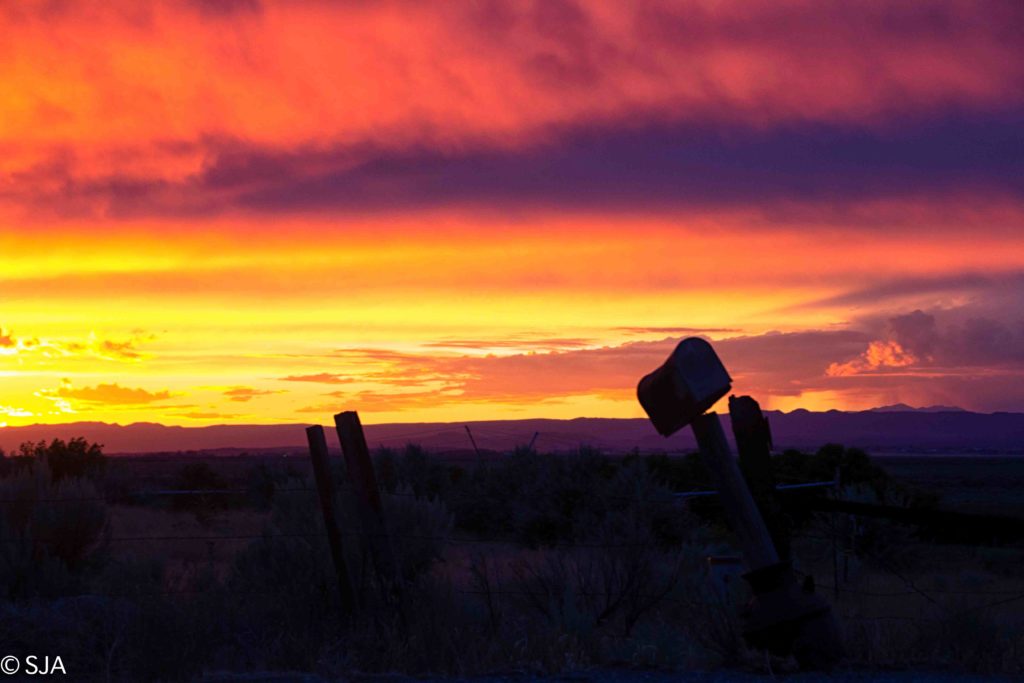
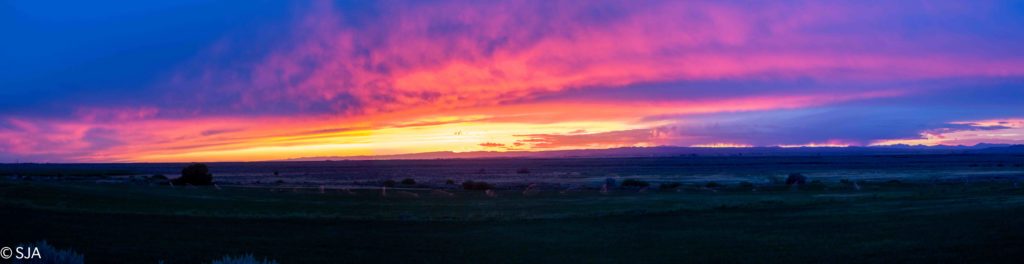
The evening before, the sky was ablaze with fire. Flames lit up the skyline as evening cast long shadows across the desert of Southern Idaho. Soft light of the “golden hour” had turned to brilliant yellows, oranges and reds, then transformed into pinks, purples and midnight blue until it faded into the dark of night. Stars appeared and the Milky Way laid out its path across the ebon expanse.
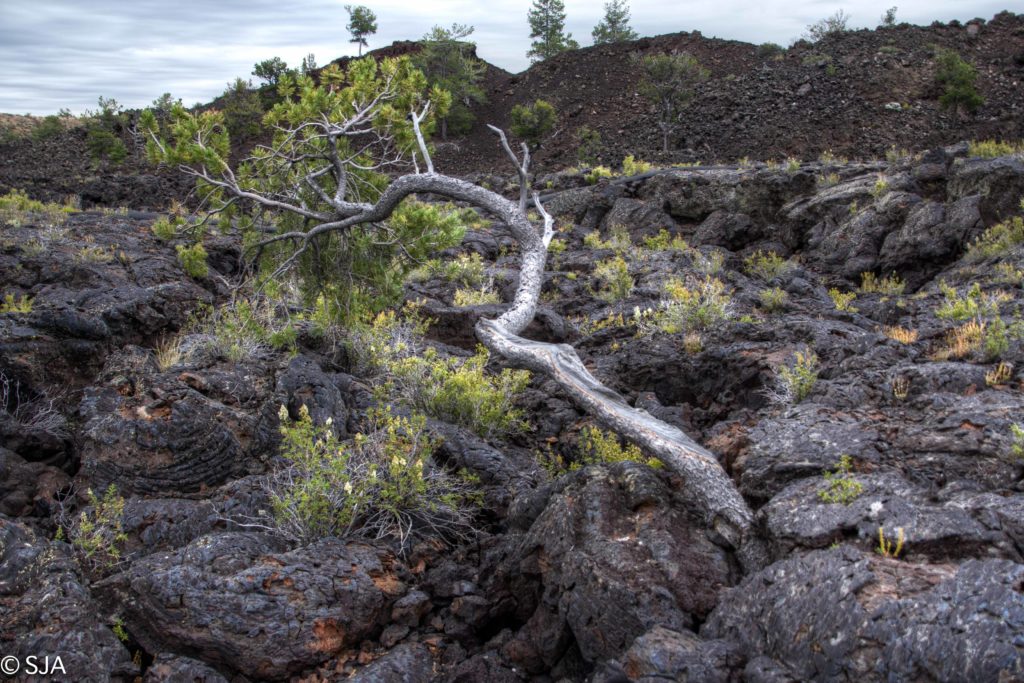
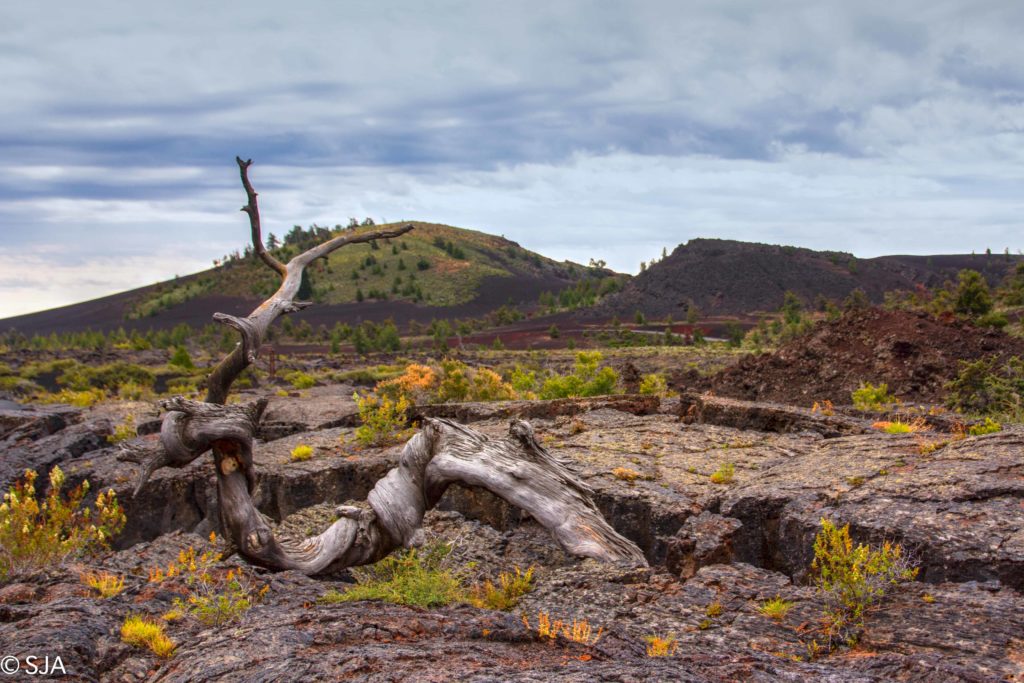
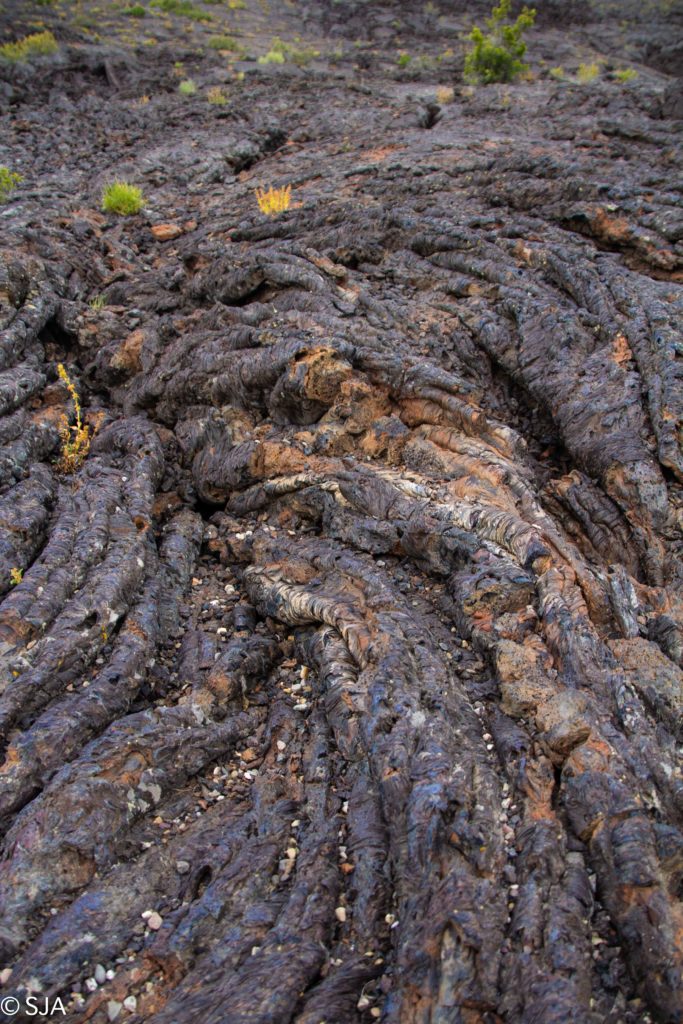
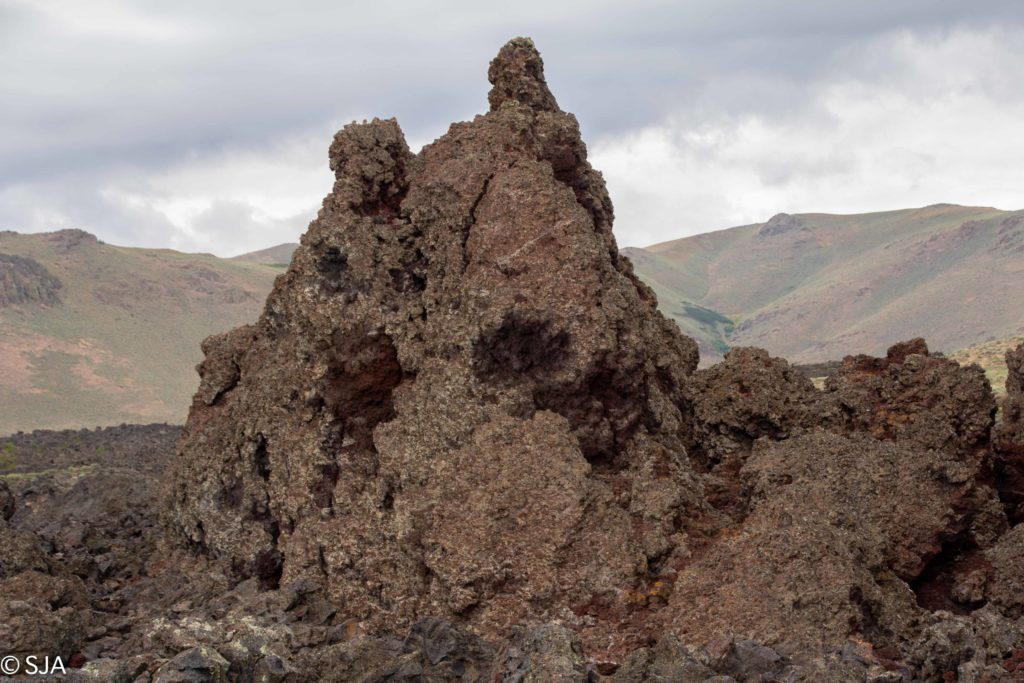
The night was overshadowed as day emerged. In the morning light, it looked like the fire of night had turned everything to ashes. The clouds hung to the ground causing an eerie look over the landscape covered with cooled lava flows and ashes left behind in its wake. Hardened lava resembled exposed tree roots, some seeming to be burning with dying orange embers.
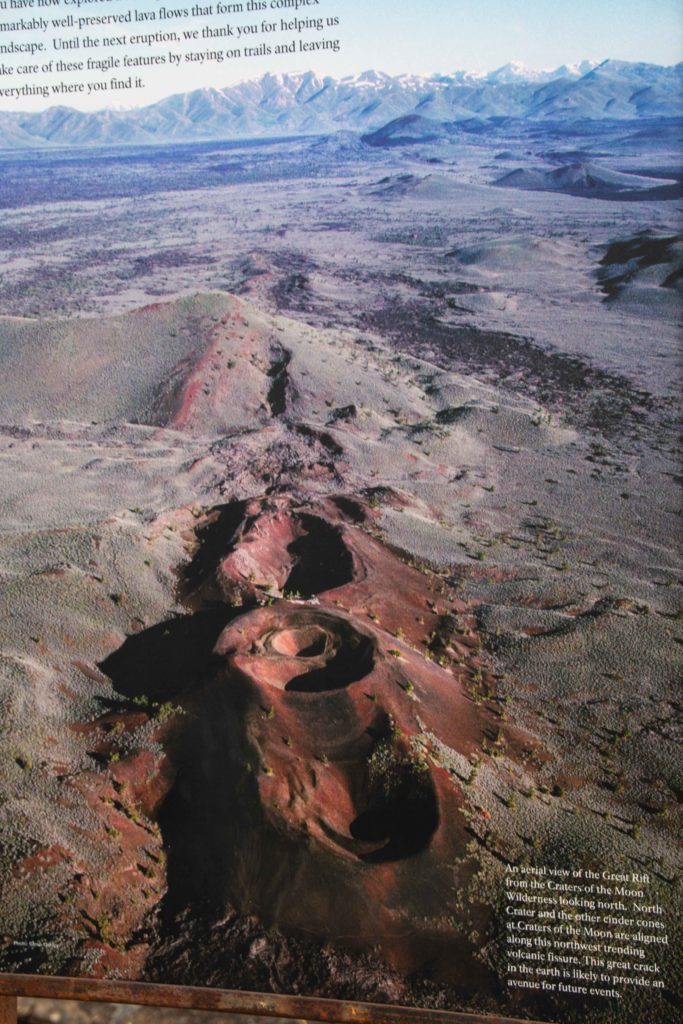
It appeared that we had landed in the middle of a dormant volcano on a strange planet. At one time small volcanoes erupted, spewing scoria to the ground near the vent to build up steep cinder cones. I had never heard of this alien place on earth called “Craters of the Moon National Monument and Preserve,” but it was fascinating. It was formed from lava erupting from the Great Rift. This protected area covers 1,117 square miles, encompasses three lava fields, and contains the deepest known rift on earth at 800 feet. The Monument and Preserve contains more than 25 volcanic cones. This foreign harsh environment was visited by astronauts in 1969 as part of the study of volcanic geology in preparation for their trip into space. Years before, it was frequented by Northern Shoshoni Indians who hunted in this area and possibly gathered tachylyte, which is a form of basalt, for their arrow points.
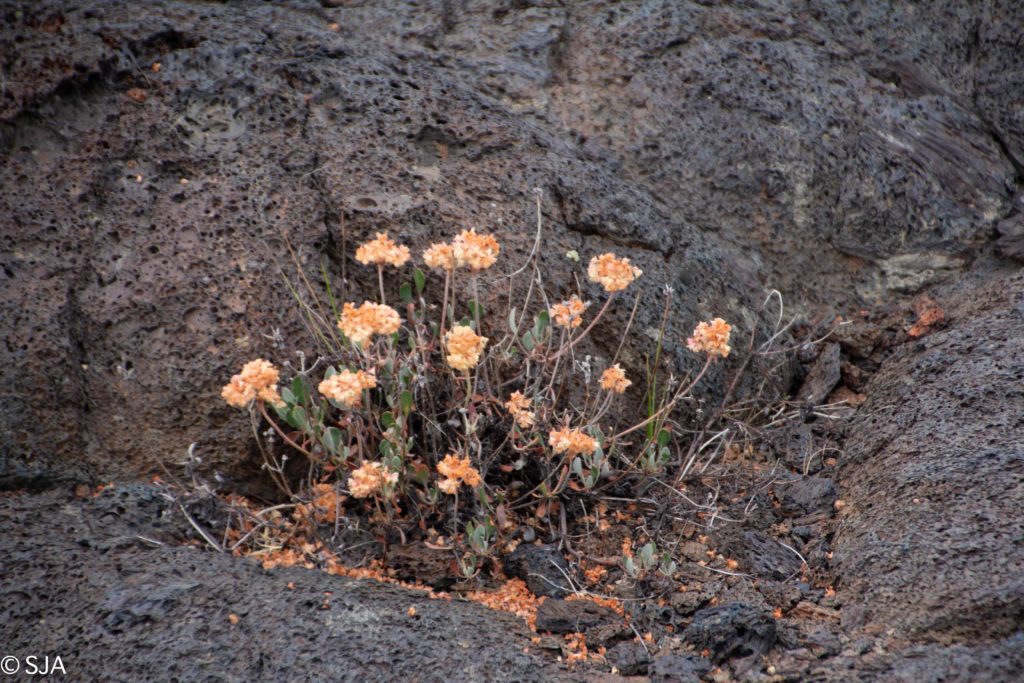
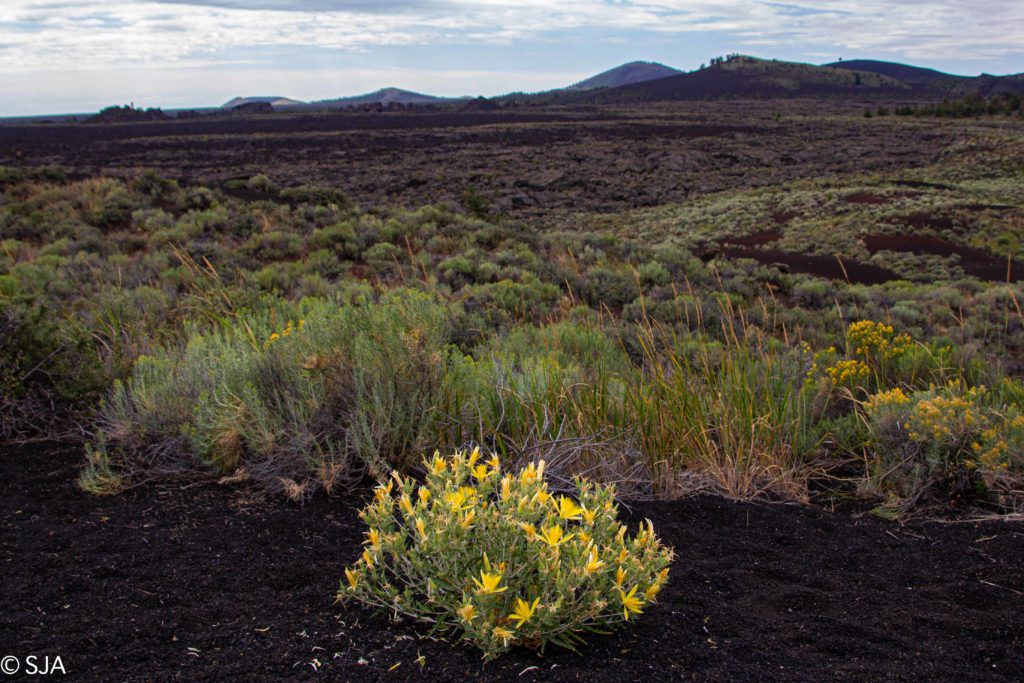
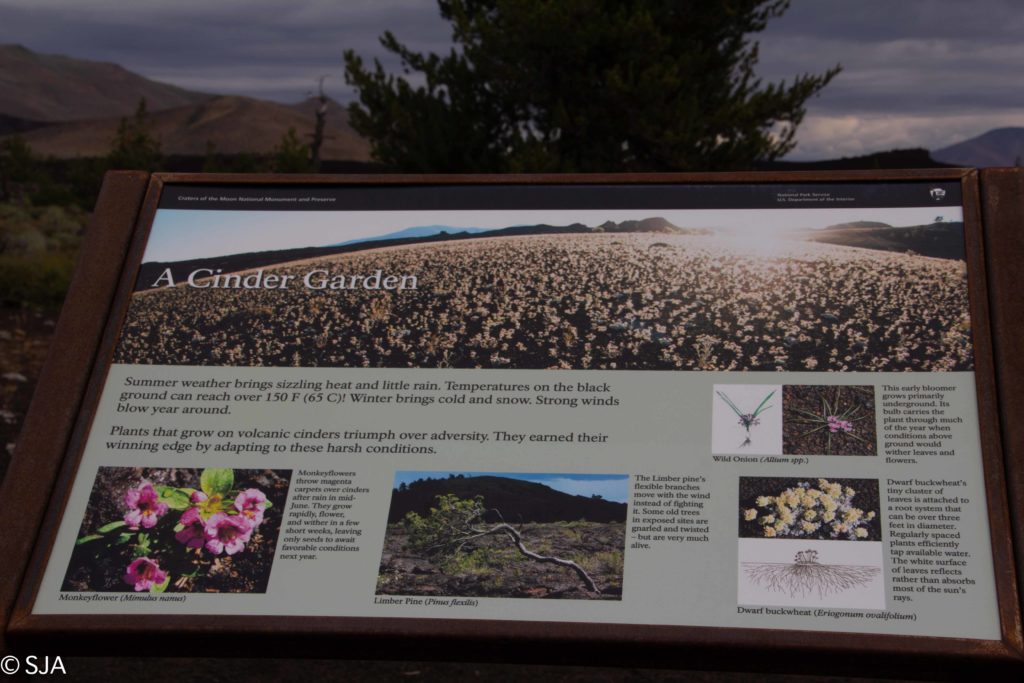
Even in this harsh environment, life adapts and finds a way. Somehow, plants grow in cinder gardens throughout the preserve. The black ash, extremely porous like pumice, quickly absorbs water, and heats up in the summertime, often exceeding 150 degrees. Cinder crags and formations rise from the sleeping volcanoes. This universe never ceases to amaze me. I’ve been to many interesting places, each with a beauty and uniqueness all its own. “Craters of the Moon” is definitely one of those unique places, a rare jewel hidden in this harsh terrain.
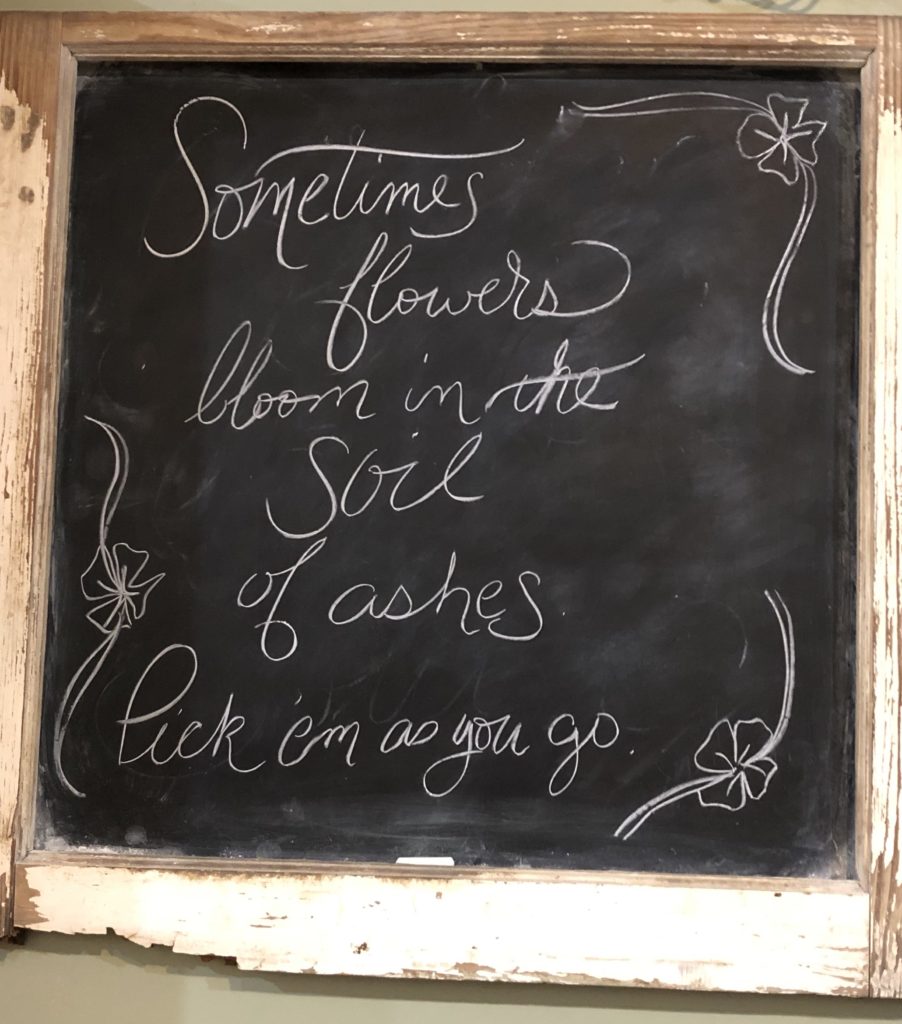
I’m always amazed when life blooms in unexpected places. Seeds can lie dormant for years just waiting for the ashes of death and adversity to bring life. Fertile, mineral rich ashes give birth to new growth that might never have had the chance to live otherwise.
The same is true in our lives. Fires of adversity and trials burn in our lives leaving us standing in ashes of destruction and uncertainty. When we least expect it, a bud pushes up out of the ashes and something beautiful blooms. Life has a way of purging itself. By getting rid of the weeds that threaten to strangle us, we are enabled to grow. Life is given a chance.
There are lyrics in a song, “Sometimes flowers grow in the soil of ashes.” Another says, “He gave me beauty for ashes.” Life finds a way and out of the ashes we rise.