Discovering Treasures in Nature

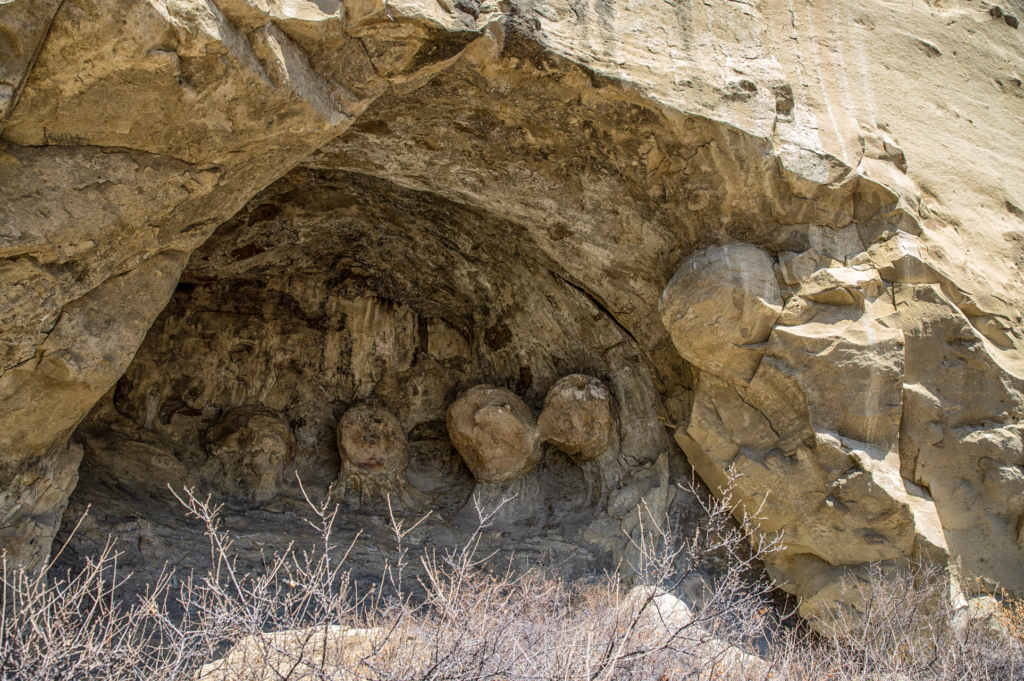
I stood in amazement as I studied the formations in the cave. Big round boulders hung as if suspended from the ceiling and walls of the hollow cavity carved into the high cliffs. It looked as if the huge stones were put into a mold, secured by concrete, and set in place. I had never seen anything like it. I stepped back into the sunlight and looked around me. There were more of those same large shapes on the sides of cliffs along the skyline. My mind raced. What were those geological dome shaped figures imbedded in stone, and what caused them to form as they did?

Upon further investigation, I had a name for those fascinating wonders of nature. They were “concretions”, masses of mineral matter embedded in layers of rock, one of those minerals being a component of concrete. Hidden deep in the core of the rock was a bone, fossil, pebble, shell, or other object that served as the nucleus around which the concretion was formed.

It reminded me of another act of nature, that of a little oyster and a grain of sand trapped in its shell. The oyster releases a secretion to buffer the pain of the irritant resulting in a prized gem, a pearl.

As I pondered these things, a thought came to mind. Aren’t we like those “concretions”? Haven’t our lives been shaped around the experiences, and the trials that come our way?

I just finished reading the story of a family who endured horrific circumstances and defied all odds of survival. They were tested as if refined by fire and emerged as survivors of the atrocities they saw and experienced. All those events acted as secretions that wrapped their lives in stone and precious pearl to shape them into the people they became. A friend who suffered through many of life’s tests once said, “You have a choice – to emerge bitter or better.” 

We tend to base our opinions or beliefs in that which we see, not on what is hidden at the core. Our lives have been formed around events and obstacles that made us who we are today. Within each life is a story, and who knows what treasure you may discover!
Foot Washing

The little man wore holey socks. His long bird-like talons cut the toe of the socks until a hole wore through. He then switched feet for the socks so there was a matching hole on the other side. Sometimes holes even showed up on the underside of the socks. If you happened to see those claw nails escape the socks, you would surely gasp at the atrocity. 

One job I said I would not do was cut the little man’s toenails. They were horrendous. Though I would have done it if there was no other choice, I declared emphatically, “I won’t cut his toenails! I’ll cook for him; I’ll clean up any messes he makes; I’ll shower him; I’ll toilet him; I’ll get up in the middle of the night and change his sheets; I’ll take him to his appointments. I’ll even administer his suppositories, but I won’t cut his toenails!”

I thought about calling a farrier, but then my tall daughter came to the rescue, “I’ll cut his nails.” I was relieved. Not only was she performing a job I didn’t want to do, but she was also getting training to cut my nails that look just like my dad’s. 

Oh, if you could have seen that little man when she came to the house with her clippers! She bought a massage soaking tub for his feet. Gently, she massaged his feet as she rubbed ointment on them, placing each in the tub to soak and soften those ghastly sharp misshaped weapons. She sang songs as she lovingly washed his feet and trimmed his nails. You would have thought he had been given the best of gifts. His eyes danced and a broad smile covered his face. The smile on my face was almost as big because I didn’t have to do that task. 

What I saw as a thankless terrible chore, she saw as an act of love, selfless service, and respect for the little man she held dear to her heart – foot washing.

By the way, “thanks Daddy for passing on your feet to me.” At least I know who can cut my nails! I, too, served a little man with respect and love even when I said, “Now bend over!”

Tumbleweeds

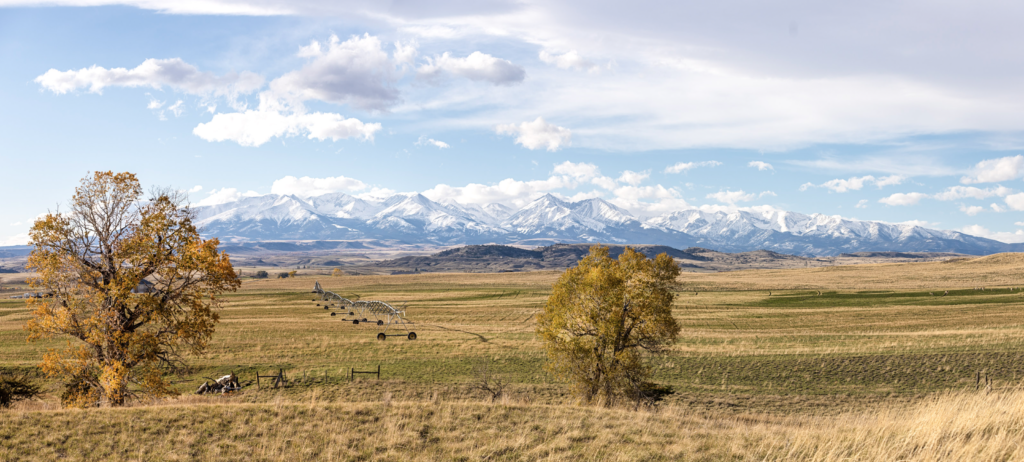
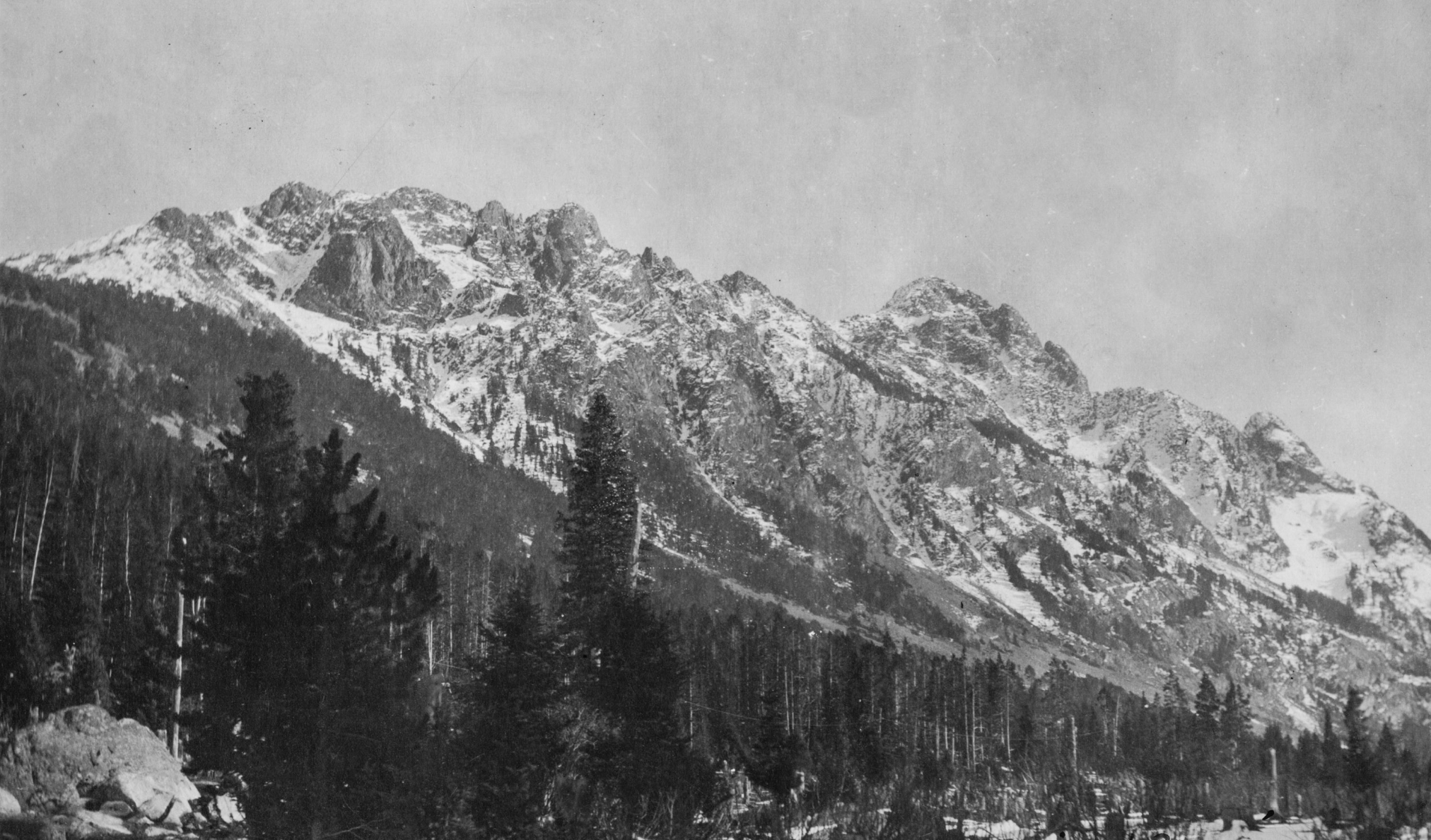
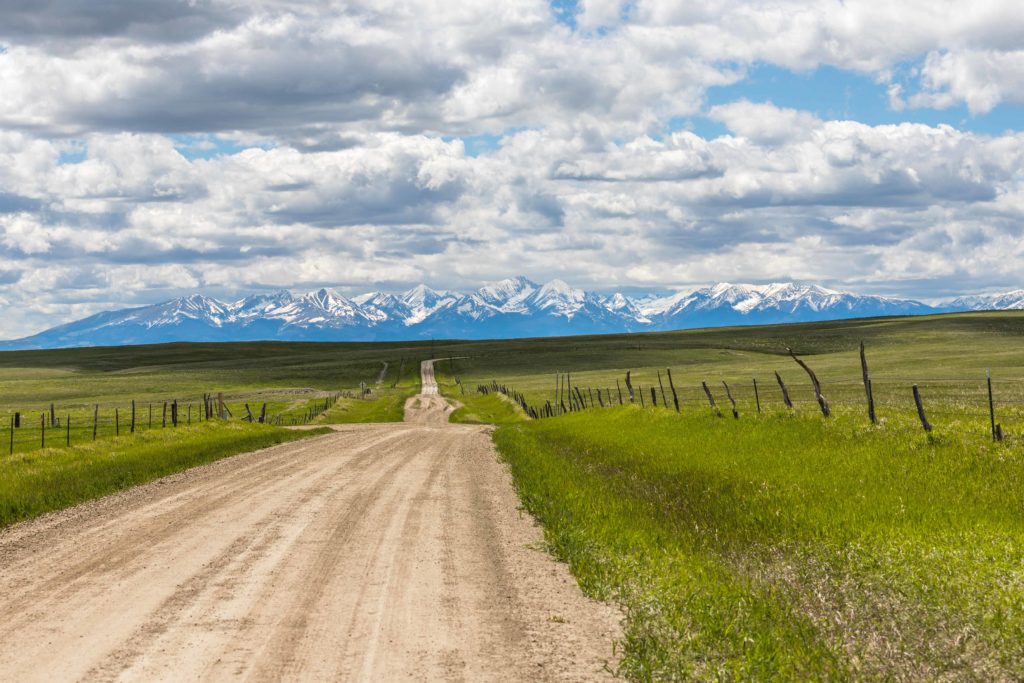
I sat on a big rock and looked out across the foothills toward the snowcapped mountains that rose from the prairie floor. It looked as if I could reach out and touch the tops of the peaks though they were miles away. I was always in awe of the mountains even on the days they were distant and dared anyone to approach. 

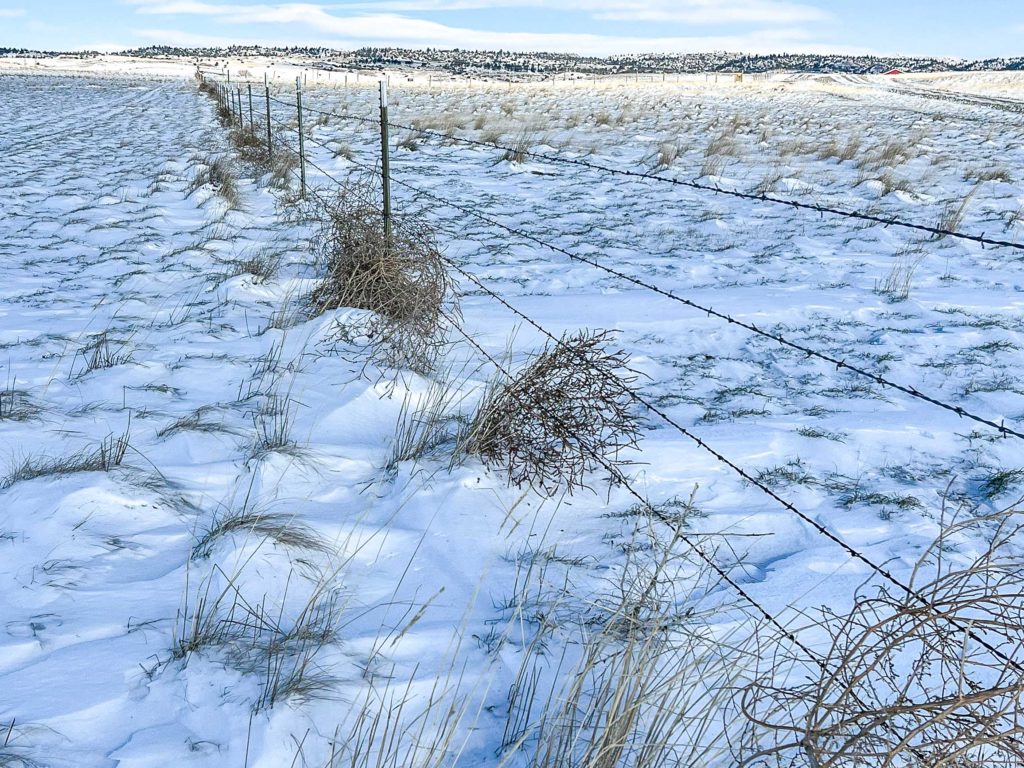
A breeze tugged at my hair and awakened me from my trance as the wind blew across the wide-open countryside, tossing tumbleweeds that jumped over clumps of sagebrush. Just beyond, uprooted grasses and weeds of various kinds clung to the barbs of a fence.  As the tumbleweeds reached the barbed wire, they finally found a resting place. As I took in the whole scene, I felt kind of like one of those tumbleweeds that rolled across the prairie.

During my growing up years, we moved from place to place. Living in parsonages with cast off furnishings of members of the congregation was not really a place to call home. However, there was one constant – the town where my grandmother lived. She spent most of her life in the mountains and even after she moved to town, they remained in view and gently spoke her name. It was there in the mountains where my father was born. When he married the girl from the prairies, she went to live with him in his mountain home and it was there that five of their six children were born. Those were their roots, their place to call home. 

I came along later. Though I was small the first time I saw the mountains, it was as if they whispered my name. After each visit, the silent call became louder. I heard it in the wind that whistled through the trees and in the gusts that blew through the valleys. Others before me heard the call, too, and many answered. My great grandmother found refuge there in the mountains that spoke to her. Native Americans heard the call and climbed the mountain peaks in search of wisdom through visions to lead their people. Even now, many who visit there find solace and can feel the sacred reverence.

When I married, we almost moved to the mountains. Instead, we made a vow that one day we would move to the place where the mountains lifted from the prairie floor, the place held sacred to those who had walked among the valleys and peaks and lived in its shadow. 

Yes, there were many places I called home, where we raised our children and spent time with grandchildren. Yet I still heard the voice calling. After many years, the dream I had as a child was within my grasp and now, I see the mountains every day. When my siblings see pictures of the roads that lead into the mountains, they say it looks like the road home. 

Just as those tumbleweeds that found a place of rest in view of the mountains that speak, it is here we found the place we will call home and rest for a time.

“The mountains are calling, and I must go…”    John Muir

The Magic of Christmas

Colorful packages with ribbons and bows are piled under the tree that is decorated with twinkling lights that cast their dancing glow on the ceiling and walls. Shiny Christmas ornaments and balls show the reflection of those gathered around the tree, but the greatest reflection is seen the eyes of a child. It is the magic of Christmas.

The years go by and yet memories of Christmases long ago come to mind. One such time was a Christmas Eve when a newborn baby lay under the decorated tree in Bethlehem. The baby boy, just ten days old, kicked his legs, cooed, and smiled. His gray eyes glistened as they reflected the sparkling lights. He amazed all who saw him because he was so bright and alert. His smiles were contagious, and his coos brought laughter to all those gathered. 

We were given the gift of Christmas in a baby boy that brought such great joy.

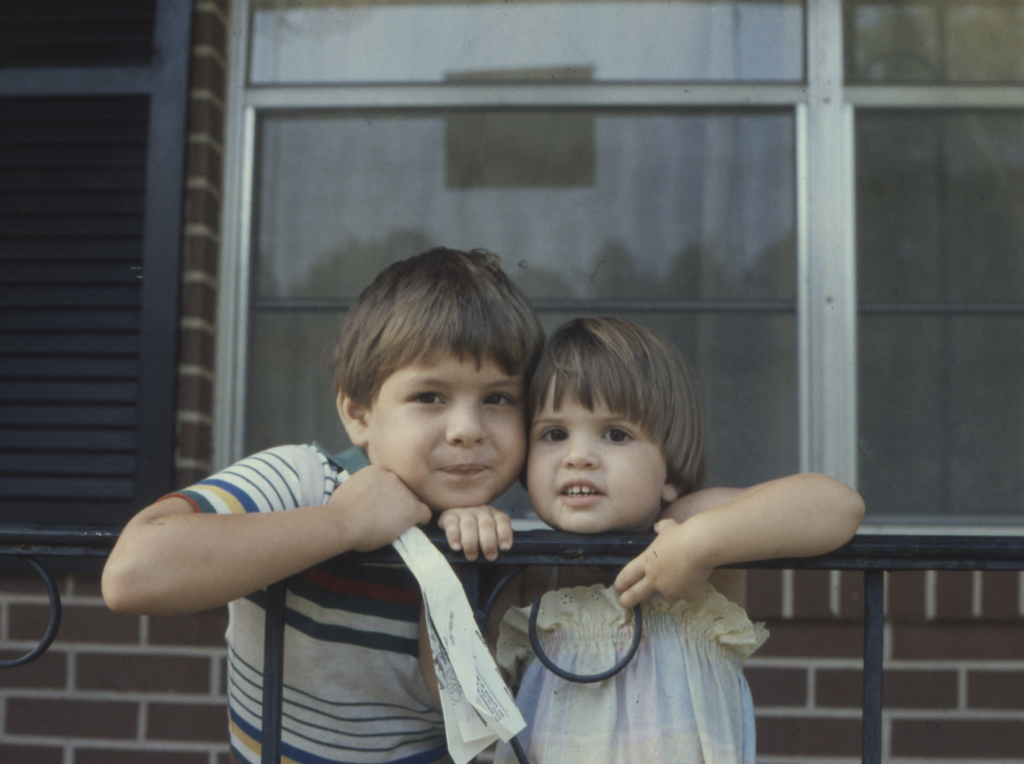
A few short years later, on another Christmas Eve in Bethlehem, a three-year-old little boy smiled as he ran around and played, anxious to see what was in the bright packages under the tree. Another child, a baby girl, had joined the family. This little girl did not lay under the tree and smile. No, she cried with colic. Her eyes did not dance with the lights. She brought a different gift.

There was another visitor that year – Mrs. Hunt. One would have thought she was handed the world when she took a fussy little girl into her arms. The two of them, a matronly Southern lady and a colicky three-month-old baby girl rocked in the rocking chair as the runners squeaked and creaked.

There were gifts for all under the tree, but I think Mrs. Hunt got the best present of all – the unconditional love of a newborn baby – the gift that was wrapped in a blanket.

Now that’s a Christmas story!

The events of these two Christmases did indeed take place in Bethlehem – Bethlehem, Georgia. One of the highlights of our time there was the live Nativity complete with sheep, shepherds, Mary & Joseph, the wise men with their gifts, and even an angel who shown brightly atop the wooden stable under the star of wonder. It was a reminder of the gift that was given those many years ago in another Bethlehem, the magic of Christmas, a baby boy wrapped in swaddling clothes. 

Among the Tombstones

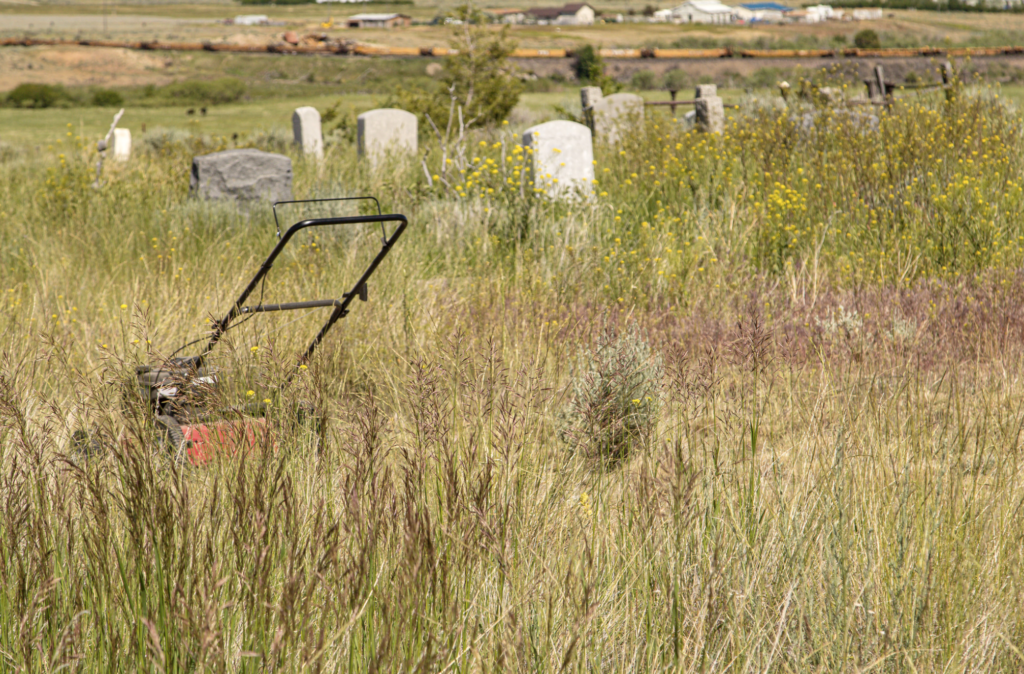
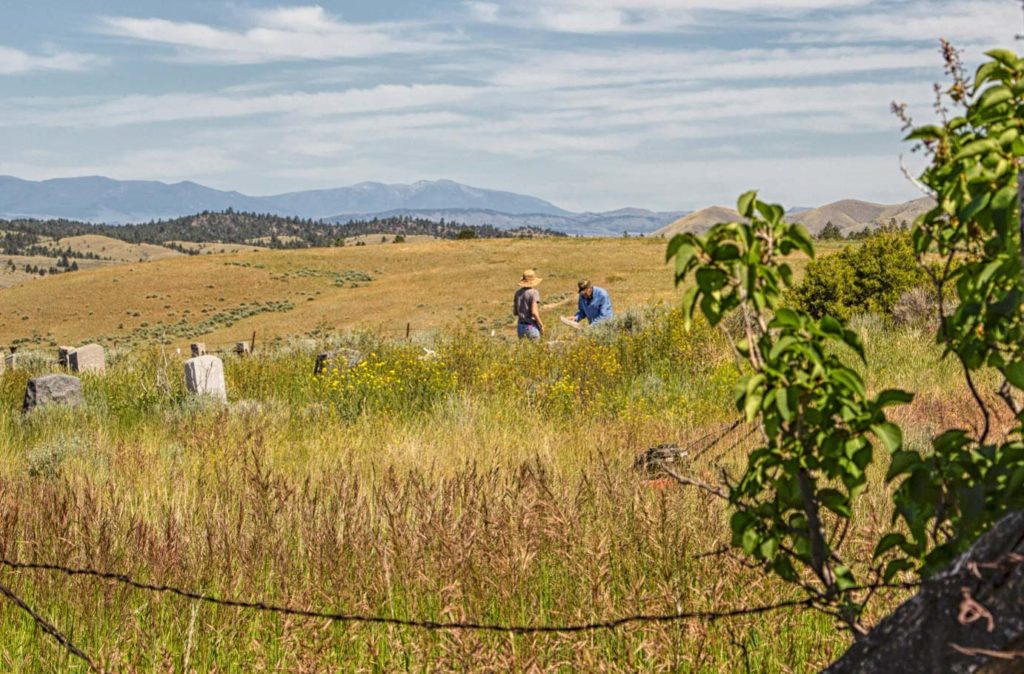
I stood on the hill among tombstones that hid in the tall grass and wildflowers of the old Silver City Cemetery. Helena could be seen in the distance just to the Southeast. Though the streets of Helena were busy with the comings and goings of all kinds of folks, the little town of Silver City wasn’t much more than a name. Had events taken a turn years earlier, she would have won the right of being called the capital of Montana. But that wasn’t to be.

The cemetery was quiet except for the sounds of the mower being pushed by the kind gentleman who was trying to clear the weeds from around the gravestones and markers of those who were buried there with their memories. With my boots on, I walked around and snapped a few pictures of forgotten names and stones that had been so worn away no inscription could be read. Sunken places in the earth whispered stories of those whose remains lay all but forgotten.

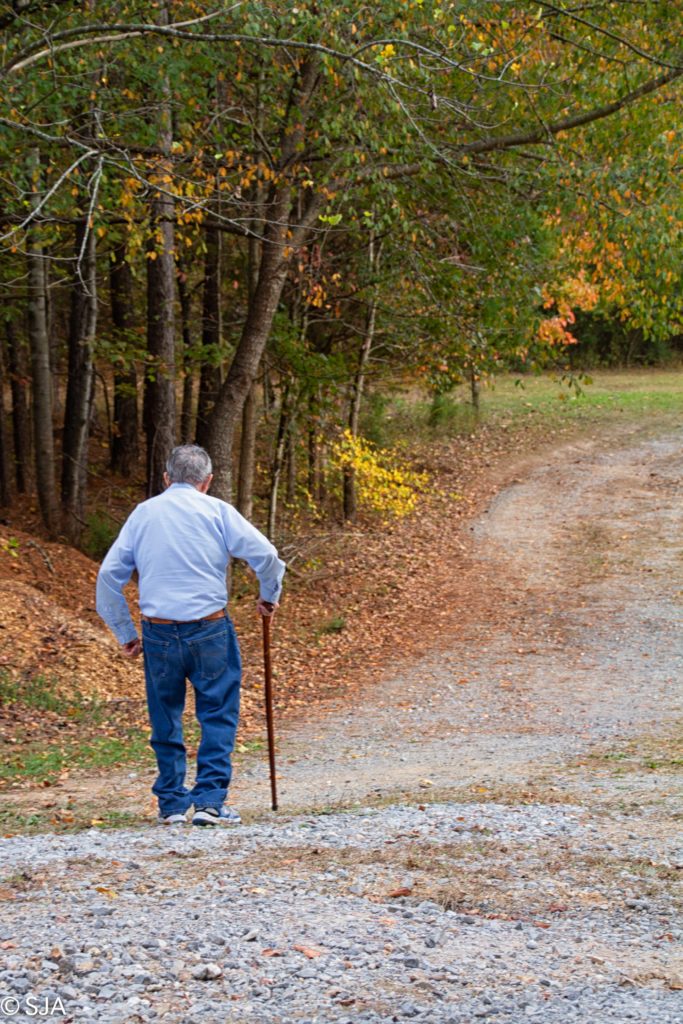
As I stood there pondering the tales that would never be told, wondering about the lives of those who had come to this harsh and beautiful land, a van turned up the trail. It slowly made its way to the top hill. A young lady got out of the driver’s seat, walked around to the other side of the van, and opened the door. Out stepped an elderly slightly stooped gentleman with a cap on his head. 

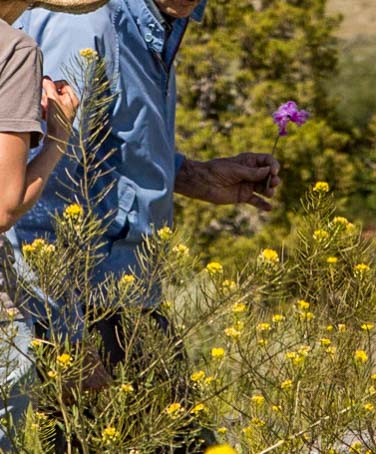
He was gently led by the young lady who held his elbow in her palm, her other hand on his arm. He spoke to the man who had turned off the mower, “I just came to put a flower on her grave.” In the elderly man’s hand, he held a purple flower on a single stem.

The lady guided him through the newly chopped clumps of grass and into the weeds yet to be trimmed. “Watch out for rattlesnakes, Grandpa!” They made their way to the grave of his beloved wife. He bent down, pulled a few weeds from the front of the tombstone to reveal her name, then stooped lower to place the purple flower on her headstone. 

A warm gentle breeze blew as the yellow wildflowers danced in the magic of the moment. I brushed away a lone tear that slid down my cheek as I turned and slowly walked away.

Note: The Silver City Cemetery is now maintained and has gained a place in the National Register of Historic Places in Montana. One of my great aunts is buried there as well as Old Moss – but that’s another story. You can read some of the history of the cemetery at these web links:

https://mhs.mt.gov/shpo/docs/NRnoms/SilverCityCemetery.pdf

https://historicmt.org/items/show/3221

Beyond the Gate

The road to the old home place was not much more than a beaten path riddled with rocks and potholes that led into the mountains, and we managed to find every one of them. We jiggled back and forth when we forded the creek, the sound of stones crunching under the tires. 

History lived there in the trees and behind rock piles along the trail. We heard it whisper old tales as we passed by. Laughter sang through the boughs of firs and pines as images of children played outside the old schoolhouse that once stood in the woods. If one knew where to look, there might even be faint visions of children pulling on the reins of the horses that stomped their hooves and swatted flies with their tails. Kids hid behind sagebrush while one rode an imaginary horse that looked like a dried-up stump. In the distance was the sound of the shrill whine of a sawmill. Smoke rose from the chimney as a greeting to any that made it that far into the heart of the mountains.  

Though no one had lived at the place at the end of the road for some time, memories still lingered. As we pulled into the yard, we were greeted by Quaking Aspens waving their shimmering leaves in the summer light as if anxiously awaiting our arrival.

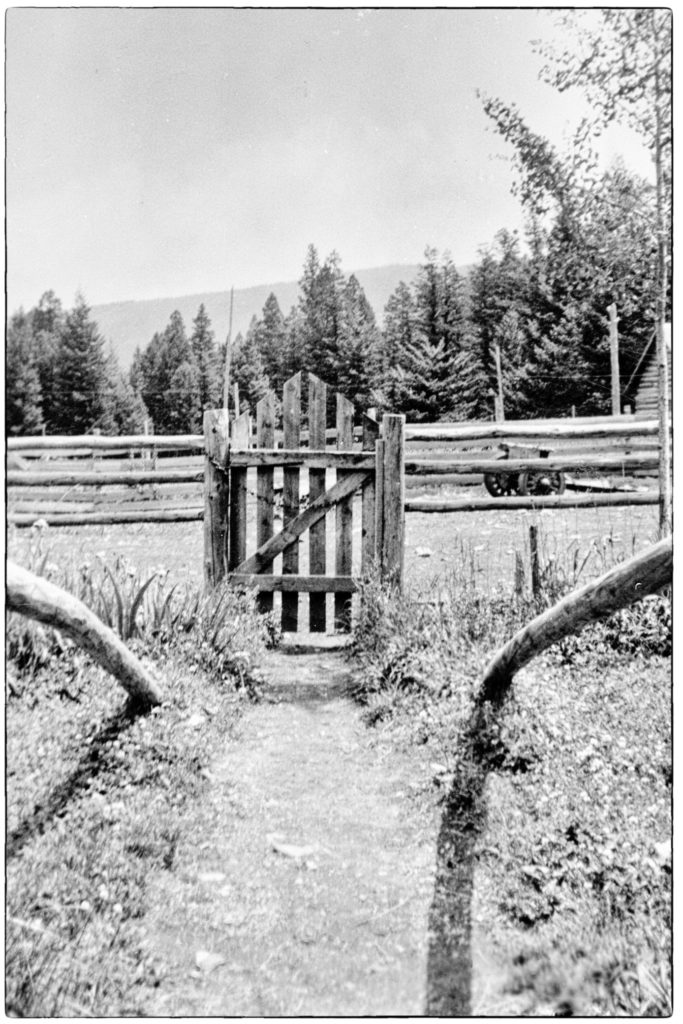
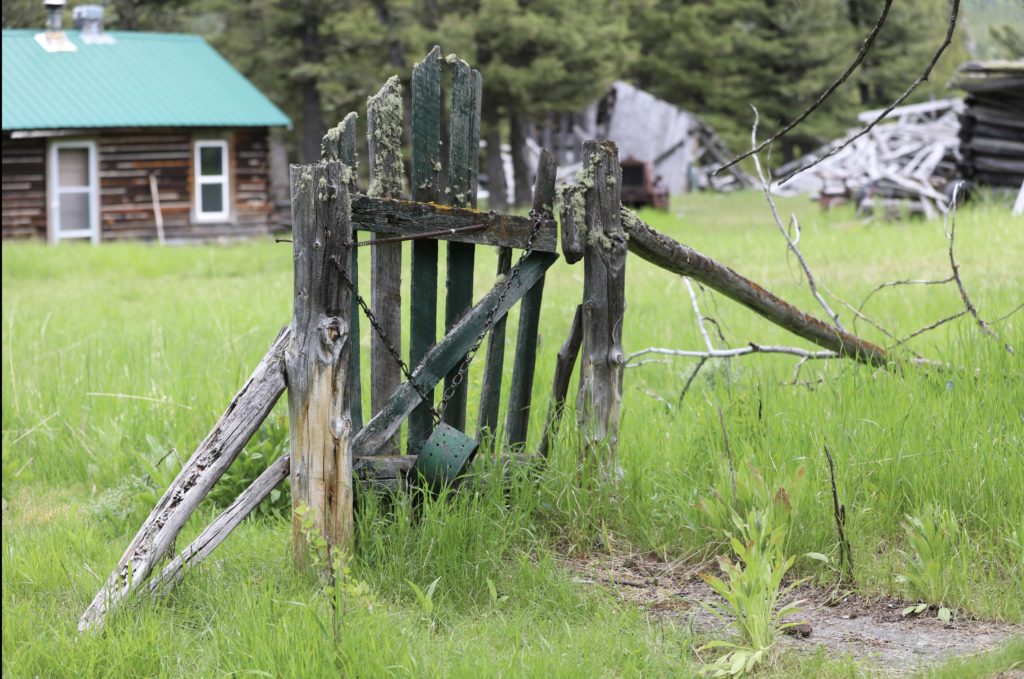
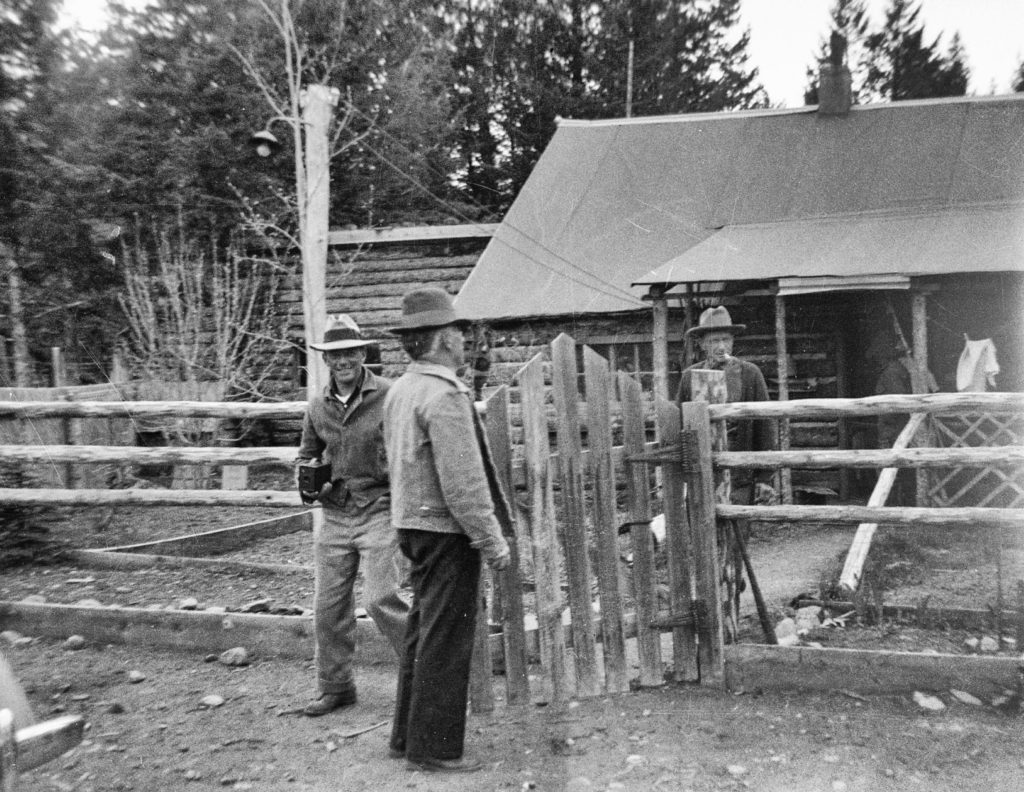
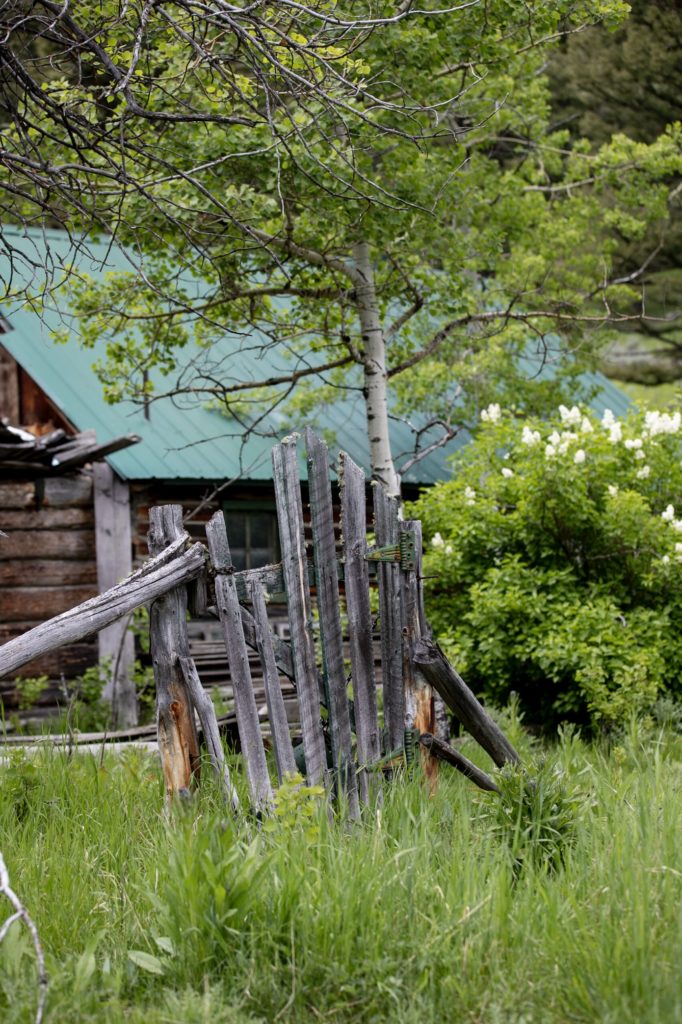
An old fence that at one time surrounded and protected the log cabin was all but gone except for a few worn pieces of wooden rails scattered on the ground. A weathered gate cheated time and stood defiantly in its place. Its rusty hinges gripped tightly to the posts that held the gate. Patches of faded green paint clung stubbornly to the brittle slats. A round piece of old machinery chained to the gate hung heavily to keep it closed and to signal the comings and goings of family and friends. Though I could have easily walked right past the gate, I opened it anyway and was not disappointed to hear the clang clang as it slammed behind me. 

I stepped onto the walkway that led to the sagging door of the cabin. As I entered the doorway, a light breeze stirred remembrances along with the dust and dirt that danced across the floor with a breath of the wind. Memories came to life. 

Thoughts and images flashed before me and soon the chill in the air dissipated. I looked around and was amazed at what I saw in my mind’s eyes. The wood cookstove was fired up and the cabin filled with warmth. On the kitchen floor was a washtub filled with hot water where a teenaged girl had just soothed her aching muscles after her trek in the mountains. At the sound of the clank and clang of the gate, weary backpackers trudged down the walkway into the house to be relieved of their burdens and greeted with the aroma of meat and potatoes cooking on the old stove. After dropping their packs and other gear, some plunked down on the long wooden bench and rubbed their aching feet. Some backed up to the crackling fire under the watchful eyes of the old deer mount that surveyed the scene with the shifting eyes of a sentry. At another glance, I saw little girls sipping hot tea out of fancy teacups with their grandmother. The slam of the gate caught my attention again as kids ran in and out of it as they played. 

I think those who went through the gate just liked to hear that resonating tone, for you see, it signified something greater than just a clanging clanking noise. It symbolized hospitality, an ever-encouraging word, family, friends, love, laughter, and tales of life in the mountains. It meant safety, and protection from the rest of the world.

All too soon, it was time to go. The gate clapped one last time as it closed behind us. With one look back at the place in the mountains that had once teemed with life, I knew that on another day, we would make that journey again.

Though the green wooden gate no longer stands in the mountains, it remains a portal to a place of serenity, a place to recharge, and a place to visit in my memories when all else in the world seems wrong. 

A Sacred Land

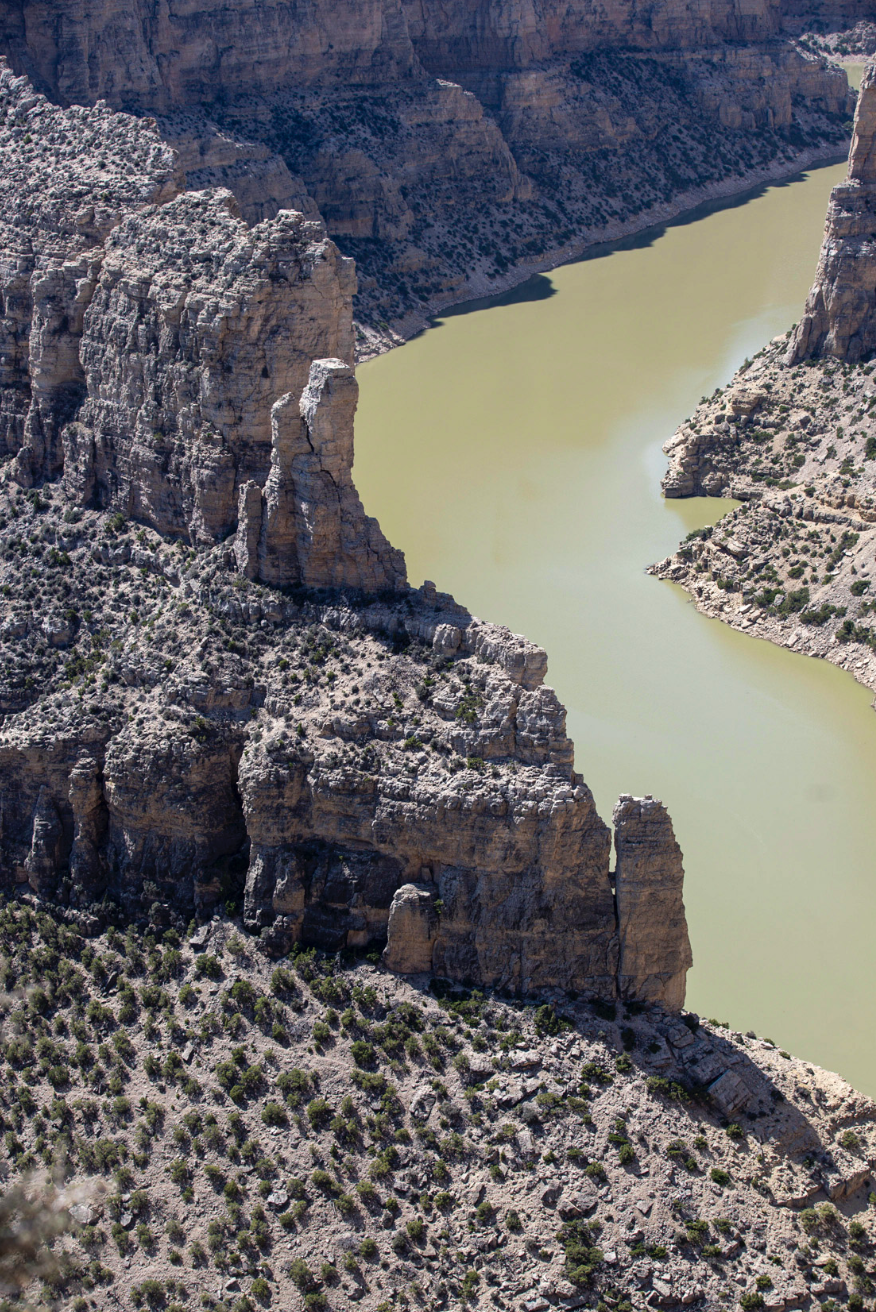
The side road between the Big Horn and Pryor Mountains abruptly came to an end. I cautiously stood on the precipice and peered into the Bighorn Canyon below thinking it could swallow me at any moment. 

Massive rugged walls of colorful layers of rock rose 1000 feet from the riverbed. Time and unrelenting forces of wind and water carved the canyon leaving stone sentinels to stand guard along the pea soup green algae water of the Bighorn River that winds through the curvy gorge. 

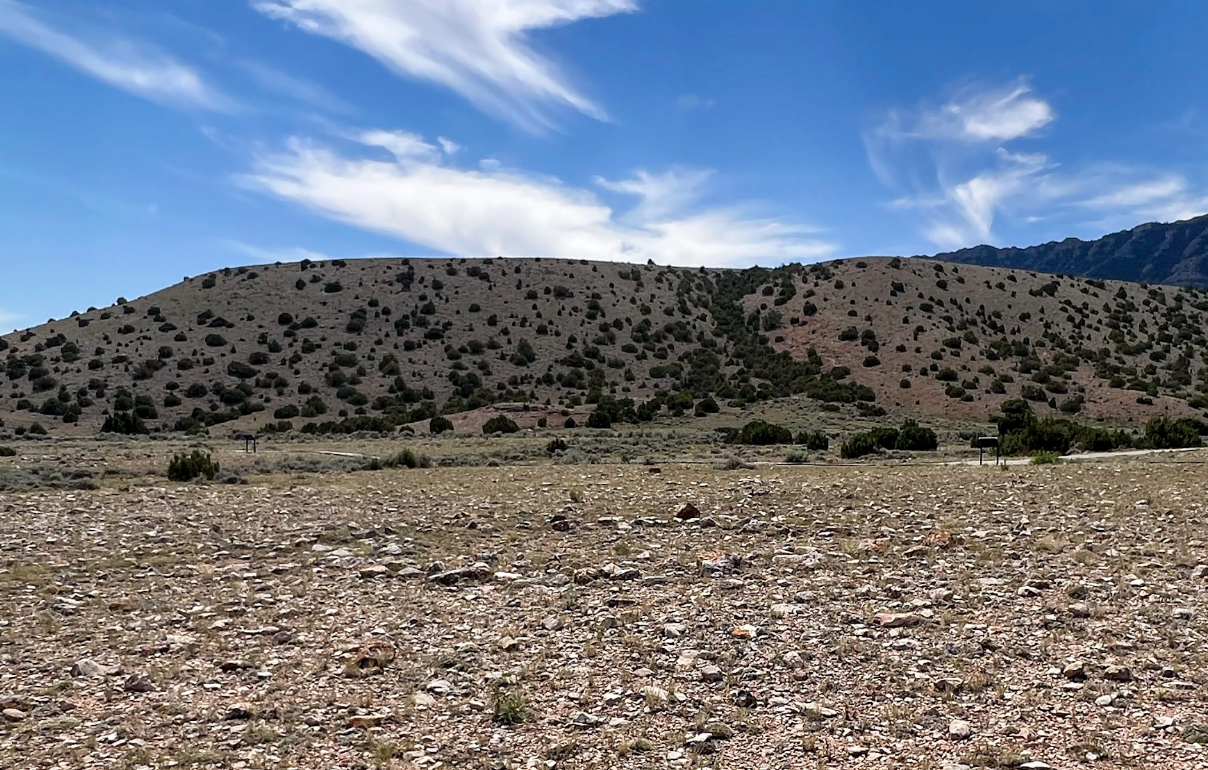
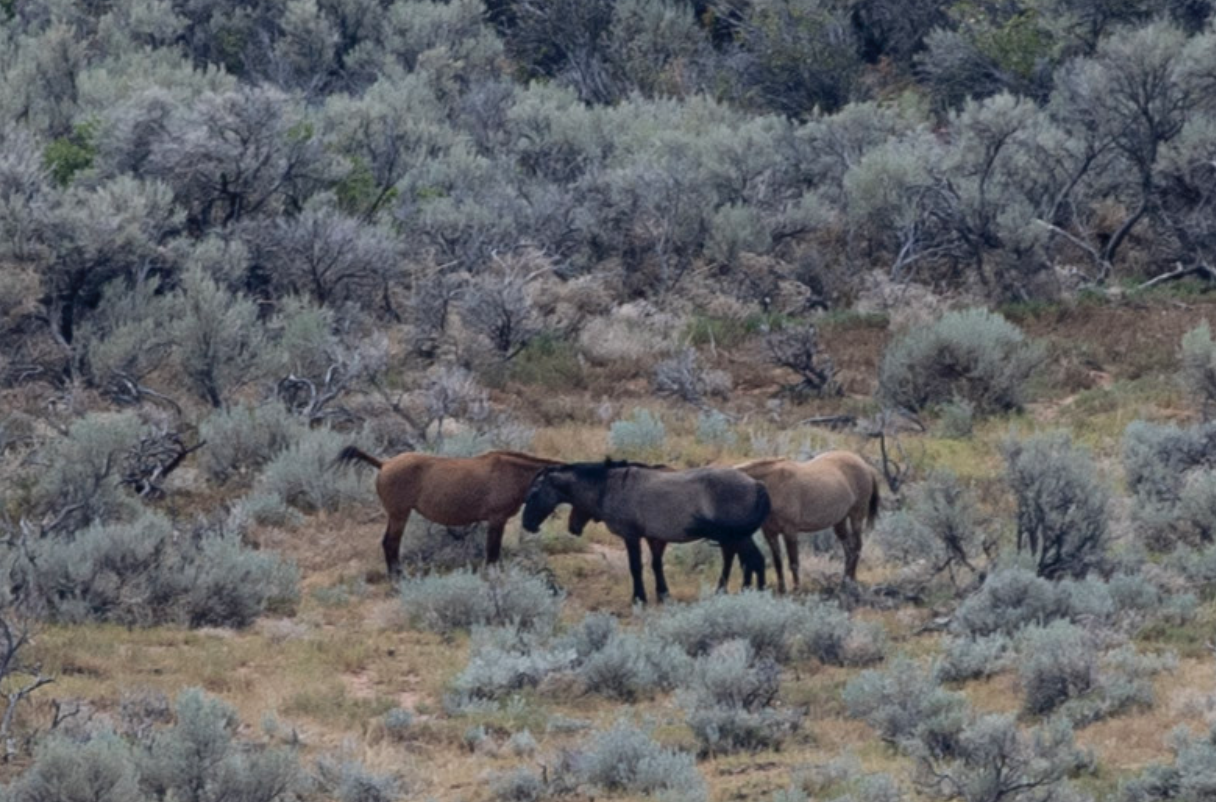
Not far away in this high dry country between the mountains, I walked along a trail where teepees once stood in the shadow of a rocky cliff. I looked across the valley and could almost envision the camp of teepees, fires burning, little ones playing and helping the women and men as the buffalo harvest was under way. Though the teepees no longer point toward the big sky, the stone rings that once secured them still remain, and so does their story. Wild mustangs, descendants of Spanish horses brought to the area by the Crow Indians, still make their home in the Pryor Range and stand watch over their homeland.

It is said that several hundred years ago, the Crow Chief was instructed in a vision to take his people and “find the mountain range where the sacred tobacco plant grows.” They eventually came to the Bighorn Mountains where the treasured plant continues to live. This area which includes parts of Montana, Wyoming, and South Dakota, became the historical homelands of the Crow Nation. Through this journey, they became known as the Apsáalooke. 

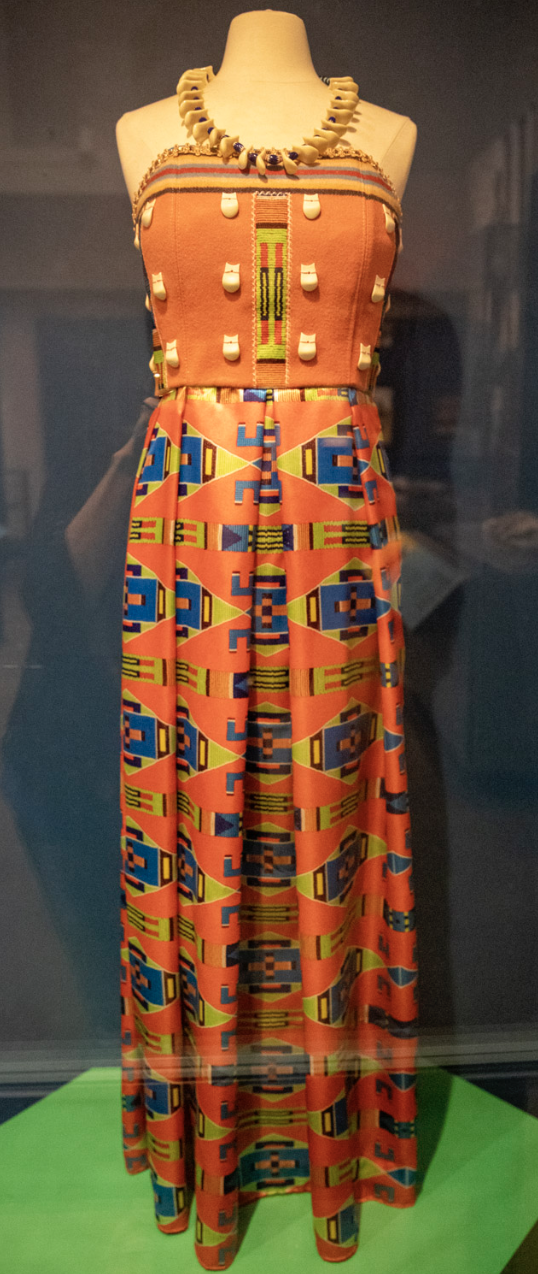
Through an exhibit, “Apsáalooke Women and Warriors,” currently on display at the Museum of the Rockies, we were able to walk through part of their journey. It was a fascinating trail exploring their beginnings in this historical homeland and traveling with them past works of art, and into modern times ending with contemporary clothing intricately designed. My mother would have been in awe of their artistic creations and seamstress expertise. 

The exhibit began with the story of how the Crow tribe came to the area. As I read their brief account, I was amazed to find that the place upon which I had stood among the teepee rings just days before in view of the Bighorn Mountains was in the land the Apsáalooke called home. My thought was, “It is indeed a small world.”

Several miles away from the site of the teepee rings, a baby boy was born into the Crow tribe at the-cliffs-that-have-no-name in 1848. His name was Chiilaphuchissaaleesh, or “Buffalo Bull Facing The Wind.” When he was just a boy he made his way with others to the Crazy Mountains, known to the Crow tribe as Awaxawapiia. The mountains were a sacred place to them. For four days, the young boy fasted and prayed for a vision that would strengthen and guide not only himself, but also the Crow people. He was granted his desire. Later, as the boy grew to a man, he was called Plenty Coups and he became Chief of the Crow tribe.

The Crazy Mountains are still considered a sacred place for the Crow nation as well as those who have lived in the heart and shadows of the mountains. It has been a place of refuge for some, a place to relax and reflect and enjoy beauty beyond description. Many still go there for guidance and to seek a vision.  One writer put it this way: 

“The Crazy Mountains overlook so much more than a landscape. They are keepers of the stories of the past, and they could provide keys for the future. Those who live in the shadow of the Crazies know of their beauty, and others, those who’ve experienced or heard stories of their power, can feel their presence from afar.”

And so it is in a sacred land…

Hindu Divide

backing packing over the Crazy Mountains, 1974, as told by my dad

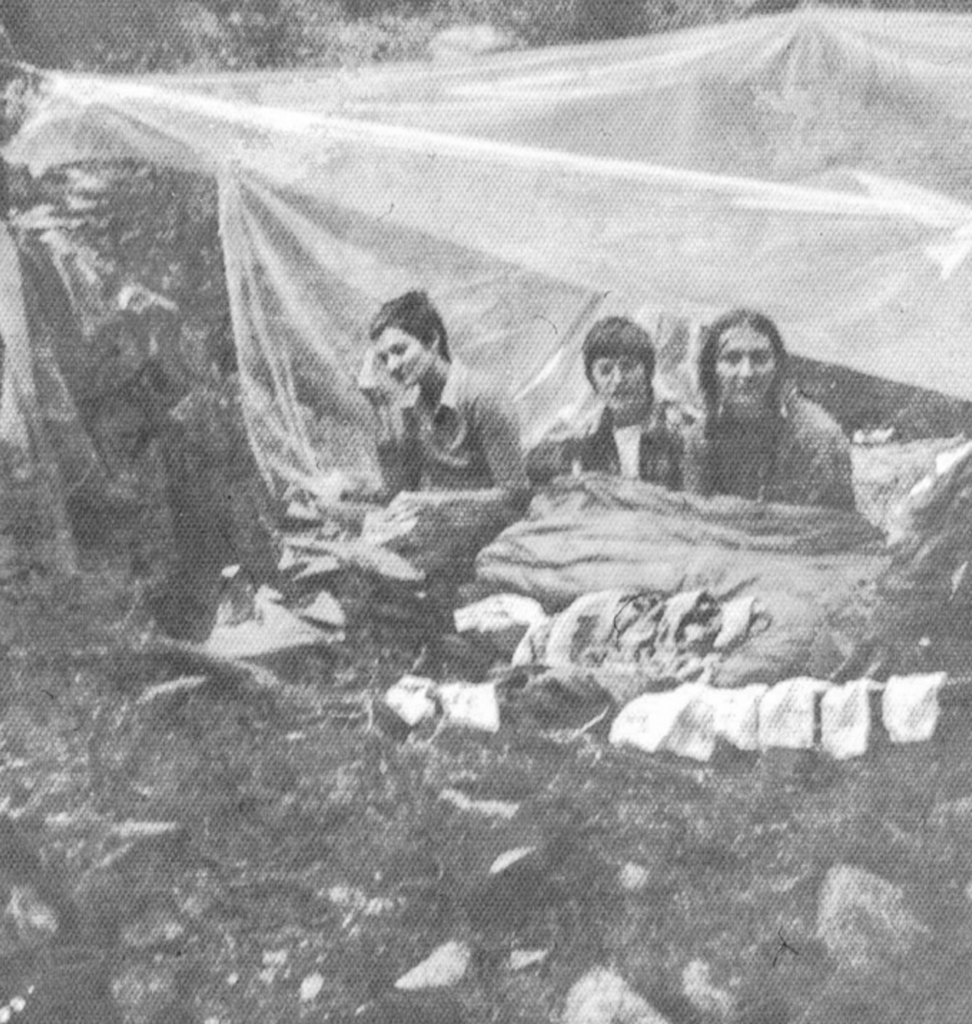
The year before our youngest child graduated from high school, we were having a good summer.  Six refugees from Dixie moved along the ridge as we trudged eastward on our trek from Shields River to the Sweet Grass.  We were at 10,000 feet altitude and above timberline.  We were also above the cloud line.  The sky overhead was blue, but behind us, and below us, a storm was building.    

Black clouds caught on the tops of the forested mounds by the Porcupine Range Station. They climbed through the valley behind us rapidly growing in size. Then in a sudden fury, the storm boiled out of the lowlands and crossed the glaciers.  Lightning jabbed into the barren ridges.  The clouds which engulfed us became fire breathing dragons and chariots for the armies of Mars!  Explosions surrounded us and thunder echoed through narrow gorges.             

We huddled beside an outcropping cliff huddled together taking courage from one another as cold rain slapped our faces.  When the rain ceased, we shivered our way along the crest of the divide.  It was dark and misty.  Then, for an instant, the fog lifted.  From the cliffs below us, valleys branched off like fingers from a hand – Grace Crowell’s blue distances calling like a song.

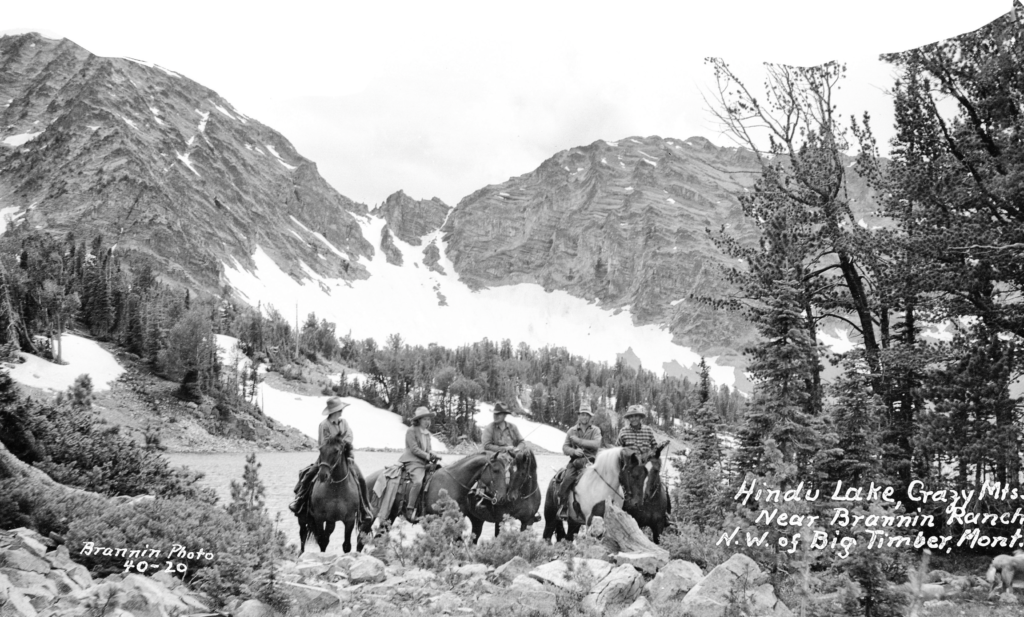
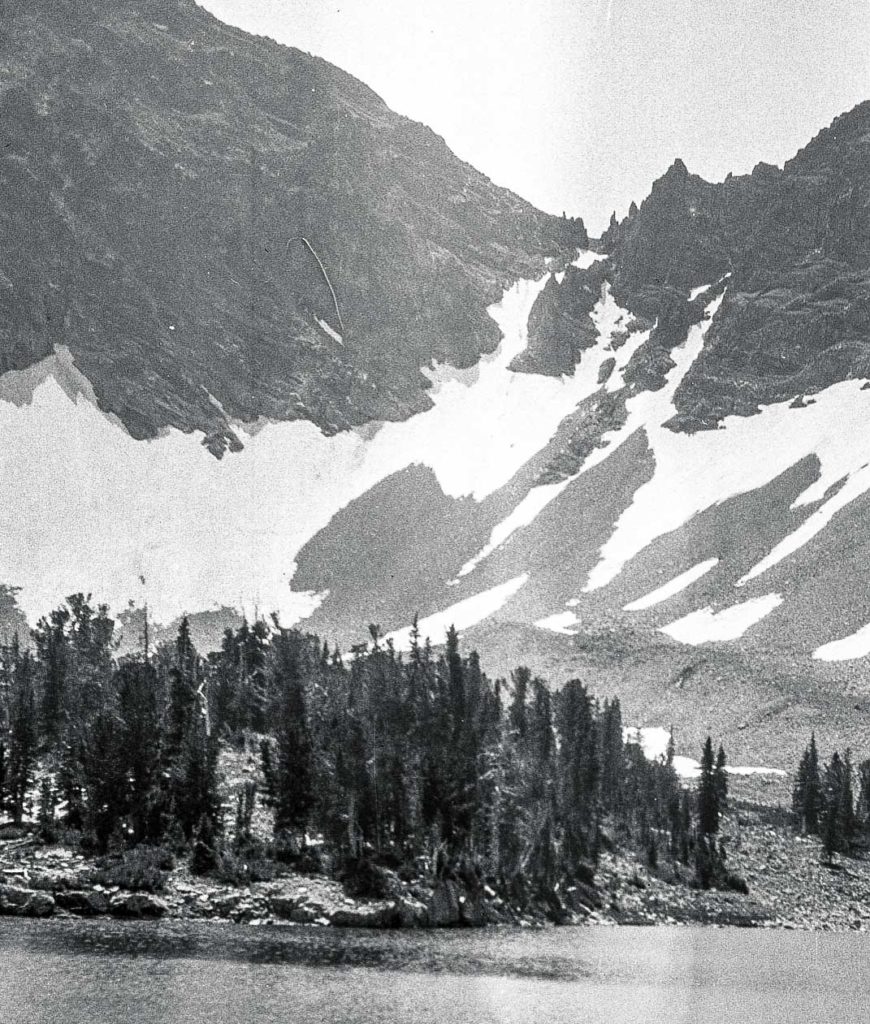
Ten miles away, to the north, a tiny thread of a highway showed us the route to White Sulphur Springs.  Behind us, dark clouds still hovered over a quilt top of meadows and farmlands.  Southward, a narrow canyon wound into a valley.  Then we reached the end of the ridge and looked down into the headwaters of the Sweet Grass drainage.  A mountain lake came into view.  Campfire Lake, the forest map told us.  But I knew it more by another name.

“Hindu Lake,” Barney Brannin said.  “When you get there, just look at the jagged ridge around the lake and you’ll see why.  There’s a rock on the ridge that looks like an India Indian with a turban on his head.”

“One time,” he said, “two men from India came up the Yellowstone with a party of Englishmen.  These two got put off the boat, or else they left it somewhere between Greycliff and Livingston.  They saw the mountains on the north side of the river and headed for the peaks looking for gold.  Some say they found it.  One of the Hindus returned for supplies but met with foul play before he could get back to the mountains.  His companion, the prospector in the Crazy Mountains, is still on the ridges, waiting for his companion to come back.” 

We looked above the lake toward the southwest.  I caught a glimpse of the Hindu before the mist wiped him out.  Then the rain hit us again.  We were cold, wet and weary when we arrived at the edge of the water.  But there had been a moment that we would remember – a high moment measured by the heart and not by a clock.  We had found a place for seeing – a place for finding oneself. William Stidger put it this way:

“Each soul must seek some Sinai
some far flung mountain peak
where he may hear the thunders roll
and timeless voices speak.”  

Barney Brannin was right.  In this same range Plenty Coups sought wisdom to lead his people. Plenty Coups, Chief of the Crows, could have said it with us.  “Mountains are for visions.”  

The Last Drive

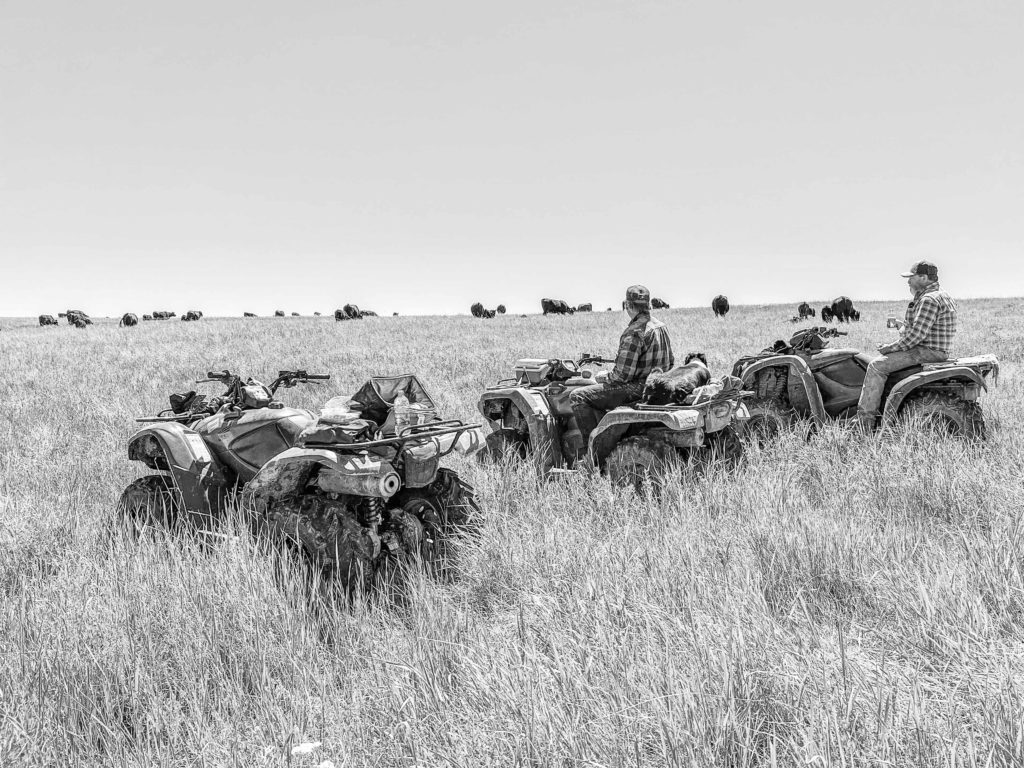
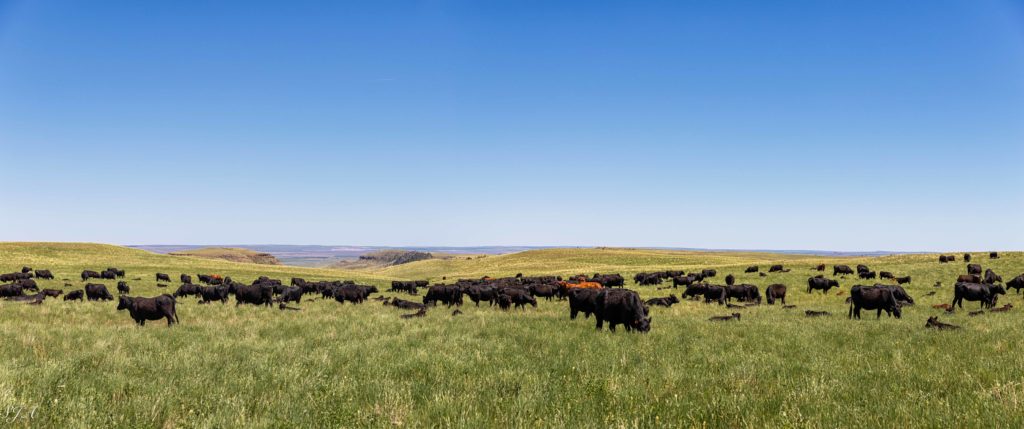
We pulled into the driveway and parked the dusty four-wheelers. I pried my fingers loose from the handlebars and sat for a few minutes before throwing one leg over the seat and slowly sliding off. It had been a 10 ½ hour day trailing cattle to summer pastures. Two more days of trailing and that part of the herd was settled for a while. When we reached the end of the last drive, though I had offered little, I wore a look of satisfaction while completely and contentedly exhausted. I think I even walked a bit bowlegged just like the time I helped drive cattle over the mountains on horseback with my cousin, her crew, and my sister. 

Somewhere along the ride back home the last day on the trail, a thought came to mind, and with the thought was a sense of renewed wonder and respect for my ancestors. Many years ago, they went on a long goat drive. The end of May 1895, the Brannin family left Sapillo Creek, New Mexico and began the long trek by wagons and horseback to Marysville, Montana. Just going that distance of about 1400 miles (by today’s road) was quite a task for the Brannin family and others who traveled with them, but they also trailed a herd of 900 angora goats, 360 horses, and 90 burros. They treasured joys of the journey as they tucked away memories of their time together and made lifelong friends. They also faced many challenges and disappointments along the way, but what others considered obstacles merely spurred them on. 

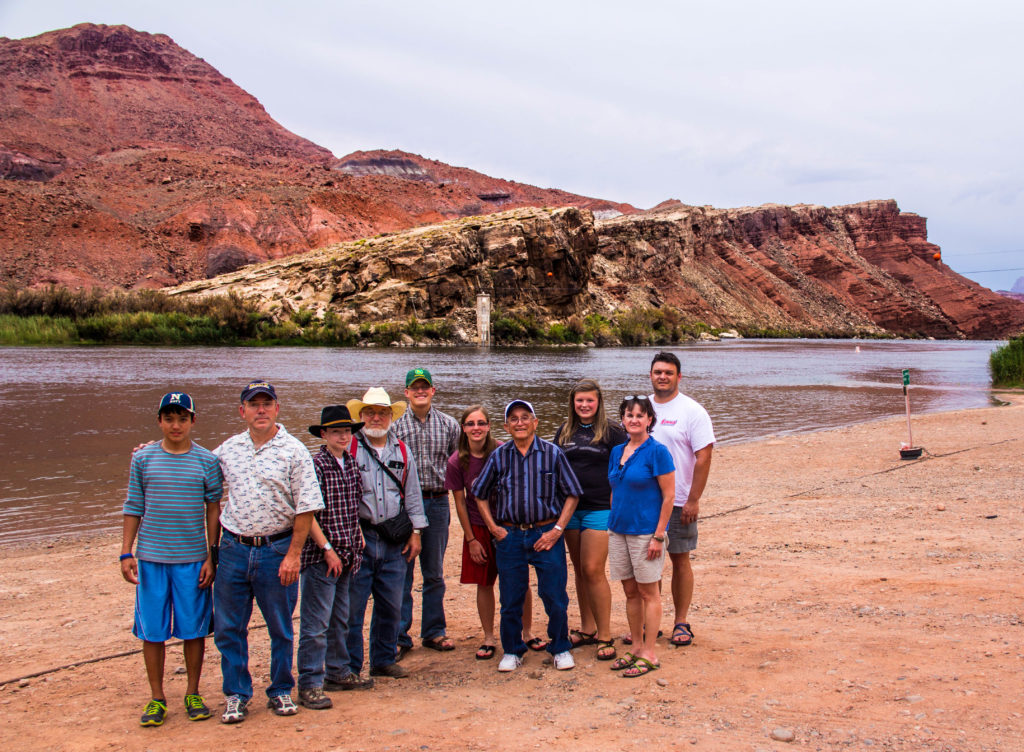
Brannin descendants in 2012 at Lee’s Ferry where the Brannin family crossed in summer of 1895 on their trek from New Mexico to Montana.

Can you imagine seeing that exodus come your way and passing by? Four covered wagons drawn by horse teams and a mule drawn spring wagon driven by one of the girls followed behind the Brannin “boys” driving the goats, horses, and burros that scattered across the landscape. Any of those alone would have been fascinating to see, but all together must have made quite a picture. I can almost hear the sounds of hooves and the bleats, neighs, and brays of the animals. I can almost see dust rolling behind the company as they pass through deserts and prairies and hear echoes from canyon walls as they descend into valleys and climb steep mountain passes.

Over one year after their departure, the Brannin clan arrived at their Montana destination, but even that wasn’t the end. Years later, wide-eyed children sat in silent awe as family gathered around the table or sat in front of the stone fireplace in the Brannin Ranch lodge and listened to firsthand stories of the historic drive north. The legacy continues to be passed on to later generations as family history is repeated in oral tales and written memories of those long gone.

As I walked away from the four-wheeled steed, a light breeze tugged at my memories, and the stories I’ve heard so many times seemed a bit more real. My step became a bit lighter. I shook the dust from my hat. It had been a good day!