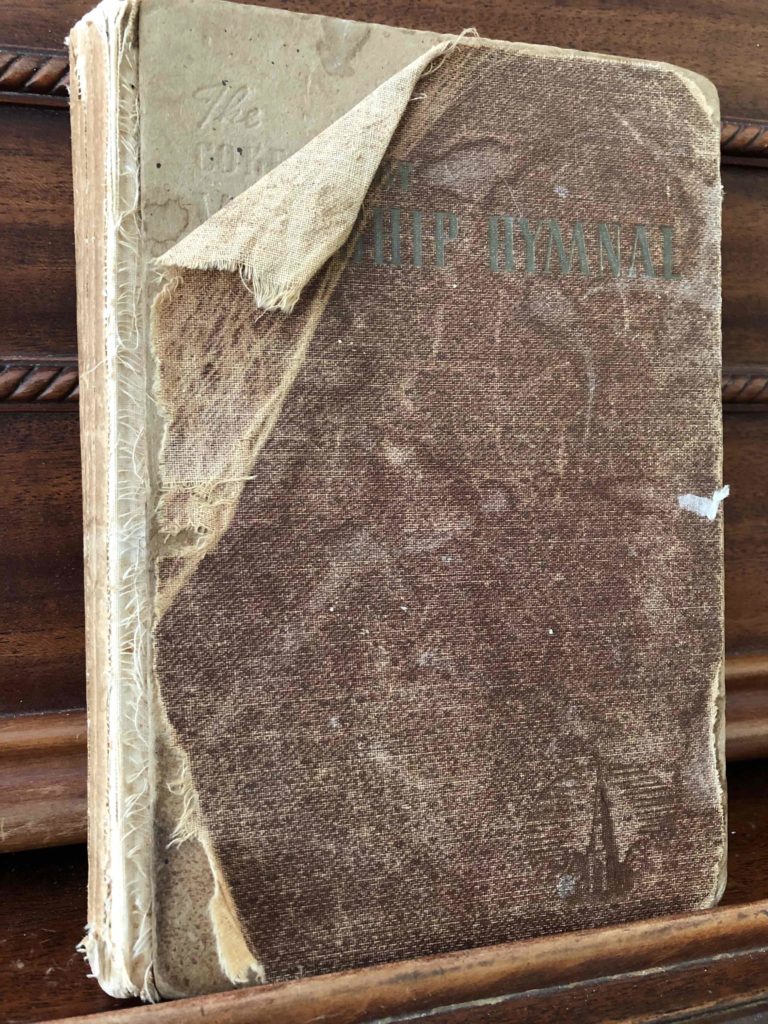
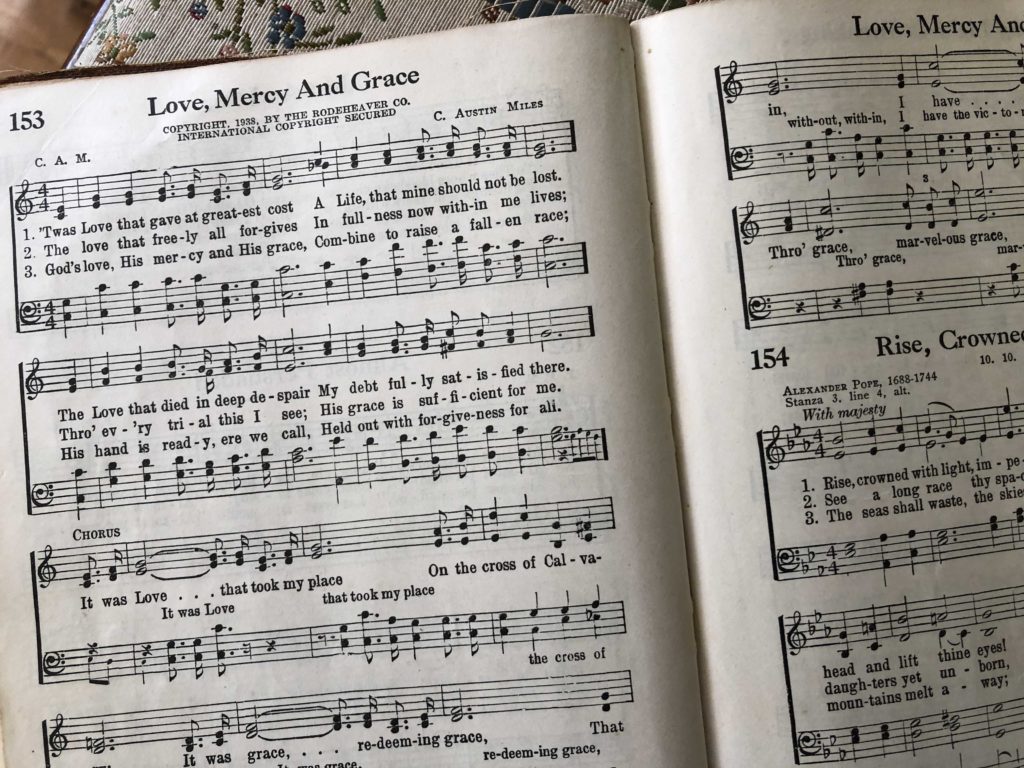
Daddy puttered off to the computer room. After about 15 minutes he returned. He was looking for something and couldn’t find it. “What were you looking for?” “A song book.” “What does it look like?” “It is kind of torn apart. It’s the old Cokesbury book. Well, I’m headed to bed.” He puttered on his way. A few minutes later he blew past me with his rolling walker. “I’m going to look someplace else.” He soon returned, book in hand. When I went in to tickle his feet, put in his eye drops and tuck him in for the night, he was looking through the songbook. “What are you looking for?” “The song that Leroy liked to sing.” He couldn’t remember the name of it. I flipped through the pages and stopped on page 153, unbeknown that was the song.
That’s when I remembered his story about Leroy. After Mama and Daddy moved to the South they became acquainted with Leroy and his family. Leroy was a bit slow – just like his folks. When it came plowing time, Leroy’s daddy hooked the plow up to Leroy and Leroy’s mom. They were the work mules. At church on Sunday Leroy would holler out, “Let’s sing One Fifty Three.” That was 153 in the Cokesbury Hymnal, “Love, Mercy and Grace.” I guess that song was sung every time Leroy was in the congregation.
Leroy’s folks would send him down the road to one of the neighbors to get their milk. He strolled down the red dirt road and got his bottle of milk. The poor guy got thirsty on the way home and drank some of it. His mom would kill him if he didn’t return with a full bottle of milk, so he veered off the road, headed to the creek, and filled the bottle before taking it home to his mom.
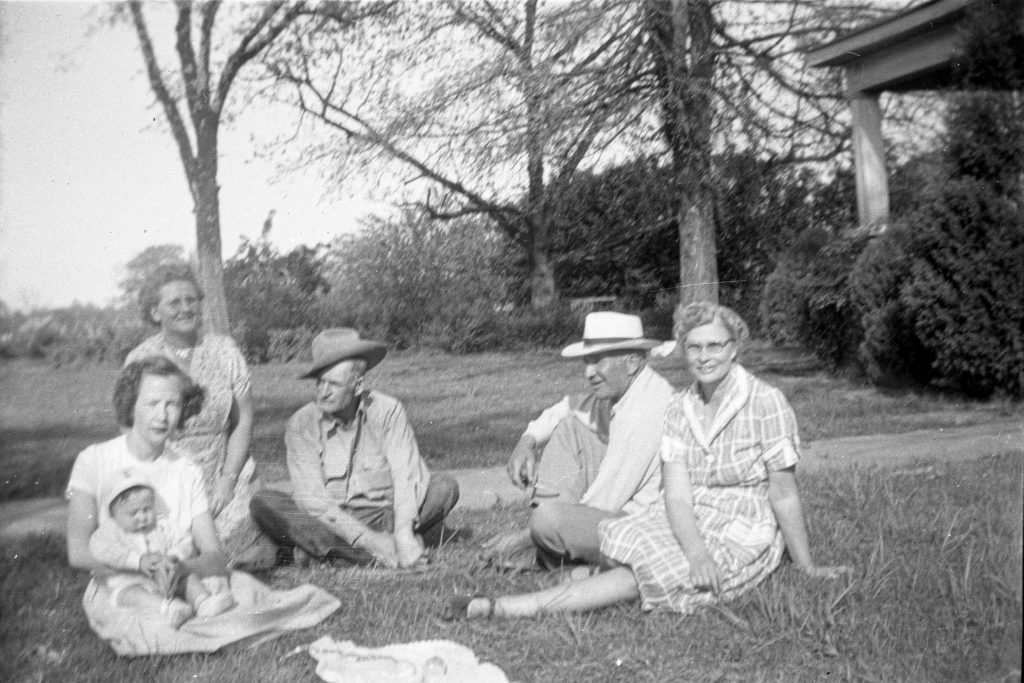
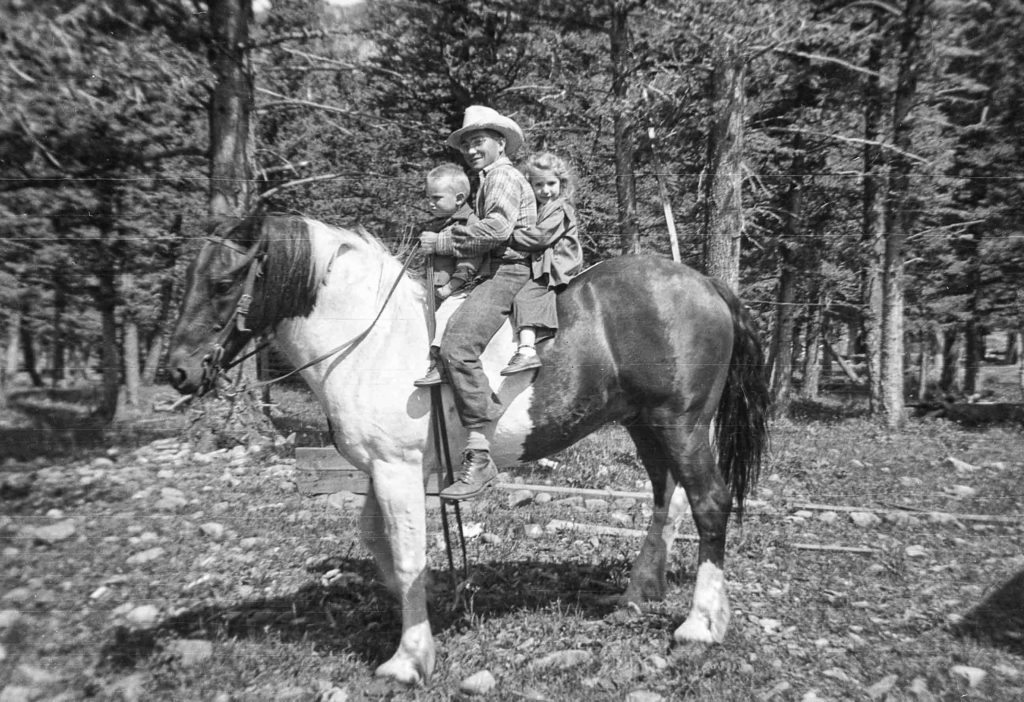
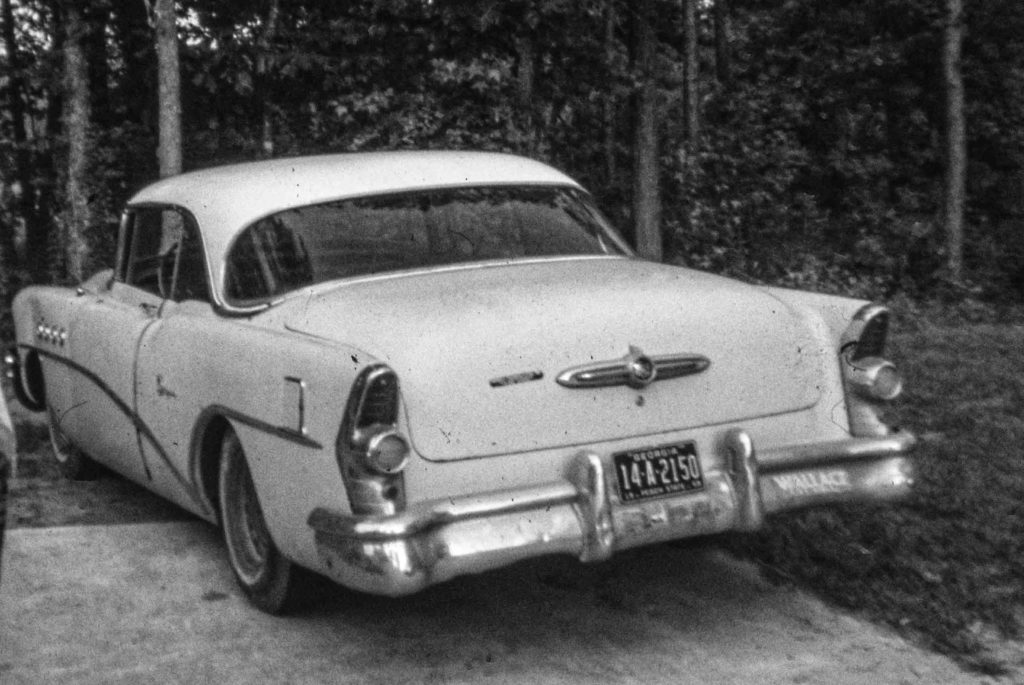
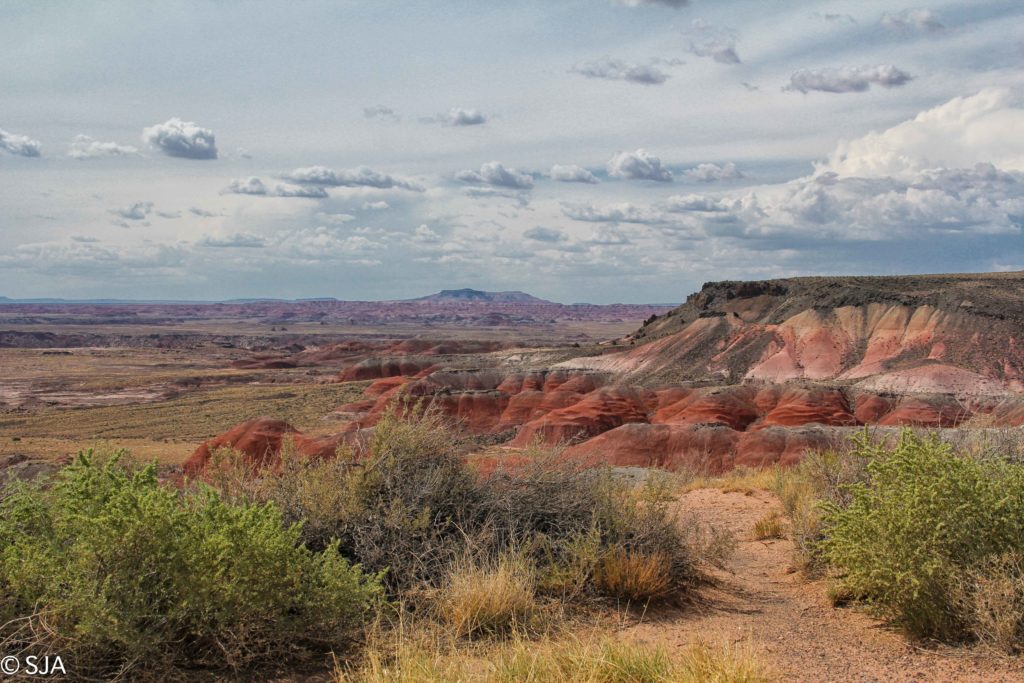
Family taking in the sights. Maybe Leroy passed by that day.
When my mother set up a burial fund through the funeral home, my daddy didn’t. I figure he thought he’d live forever. Not long after that, my mother’s fund was cashed in. Daddy became my sidekick – for almost twelve years.
Even though I suggested he change his will and make final arrangements, he kept putting it off. He finally decided it was a good idea when he understood his procrastination would put an extra burden on me.
When I asked who he would like to preach his funeral, this man, who had preached for 50+ years, said, “I don’t want a preacher.” Okay – well – that didn’t help much. “Whatever you decide will be fine.” I really didn’t like that burden of responsibility so let it slide for the time being.
The Man of the Mountains with his two oldest kids
One morning in January 2018, I gave the Man of the Mountains an assignment. I said, “Daddy, I’ve decided on a preacher for your funeral.” He looked at me a bit puzzled since he had already told me more than once that he didn’t want a preacher. “Who is it?” I paused a second and said, “You.” His eyes lit up, he got a great big smile and he chuckled that chuckle of his.
I told him I’d keep it a secret. Not even the family would know who was to speak at his funeral. He laughed. “I can say, ‘Hey, I’ve been asked to do a funeral for this old man and I know him better than anybody else.” He jiggled as he laughed, “He got old in a hurry and it was because of the company he kept. He had sisters to bring him up – his older sister,” he paused, “and his younger sister made a contribution towards bringing him up because she’d kick his slats in if he got out of line. He respected her!’”
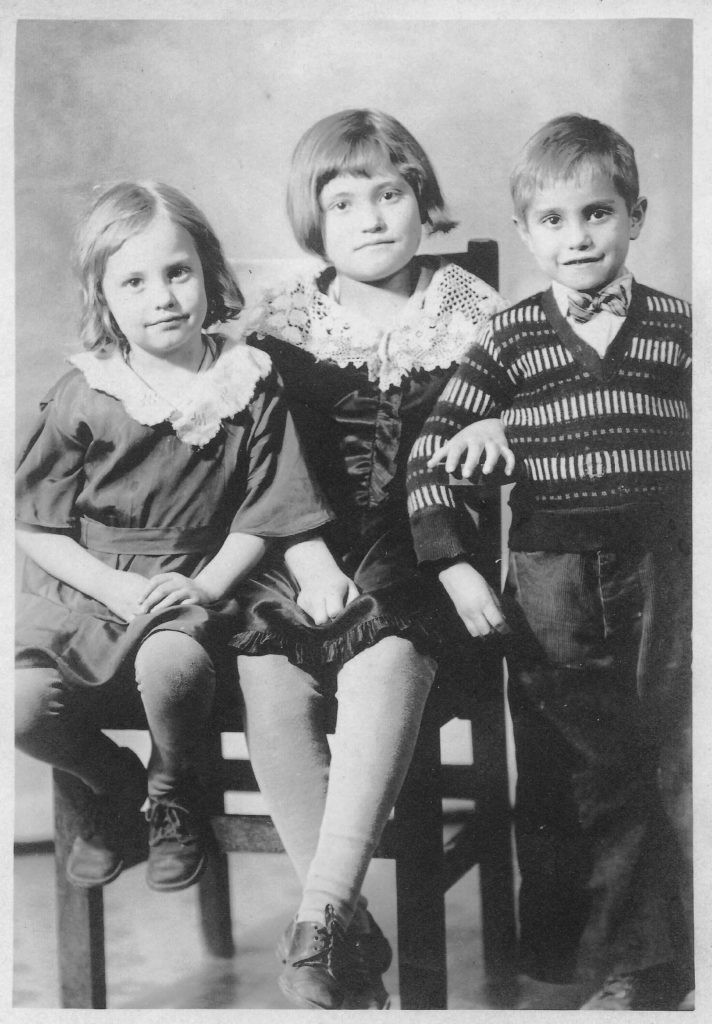
One of these girls “kicked his slats in”
After a period of several weeks, in between many days when he could barely breathe, I recorded him telling stories of his life, his family and his ministry. Little did I know at the time that in three short months his family and a congregation of friends would be watching and listening to him preach his own funeral.
This morning as I rocked on the front porch and listened to the recording of the above conversation, I couldn’t help but chuckle a bit myself. Hearing his voice again brought back many remembrances of the sheer joy of spending time with him. We shared one last secret.
His words brought laughter and tears. He didn’t need a preacher.
A bit of history from the writings of my Guest Author, my Dad
“The good are always merry, Save by evil chance, And the merry love to frolic, And the merry love to dance.”
The earliest Melville I knew had a store, an old hotel, a tin barn, saloon, blacksmith shop and some 6-8 dwellings. The tin barn served as a dance hall and service center. Its basement was used for the dance supper. I remember it only faintly. When Stanley Hansen’s tin shed saloon burned down, he built a regular dance hall. It was a log building in the Northeast corner of town, just north of where the hotel had stood. A Delco light plant furnished the power for the lights in the saloon and dance hall. A gasoline explosion beside the Delco burned this building to the ground. Sometime, before this, two different Melville stores had burned down. One was next to the Allman home. It had a sizeable basement and Victor Allman bought the burned building. He used the basement to hold the trucking equipment for his hauling business. Then he built a dance hall on the upper part of the burned-out building.
This photo of Melville had the date of 1910 written on it
The Melville dances I remember were held in the Allman Hall. Admission was a dollar. In my first high school years, music was furnished by George Tronrud, Sr. on a fiddle; his daughter Bernice, on the piano; young George or Morris on the drums; and sometimes young Adolph with a clarinet. Later Beans Tronrud (Morris, Jr.) took over the Tronrud orchestra. Beans was a great pianist and could have done well in the music profession.
the last Melville dance hallthe dance hall is no longer standing
Melville dances were promoted by the Melville dude ranchers – especially the Harts, Van Cleves, and Donalds. The dude ranchers shared in dance promotion but not the clean up after a dance. When Janice Allman got tired of fixing dance suppers and listening to the noise of the dances, Vic Allman closed the dance hall. Then, Bob Hart held some dances on the Hart Ranch. At one of them, the youngest son of the United States Secretary of Army swam the length of the Hart swimming pool with his “go to dance” clothes on.
My father called the dances “Melville Hops.” Sometimes he hopped too much, and Mother drove home. One time Jimmy Hicks celebrated too much and sang, “Kimono, Kimono, the wind is blowing round my knees. Kimono, Kimono, if you don’t find me soon, I’ll freeze.” (This was an adoption of a song entitled, “Ramona.”) When he said, “Kiss me Virginia,” to my cousin it was time to go home. He opened the pole gate above Rein’s house, fell down, and lost the change in his pocket. The next day Mama found 57 cents and kept it for driving him home.
When I reached high school age, a Melville Hop on Saturday in the Dude season was a good social endeavor. I learned to dance “Put your Little Foot” – not as good as my uncle and aunt – Ed Brannin and Julia Cannon – but passable for a Melville Hop. I also liked Schottisches, Square Dances, Circle Two Steps, and Tags.
Some of the dancers built reputations that led to unofficial nick-names. One was “The Galloping Swede.” He was a speedy dancer that galloped his partner around the perimeter of the dance floor. He pumped out the rhythm with his left arm like he was manning a pump for a fire brigade. My wife, Jean, was one of his favorite dancing partners.
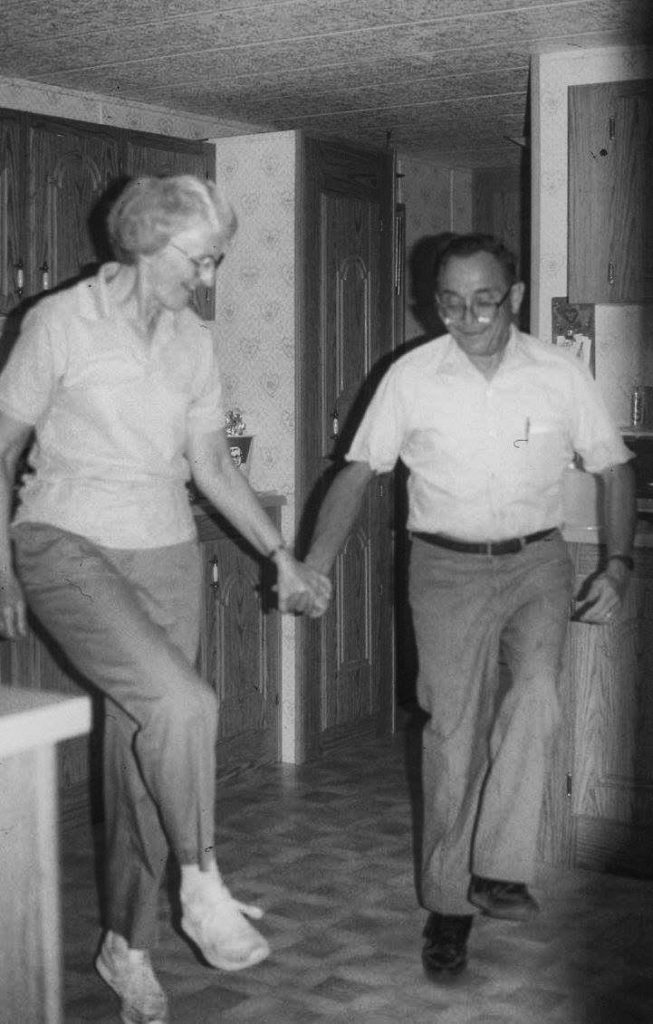
Dancing the Schottische in the kitchen
Another, a younger fellow of barely High School age, was “Backing Up McClure.” He danced all over the floor, backing up and bumping into people. He liked to navigate with my little sister, Mary Jane. Maybe he danced with his eyes closed.
World War II took me away from the Melville Hops. Shortly after that the American Legion built a Hall in Big Timber which is still a social center for community activities. None-the-less, the Melville Hops might still be going on if Bob Hart had not lost his life. After that people went to Big Timber, Harlowton, the Wild Rose School House, and the Legion Hall.
(P. S. I don’t know how wild Rose was, but I heard that her school house was a good place for Saturday night’s fist fights.)
Cousin Benny was kind of fun to have around. He was always good for entertainment and maybe even a bit of harmless trouble. My oldest sister might not agree with that.
We were headed to the mountains for a day of tromping around the old home place, wading in freezing creeks, hiking to the lake and beyond, and, of course, a picnic. Mama stayed back in town. I just can’t figure out why she didn’t want to go to the heart of the mountains with her husband and a car full of kids stacked on top of one another. One of those kids was Cousin Benny. When his face wore that cheesy smile that turned up at the corners, his eyes danced with mischief.
All went well. No one fell and busted a limb. No one got cut jumping from rock to rock in the creek. No one froze to death in the ice cold water. No one drowned in the lake. We had our picnic with no incident, and we all drank a belly full of fresh spring water. Back then, we could even belly flop and drink straight from the fast-flowing stream. Cousin Babs once said that the water ran so fast it purified itself every few feet. I believed her! Our bellies believed it, too, and we never got sick.
Little green non-poisonous snakes were sometimes found at Gommie’s Lake.
As the sun gave its warning that it had to rest soon, we all piled into the car for the return trip to town. Big Sis got to sit in the front seat because she was the oldest kid with us – and the most reserved and refined. She was a no-nonsense teenager. There may have been another kid or two crammed in the front, but the rest of us scrawny, wet, dirty kids climbed in the back seat, including Cousin Benny.
Those old cars could go anywhere. It didn’t matter if it was a smooth paved road or two parallel dirt trails with tall grass growing in between. There was no trouble fording the creeks. If we hit a rock, that old car just bounced up onto another and off we’d go, the crunching sound of river rocks beneath as they spit out from under the tires. Hitting the rocks and bumps in the road was like riding a bucking bronc.
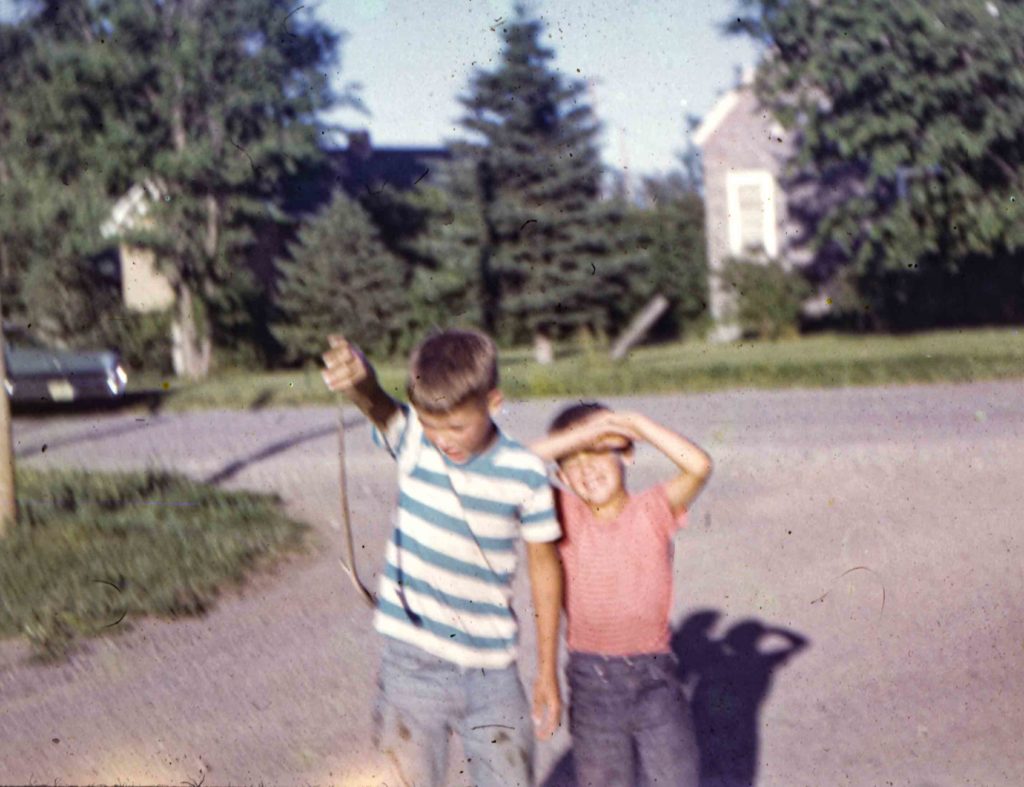
We hit a deep hole and catapulted out. Cousin Benny let out a shriek. Daddy stopped the car, “What’s the matter?” He didn’t see any blood and no one was missing. Cousin Benny said, “My snake got loose.” My refined, reserved big sister let out a scream. We all stumbled over one another getting out of the car. Well – all but my big sister. She was glued to her seat but threw her feet up on the dashboard quicker than greased lightning.
We looked under the seats. We looked in cracks. We called, “Here snake.” That poor snake was scared to death and he buried himself where no hand could reach. There was no choice but for us to pile back into the car and continue our journey. I will have to admit that my feet were pulled up on my seat, too.
It was quiet on the trip to town. Well, I take that back. My sister complained all the way back. She released her arsenal of fiery darts at Cousin Benny as she muttered threats under her breath, casting backward glances as often as she could without getting a crick in her neck. Her feet never touched the floorboard. The snake didn’t show his little green head or any other part of him. We pulled into the driveway and big sis shot out of the car like a rocket, even before the car came to a complete stop. The search for the snake continued. With sis out of the way, he thought it was safe to emerge from his hiding place. He was released from his prison with a stack of kids and an angry teenager. He slithered away to find a peaceful refuge. And so ends my story of Snake in the Car!!!!
Cousin Benny with his snake friend and his brother
This is my 195thpost since I started my blog one year ago today. For those who have read some of the stories, I hope they have given you a reprieve from the events going on around us. Hopefully some of the tales have given you a smile and a glimpse of places you’ve never seen. Maybe some have been educational or prompted you to connect with your ancestors.
Prior to starting my blog, I jotted down topics, notes, places visited, etc., to determine if I had enough material and stories to write about. I wasn’t sure, but thought I’d give it a try. Growing up in a family of story tellers, I was a bit jealous that I didn’t have wild tales and memories like they did. They always told stories of wild west adventures of those great pioneers who forged trails in the wilderness and survived to tell it. Little did I know that I would be able to muster up 195 posts, to date, and I have barely marked anything off the list!
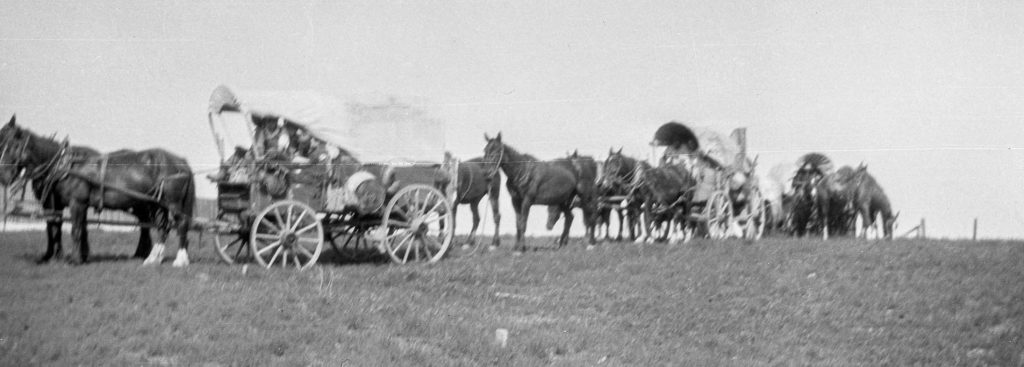
Family wagons headed to Idaho from Montana in the early 30’s
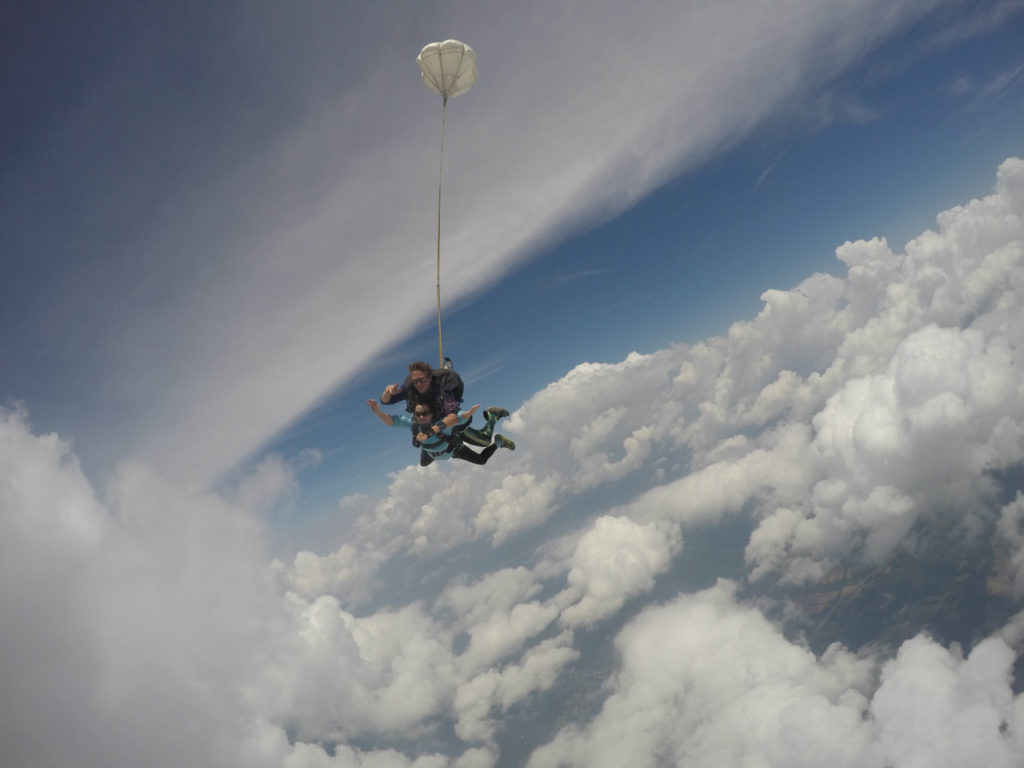
Since my first post, you have traveled with me across the country to swamps, deserts, oceans, streams, mountains, and National Parks. We have camped, cruised, hiked, backpacked, spelunked, skydived, rode in boats, fished, kayaked, and flown. We’ve met family, made friends, and seen lots of wild animals. We’ve gone on “destination unknown” adventures, eaten good food, took a trip to the moon, visited ghost towns and historical sights. We’ve chased bandits, walked among tombstones, met heroes, and retraced our ancestors’ steps. We have traveled over hills, mountains, buttes, and prairies. You have met some of my family, sat in my Granddad’s lap and dunked in his coffee, read stories by my Dad and other guest authors, made quilts, and shared memories of my childhood.
Thank you for sharing my “Back Window Adventures.” I hope you will join me for more. I might have another story or two.
I will admit that my sister was more of an avid fisherman than me. If I was getting a bite, I was all in, but if not, I could think of a million other things I could be doing. One of those things was exploring. I would wander off and climb on logs, watch for animals, play in the water, examine various flowers and plants, pick berries, and simply enjoy the scenery. Most of our fishing was in the mountains by cold streams. If you haven’t figured it out by now, that setting suits me fine. As I got older, my wandering included a camera. That would (and still does) satisfy me for countless hours.
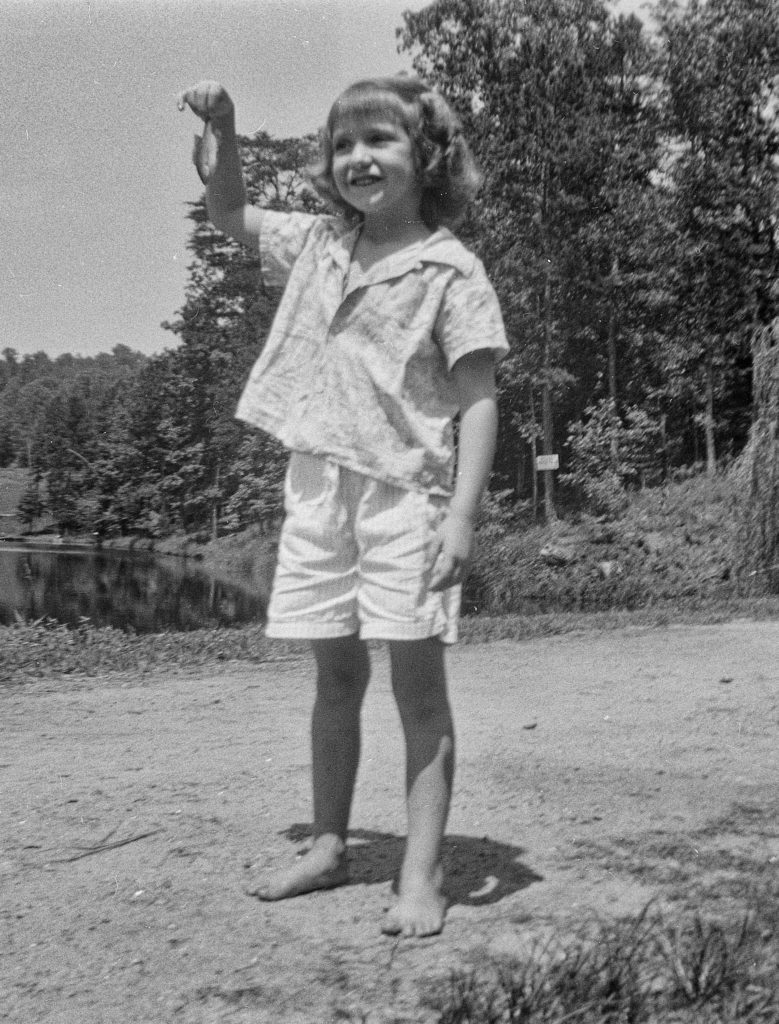
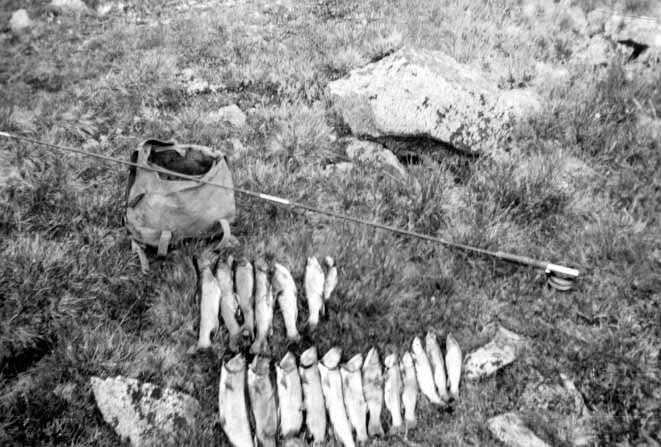
No, this wasn’t her prize fish. This was part of her training for catching the big one!
One summer we headed to the mountains for a day of fishing and a picnic. My sister had good luck that day. She caught the biggest fattest trout. As soon as we got back to town, she pulled out her prize fish to show everyone. That was a mistake!
There was another fisherman, “Grumpy John,” who didn’t go with us and even though he wasn’t along, he didn’t like anyone to catch a bigger fish than he could – especially a scrawny little girl. His eyes were green with envy and he said, “I’ll take care of those fish for you.” Sis had decided she wanted to take her fish home. In fact, the whole mess was heading south. The fish were put in water and made into fish ice cubes. All the fish would fit in the cooler perfectly for the trip home.
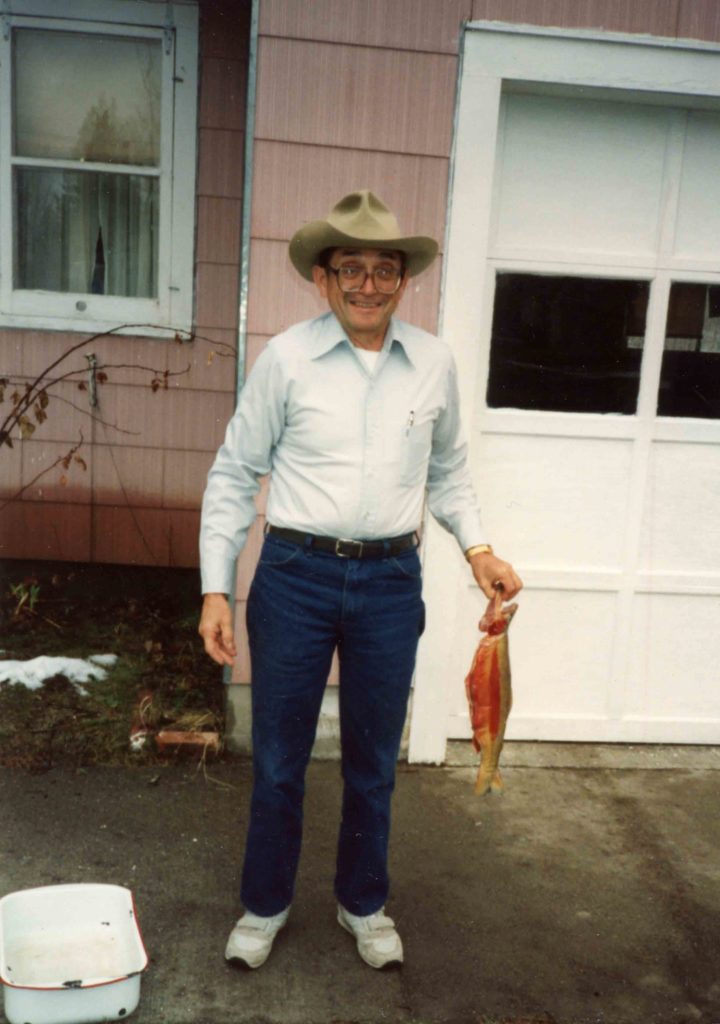
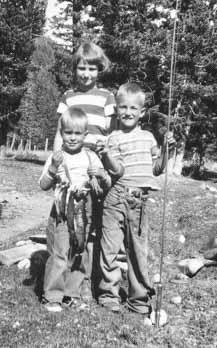
Daddy with his catch
Just a few days later, it was time to head home. Grumpy John said, “I’ll get your fish out of the freezer and put them in the cooler.” It was usually a three-day trip back home. Either the first or second night we stopped to get a room. Daddy was not a big spender when it came to motels. We stayed in a room that looked like a cozy home for bedbugs and other critters. The cooler with the fish was taken into the room. The fish ice cubes needed to be iced down a bit more for the rest of the trip. The lid came off and after a more thorough inspection, it seemed something was missing. Instead of the fish we caught, including the prize fish, there were smaller ones in their place that he had frozen previously.
“Where is my fish?” You talk about mad, my sister was mad! We were too far away to turn around and go back to get her fish. If she thought she could have gotten by without being slapped, she would have said a few choice words. “He did that on purpose!” she said. We all agreed.
I’m not sure, but I think she might still be holding a grudge against Grumpy John for “stealing” her prize fish. After all, that was the one that got away.
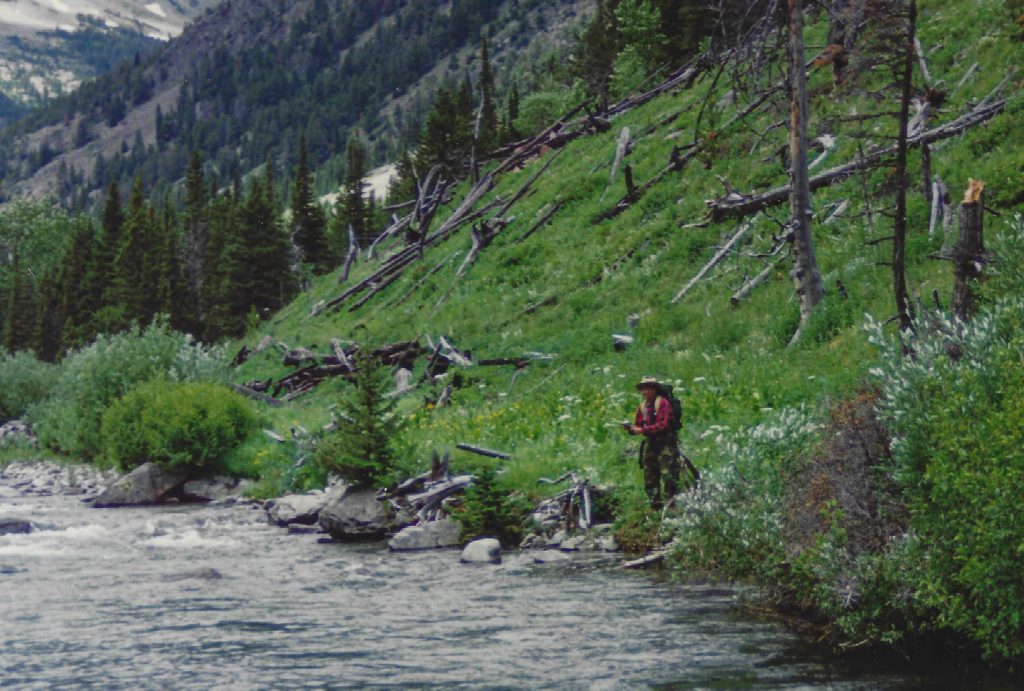
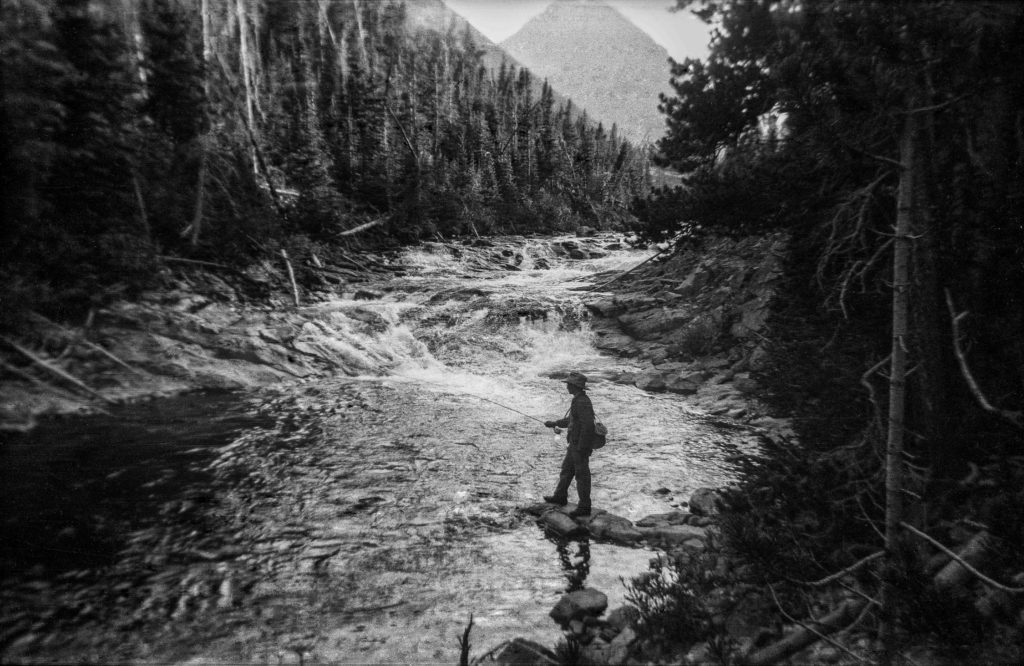
I thought my dad was a master fisherman, I guess just because he was my daddy. He used a casting rod in earlier years and then he graduated to a fly rod. I wouldn’t say he had the greatest form, but I sure enjoyed watching him fly fish. He cast out his line, then pulled and eased out the line with his other hand, letting it flow with the rippling river, teasing the fish and luring them to take his bait. Sometimes it even worked.
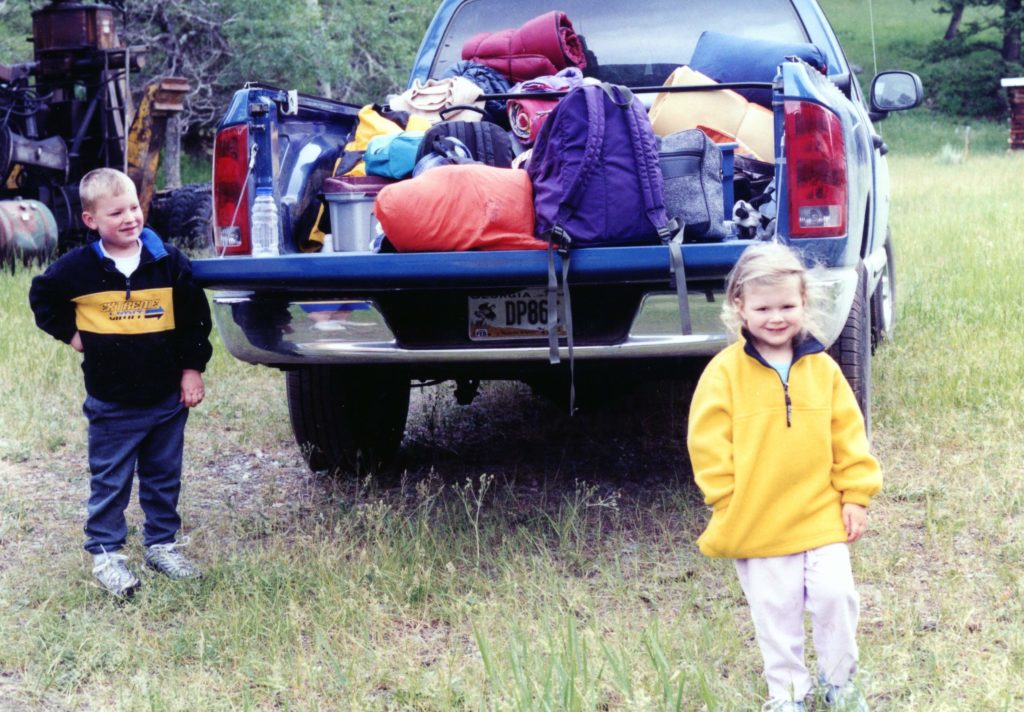
He didn’t mind taking us kids fishing – or his grandkids – even though I think he spent most of his time getting hooks out of trees or kids’ hats, or unsnarling a stick we caught. When it was time to go fishing, we were all excited. We gathered up our gear, piled into the back of the truck and headed to the mountains where the fresh streams were home to rainbow and brown trout. Daddy fished those creeks many-a-time. He knew where the good fishing holes were.
The rule was, “You clean what you catch.” Another rule was, “Bait your own hook.” We would catch grasshoppers or buy a little cup of worms if we weren’t able to dig some out of the garden or from under a rock. I’d bait my hook and some of the worm’s guts or grasshopper brains would squish out. After we caught and cleaned a mess of trout, it was time to eat them. The best fish were fresh and cooked over an open campfire. They were pretty good just taken to the house, battered with seasoned flour, and fried in a cast iron skillet.
We ate the trout like a sandwich. We held the tail in one hand and the head in the other (unless it had the head cut off). Gingerly, lightly, our teeth sank into the back of the trout. It was so tender the meat slid right off the bones. Yum, yum. By the time we were done, there was a pyramid of intact fish skeletons with tails and heads still attached.
The fishing bug passed down the family tree. My nephew is a master fisherman. He can catch a fish almost anywhere. One year, while traveling out west, we stopped to mine for gems at a roadside stop. We bought a bag of gem gravel and poured some onto a screen. After shaking out the excess dirt, then came the process of dipping the screen in water to wash away the rest of the sediment. We found several sapphires, garnets, and other gems. My nephew shared a bag with some of his family. He shook his screen and dipped it in the water, shaking out the extra dirt. When he lifted his screen, lo and behold, he had caught a fish! No fishing pole required.
In my next stage of life, I plan to take up fishing again. My husband will be joining me. I need someone to get the hook out of my hat or my britches. After all, I did learn some great skills from my daddy. Here’s to you, Man of the Mountains!
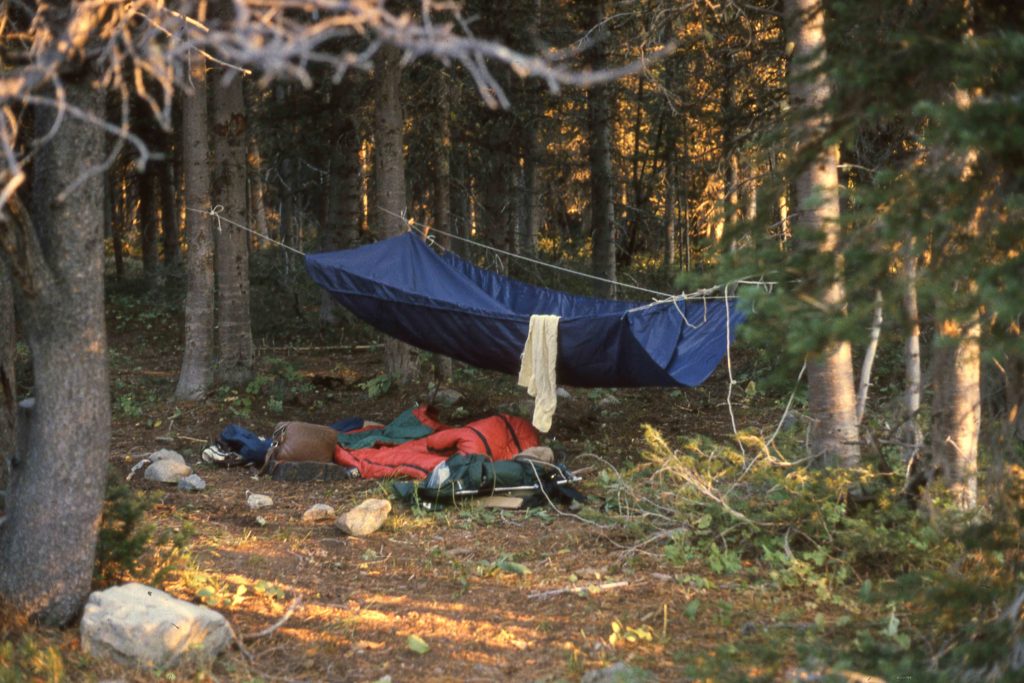
I awoke to the soothing song of the ice-cold mountain stream as it leapt from rock to rock on its journey to the plains. Everything else was still. The tent sagged from the moisture that rested on top. It was so quiet I could almost hear each little drop of water that beaded up and fell. I gently pulled back the flap of the tent and was greeted with the sun already smiling as it approached the valley. It was only 5:00 am but the day was anxious to make its grand entrance and shake us from our rocky beds. I emerged from the tent that shook just enough to shower me with the night’s dew.
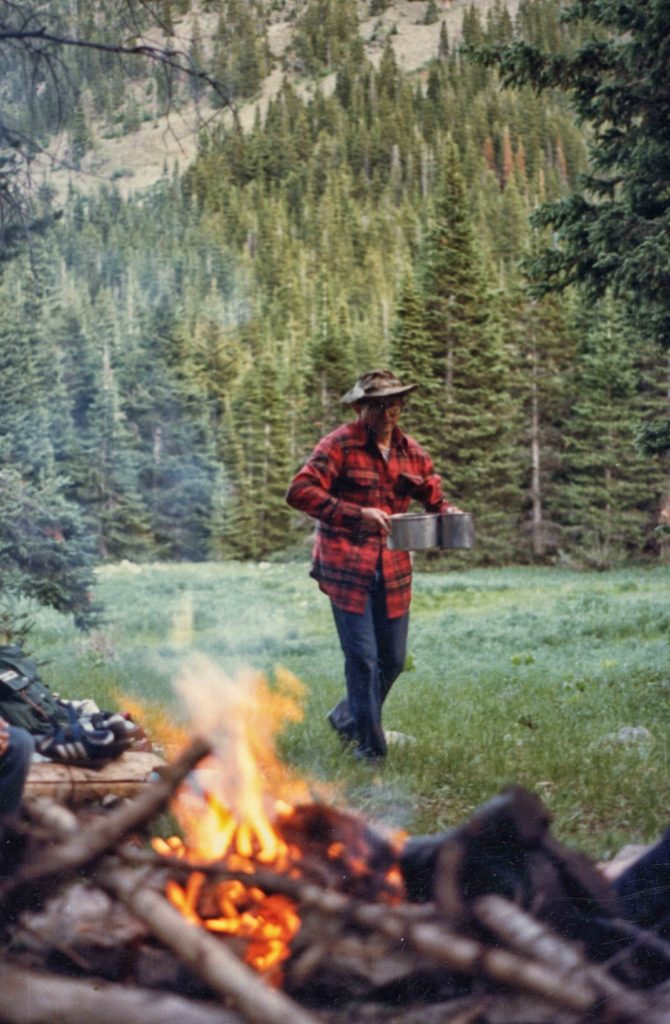
Soon the fire was started. Flames licked the sky as tiny sparks shot out from the burning wood and flew into the air. A kettle filled with freshly dipped water from the creek was placed near the fire to get hot. Campers emerged from the tents and lean-to, some clad in long johns, some already shimmied into jeans and wiping sleep from their eyes. They backed up to the fire then found a rock or stump to sit on for their first tin mug of hot Tang or coffee.
Rocks that served as burners had already been strategically placed within the fire ring. Before long, our breakfast was cooking. A few Snow Under the Mountain roots were sizzling in the skillet over hot embers. Those were shifted to the edge of the pan to make room for the hotcake batter. Squeeze butter and honey sat on ready to be slathered over fresh hot hotcakes. We ate our breakfast and discussed where our path would lead us that day and whether or not we would have fresh trout for supper. I never depended on that and carried a supply of other supper options. You eat what you catch, you know, and usually that was nothing.
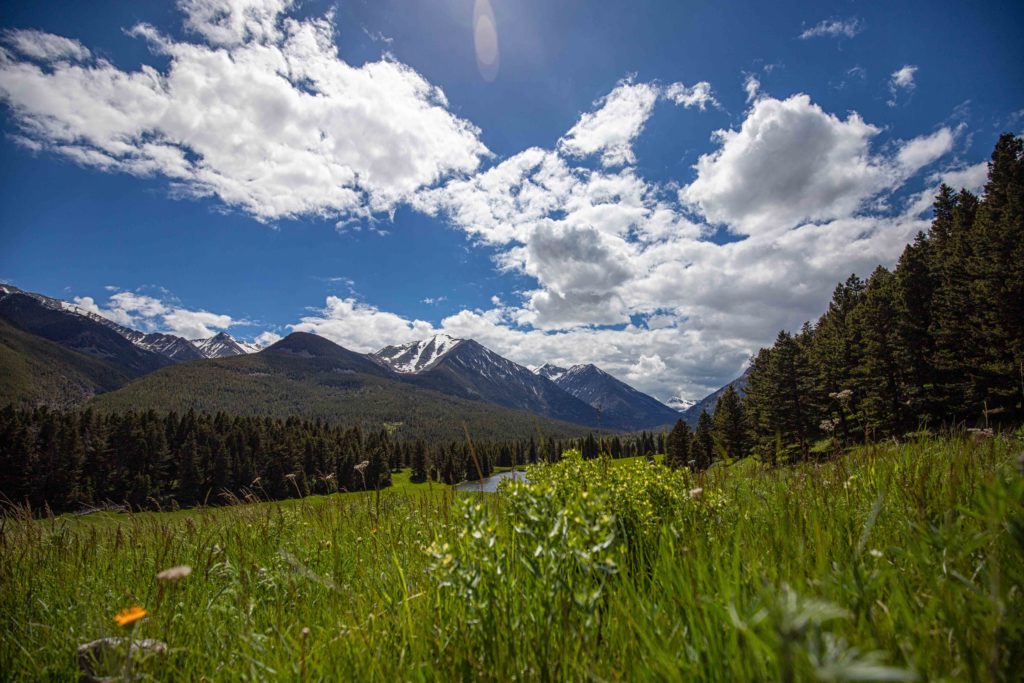
Fresh cool air filled our lungs and our spirits as we packed up our gear and started up the trail edged with bluebells. Some of the path was smooth and carpeted with evergreen needles. Other parts of the trail were rocky, steep, and jagged. Narrow wildlife trails led through alpine meadows donned with lupine, sticky geraniums, harebells, penstemon, Brown-eyed Susans, and an occasional Indian paintbrush among other wildflowers. As we hiked deeper into the mountains, alpine lakes that looked like they were formed from a giant’s footsteps came into view. They sparkled as a myriad of diamonds danced in rhythm with the breeze on the surface of water.
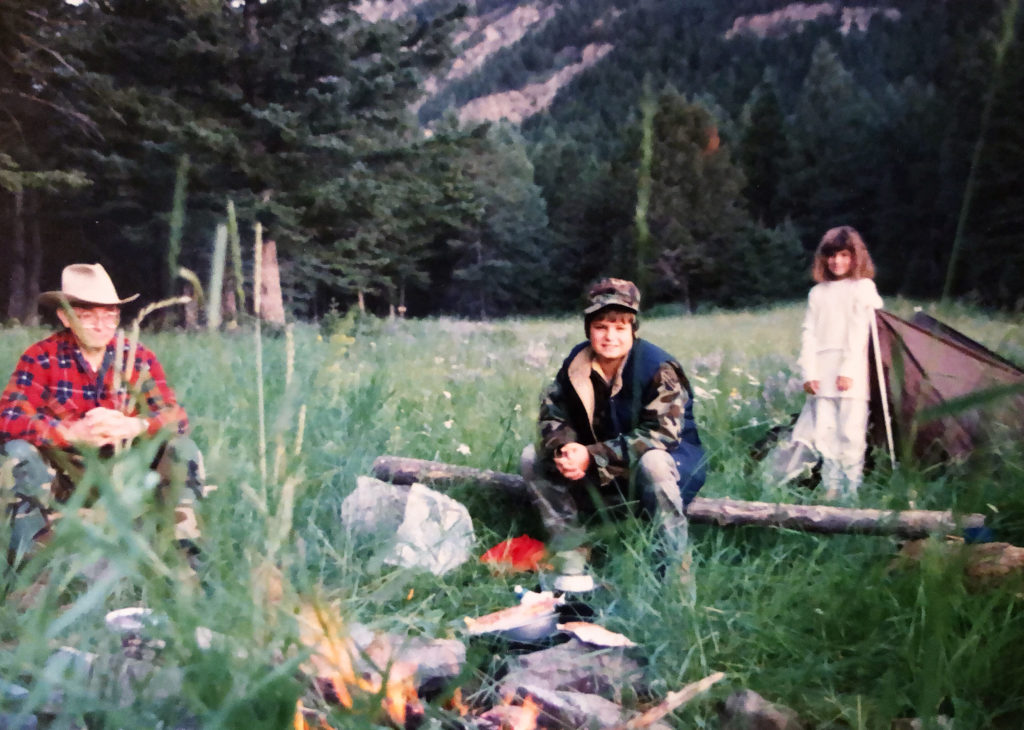
The sun sank lower in the sky, giving the signal to set up camp. We pitched our tents and started the fire to cook the evening meal. It is a good thing we did not rely solely on the fishermen’s skill (or luck). We managed to salvage enough from the campers’ packs to supplement the meager catch of the day. With the meal finished, everything was washed up and food items hoisted high in a tree to avoid any unwanted furry guests. The evening fire was a time for reflection on the days behind us and expectations for the morrow. Retelling of the day’s events grew with vivid animation and laughter. As the fire died down so did our energy. We banked the embers to keep enough spark alive for the morning kindling.
As the last light faded behind the mountains, I bid the day farewell. With a smile of satisfaction, I pulled back the flap of the tent and crawled into my rocky bed as the mountain stream sang its evening lullaby.
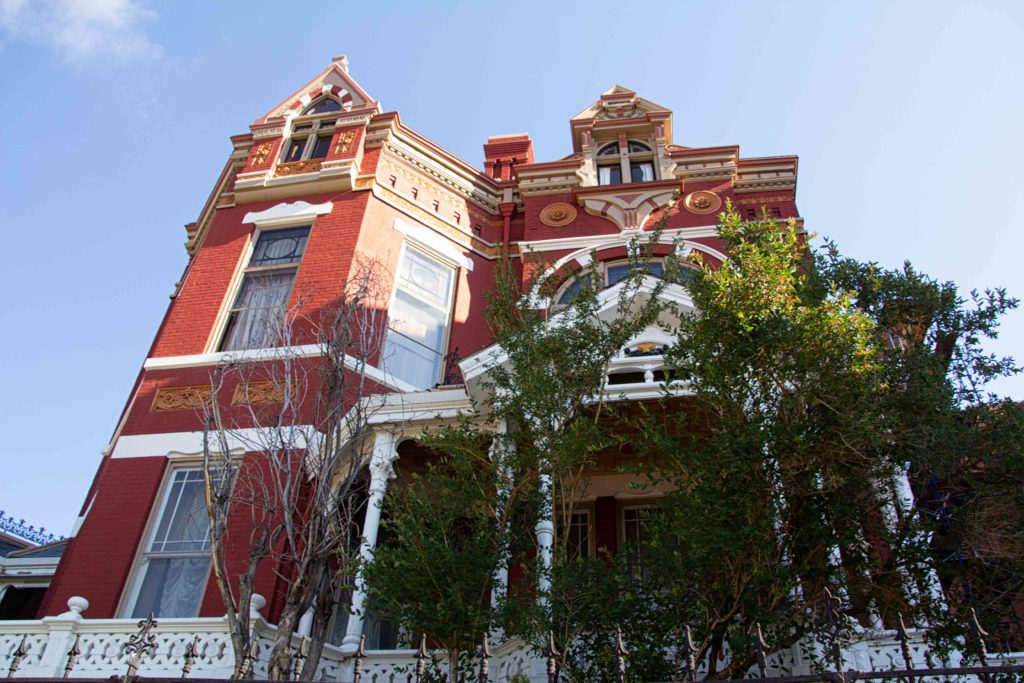
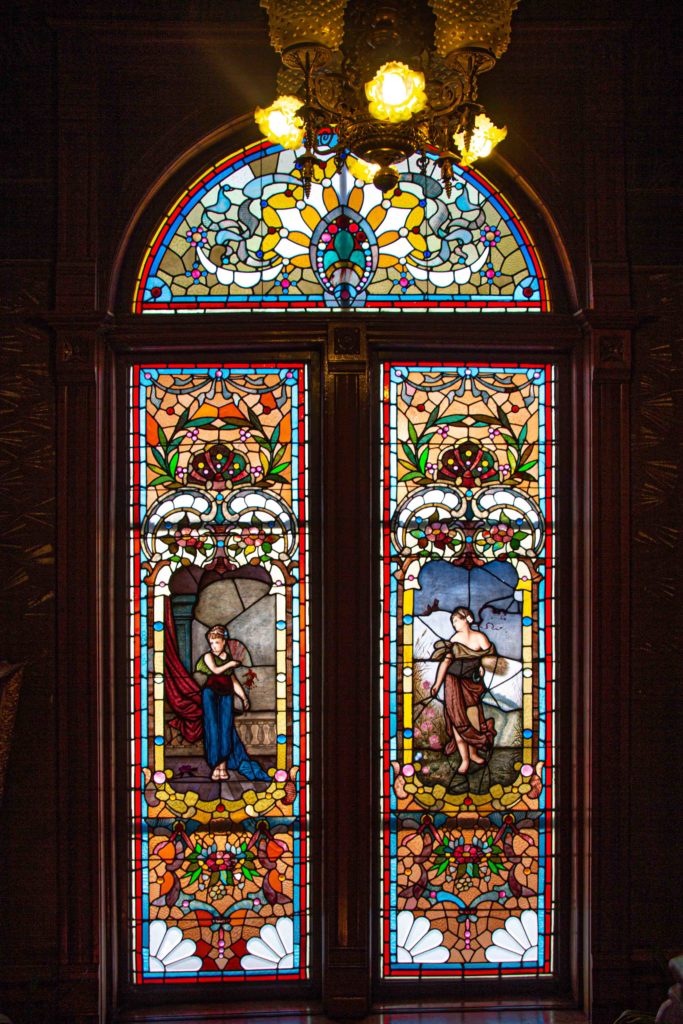
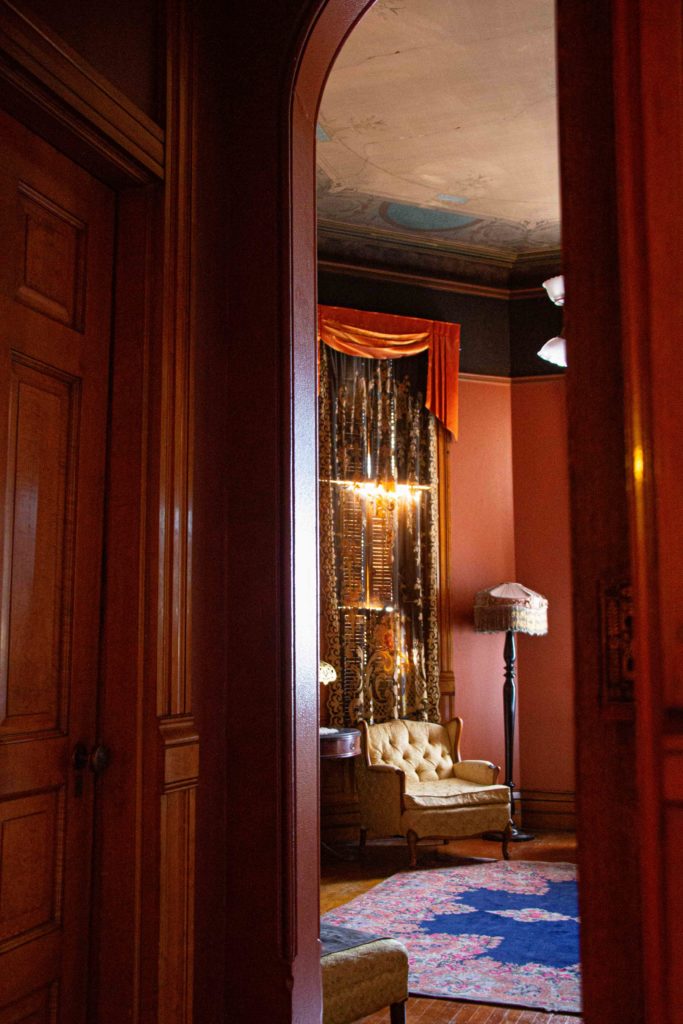
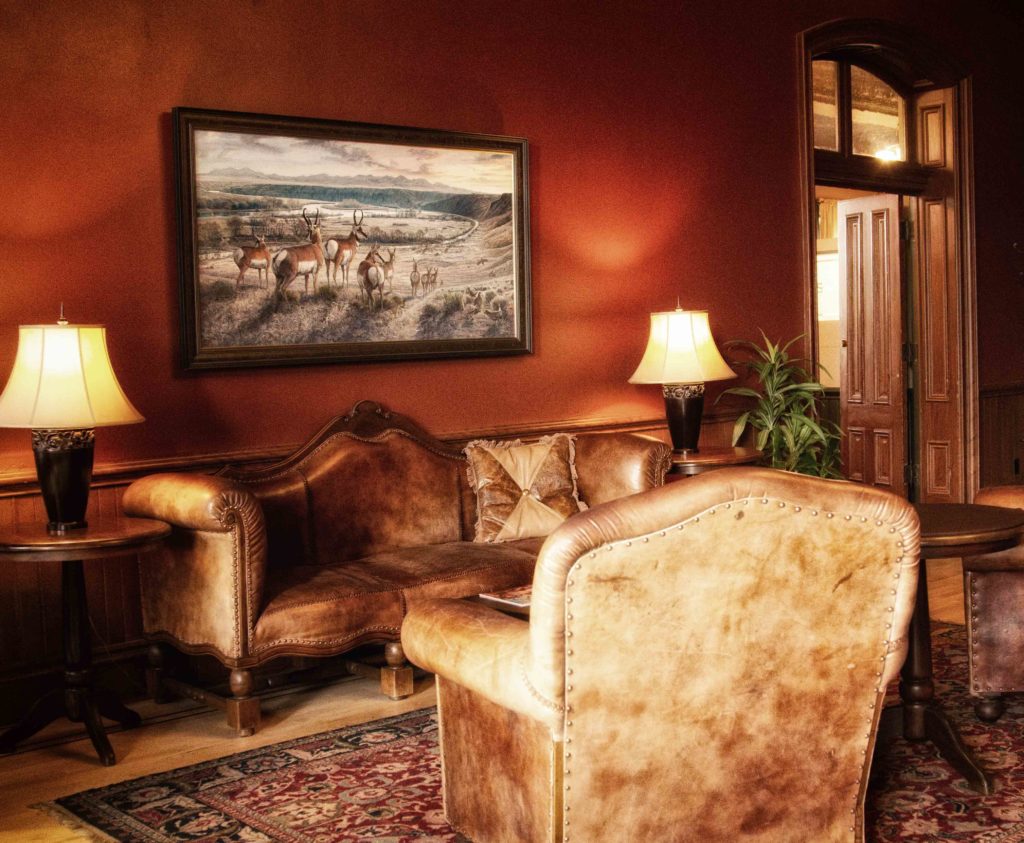
There was a sense of slight unrest in the halls of the Romanesque Revival Victorian mansion as if there was some unfinished business. The faint silhouette of the Copper King mogul sat at the ornately decorated dining room table. The landing of the wide red carpeted stairs was lit by a prism of color reflecting through intricate stained-glass windows. Each room’s décor pointed to the period and style of the Victorian home. History came to life as story after story revealed the characteristics of those who once lived in the lavish rooms. Guests who spend the night in the mansion have a more authentic experience of the life and times of the rich and famous in that era as they get pulled into the historical vortex. It’s easy to sense and imagine the scenes that could have gone on in the household of this wealthy elite family.
Stained Glass WindowsOne of the rooms in Copper King Mansion
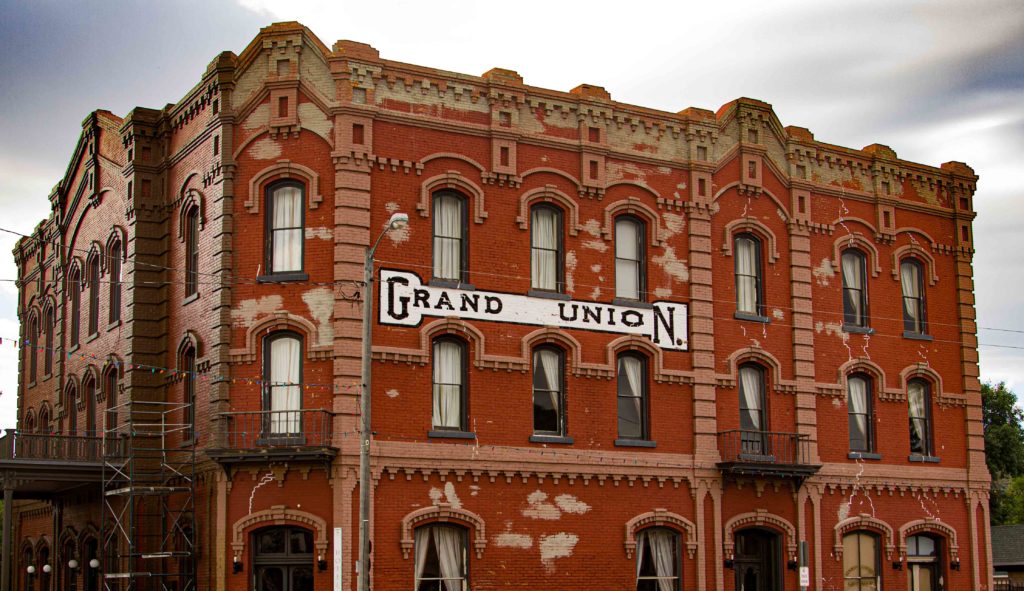
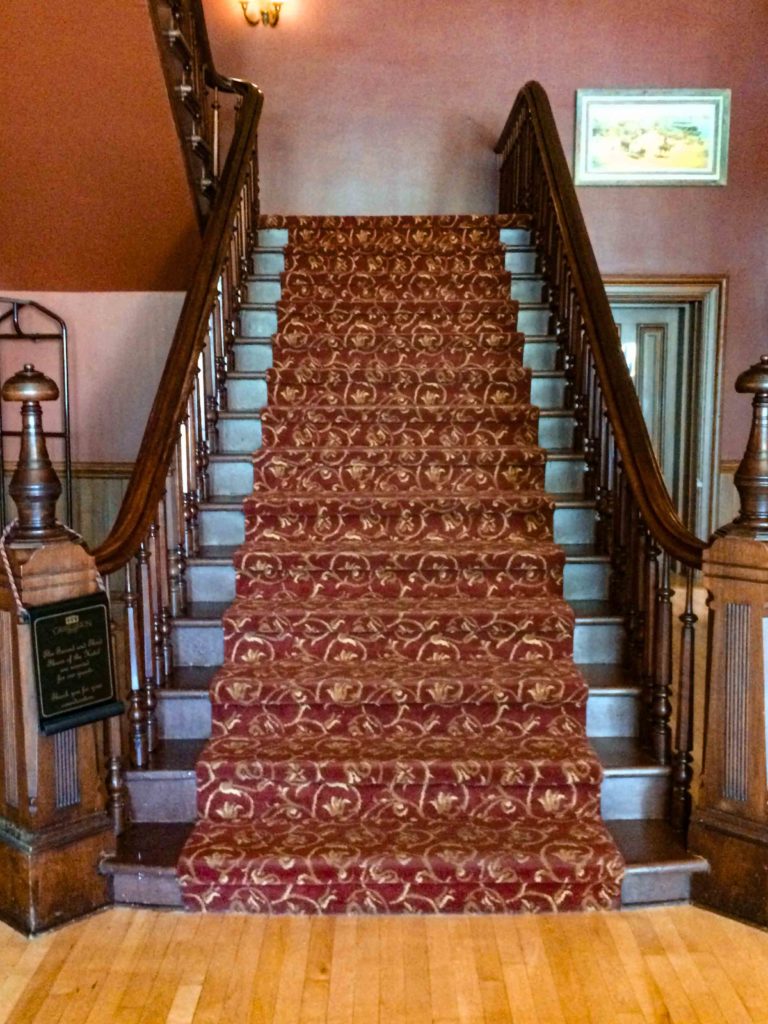
The scene was much different in the old western historical inn along the Upper Missouri River. It was the gateway for pioneers traveling to the great Northwest. People of all kinds walked through those doors. Stories are told of the inn being haunted which helps bring the imagination alive. The view from the top of the richly colorful stairway offers a view of the lobby below. Looking down, I could almost see shadows of the past as faint figures of women wearing button up boots, poofy dresses and feathered hats walked by. The door slammed silently as ghostly shadows of men wearing bolo ties, cowboy hats and boots with spurs that jingle entered the room. I thought I caught a glimpse of an old Indian in full head dress sitting on the bench along the wooden sidewalk just beyond the window. Maybe it was just a puff of smoke from a man’s pipe. Weary travelers just arriving from the boat ride up the Missouri merely sought a place to rest and have a meal as they waited to load the wagons headed further west over the rough wild country. Other guests, more elite, drinks in hand, mingled at the back of the inn along the river.
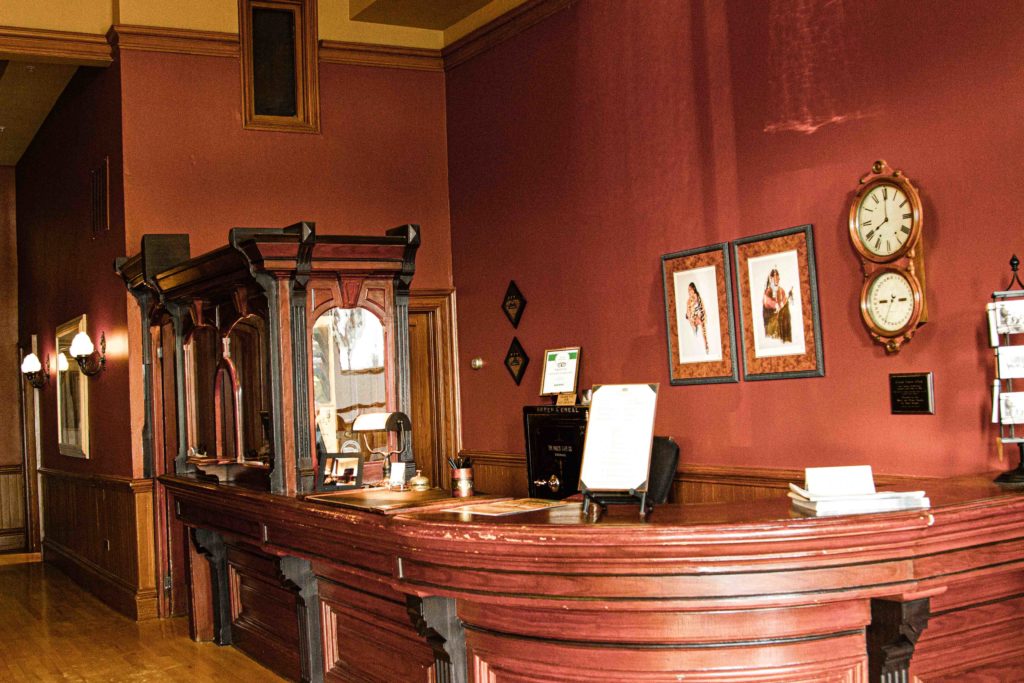
Lobby of the Grand Union Front desk
These aren’t just the stories of others. Rather, I find their history intertwined with my own. The Copper King was an acquaintance of my Great Grandfather. He was a frequent guest at the hotel in Virginia City that was owned by my cousins. One family story is that the “Copper King” was sponsored as a candidate for entrance into the Masonic order by either my Great Grandfather or one of the cousins who owned the hotel. After his acceptance into the Masons, he forged relationships that were instrumental in his climb to fame, wealth and shrewdness. Years later, my Great Grandfather went to visit the Copper King who refused to see him or even acknowledge him in any way. Maybe that’s why I had a feeling of unrest in the halls of the Copper King’s mansion.
Another part of my history of that era was that of Mary Furnish, my 2C2R (second cousin twice removed). Her sister, mother and stepfather were among the group of Brannin relatives that traveled to Montana in 1864 (along with my Great Grandfather, Aunt and other cousins). Mary could not make the trip because of illness. The following spring, she headed west to Helena bringing with her the furniture and Steinway piano. She traveled by boat up the Missouri River. The boat could go no further than Ft. Benton, Montana. From there, travelers had to continue their westward journey by wagon. I have little doubt that Mary Furnish entered the very doors I went through as she stepped into the old Grand Union Hotel.
Grand Union stairway
I love to stay in old historic inns or homes that have been preserved to their former glory. It’s not so much the buildings but the foundations upon which they stand – the history and the stories, some of which are woven into mine. It’s easy to be transported to a different world and imagine how it must have looked. Even the sounds come to life. As I think of it, I remember that some of those scenes are even from my childhood – bowlegged cowboys with their spurs reflecting in the sun and Indians along the boardwalks of Western towns.
Whether it’s preserving the past and keeping our history alive, or those things from my memories, each causes my heart to skip a beat.
My Guest Author today is my Dad in his recounting of the Logger’s Cabin
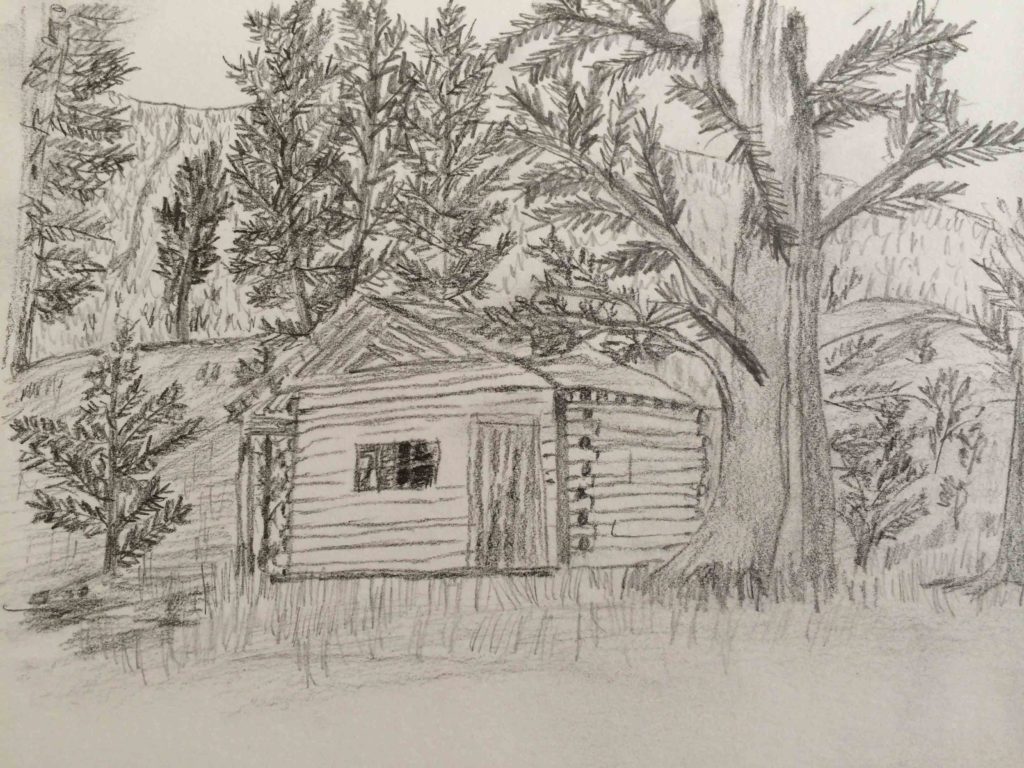
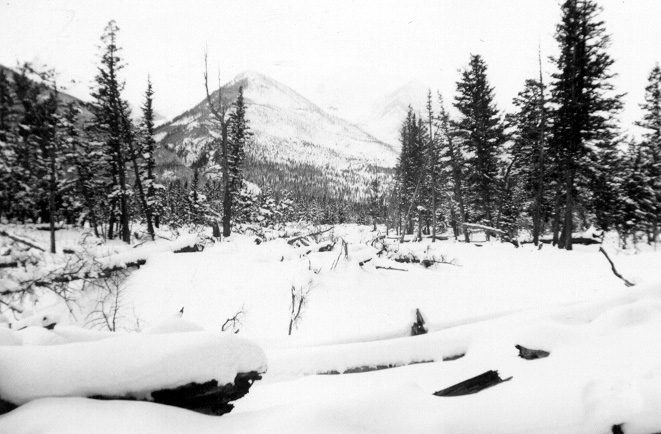
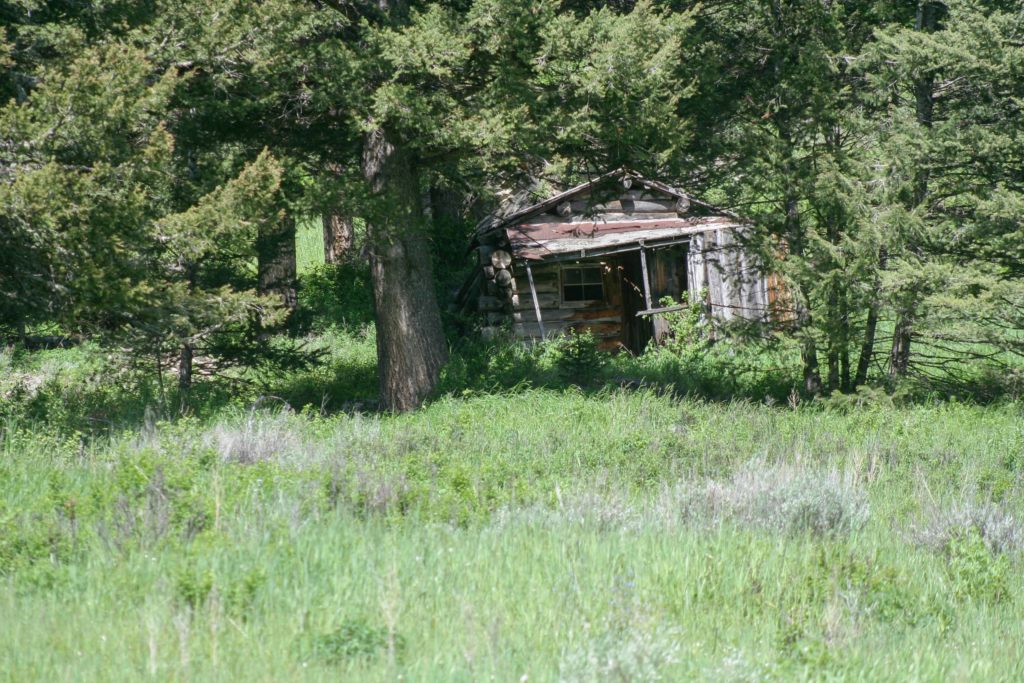
Ours was the last place on the Sweet Grass, and then a logger’s cabin was built on the Forest Section about three-quarters of a mile west of Gommie’s Lake and maybe a quarter of a mile beyond Ward and Parkers’ boundary fence. The cabin was located down under the hill below the road. It was put up in the fall or late summer and was right next to the steep bank that led up to the road. Billy Briner and two Reynolds boys from Melville were the first residents. They had a log contract for two dollars a thousand feet. That would give them more than a dollar a day for each one, which was a dollar more than they could make any place else in those depression days.
There hadn’t been much rain or snow for two years, but after they moved in snow started falling. The wind blasted out of the northwest, and the snow blowing out of the trees made it so a person couldn’t see more than fifty yards. The temperature dropped below zero and the Reynolds brothers got homesick for downtown Melville and home cooking, and besides, they knew that when October came, they could get some really bad weather. They moved back to town and Riley Doore became their replacement.
Riley was a good worker, a good storyteller, and a passable cook. He had anti-freeze in his veins and wasn’t afraid of bad weather. Besides that, he needed a job. The round-roofed cabin was well protected from the wind, and it faced the south. This suited the needs of Briner and Doore as they reduced forest service trees to ten, twelve, fourteen, and sixteen-foot logs. They were allowed to scatter the tree limbs, but the top of the tree stumps had to be no more that fourteen inches from the ground. This caused trouble because the snow lay about two feet deep. But like Mother asked, “What can you expect if you work all winter back in the wilderness?”
Riley Doore and Billy Briner batched all winter in the cabin. Sometimes they hiked the mile and a half down to the sawmill or the next two miles to the Brannin Ranch where Anna Doore hung out. They seemed to enjoy a woman cooked meal.
Winter wore the lumberjacks down, but, worse luck, that year spring came. The water in the Sweet Grass rose, and a fresh water spring creek sprung up beside the bank. The hole, which was dug under the cabin floor for potato storage, became filled with water. They had to wade to get to the cabins’ front door. And it was worse on the outside. The cabin had to be moved to higher ground about thirty feet away.
Another set-back, when the snow melted those fourteen inch stumps were two or three feet high and had to be cut off again. It was like sawing the trees down twice. You couldn’t blame Riley for deciding that Van Cleve’s Lazy K Bar offered a better way to make a living.
That summer the Forest Ranger marked more trees. Another logging crew was needed. Two young Swedes came down from Canada. They were tree cutting dynamos who thought that the severest winter was like a Canadian spring.
When Pearl Harbor was bombed, the available log cutters went into the army – all but one. He became known as Bunyon. He worked alone with a Swede bow saw. Suspicion had it that he was dodging the draft. Some time, in the warring forties, he left for parts unknown. Barney Brannin built a cabin for Bunyon. It is the one between Brannins and our place.