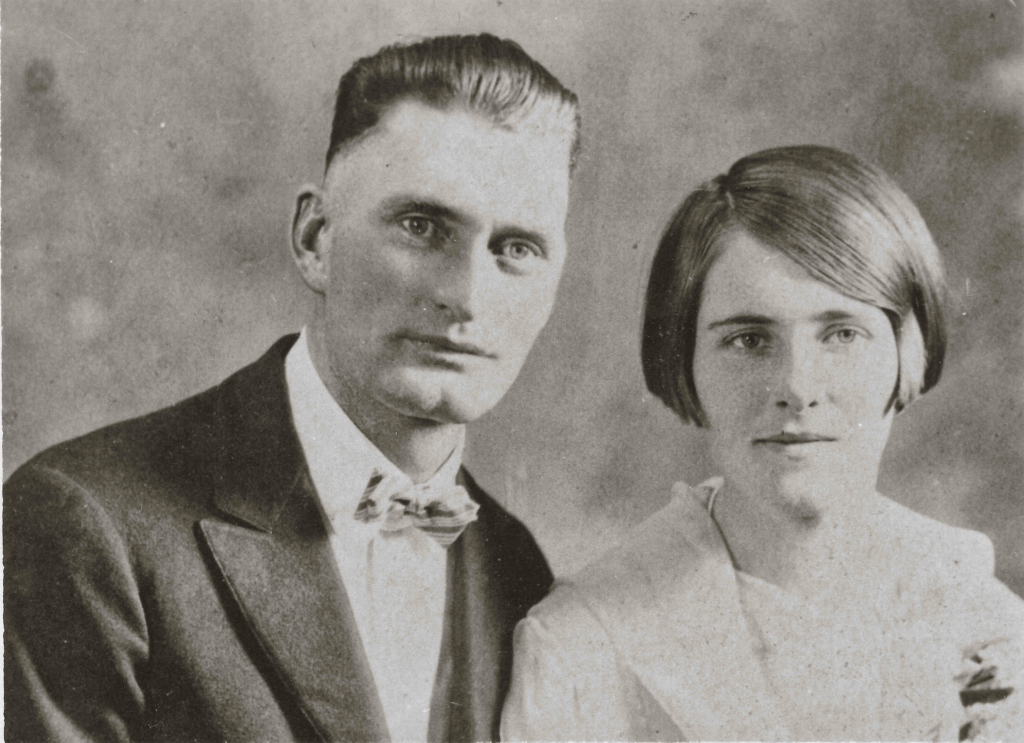
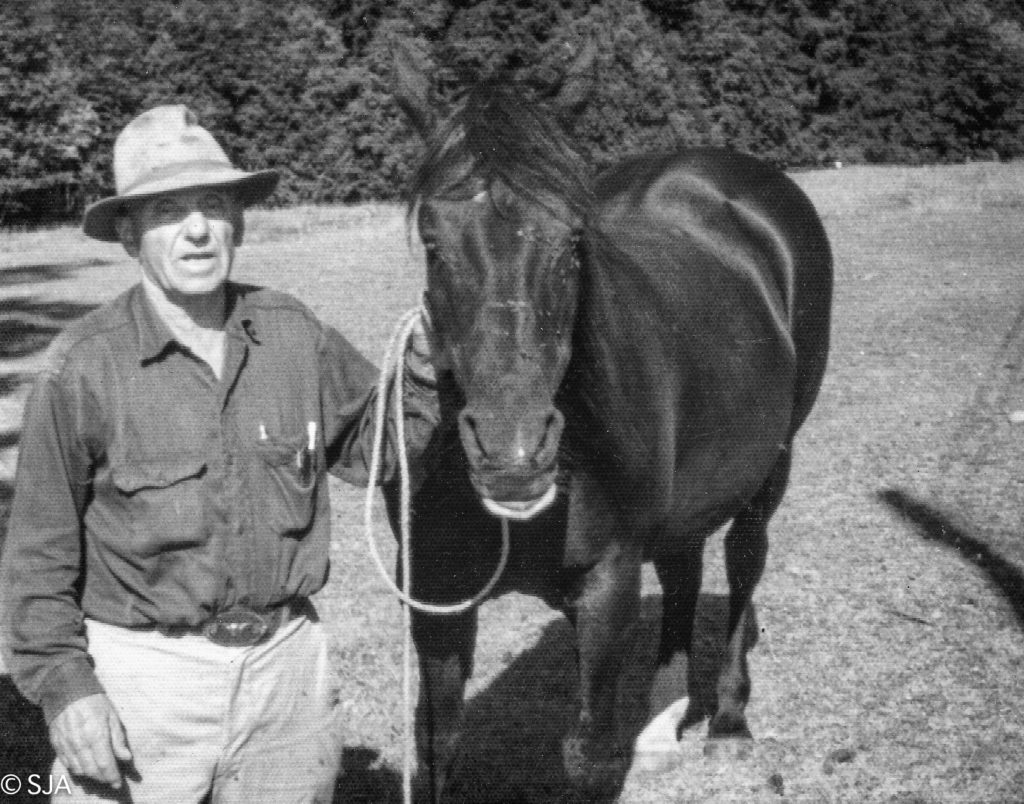
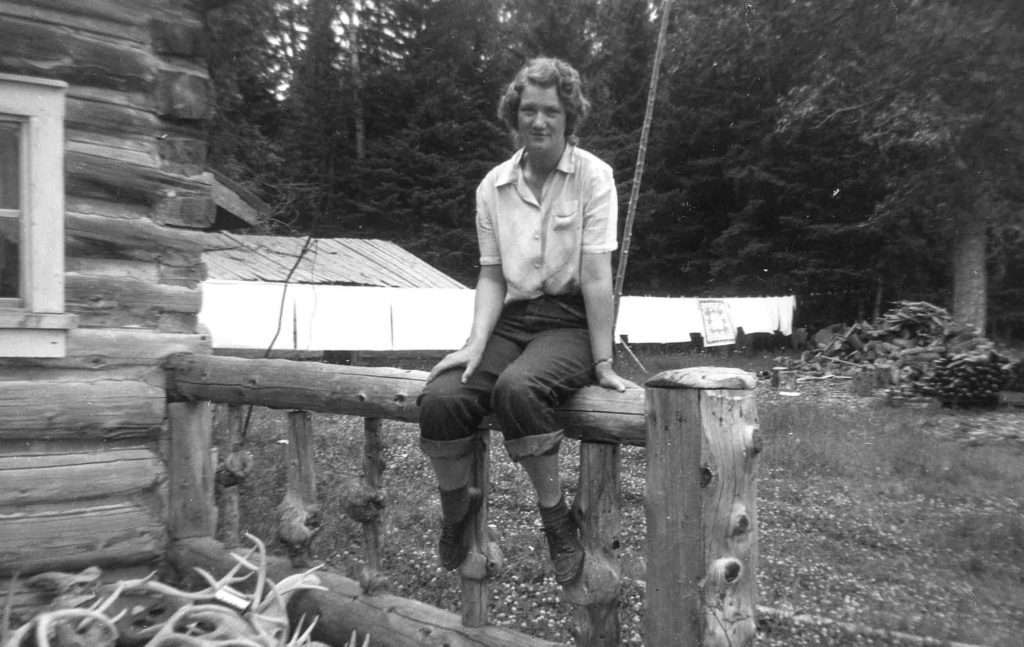
A bald-headed man took up a homestead in Northern Montana west of where the Musselshell and the Missouri meet. The man called himself “Beetlehead”. When the year 1920 rolled around, he was getting up in years – about fifty. He had never had a hair on his head, and he had never married. Other men might ride fifteen miles horseback to go to a dance at a country schoolhouse and meet young ladies. Beetlehead went for other reasons. He’d rather fight than court.
“Ain’t nobody can whip Old Beetle,” he boasted. “When I get a challenge, I just duck my head in between my shoulders and plunge in headfirst.”
But one day Beetlehead met his match! A woman! He got married.
“How did a thing like that happen?” Bee Knapp, a neighboring homesteader and bachelor asked.
“It’s on account of Blood Pudding,” Beetlehead replied. “Old man Johnson comes by every time a fellow butchers and gets a bucket of blood. He takes it home and his wife cooks up a batch of pudding.”
Knapp nodded.
“Well, I went home and tried that blood pudding. Made me feel ten years younger. Felt so young I proposed to his daughter and she accepted.”
Bee Bell Knapp went back to his homestead shack and thought things over. Whether you live in the mountains or on the prairies, marriage is one of those things that’s catching. The marriage virus was going around. Bee Knapp had escaped it for thirty years, but in 1926 it caught with him. Twenty years later, I caught the marriage virus. Mr. Bee Bell Knapp became my father-in-law. A person never can tell where the virus will strike next.
We left our little cabin on Elk Creek to embark on another escapade. A trip to Montana was not complete without a visit to Uncle Buster’s place in the rolling hills of Eastern Montana. He was a prankster and loved to tease the little kids, but he was also full of tales and loved adventures.
We got to his ranch as the oat harvest was underway. I loved seeing the farm equipment at work. Golden fields of oats swayed in the warm breeze that blew off the prairie. A big combine made its way through the field cutting the oats and separating the grain from the stalks. When the tank that collected the oats was full, a trailer attached to a tractor pulled up beside the combine. A pipe shot mountains of gold grain into the trailer. Chaff blew everywhere. We climbed up, grabbed a hand full of oats and let the golden grain fall through our fingers. We scooped up some more and ate fresh raw oats. Before the harvest was over, Uncle Buster even let us drive the combine leaving clouds of chaff and bits of straw in our wake. We helped Aunt Viola prepare the noonday meal for the harvesters. Aunt Viola, Uncle Buster’s second wife, was a Southern girl through and through. She was also a good cook. Her desserts were just as sweet as her slow syrupy Southern drawl. She was so thoughtful and kind to the harvesters and went overboard to make sure they had everything they wanted to eat and drink.
With Uncle Buster, there was always some surprise within reach. One such surprise was going on the sheep drive. Now I had been on a cattle drive and was known as a famous rodeo rider of a bucking malcontent she-horse, so figured I had some experience. The first surprise was when we went out to saddle up the horses and he said, “We’re going in the car.” You can read the previously posted story about our Sheep Drive. Let me tell you, you just don’t know what you’ve missed in life without Great Uncles!
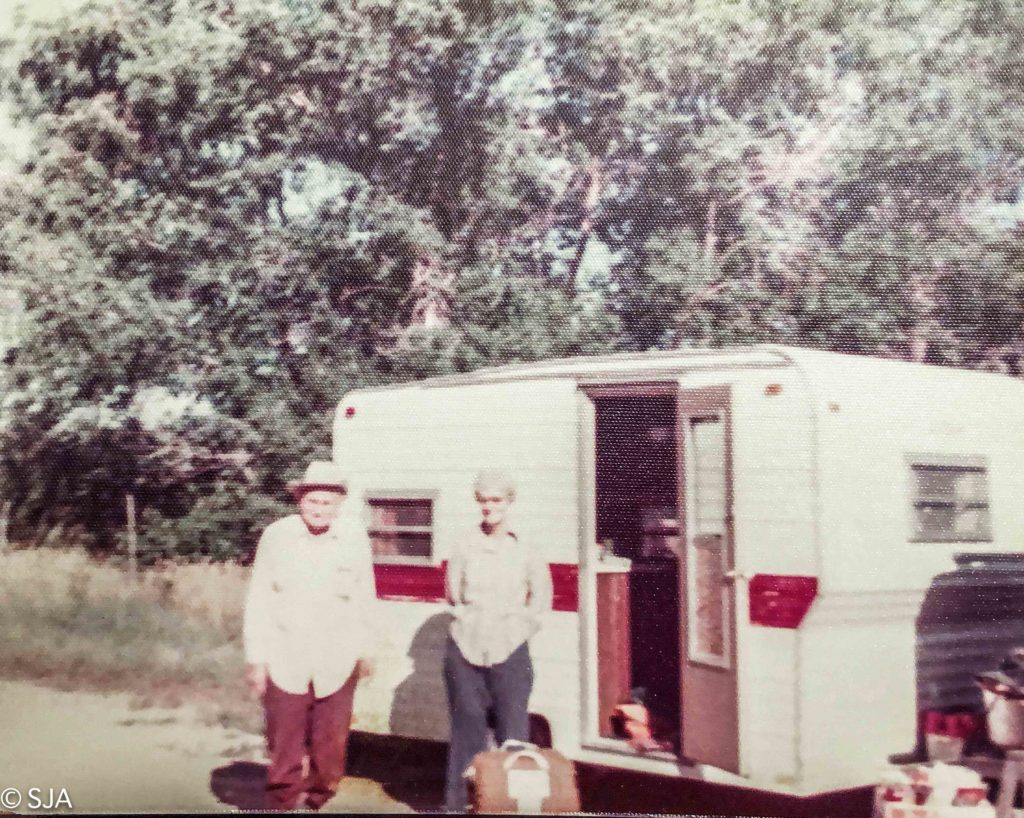
Another adventure Uncle Buster had planned was a trip to Glacier National Park. I was super excited about that! I had never been to Glacier before. They had a small camper hooked up to the back of the old beat up green truck. We crammed into the seat of the truck and headed out. We drove through the town where my mother was born and kept heading north. Oil wells dotted the countryside. Sage brush and prickly pear were scattered through the dry hills with occasional tumble weeds rolling across the road or caught in a barb wire fence.
Uncle Buster & Aunt Viola
We drove through part of the Missouri River Breaks country. That is one place on my list to go back and visit. My Granddad told us many stories of that part of the country. His tales included Sun Prairie Flats, Zortman, Landusky, Malta, the Long X Ranch and the breaks. His voice would break as he spoke with great admiration as he gave descriptions that painted a picture of the beauty and harshness of that land. Uncle Buster was no stranger to that part of the country. He traveled that country by horseback and worked at the Circle C Ranch in Zortman for a time.
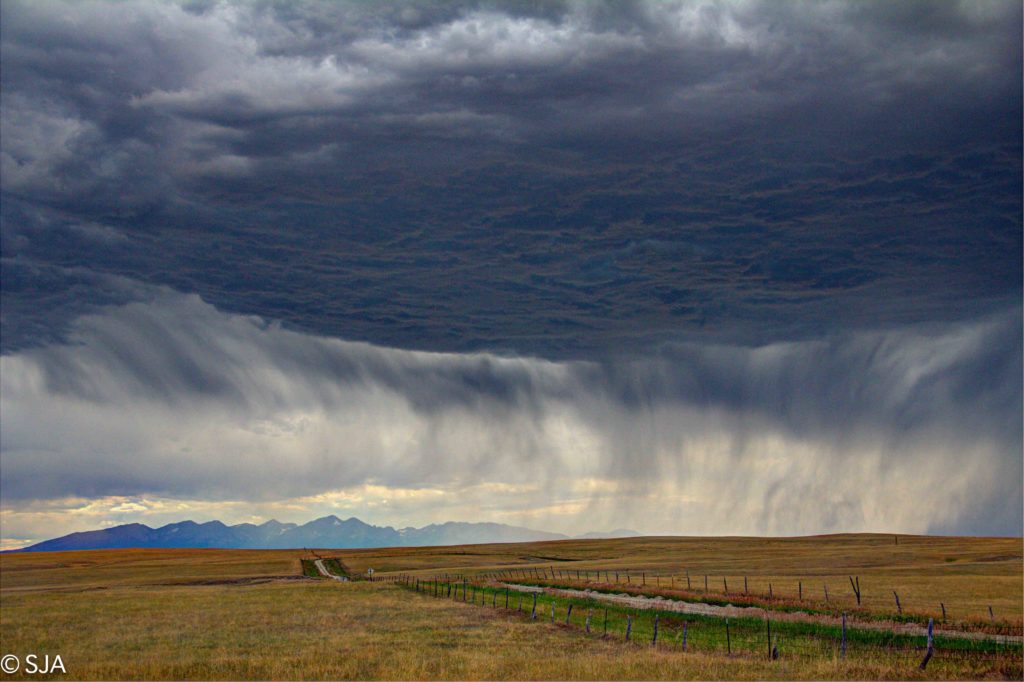
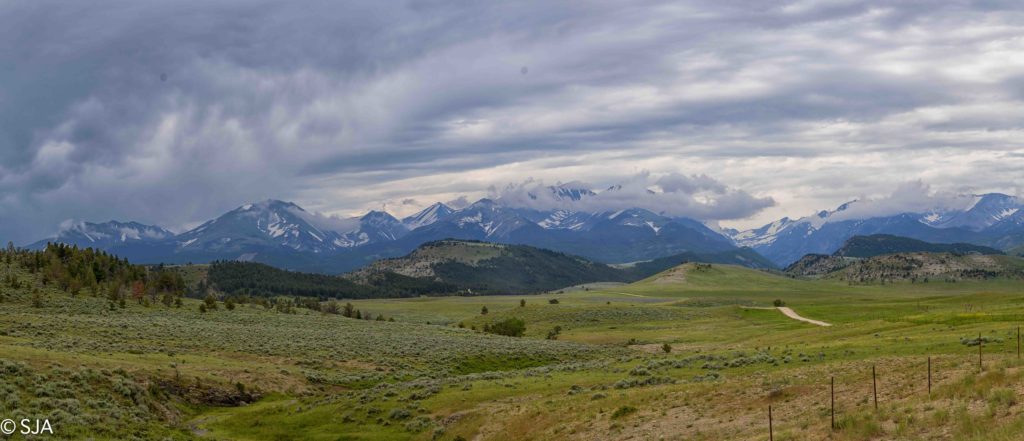
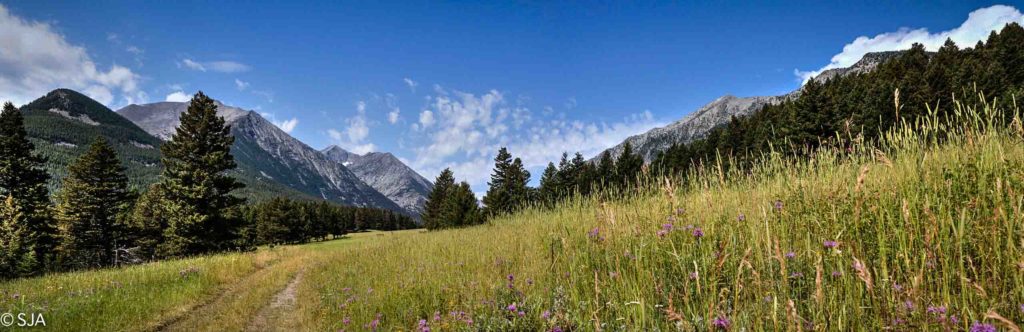
As we neared Malta, we were reminded that the Knapp family homesteaded there after the long wagon trek from Oklahoma to Montana. At Malta, we hung a left and stopped in Havre to visit another great uncle and some cousins. I always loved going through Indian Reservations and there were a couple along our way to Glacier along the Montana Hi-Line. That region symbolizes what Montana is all about. It is a land of wide open prairies like my mother liked, fields of wheat and other grains waving in the prairie breeze, cattle grazing in the pastures, towering mountains in the distance, Indian Reservations, big skies, and summer storms rolling across the vast open landscape. Some people look at that and see a lot of nothing. I look at that and see a land ripe with history and beauty.
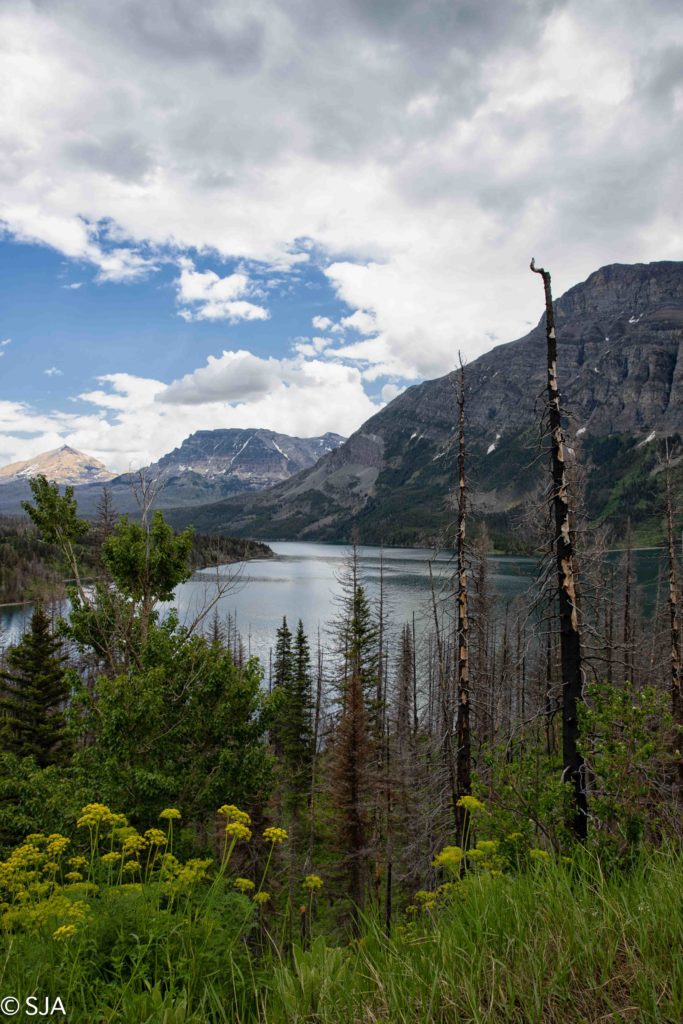
We camped at one of the campgrounds near Glacier National Park. The mountains are majestic and beautiful. We stopped and walked through some patches of snow and saw a couple of grizzly bears. They were close enough to see they were bears but far enough away to feel safe. We traveled on the Going to the Sun Road. The mountains, streams and lakes were absolutely breathtaking. Riding with Uncle Buster on a flat straight road was bad enough but riding with him on curvy mountain roads with no side rails was at times maddening. By the time we descended to the valley, I think we were all sweating – except for Uncle Buster of course.
We drove past the deep blue waters of Hungry Horse Reservoir, stopped in Kalispell to visit another cousin and were soon headed back to Uncle Buster’s house. The road back had completely different scenery. At Uncle Buster’s again, we stayed another night then headed back to Big Timber.
Our time was coming to a close and we still had a few more places to go.
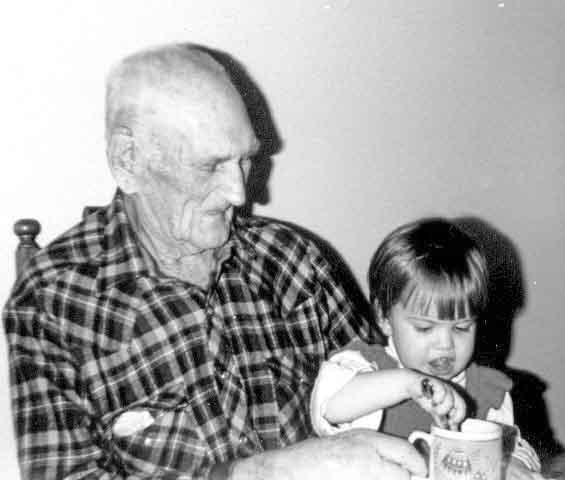
My Granddad really enjoyed eating, especially breakfast. He knew how to make the most of a meal. He didn’t scarf it down but took his time and savored every bite. A mug of coffee or hot tea or hot chocolate was his dunking tank. He managed to find something in every meal to dunk in his drink and when he was done, he’d drink or spoon out the dregs. It didn’t matter what was served to him. At the end of the meal, he always said, “that was the best meal I ever had.” And he meant it.
It was fun to sit at the table with him. He always had a story to tell, often one I had heard umpteen times before, but it was always fresh and new. In his later years the same tale was sometimes told with a different cast of characters or locations and I believed it every time just as if was the first time I heard it.
One day as we sat at the table after lunch, he cut an orange in half. He took one of the halves and started eating it, then he squeezed it to slurp out the juice. He turned it wrong-side-out and ate the remainder of the orange. When he was all done, he didn’t say a word. He was too busy working his tongue to get every last bit of pulp from between his teeth. It wasn’t working too well. What he did next shocked me. There are not many things that turn my stomach, but when he popped out his chompers and started sucking the pulp out of his false teeth, I almost lost my lunch.
Sis and I started our cross country adventure on June 14. Almost two months later, along with Uncle Sid who we picked up in Port Angeles, Washington, we arrived in Big Timber, Montana. We had numerous adventures along the way (some of which you don’t know about). You might ask what even prompted such a journey for two young gals traveling across the country by themselves. Well, it seemed simple to us. My brother-in-law once gave us shirts that read, “I’ve got the Crazy Mountains in my heart.” That’s part of the answer. From the very first time I saw the homeplace of my Dad and met my family that lived in the heart of the mountains, I was hooked. I can say with John Muir, “The mountains are calling and I must go.” Is that not reason enough? I wasn’t the only one who felt that tug on my heart.
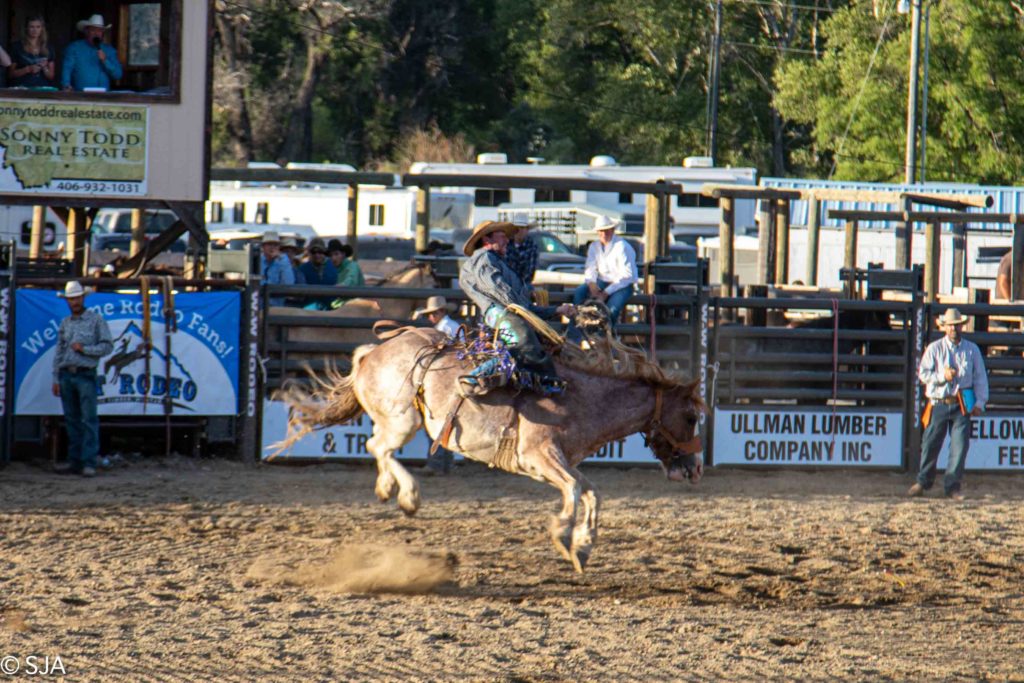
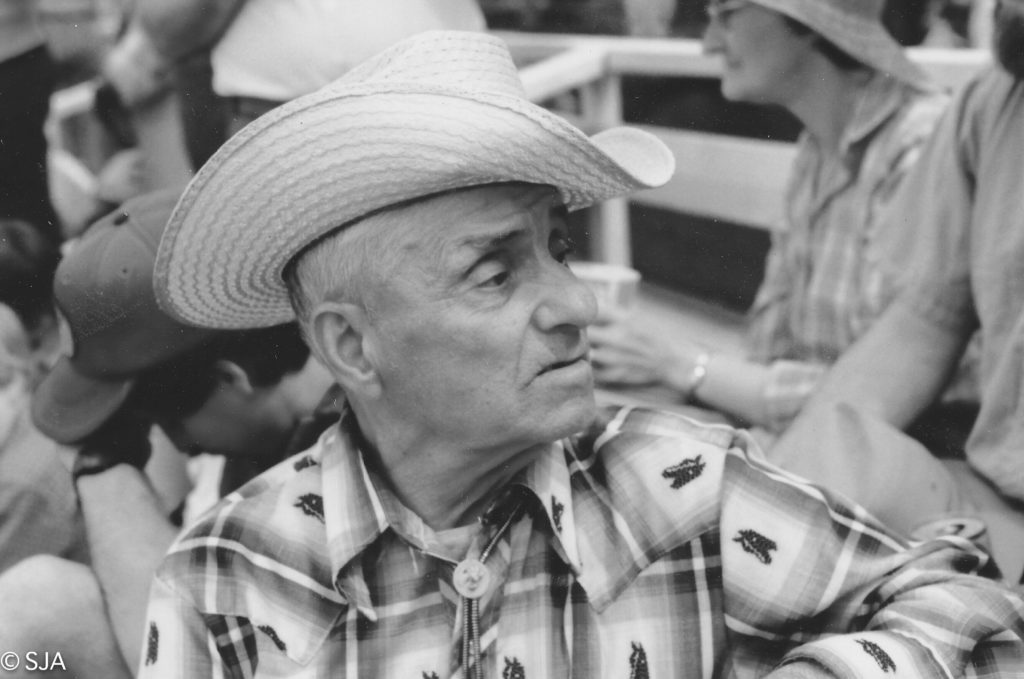
Uncle Sid was an old cowboy. Though his rodeo days of riding bucking broncs had passed, it was still in his blood. The Montana mountains were in his blood, too, and they were calling all three of us. We arrived in Big Timber just in time for the annual rodeo, which was the plan. If you never went to the rodeo with Uncle Sid or the other uncles, you missed a grand adventure.
It was almost as if the hands of time moved back fifty years and Uncle Sid transformed into a young buck. There was energy, excitement, and a real western rodeo. The town took on the atmosphere of the old west with all the horses, and cowboys and cowgirls in their best western shirts with pearl snaps, jeans, vests, cowboy hats, boots and spurs. The whole town came out to take part in the festivities. Many took part in the rodeo. Even the little kids got to try to ride sheep or tie ribbons on a calf’s tail.
at the rodeo
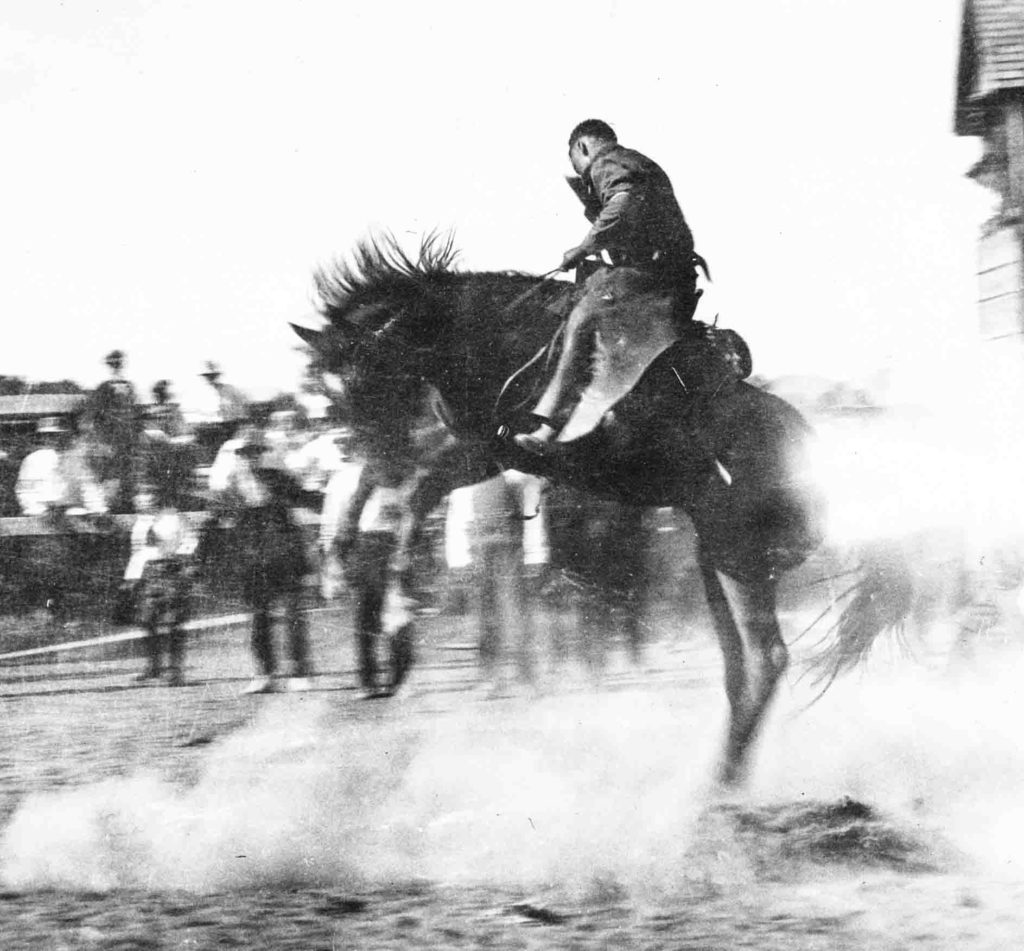
Uncle Sid in his rodeo days
Uncle Sid stayed in town a few days before going back home to Washington. He was the most famous bucking bronc rider I knew, the only one in fact. After he left, I figured I’d vie him for that position, but first I needed some practice on the back of a horse.
Sis and I headed to “the Boulder” to stay with cousin Babs. She set us up in a little cabin along the creek that was a mile or so from the main ranch house. We had a visitor that wanted to share our one room cabin. It wasn’t quite big enough for all of us and didn’t work out so well, especial for the mouse. You can read that tale in a previous post, O Rats.
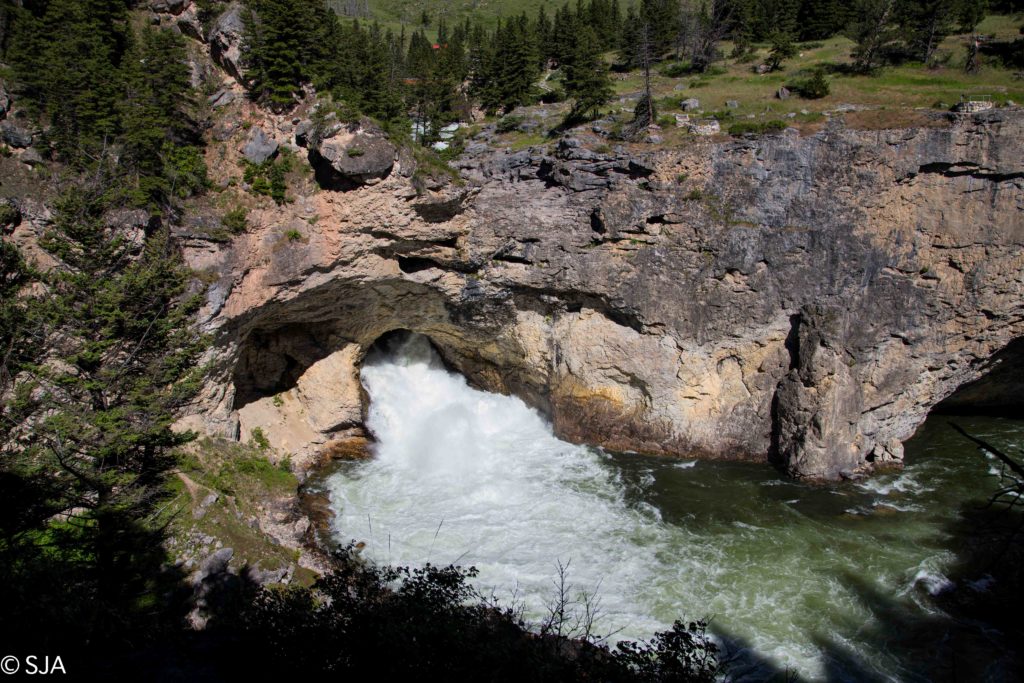
Natural Bridge Falls
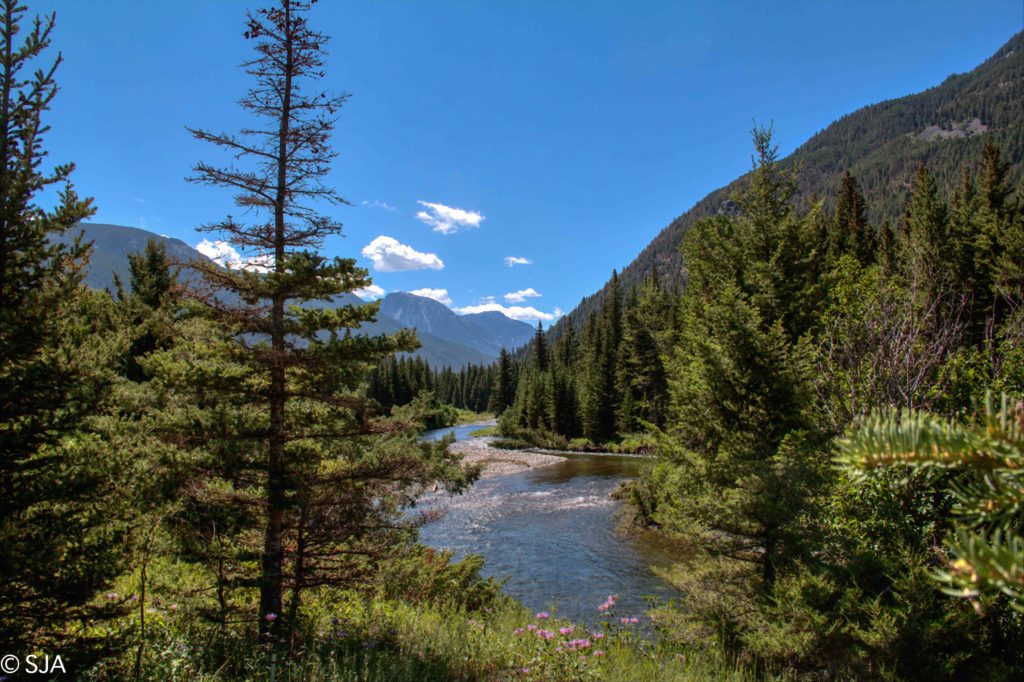
Boulder River
We helped with various things around the ranch but mostly we just had fun enjoying the scenery and spending time with Babs. We had picnics by the creek that ran through their back yard, named the new calf born on the same day as my nephew, threw hay bales onto the back of the wagon one day, rode horses, went to the Cow Belles meeting with Babs, walked around Natural Bridge Falls, and had other adventures.
When Babs announced we were going on a cattle drive, I was excited! We got up early for the day’s drive and headed out. We drove cattle over the hills and chased them out of the swales and trees. Hats waved in the air and shouts echoed from the ridges as we urged the cattle on. We had our picnic lunch in a stand of Quaking Aspens. As the sun reached the western sky, we made the final push and the cattle were soon enjoying lush green pastures. We rode to the top of the hill and the view was worth every aching muscle. I saw the Crazy Mountains like I had never seen them before. By the end of the day I walked like Uncle Sid, had muscles I didn’t know I had, and had learned several new words of which my Mother would not have approved. Cousin Babs was a great teacher!
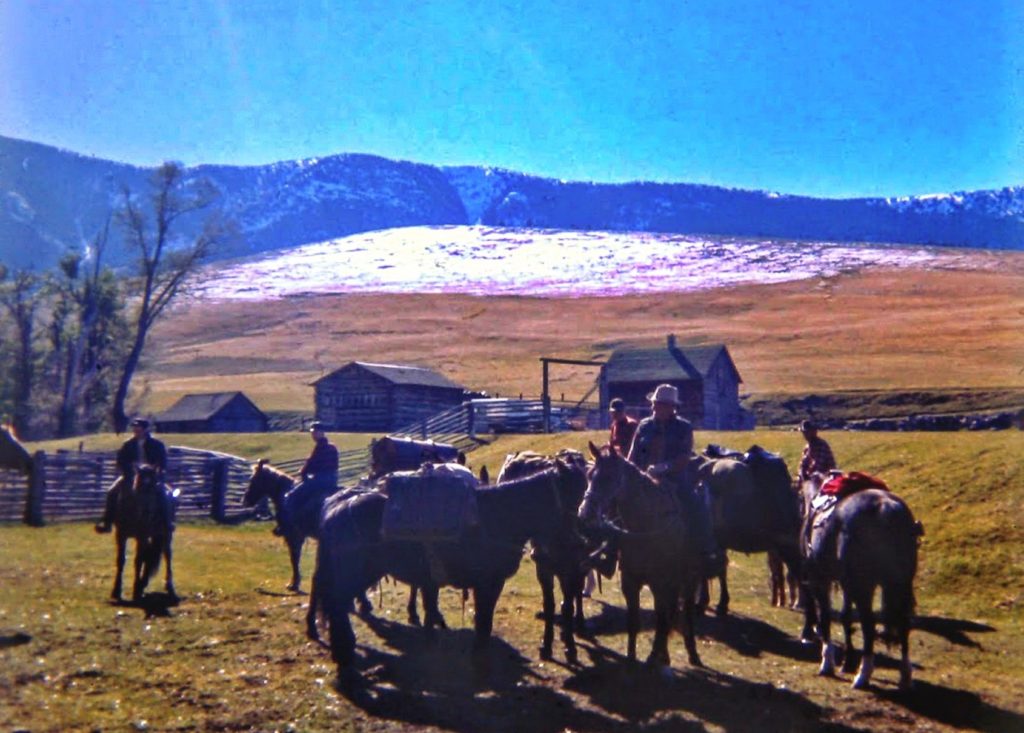
Ranchers ready for the fall drive a few years after we were there
A few days later, we went on a horseback ride in the mountains. It was a beautiful day to ride the mountain trails. Little did I know I was about to have another grand adventure. Of course, my rodeo ride was quite by chance – and it wasn’t a bucking bronc but rather a malcontent she-horse who had her belly rubbed by a downed wire. Read about that adventure in a previous posting, Rodeo Rider.
Our time with Cousin Babs passed all too quickly. For years, when we saw each other again, we recounted the stories with great animation of that summer at the ranch. Those memories never grow old. The sights, smells and sounds of laughter are almost as fresh as the day it happened.
We had other adventures there as well. Stay tuned for a few more Montana adventures!
The stop sign extended from the side of the bus, lights flashing. As the bus slowed to a stop, Mr. Brown grabbed the handle and popped the door open. A girl got on the bus. I don’t remember her name and wonder if I ever even knew it. The house where she lived was little more than a shack. There were other kids in her family that rode the bus, too. No one wanted to sit too close to them. The smell was terrible! She smelled like dirt, body odor, urine and kerosene. I paid no attention to the others, just the girl. Her hair was matted and looked like it had never been brushed or even washed. Dirt was visible on her skin and on the ragged unmatched too big hand-me-down clothes she wore. If she scratched her face, a trail was left in place of the dirt. I imagine a tear left a trail as well. Her shoes were too big for her feet and she usually didn’t wear socks. Many days the bus stopped in front of the house and waited, but she never got on.
She wasn’t in any of my classes. If she would have been, I know she wouldn’t have been in the Bluebirds reading group. I don’t remember even seeing her in the schoolhouse, just on the bus. Kids in the classroom were divided into groups. Each row or group indicated a degree of intelligence. Often the dirty impoverished kids were all clumped together in the same group.
I wondered about her family. Did she have parents in the home, or did she live with someone else? Did she have any friends? I don’t remember ever hearing her talk. If anyone would have listened, what would her heart have revealed? Would she have said she wanted a friend, or to belong to a group, or to play with someone on the playground? Was she made fun of all of her school days? Did she even finish school?
Even though I never had any contact with her or said anything ugly to her, I often think that she needed a friend. What if I had dared to speak to her, to offer a smile or give her my coveted maple stick from my lunch bag? Who would have been changed the most – her or me?
You know, we pass nameless faces almost every day. As we look across the sea of faces, we don’t see the hurt they may carry. Maybe they lost someone dear to them. Maybe they don’t know where they will get their next meal. Maybe they have no home or family. Maybe they suffer some kind of abuse. Maybe they are alone with no friends. Maybe they are neglected or abandoned. Maybe they have had no one to teach them how to care for themselves. Maybe they wear a smile and walk with confidence. Maybe they reach out to help someone who trips and falls. Maybe we should remember that in the sea of faces, others see each of us as a nameless face, too.
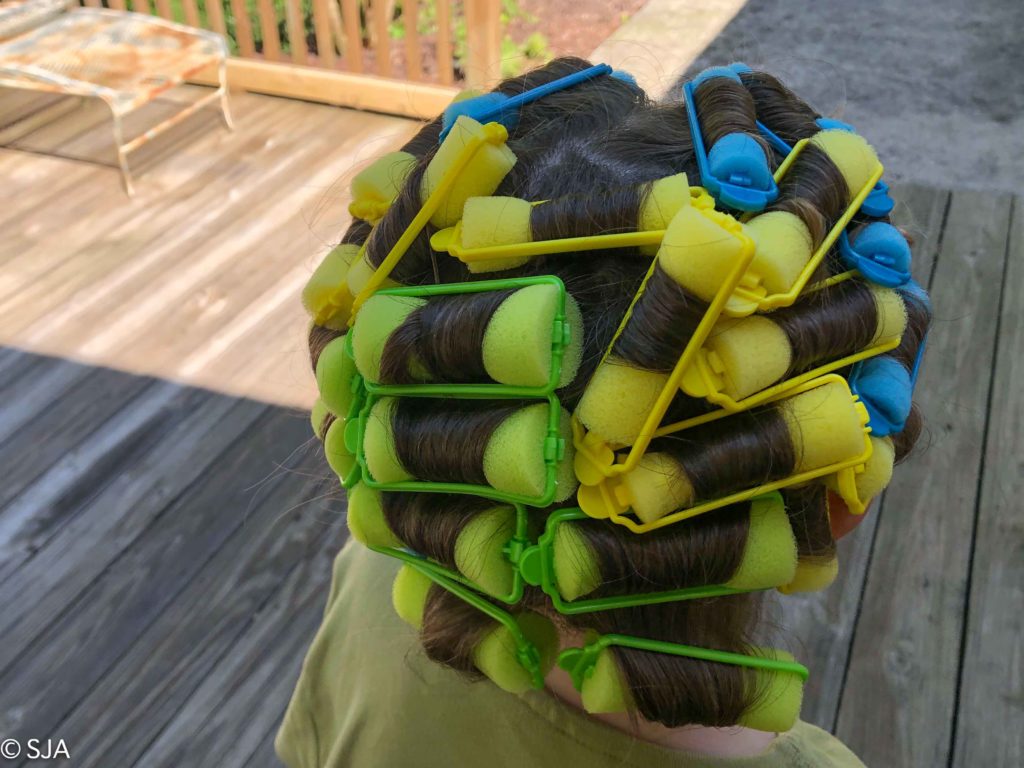
I saw some sponge curlers in the store – blue, green, yellow and pink. Ahhh, I just imagined my littlest granddaughter would like to have her big sister curl her hair. When I handed her the bag of curlers, she knew exactly what they were and what to do with them. She was excited to have her sister curl her hair and more excited when her hair bounced with curls. Cute as a bug, she was!
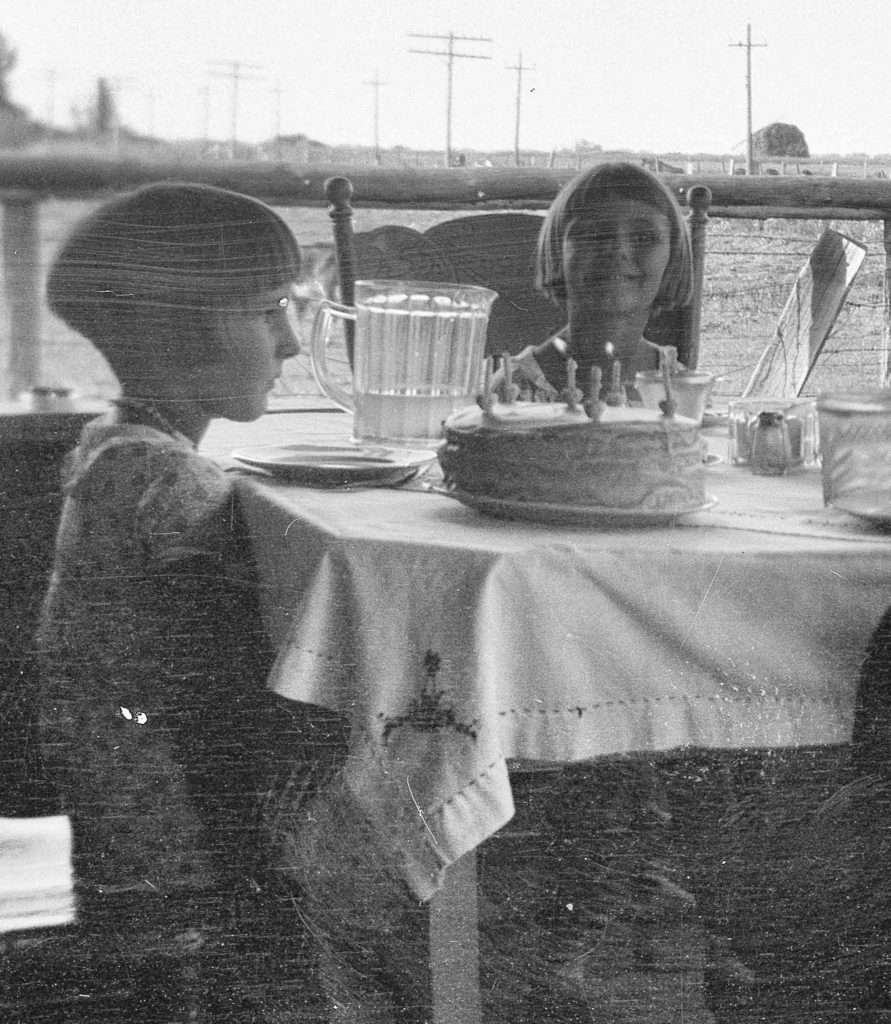
Mama behind cake
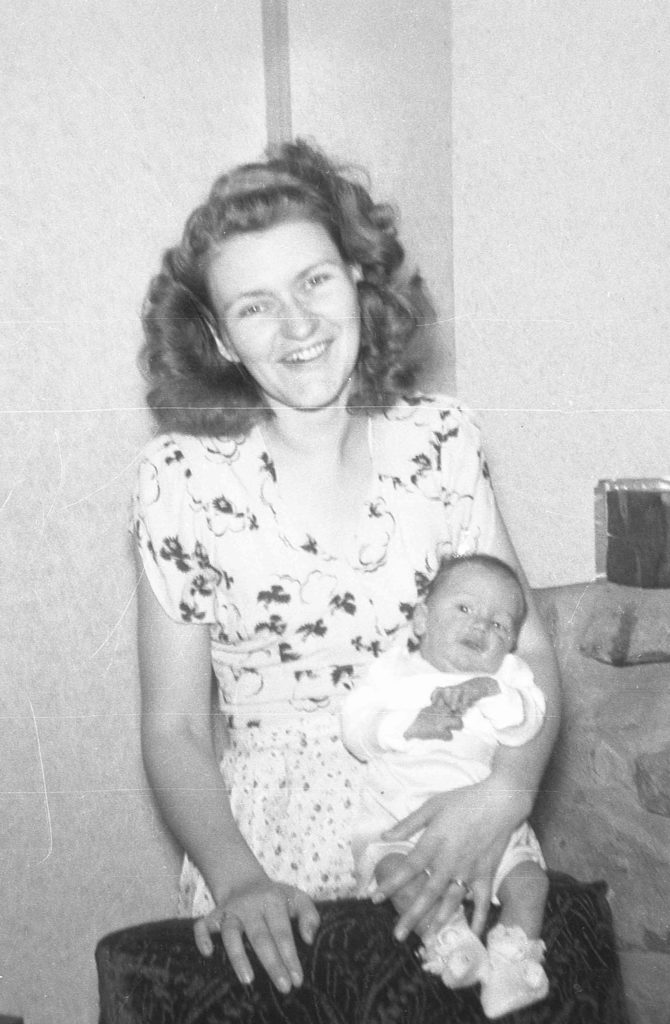
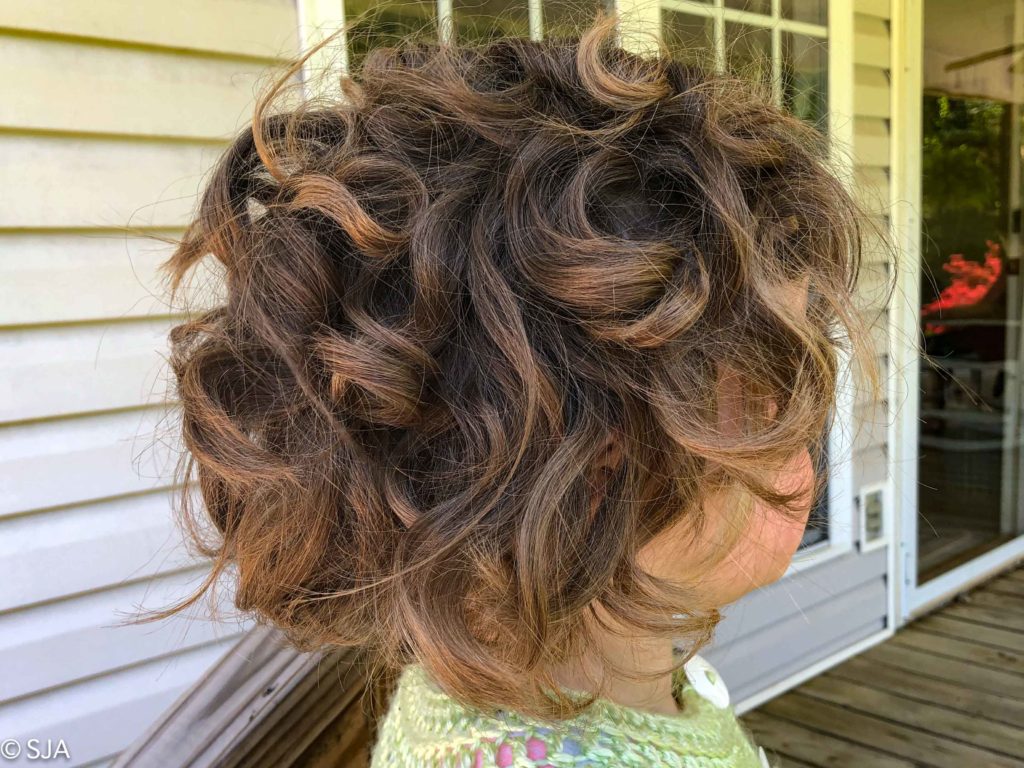
Mama’s wanna-be-curls on left
That triggered the memory of when I first started helping my Mother with her hair. At first it was just putting gook on her wanna-be-curls. Later, I also rolled the hair on the back of her head because it was hard for her to reach.
My mother’s hair was limp, lifeless, and “straight as a poker.” She was jealous of anyone whose hair was wavy or curly. She told me more than once that she wished her hair had body and could hold a curl like my hair. If she curled her hair on regular rollers, it would be flat again in no time at all. It wouldn’t hold a curl at all. She remedied that with a Toni perm.
She opened the pink box, laid out the permanent rods, pack of end papers and the two bottles of solution. I remember her first calling me to help when I was just five years old. I don’t know why she chose the youngest of her kids to help, especially a five-year-old. Maybe it was when the other kids were in school, but it seems she got me to help her even when the older girls were around.
She got her Rat Tail comb, parted her hair into sections, each twisted and secured with bobby pins. Each section was parted one little piece at a time, combed carefully, the ends wrapped in little papers (that looked like my Granddad’s cigarette rolling papers) and rolled onto the curling rods. That’s when I was called to duty. Mama sat in a chair, wrapped a towel around her shoulders and waited for me squeeze the solution onto the hair rolled on the rods. My favorite part was snipping off the tip of the nozzle of the thin plastic Permanent Wave Solution bottle. I turned the bottle upside down and squeezed out some of the liquid, letting the tip of the bottle scrape along the top of each curler. I repeated the process until all the solution was used. The last few curls got an extra squirt. What an awful smell! It was almost as bad as the nose-hair-burning odor of sulfur. Just thinking about it opens my sinuses.
After waiting about five minutes, she rinsed her hair and patted it with a towel. The towel rested on her shoulders again while I administered the second solution, the neutralizer. After another five minutes, she rinsed her hair again. Then the curlers came out. Rods were cast to one side to be rinsed and sorted, the wet papers to the other. All evidence was destroyed except for the awful smell of permanent solution that lingered in the house all day.
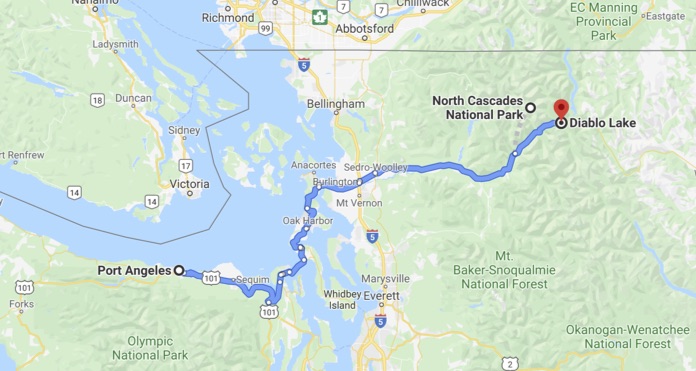
Leaving Uncle Sid’s place wasn’t so bad because we had Uncle Sid with us as we headed to Big Sky Country. We left behind Hurricane Ridge where we had our adventure with Chuley (the dog) and Uncle Sid. We passed Dungeness Spit, between Port Angeles and Sequim, along the Strait of Juan de Fuca where we had walked the beach with Aunt Lois. The Strait, named for the sailor who reputedly discovered it for Spain in 1592, separates Vancouver from the Olympic Peninsula. We drove along the road that curved around Discovery Bay, then took the ferry from Port Townsend crossing the northern end of Puget Sound, called Admiralty Inlet, to the town of Coupeville on Whidbey Island.
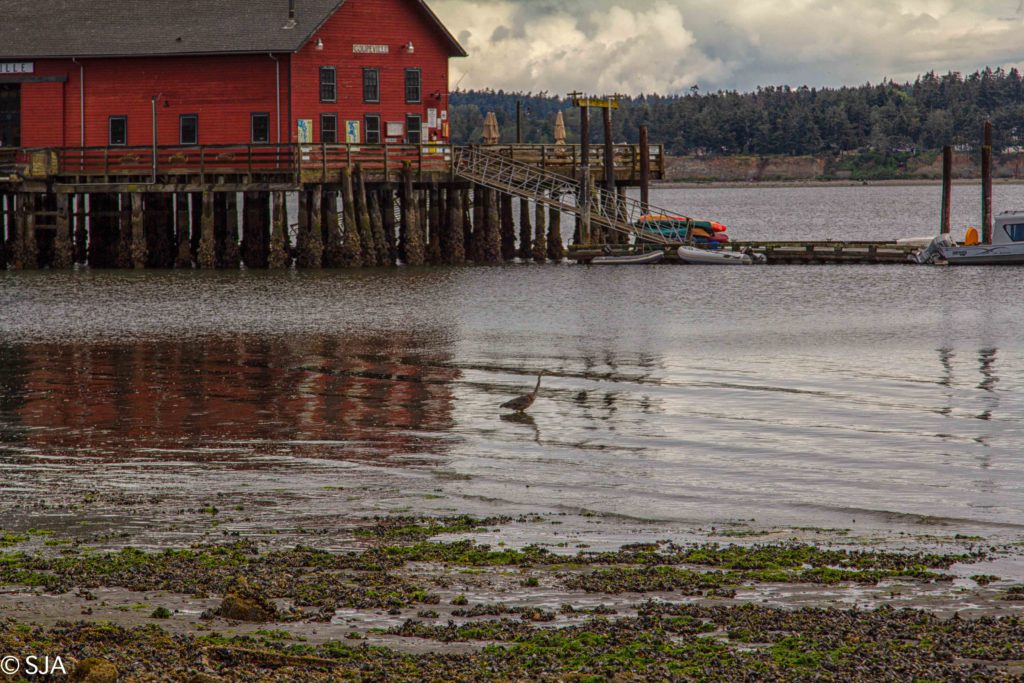
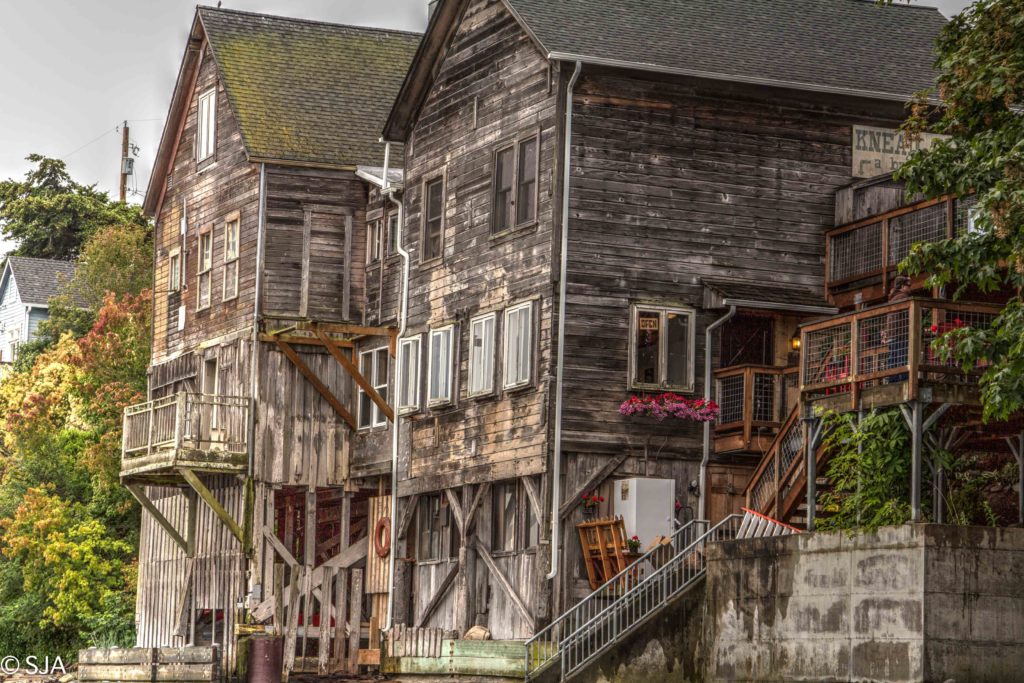
Though we had driven along much of the coast from California to Washington, this land of waterways was still foreign to me, though no less fascinating. Standing on the deck of the ferry with the wind and spray of salt water in my face was somehow refreshing and relaxing. The small town of Coupeville was interesting. Years later, I visited that area again. There was just something special about eating in a quaint café that stands on stilts. Big windows allowed for a view of Historic Coupeville Wharf while looking out across the inlet as birds dove into the water to catch their next meal or foraged along the shore covered with rocks and shells. The sounds of birds and foghorns, the smell of salty air and the décor of nets, anchors, fishing relics and shells, all reflected the atmosphere to match the weather-beaten clapboard buildings of the coastal town – laid back, hospitable, rustic.
Historic Coupeville Wharf
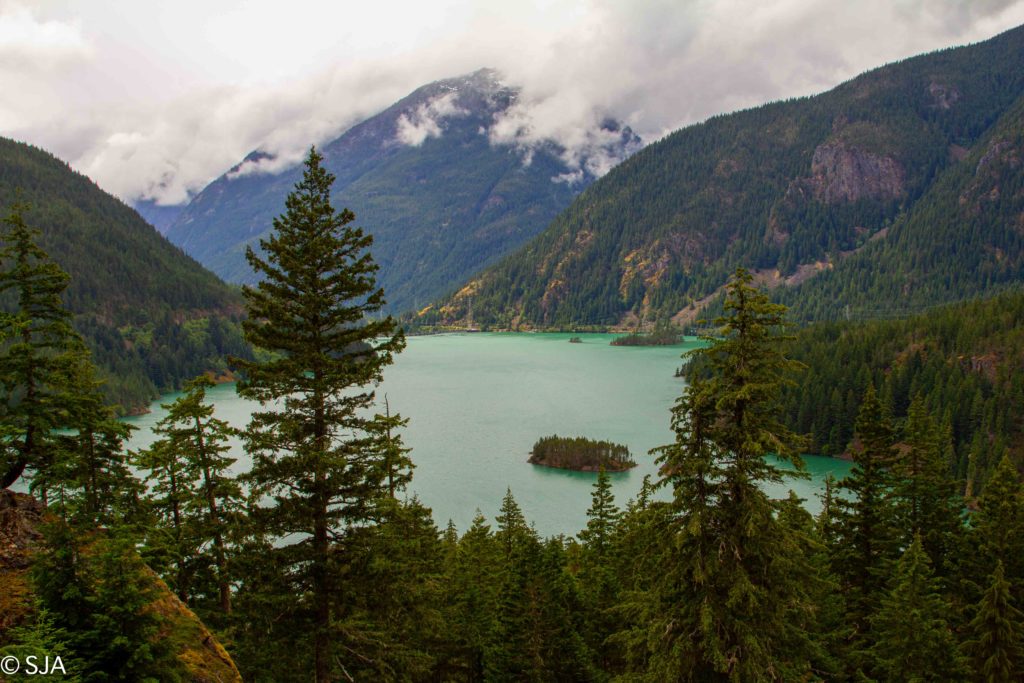
We crossed the emerald green waters of Deception Pass. It wasn’t long before we followed the Skagit River and heard the Northern Cascades call our names. I have had the opportunity to travel that road more than once, even into the Canadian Cascades. That is beautiful country. One thing that surprised me was the color of the water, especially the larger bodies of water. It was really evident in the waters of Diablo Lake. The emerald color is so intense because of the surrounding glaciers that grind rocks into powder, called glacial flour. It stays suspended in the lake, giving it that brilliant color. The lake, also called “Emerald Lake,” has been described as the “emerald-green jewel of the Northern Cascades.” Words don’t give it justice. How can I paint a picture with words to display the beauty and wonder of such a place?
The road wandered through the mountains, sometimes the curves so sharp we almost met ourselves on the other side. Douglas fir, redcedar, western hemlock and spruce trees dominated the forests of the Cascades. Alpine meadows opened up to display their splash of color as a variety of wildflowers bloomed and raised their faces to the sun, glad to shake off the cold. The wind blew high in the trees, slowing as it descended into the valley and danced over the emerald green waters of the lake and creeks. Waterfalls cascaded down the mountainside and joined other streams that bounded into the valleys below.
Diablo Lake
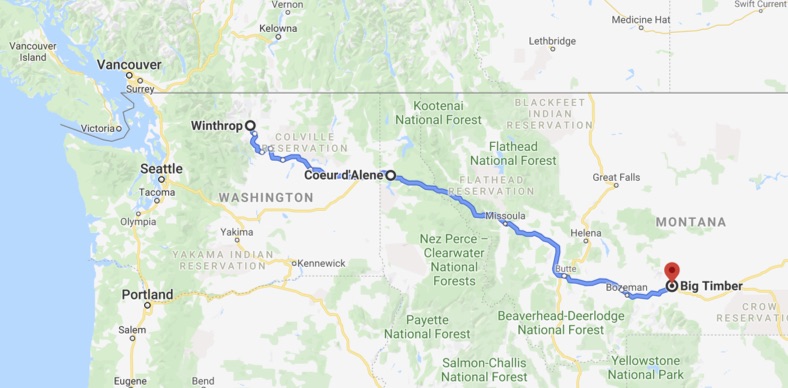
I didn’t know until many years later, specifically in the Winthrop area, that we traveled through part of the country that holds one of the mysteries of my Great Great Grandfather on my mom’s side of the family. That’s a story for another day. Our road took us past Coulee Dam and into Idaho. We stopped somewhere near Coeur d’Alene to visit another Great Uncle, my Grandfather’s brother, on my mom’s side of the family. He wasn’t home. So, what did we do? We opened the door, went in the house, got a drink of water and left a note on the table. We were sorry to miss him. I had only seen him once or twice and would have loved to have been able to know him a bit better.
We didn’t wait long because we were anxious to get to Big Timber. With Uncle Sid telling us family stories and other tales, it seemed the time flew by. Memories were triggered as we passed through each part of the state. Oh, how I wish I had all those stories recorded! Just being in Montana made me feel like I was home. To see it with Uncle Sid riding shotgun made it exponentially more special. What a great treasure! Before long, we turned into my Grandmother’s driveway. And so began another series of fortunate adventures in Big Sky Country!
The map program won’t let me track the road through the National Park but we took the road from Diablo Lake to Winthrop where the second map picks up.
My Guest Author today is Aunt Ellen via a manuscript written by my Daddy in which this poem was featured.
note written by my Daddy: Here is a note from Ellen in January of 1944. The flu bug was going around in the Crazy Mountains. Here’s a piece of her poetry: I have left the punctuation and spelling the same.
The first time Pa got the flue T’Was January the Twelth Up to that time He enjoyed perfect health He would work and he would cus And he would wallow the snow And travel the ridges Where the south wind does blow.
Oh he is tough And he is wiry Always on the go Up in the hills In the ice and snow With four kids and a wife And an axe and a saw That cussing old fellow My lumberjack Pa
Two weeks have gone by But dear father is not dead He coughs and he sputters And has pains in his head His bones almost rattle His eyes almost glaze As he suffers around in a kind of a daze
The next time I see him Will be early spring He’ll be pulling the saw Making an axe ring The logs will be rolling The river up high The hole outfit busy And the flue long gone by.
written by Sister Ellen
Poppy & Sister Ellen
The Influenza Epidemic of the Winter of 1943-44 in the United States: A Preliminary Summary Public Health Report, September 1, 1944, Dorothy F. Holland & Selwyn D. Collins
The influenza that hit the mountains of Montana was part of the influenza epidemic in the winter of 1943-44. “An outbreak of a mild type of influenza started in Minnesota and the Great Lakes region about the middle of November 1943.” “The epidemic spread eastward to New England, the Middle Atlantic States, and Kentucky, Virginia, West Virginia, Delaware, and Maryland, outbreaks being reported subsequently in the Mountain and Pacific States, the Southeast (Central and Atlantic) and, finally, in the West South Central States.” “ The disease in the epidemic “were the sudden onset, moderate prostration, ever and general pains, followed by marked weakness. The duration has been variously reported as between 3 and 5 days. As a result of the characteristic short duration of the illness, the term “lightning” influence was used in newspaper reports of the epidemic in England.” “The excess mortality associated with the epidemic resulted from the high incidence of cases rather than a high case fatality rate.”
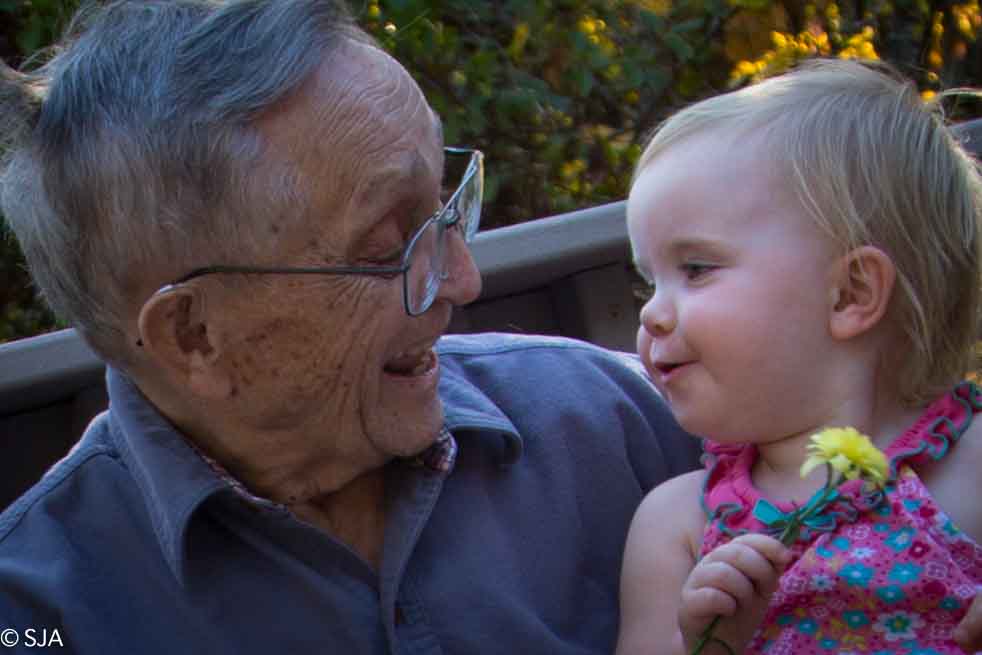
I crawled up in the chair and squeezed in beside the little man. In younger days, I would have plopped down right onto his lap. He looked over at me and gave a weak smile. His chest rose and fell sharply as he fought for every labored breath. He had only been on oxygen for a short time, progressing from a nightly routine to a valuable lifeline. Still, he struggled to breathe. The pneumonia filling his lungs was slowly drowning him. Antibiotics couldn’t even touch the rampant infection that threatened to take control of his body.
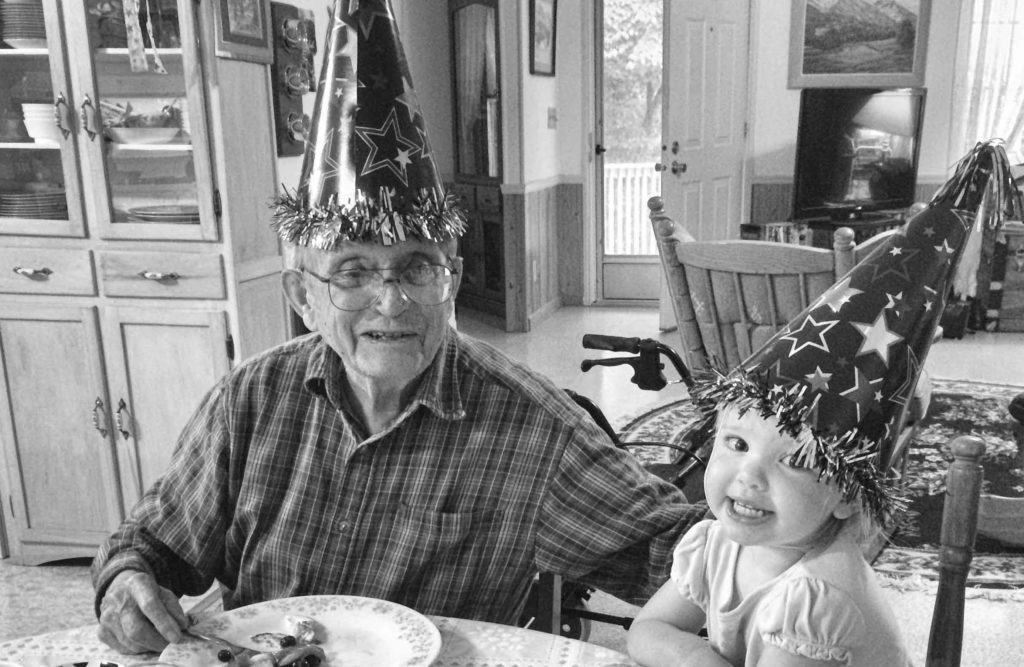
It was evident the little man was uncomfortable. He could find no rest whether lying in bed propped up or sitting in the recliner. He had gone with us months earlier to select his recliner. The requirement for the perfect chair wasn’t a matter of comfort. It had to be the right size for one little man and one little girl who brought him a smile and shared his blueberries every morning. That little ray of sunshine was a miracle worker. She brought him life – gave him something to live for.
There was something special going on that day – a birthday celebration. Several family members were already gathered, some came to visit the failing little man, and some came for the birthday party. We all buzzed in and out of the bedroom where he lay in the hospital bed. I took his hand and chatted a minute or just rubbed his little face when I checked on him. Sometimes I just sat by him and held his clammy hand in mine. His words were few. It took too much strength to even try to talk. In fact, it was almost impossible to say anything between gasps for breath. He tried to muster up a smile, his eyes darting back and forth, as oxygen was depleted from his lungs.
Earlier, my daughter had suggested that I had not given him permission to “go on.” Well, I had, but said I would give him permission again. I suggested that she do the same thing. She looked a bit sheepish and made her way to his side and gave her consent. And then, as I sat with him in his chair sharing just a quiet moment, our eyes met. His eyes held a steady gaze. I rubbed his little hand that was in mine and said, “Daddy, it’s okay if you want to go on now.” He gave me a smile and his eyes twinkled a bit. My eyes twinkled a bit, too, but it was because they held tears that began to spill over. I told him, “Daddy, I will miss you.” He whispered, “I will miss you, too.” “I love you, Daddy.” “I love you, too.” That was about all he could muster. Though the words were brief, they forever hold a place in eternity and in my heart.
More times than I can count, the little man had said his goodbyes. For almost twelve years, after my mother’s death, he tried to check out. Every time he was sick, and often when he wasn’t, he said, “I won’t see you in morning.” I would roll my eyes and say, “Sorry, but you will see me in the morning. That just isn’t your choice. When God says it’s time for you to go, then you can go. Until then – same song, same dance.” As time approached for a little girl to turn three years old, the little man promised that he would stick around for her birthday celebration.
That day had come. The tables set up outside, spread with birthday cake, snacks and drinks, were in full view from his bedroom window. Everyone filled his room and we sang “Happy Birthday” to the birthday girl. He managed a slight grin and a slight movement of his hand as if he was mustering the strength to raise it. That was a familiar sight. I had been with him numerous times, as a child and as an adult, to visit parishioners at home or in hospitals. At various times during the visit and before we left, he raised his hand and pronounced a blessing on them. It seemed as we were all gathered around his bed, he was sending himself off with a blessing. Maybe the blessing was for him, but I believe it was intended for all of us as a blessing and a goodbye. It wasn’t long before he seemed agitated. I could tell the crescendo of the chatter bothered him. I suggested everyone leave the room so he could rest. After we left the room, I sneaked back in and just sat with him.
Someone came and delivered a larger oxygen tank and increased the level. I was called out of the room. Reluctantly, I went out the door. I was only gone about two minutes or so. When I returned, there was no sound of labored breath. His chest did not rise and fall gasping for air. His hands were slightly crossed, his glasses laced in his fingers. He was at complete peace. I touched his hand, then his face, and knew that life had left his body. I had wanted to be with him when he left us, but he waited until I stepped out of the room. I needed a deep breath myself before calling the others. It was okay for him to go. He had kept his promise to a little girl.
We celebrated life that day – the life of a little girl and the life of a little man who was endeared by all. Life and death were intertwined in the lives of those two who were the best of buddies. He was invited to another celebration that day. He stepped over the threshold and was met by loved ones and friends. I wonder if they gathered around him along with a choir of angels and sang, “Happy second birthday in heaven” as he raised his hand.
Two years have passed since that day and not a day passes without thoughts of him going through my mind. There are so many things I still want to tell him, so many songs and stories to hear, and so many questions I want to ask.
Our ride along the coast and through the mountains had been full of adventure and gorgeous scenery. Even our stops in the big cities had been eye-opening adventures for two young girls traveling across the country. After visiting a great uncle on my mother’s side of the family, we headed to another great uncle on our father’s side. We had seen him several times before. He was no stranger. He lived in the shadow of the Olympic Mountains and being with him was always and adventure!
It wasn’t hard to recognize Uncle Sid. On a clear day, you could see Uncle Sid for miles away. He was easily identified by the hat that had formed to his head. It was just as weathered and worn as its owner. His walk also gave him away. For one thing, even at a distance, you could see daylight between his bowlegs. That’s what years of sitting in the saddle on the back of a horse will do. He didn’t back down from even the roughest toughest bronc and dared it to cross him. I would guess he sat in a saddle long before he could even walk. Animals of all kinds did his bidding at a mere word or silent request. His horse Jughead counted with his hoof or stuck out his tongue on command.
Un clé Sid & Jughead sticking out his tongue
Uncle Sid was full of jokes. Little kids would run and hide under the table whenever they heard he was coming. When they poked their heads out to see this legend, they were rewarded with ears wiggling out from beneath an old cowboy hat, a contorted face, or forefingers stuck in the man’s ears with the others wiggling. Solemn soulful eyes belied the playful youthfulness of the aged man. He was full of fun and he told stories just like other members of the family. His straight face didn’t even twitch a tiny bit as he told some wild tale.
You can read some of our adventures with him in a previous post What Does A Cowboy Look Like? All of our experiences with him horseback riding, rounding up cattle and almost getting thrown out of Olympic National Park were unforgettable. We enjoyed seeing his saddle collection. He had a story of each saddle – when and where it was made, who it belonged to, what it was used for, how he acquired it and the history that went along with it. We spent time with him and Jughead, went with him several places and explored the countryside. I feel sorry for any little kid that didn’t grow up with great uncles. We had a blast!
Aunt Lois in her younger days
Another perk was seeing Aunt Lois. Somehow, I didn’t think she and Uncle Sid matched. She wasn’t as boisterous as Uncle Sid. She took us on adventures, too. We went to Dungeness Spit and hiked on the beach. We picked boysenberries that we put on her homemade Cream Puffs topped with fresh whipped cream. She cooked fresh wild salmon on the wood cookstove in the kitchen that was the best I’ve ever had. Aunt Lois was an adventurer herself. She loved the outdoors and was an avid backpacker and backwoods camper.
We went as far northwest as we could go without skipping over to Alaska. Backed into the corner of the lower 48, it was time to launch out toward the east. Our destination was Big Timber, Montana. Uncle Sid said he would be headed there in just a few days. As we talked, we asked him if he just wanted to ride with us. He studied the situation a few moments and said, “Sure.” I felt a bit proud to be traveling with a famous celebrity. After all, he was a famous bucking bronc rider and Grand Marshall of the Big Timber Rodeo Parade.
We rearranged a few things in the car. We had picked up a huge chunk of driftwood that we hauled up the cliffs along the Oregon coast as well as a Redwood slab to use for a tabletop. When everything was shifted, there was room for Uncle Sid and his belongings. I climbed into the back and managed to wiggle in between the mountain of gear and other things we had accumulated. I was fine as long as I could see out the window. As we pulled out, we waved goodbye to Aunt Lois who stood in the shadow of the Olympics.