The Rush is On

April 22, 1889, not a cloud in the sky, rushers lined up waiting for high noon. Wagons carrying their passengers and all their earthly possessions stood on the brink of history. A Captain from the 5thCavalry gave the signal. The bugle call sounded, and the rush was on. 

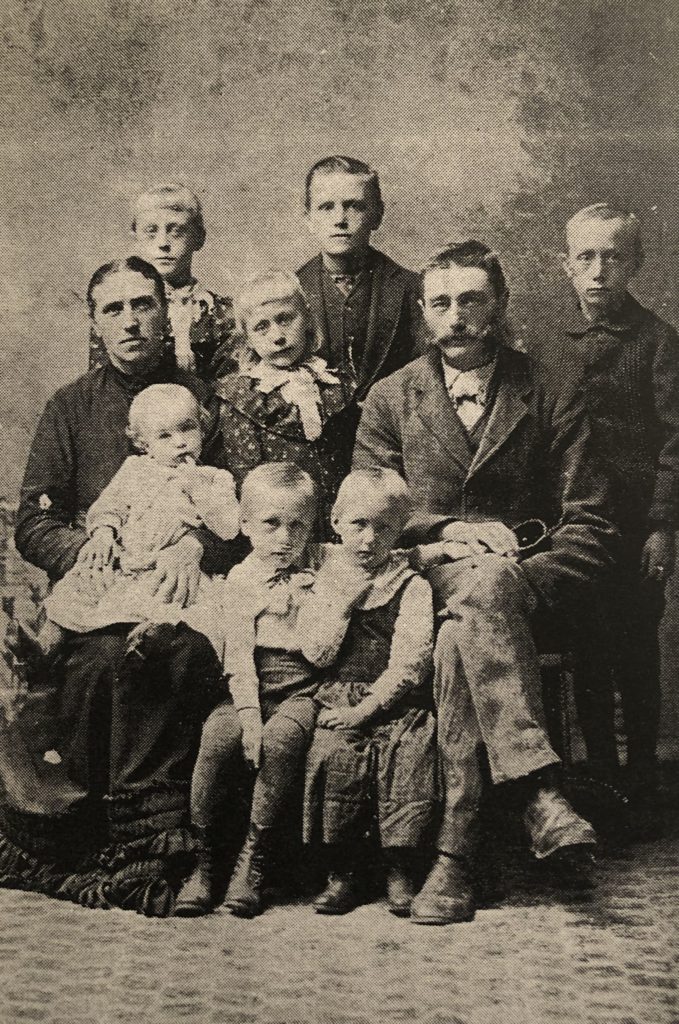
For Sarah McNeil, the race began years earlier. After her marriage ended, she moved her family to Kansas to join other family members. Her ex-husband returned to the scene and they married a second time. It wasn’t long before he was gone again. Maybe a fresh start was what the family needed.  With the west opening up, Sarah took the opportunity and was on the move again. The Homestead Act allowed single women and widows the right to claim land the same as men. She was among that number. This gutsy determined pioneer woman along with her sons, the youngest just three years old, and her fifteen-year-old daughter were among the pioneers who awaited the signal. With the bugle call, the Oklahoma Land Rush of 1889 was on and Sarah Brewer McNeil was right in the middle of it.

The ground shook as wagons and horses raced across the prairie as fifty thousand pioneers were caught up in the race. The thunderous noise of the wagons was joined by the sound of horse hooves and the whistle of the train that followed its tracks carrying homesteaders who had no horses or wagons. Furniture, pots and pans and other items tied to the outside of the wagons clanged and banged. Boiling clouds of dust and debris filled the cloudless sky shrouding the sun. Chairs and other possessions flew off wagons, some broken into pieces, and scattered across the prairie. A few wagon wheels and unfortunate busted wagons joined the scene.

My Great Great Grandmother, Sarah Ann Brewer McNeil, brought her wagon to a halt. The dust overtook the canvas bonnet that covered the skeleton of the wagon as she jumped from her seat and pounded the stake into the ground claiming her territory. Lingering dust that hung over Oklahoma Territory began to settle.

The work had just begun. As well as other homesteaders, Sarah and her family first made a house of sod until they could obtain the resources to improve their holdings and build a proper house, dig a well, and construct corrals and other buildings. 

Towns sprang up overnight. Four years later, Sarah completed her application for Homestead Proof which included the testimonies of several witnesses, one of them being Grant Robinson who became her husband. Her claim was approved on February 1, 1895.

The Pioneer Spirit lived in the lives of our ancestors who dared tread the path of adventure. They were survivors.

Coming to America

A Real Life American Tale

If we traced our roots, we would find the vast majority of our ancestors were immigrants. They were drawn to a place called America where they believed they could have a better life, freedom of religion and voice.

Have you ever stopped to consider the challenges they faced coming to “the new world?” Can you imagine the hopes and dreams that compelled them to travel by every mode of transportation available to them? Many did not even make it to America. Some died in sight of her shores, some buried their loved ones at sea. What was waiting for them when they set foot on the shores of a land that promised freedom and opportunity? Who welcomed them with open arms? What if that would have been you instead of your ancestors? How would you feel to be mocked because of your beliefs or because you spoke another language? They came with little of nothing and sought for a place to call home.

Here is a portion of the account of my husband’s 4thgreat uncle’s account of his emigration from Holland in 1865 that might give us surprising insight as to what it might have been like for our ancestors who made the arduous trip from their homeland.  

“In the year of 1856 on the 1stday of May, we left the place of our birth. We departed from Zoutkamp on the 3rdday of May on the water vehicle Toe. After several days we came to Leiden. On the 9th of May we boarded the good ship Arnold Bonniger and the name of the Captain was Anstadt.“

On May 18, they “awoke to see the beautiful high mountains called the Brythergen near Dover (Chalk Cliffs). However, we did not enjoy the scenery for very long, because the swaying and tipping of the ship made some dizzy, others sick, others laughed.”

“Four days later we behold the coast of France and this also was an imposing sight but listening to the conversation of other passengers, I am now beginning to understand how long this voyage is going to take. After some 40 days of sailing we reached a place called New Foundland. It is very foggy nearly all the time and we were anxious for clear weather and if memory serves me correctly, another 14 days elapsed before New York hove into sight. During this time a small, child, belonging to a German woman, died, and it was placed in a wooden box and lowered into the waves. What effect this had on the passengers I will not here elaborate.”

“We were anxious to see the city and this is easily understood as for 48 days our feet never touched earth. A place called Koothe Garden was our next abode, and it was so arranged, the passengers could stay here but there we no sleeping facilities. America which we had so much coveted, but how sorrowful, we stank like strangers in Jerusalem. And what was worse, when we made a purchase, we could not make change, because we could not understand these people…. It was impossible for us to find work.”

“Many times have I been misled to go for employment and could not find one person for instruction, and then later these same people would stand in a circle around me and laugh at the greenhorn. It was driven home to me that the people here are very mischievous and without any kind of organization compared to the Fatherland where everything always was in order.”

On July 4th, the weary travelers met up with their brother who had come to America two years earlier. Upon seeing his condition, they knew they could not stay with him. He was poor in health and the means to feed even himself. At least they were together and that has to count for something.

In the spring of 1885, my husband’s Great Great Grandfather, his wife who was pregnant with their second child, and a son boarded the boat to make the trip across the big waters to New York. There, they traveled by train to an established Dutch community in Illinois. Their transition was easier than that of their aunt and uncle. It is said of them, “They never achieved material wealth but were rich in love and religious faith. Basic necessities were never lacking. They earned a living with a sense of pride. Everyone cared for and shared with each other, strengthening the bond that held the family together through the following generations.”

Mouse Water by Shakespear

My Guest Author today is my Granddad. He was full of life and very witty. This is a transcription of the letter Shakespear (my granddad) sent to my dad many years ago. The spelling is as written in the original.

As Shakespear would say to Buck!

But, soft! What smell through yonder glass I smell?

It is a mouse, and he is dead! Arise, fair mouse, and move from my water who is already infested by thy smell. That a mouse are far more potent than thee.

Be not my drink, since you do stink. Water that is lively sick with green. Ah, none but fools do drink it. Cast if off.

It is my water, O, it is my life! It is wet but it smells awful! I drink yet it taste, what of it? My eyes see nothing, will I taste? I am not so bold. I will leave it. Let the water remain untouched till thy smell doth not remain. Would the mousey smell seem so bright that I could not smell it with my might.

Out, out, oh water.

Parting is such sweet sorrow.

Until the mouse smell no long do dwell.

Farewell!

Farewell!

– and this part –

Okay, so I’m a genealogy, family history nerd, geek, fanatic, extremist, or whatever you want to call me. When I get on the scent, I’m off and running.

I’d like to say that I dug up this poem written by my 4thGreat Grandfather – but I didn’t. One of my cousins (along with her sisters) who is a genealogy, family history nerd, geek, fanatic, extremist, or whatever you want to call her, is responsible. Her Grandmother, my Great Aunt, collected family history, too. She had this poem in her amassment of oral and written archives.

Lawrence Gordinier was born about 1801. Some records list his birthplace as Holland, and other documents, New York. He died in Eaton County, Michigan in May 1865. This poem was written by him and is the oldest family poem that we know of.

“Oh how hard it is to tell,
with scarlet fever also fell”
and this part –
“so we all must pass away
tho bitter struggles on our way.
We travel up a rugged road
in hopes to meet a smiling God”

This was all my Great Aunt could remember of the poem, but that was at least 125 years after the poem was written.

I wonder what filled in the gap listed as, “and this part.”

We can only speculate as to the timing and events that led to the composition. Did he suffer from scarlet fever or maybe a child or grandchild succumbed to the sickness. We may never know.

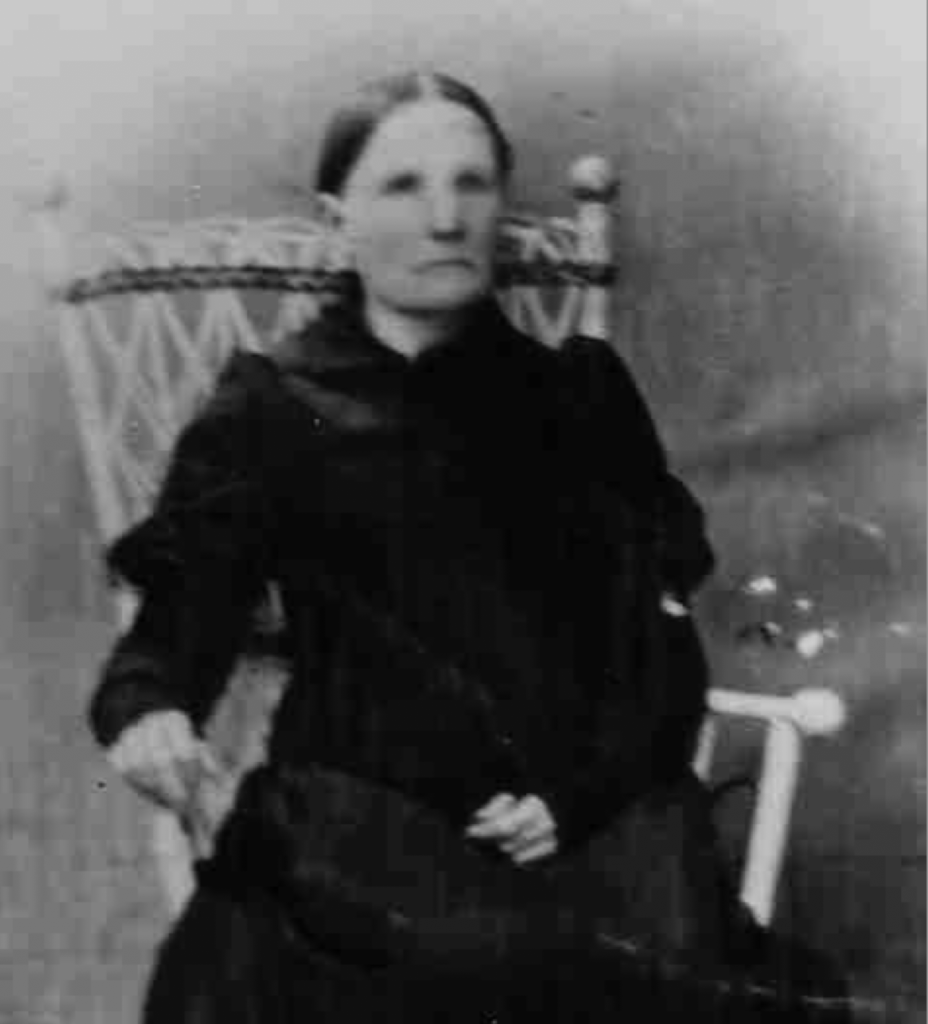
This photo is Lawrence Gordinier’s daughter, Mary Ann Gordinier Spencer, my 3rd Great Grandmother.

Oatmeal

This is taken from “Grandpa’s Book” which is a short compilation of stories given to one of his granddaughters for her 24th birthday. (One is never too old for Grandpa’s stories).

WARNING: The story you are about to read may not be true for every brand of oatmeal:

One morning I sat down to breakfast and my mother placed a dish of oatmeal on my plate. The oatmeal was cold. I had seen it before. I looked at the oatmeal and said, “Ugh.”

Mother frowned at me, “You said ‘Ugh’ yesterday and didn’t eat your oatmeal. If you eat your oatmeal you will be big and strong like your father.”

“I want to be big and strong like my daddy, but I don’t want to eat the same oatmeal that I didn’t eat yesterday.”

“Just one bite.” “O. K.,” I said.

I took a bite. I did not fall over dead, so I took another mouthful.

“Now you are eating your oatmeal like a man,” Mother said.

“It still tastes yuckie.”

“You will grow big and strong.”

“Hmph,” I said as I wandered outside. Since it was a nice day I decided to go for a walk in the woods. That was almost a mistake because the woods were dangerous. There was a tiger that lived in the woods. My Father had not seen the tiger, and my Mother had not seen the tiger, but my sister saw one. Whenever she had to baby sit she would say, “Stay in the yard because a monster tiger lives in the woods.”

But this day I had eaten my oatmeal and I felt big and strong. “Mr. Tiger,” I said, “You better watch out because I am going to get you. I’m not afraid of you.”

But that was before I saw the tiger. Wow! Was he big! He had long ears with tassels on them. He was striped and had a long tail. Yellow teeth hung out the corners of his mouth. A long beard hung under his chin, and he roared and leaped toward me.

“Be careful,” I said. “I ate oatmeal for breakfast.”

However, he acted like he did not hear me. He raised up on his hind legs and waved his terrible claws and chomped his terrible teeth.

“I warned you,” I growled. “Now get.”

He laughed a terrible laugh.

“Well, all right,” I said.

I reached out my left hand and grabbed his chin whiskers. He roared a terrible roar. It was his last because I picked him up by his tail and swung him around my head three times and threw him up in the sky. I flung him where he can’t come back.

If you go in the woods you will not see him on the ground. But if you look up in the sky you might see him. He looks just like a star. And all this happened because I ate my oatmeal for breakfast. 

Cold Oatmeal

Being the youngest of six children, I got hand-me-downs from both my sisters and my brothers. We didn’t have much, but I guess some of us didn’t know it. 

Daddy worked a full-time job, went to school at Emory University and pastored three country churches. There was only one car, so Daddy shopped for groceries and other household goods. Mama kept herd on six preacher’s kids! She had her hands full just with the washing, cleaning and cooking plus the thousand other things she did. 

One year, the food on our table was provided by funerals. That may be morbid to think about, but when someone died, daddy was asked to do the funeral. The money he was paid for his services provided our groceries. 

I didn’t worry much about what we were going to eat. I only knew there was always food on the table. Actually, there was one more thing I knew – I hated oatmeal. No matter, it was a regular at the breakfast table. It was cheap, it stuck to our ribs, it was a hot meal and even spiced up with sugar and milk, it tasted terrible. One day I had enough! I sat in my highchair (I was a little kid) at the dining room table and refused to take one more bite! Through the dining room window, I could see my brothers and sisters playing and running outside. But I had to stay there until I finished my breakfast.

Soon I heard Mama in the kitchen starting lunch. It sure smelled good! It wouldn’t be long! Lunch was served but guess what sat in front of me! You guessed it – cold oatmeal. Guess what had to be eaten before I got any warm lunch? Yep – an oatmeal popsicle on a spoon.

I learned a couple of valuable lessons that day. For one, Mama was not easily persuaded. She didn’t give an inch – didn’t budge – was immovable – was downright stubborn. 

I learned something else, too.Just because something is good for us, it doesn’t mean it tastes good. 

At least I didn’t have to eat grits!!

Snip Snip

Even without hearing all the various complaints the past few months about hair, it is obvious there has been an issue. Pandemics are not conducive to fancy hairdos or good hair days. Nope, not at all. I have seen individuals walk down the street with what appears to be a bush on their head. Ladies (and gents) who normally have luscious locks neatly in place now look like Medusa. Others who like their hair short and ironed down neatly grumble when they notice their tresses look akin to a wet mop. Well, I have a remedy for such a situation.

I know someone who can come to your rescue – my sister. If you’re in her vicinity, I imagine she would let you make an appointment. I can vouch for her mad skills. Why, more than once, she has risen to the occasion and even offered to cut my hair at no charge.

She does have one funny little quirk. No mirrors are allowed. After wrapping her victim, uhhhh, eeeer, her client, with a towel, she opens and closes the scissors a few times to test the sharpness. (Just ignore the glint in her eyes. She sometimes lets the power go to her head.) When she is satisfied, the new hairdo is well under way. Snip, snip. There is no need to worry!

When she cuts one side, she takes a quick look before moving to the other side. Then a funny thing happens. She stands back and studies her victim, ummmmm, subject. Fingers measure one side, then the other amid, “Hmmmm.” With a turn of the head from one side to the other, more sounds escape her throat. “Hmmmm. Hmmmm.” The next sound can be quite startling. It is more than just a sound; it is a giggle that turns into laughter. You might wonder, “What does the back of my head look like?” When her laughter turns into a roar, that may give you some indication.

Soon she is back at work – from side to side – and says, “I’m just evening it up. This side was longer than the other.” How many times can she say that? By the time she is finished, both sides are definitely even. How could it not be? There is nothing left.

My motto is – “it will grow back,” and it sure is easy to manage. You can wash your hair the same time you wash your face, with just one swoop of the washcloth.

So make your call! A good short haircut can last half a year at least. No worries! Give her a call at 1-800-nomirrors or shoot her an e-mail at snipandsnicker@lossoflocks.gone.

Oh – don’t forget your ear shields – and tell her her little sister sent ya!

Buster Knapp’s Model T’s

My Guest Author today is my Granddad as he recounted this tale to my Dad. Among his many skills, his brother Buster was also a horse trader.

In his younger days, Buster, my brother, was into horses. He had some skittish ones. He was lucky except for the times he got thrown, rolled on, or dragged. He managed to stay topside on broncs which other people could not ride.  And then he got into automobiles ‑ Model T’s.  He owned and operated on several of them.

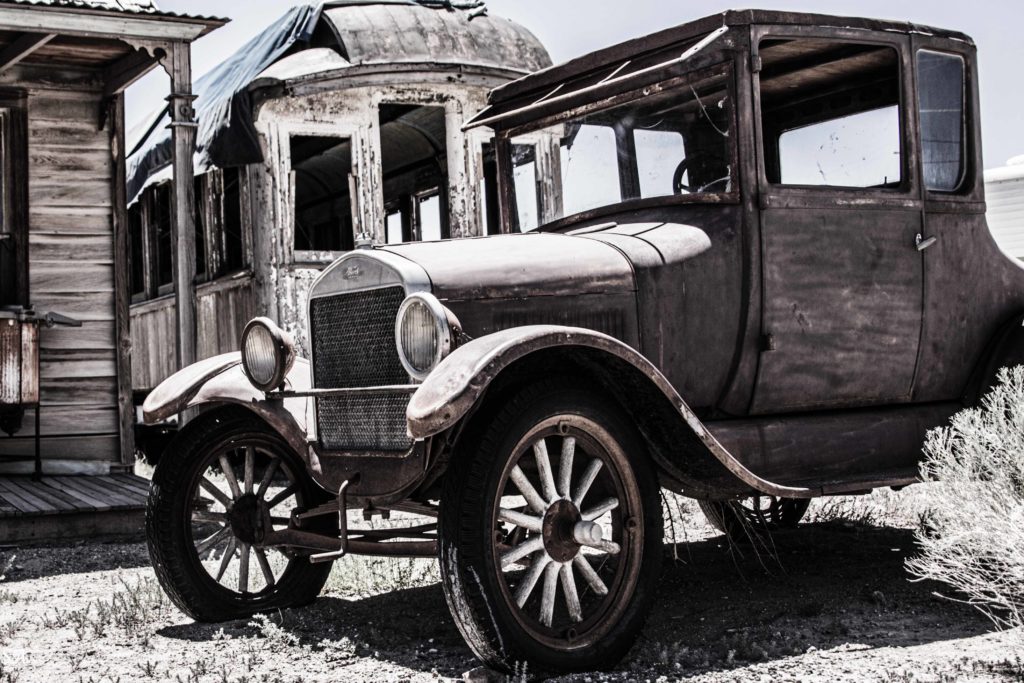
The Model T ran with bands and not a shift. You held low and reverse in with your foot. Sometimes the low went out and when you came to a big hill or bad spot a driver would have to turn his outfit around and back through. Buster burned the low band out several times. Most of the times in bad places. Well, in nice places, a person didn’t have to run the devil out of one and burn out the bands.

Buster had his Model T on a steep road near Great Falls. The brake burned out, which was not unusual.  The Model T went flying down the mountainside. It was a crooked road with canyon walls and deep gorges. However, there was one thing about the T’s. You could band down when the brakes went out.  That is, you just pushed in the low pedal and the Ford would slow down. 

Buster pushed his pedal. The outfit ground to a moderate speed and smoke started flying from the bandbox. Low gear burned out. The T Model gave a sigh of relief and hurried down the hill. It leaned over on the corners and rattled and banged to let everything know that it was coming and that things better get out of the way. 

It even had Buster nervous, so it must have been going at a pretty good rate. Anyway, he said that it was going too fast to fall into the canyon when it leaded over and only lightly touched the outer edge of the road with the outside wheels before it got back on solid ground. Centrifugal force and luck can be necessary neighbors. 

Buster’s luck also related to which automobile he was driving. Buster had three Model T’s. One of them had the bad habit of folding its top when it hit rough roads. This was the auto that he drove into Sumatra when the top fell down. With the top down, a fellow couldn’t see where to drive. Not that it mattered, roads were just worn places across the prairies and were sometimes more rutted and rocky than the fields beside them. It was uncomfortable for the driver and passenger, so Buster got out his knife and cut head holes in the top. He and Mutt Sherod wore the T Model into town. 

Ben Ziemer lived out in the Blackfoot country, about seventy‑five miles out. He traded horses. Ben had come from Germany and had several brothers over there in the German army. When the Yankees got involved in World War I, Ben said he wouldn’t go and shoot at his brothers. One thing for sure, the Montana neighbors knew that Ben wasn’t afraid of war. He wasn’t afraid of anything because he horse traded with Buster Knapp. 

About this time Buster decided he could get along with two Model T’s instead of three, so he traded for a motorcycle. This was just what he needed to test his streak of good luck. Possibly this would have been the end of Edgar Knapp ‑ commonly known as Buster ‑ except for a bit of good fortune.  Ben Ziemer came into town to a dance. He filled his foot‑wide, ten‑foot‑high frame, but was hungry for a horse trade. It ended up with him trading five horses for Buster’s newest outfit and its sidecar.

The price was agreed upon. Ben went out to get the cycle and go with Buster for a demonstration ride.  He folded into the sidecar, knees bent up to his ears, and Buster wound out the motorcycle. It wasn’t that Buster was an expert, it was just that he had a streak of luck and hadn’t been killed on the thing yet. They took a turn around the corral. That was a good place to try out a fast horse and should work for a motorcycle. 

Ziemer clutched the edges of the sidecar, he was swinging wide on the curves. His knuckles were white, but he had a lot of grip in them. A panel fence was on one side of the track. This was a snow fence, which stopped the snow from drifting the corral full. 

Each circle was faster than the previous one. Each circle saw the sidecar whipping closer to the snow fence. About the fourth go around the outfit hit the fence midway between the motorcycle and the sidecar. It was a grand wreck. The bike went one way, the sidecar the other. The driver and passenger took independent routes through the air. 

They didn’t have parachutes, but there wouldn’t have been time for them to open. They fastened the bike and sidecar together. It was still battered. “Well now, I just don’t know about that trade,” Ben said. 

“We’ll just knock off a couple of horses,” Buster answered. This was another piece of good fortune. Good enough to get rid of the motorcycle, better to get three horses instead of five. It likely saved a lot of fret and worry later on down the trail.

War Correspondent

The search for Thomas Brewer began with just a very few bits of oral history. Like the game of gossip, it mutated through the years. The fragments that remained intact, though not quite accurate, were enough to spur me onward. Though a few documents are lacking, there is now a fairly clear line of Brewers that weave through history – from the Civil War, the Revolutionary War, the newly formed Maryland Legislature, to the seizing of the Puritans’ English lands and escape to the “new world” in hope of a “New England”. But that is another story.

Thomas William Brewer was born in 1824 in Fauquier Co, Virginia. His mother died when he was quite small. He and his sister, Sarah, were raised by their maternal grandparents. After receiving his education, he took a teaching position in Ohio where he met his bride, a fellow teacher, and married in 1847. Eight children were born from this union.

Family history states that Thomas and his wife, Azuba, were part of the underground railroad movement. Thomas was an advocate for the enslaved and actively spoke for freedom of all kinds – racial, political, and religious – on every level of society. He readily spoke of his faith and political convictions. On July 25, 1861, Thomas enrolled at Downington for duty in the Civil War. He mustered into service in August at Champ Chase, Ohio, as Sergeant with Co C, 30th regiment, OVI. He was 6’1” tall, had a light complexion with black eyes and light-colored hair.

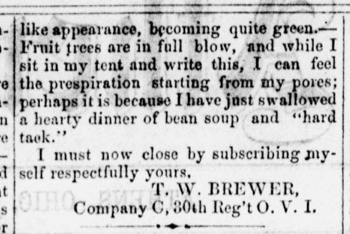
While fulfilling his duties of military service, Thomas also served as War Correspondent for the Athens Messenger in Athens County, Ohio. In this manner he was able to describe events that took place on the battlefield, and keep the public informed while also stating his moral, political, and religious views.

In late fall of 1862 until February of 1863, Thomas was on recruiting service. That gave him opportunity to spend time with his wife and seven children and father another child. He never saw his eighth child born in August 1863 because he was killed in the assault on Vicksburg on May 22.

The account given by oral history paints a vivid picture of the character of Sgt Brewer as being a dependable, compassionate, capable, trustworthy, and exemplary soldier. When his Lieutenant was killed in battle, Sgt Brewer was next in command. He rose to the occasion and led his unit to face their opponents. He fell in battle and succumbed to his wounds.

At the moment of his death, his wife in Ohio saw her beloved husband standing at the foot of the bed. As his apparition faded, she knew he had breathed his last breath in death. She was not surprised when the official word came to the family.

Thomas William Brewer is my 3rd great grandfather.

A poem in tribute to Thomas William Brewer was written by his daughter Thirza:

Our Sire whose love for native land
was dearer than his life
went to defend the dear old flag
and fell in deadly strife.
At Vicksburg, in a soldier’s grave,
he sleeps the last long sleep,
and scattered far and wide are those
he left to work and weep.

The following article by T W Brewer was printed in the Athens Messenger, Athens, Ohio March 26, 1863

The Apple Trees of Sapillo Creek

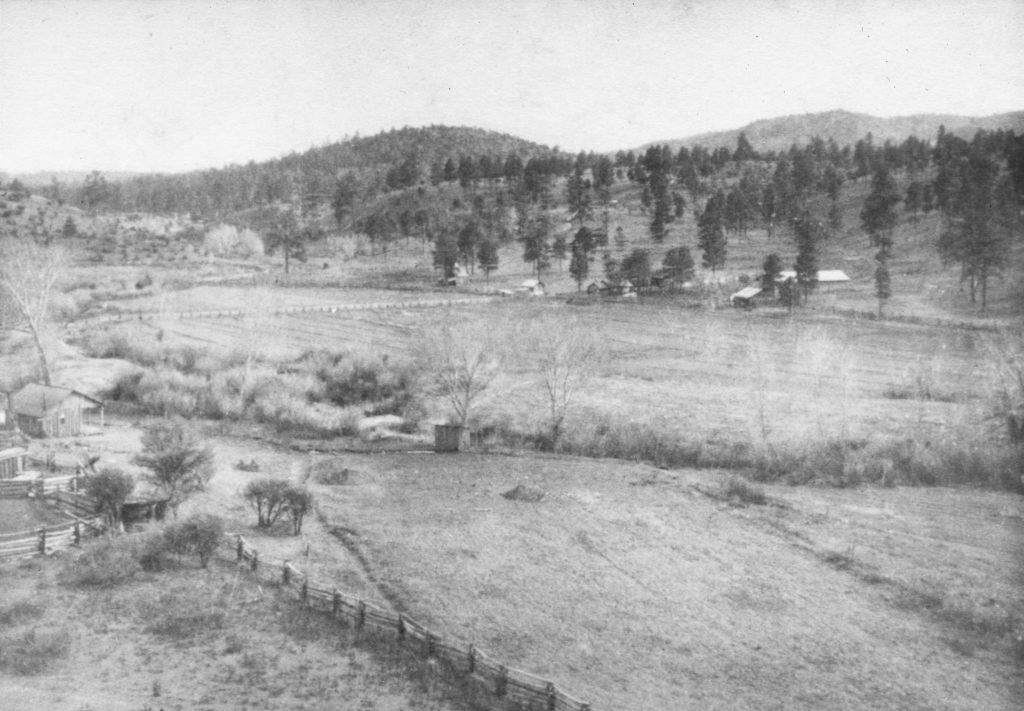
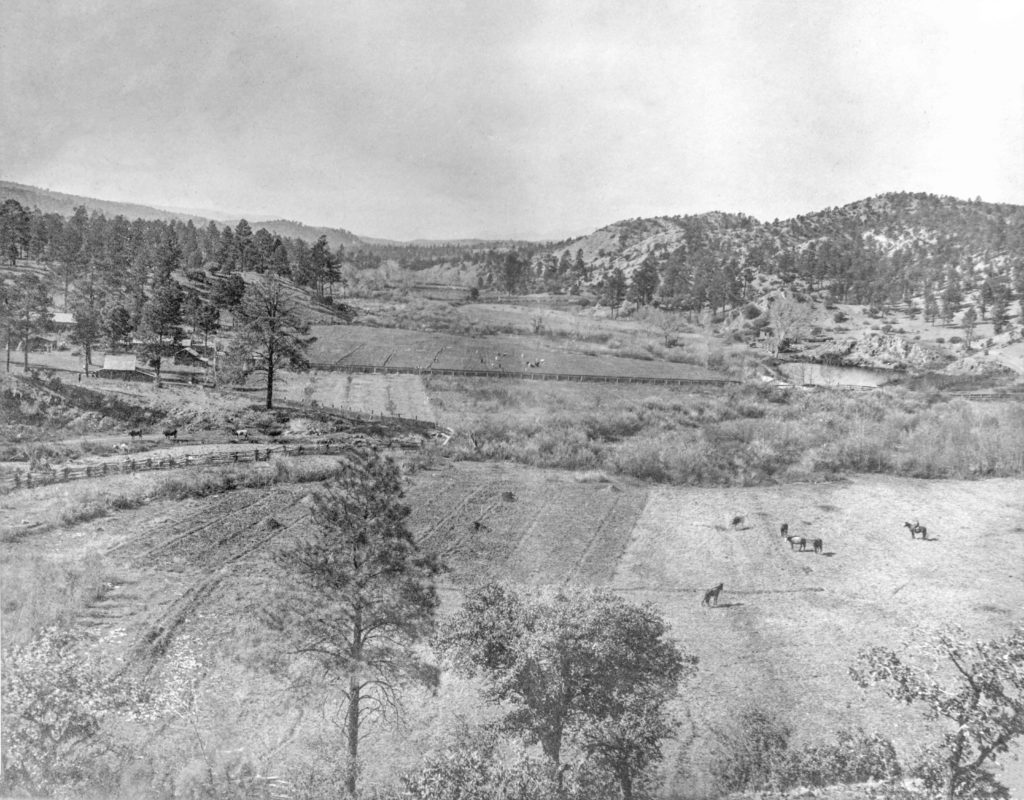
The Apache Scout looked down on the Brannin Ranch where Sapillo Creek wandered through the valley.  From that vantage point, the scout had a clear view of one of the Brannin boys on horseback who watched the stock grazing. Across the field, Guadalupe and some of the kids were busy with household chores and other projects. Smaller children played in the yard around the log cabin. The corral, barn and other buildings were in clear view. That wasn’t the first time Apache scouts made their way to the Brannin Ranch. They visited from time to time, often unseen. For the most part, except for an occasional cow taken for their livelihood, the family and stock were left alone, maybe because the Brannins allowed them food on occasion, maybe because Guadalupe could have passed as one of their kin, or because they believed she might just be the daughter of their revered Chief Victorio.

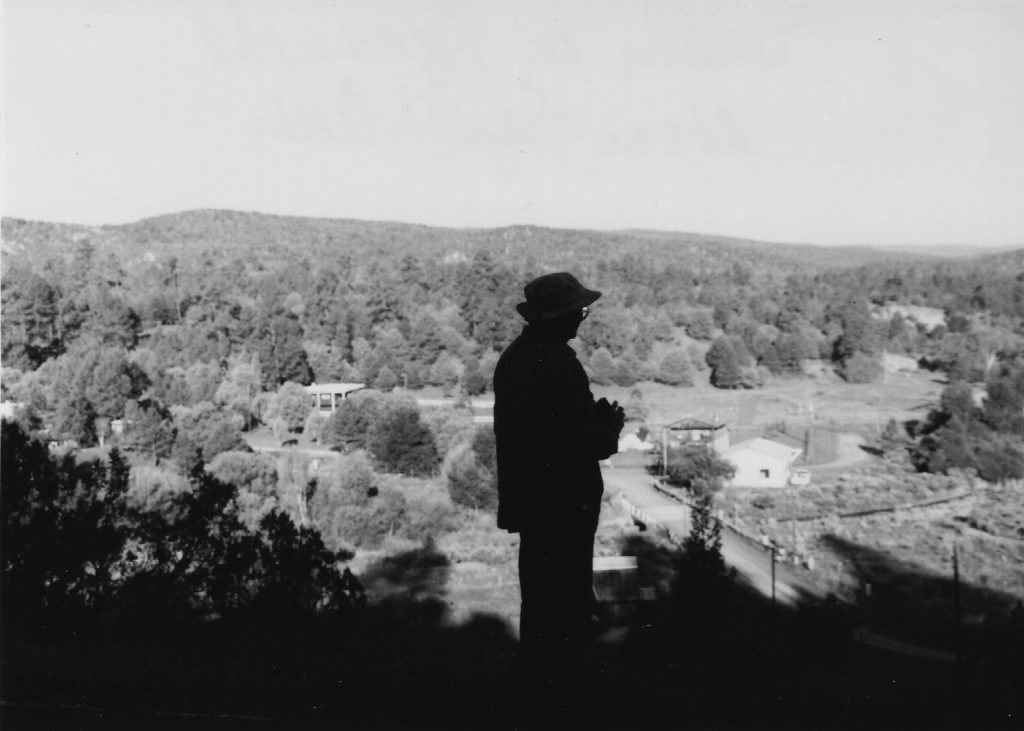
The ranch along Sapillo Creek was thirty miles from Silver City, New Mexico. In 1876, Stanton Brannin left the mining town of Georgetown and set up a sawmill on the property on the Sapillo. A log house, corral and barn were constructed. Later, a shingle machine was added. Stanton also planted an orchard of apple trees.  Eleven kids grew up in sight of those trees. If only trees could talk, they would have informed the family of more than just the presence of Indians and strong-armed land hungry ranchers who passed through the property.

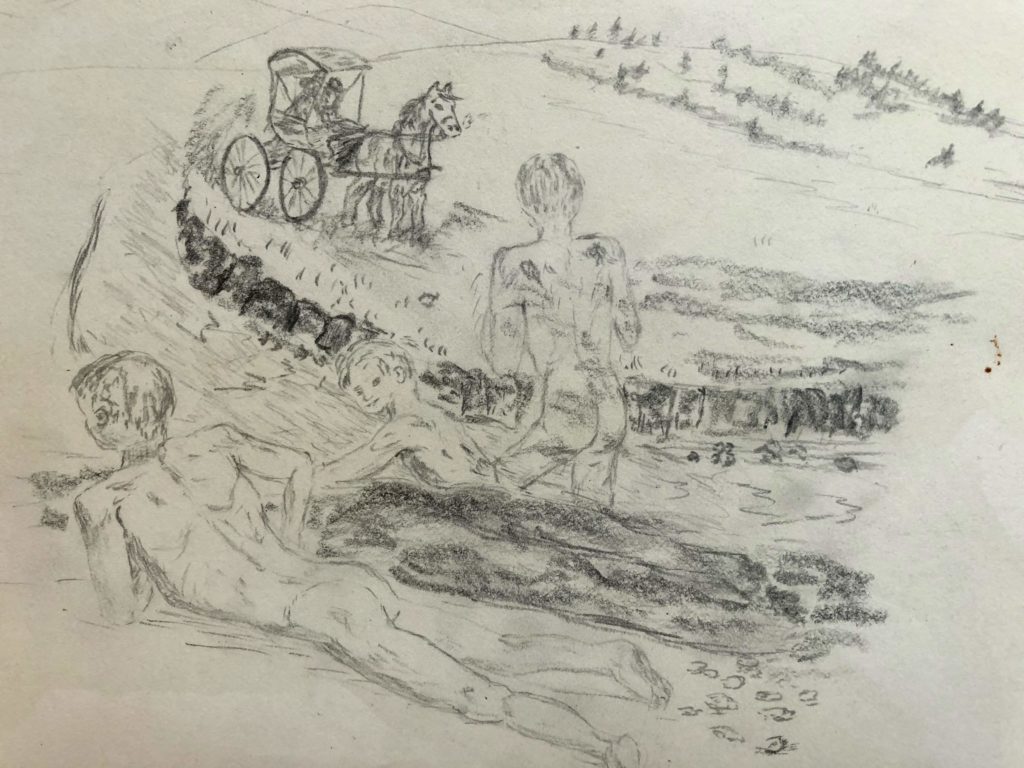
The boys were always looking for adventures and didn’t have to go far to find them. On a lazy Sunday afternoon, they offered great entertainment at the astonishment of neighbors out for a Sunday drive in their wagons. There was a great repository of mud by the creek. The boys stripped down to their birthday suits and rolled in the mud until they were amply covered. When an unsuspecting couple came by in their wagon, the boys jumped out and danced like madmen. The horses spooked and gave their passengers quite a ride. It didn’t take long for the boys’ father to catch wind of their performance. That put an end to that!

Along with cattle, horses, and Angora goats, they also had some burros. The boys hated the burros, especially Dick. He would much rather ride a horse. It was an insult to have to ride a burro. The burros were slow, lazy, and stubborn. The boys decided to drown one of the nasty beasts. They tied a log to its halter and pushed it into the swollen creek in the swimming hole. The ploy did not work. Little did they know the log would float. It drifted to the edge of the creek and the burro just walked out!

Maybe the trees would have told about the Apaches who camped at the pond near the Brannin cabin. The Indians may have grabbed an apple or two on their way to borrow and return a pair of scissors to cut their hair. Maybe the trees saw the ghost of Charley Woods walk through the orchard before he climbed up the pole in the barn. Maybe they heard the boys beneath their limbs as they conspired to string barbed wire at neck height from one side of the draw to the other with the intent to slit the throats of GS cowboys.

That’s when Stanton decided it was time to move the family. He left the untamed wilds of New Mexico in 1895 to more civilized lands – the untamed wilds of Montana. In 1896, they had made it to their destination where their last two children were born.

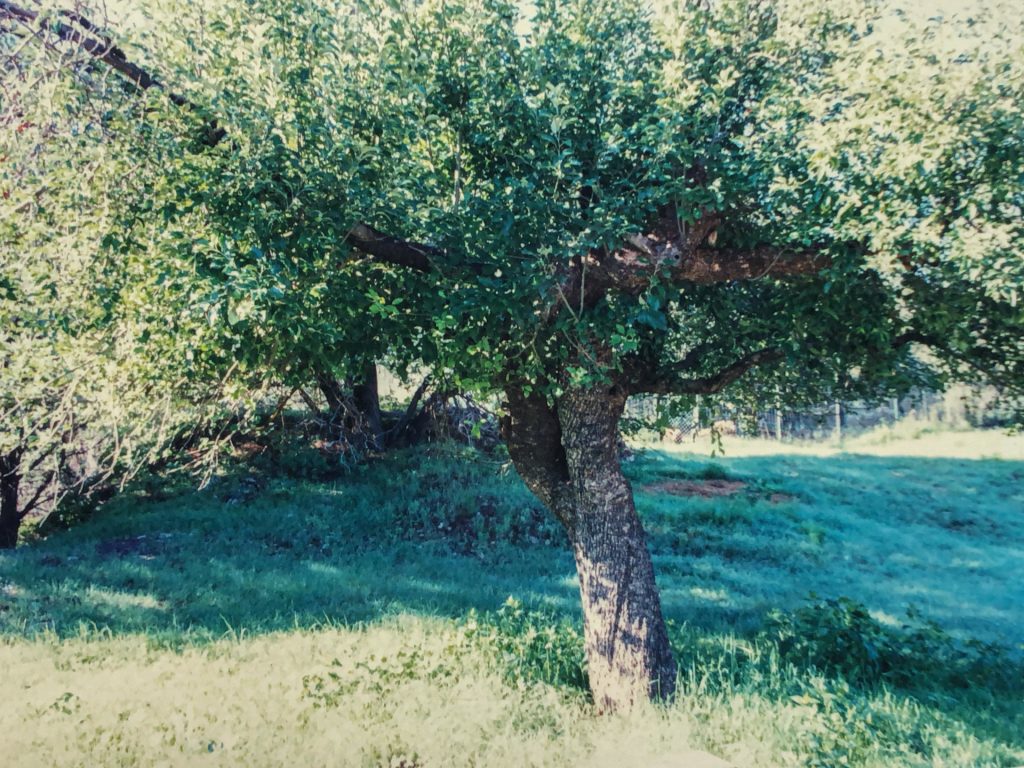
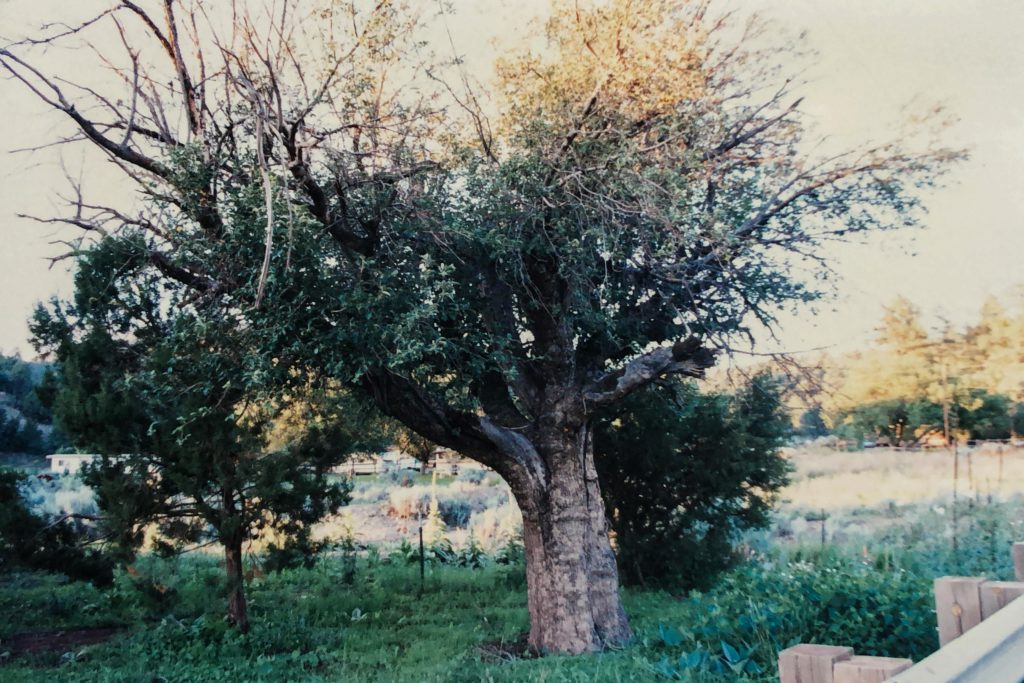
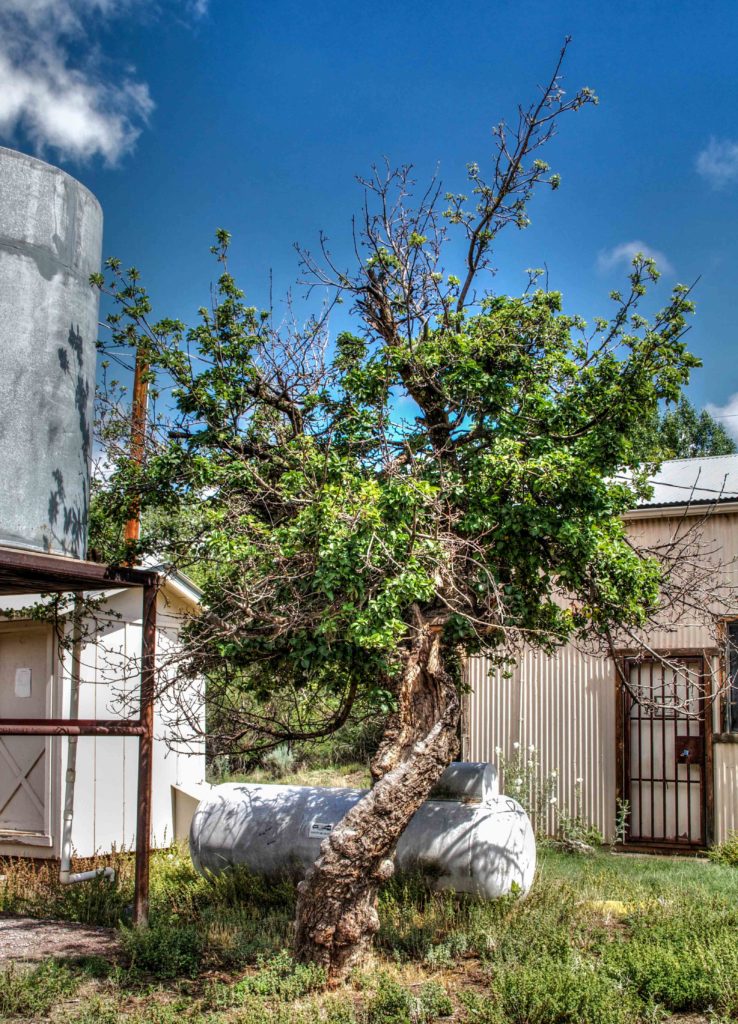
One hundred years later, descendants of Stanton and Guadalupe Brannin gathered at the site of the Brannin Ranch on the Sapillo. Still standing, twisted and weathered, were a few apple trees. Sixteen years after that meeting, we stood in the same place again and had our picture made with the last lone tree planted by Grandfather Brannin about one hundred thirty-four years earlier.

If only trees could talk!