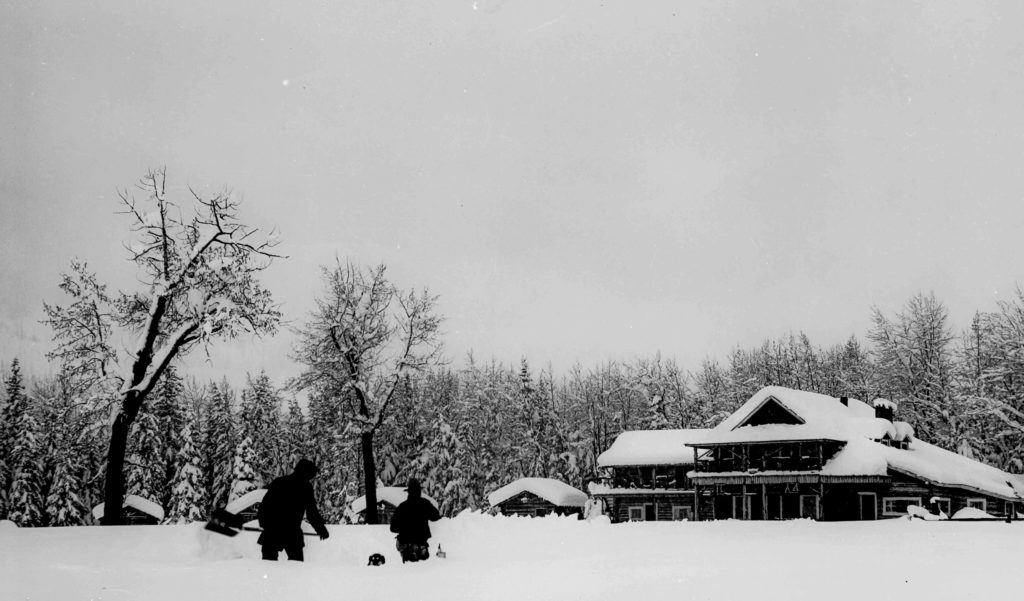
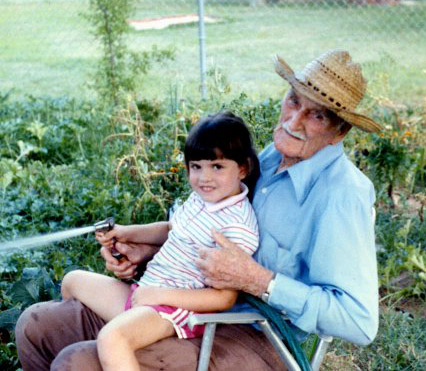
This was written by my grandfather, Poppy, after a Sweet Grass Canyon winter. He recorded that it took “45 gallons of gasoline in 42 miles of driving to feed cattle.” Poppy made a trip to Two Dot in December, 1916. He arrived home on Christmas Eve. The road couldn’t be traveled by wagon again until May, 1917. In March of that year, there was a home delivery. Jack was born and Poppy was the mid-wife.
You may talk about your winters, And rave about your snow. But for the world’s worst winter, Up Sweet Grass Canyon go.
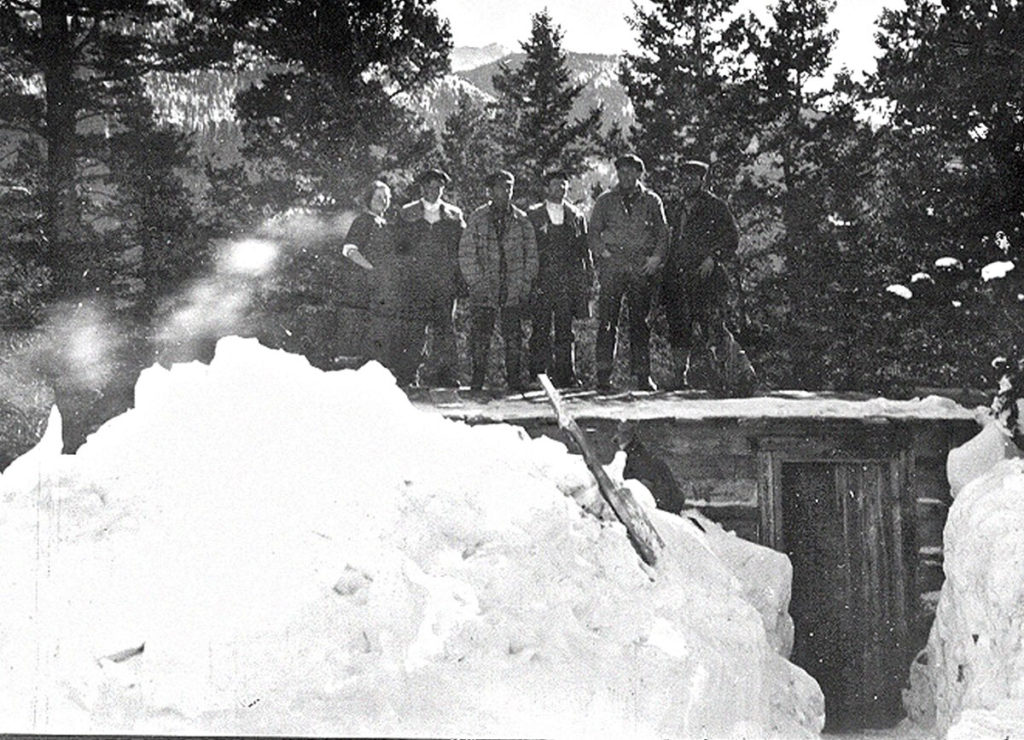
standing on the roof of the house in the winter of 1917
For endless drifts and blizzards, And everlasting snow, Don’t go to Nome, Alaska, But up Sweet Grass Canyon go.
The South Pole and Antarctica Are just a hothouse plant Compared to Sweet Grass Canyon When the weather is on the rant.
For one hundred days successively You never see the sun. And when you think it shines at last, Winter has just begun.
Twenty miles to mail a letter, Forty miles to go to town. Ten miles out is the nearest road, With grades straight up and down.
No telephone, no snowplow – You’re really on your own. When you start up Sweet Grass Canyon, The place that you call home.
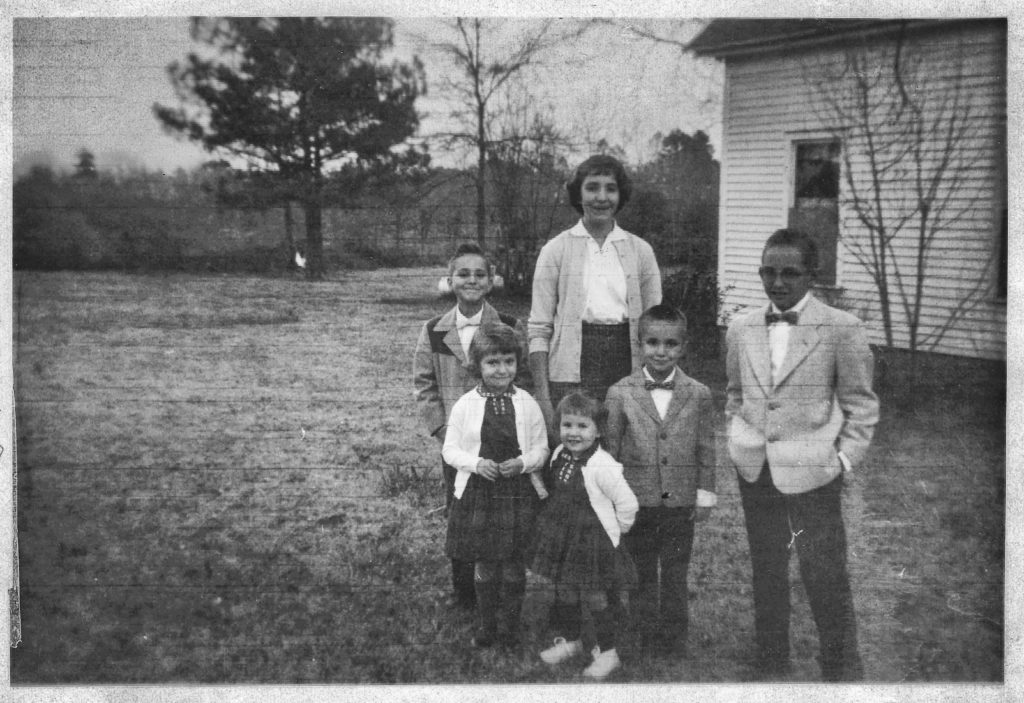
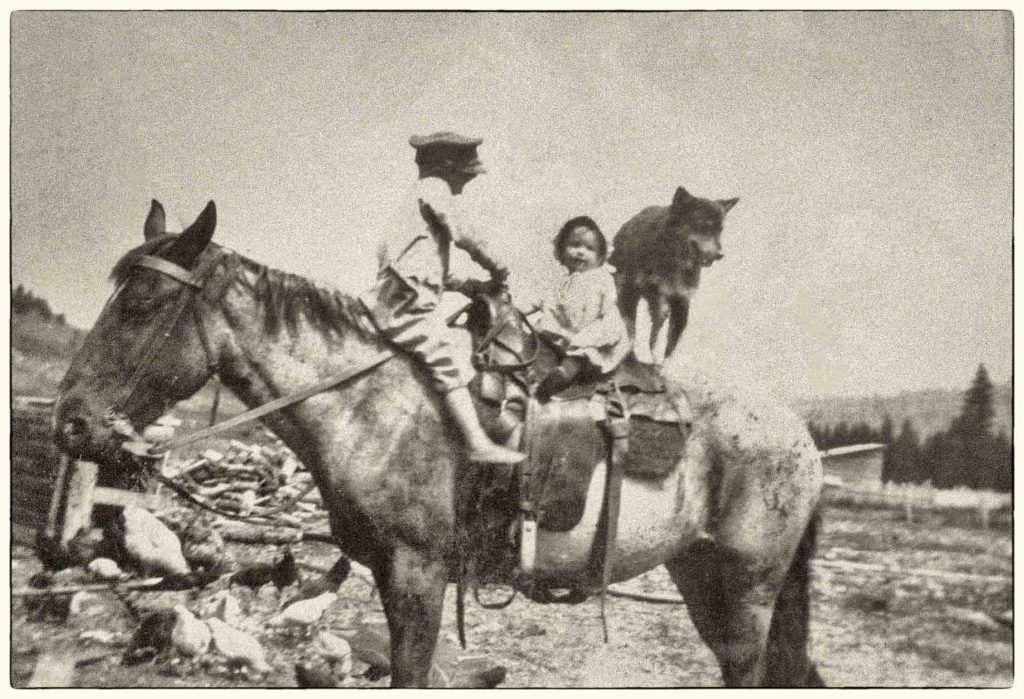
The school bus my dad rode to school had four legs, a saddle and a big sister holding the reins. When I started to school, I rode a bus with my brothers and sisters with Mr. Brown at the wheel. That was an adventure in itself. When we got on the bus, we increased the student population considerably. Mr. Brown soon learned that the drop off point at the end of our road was his best stop of the day. He was glad to get rid of the preacher’s kids.
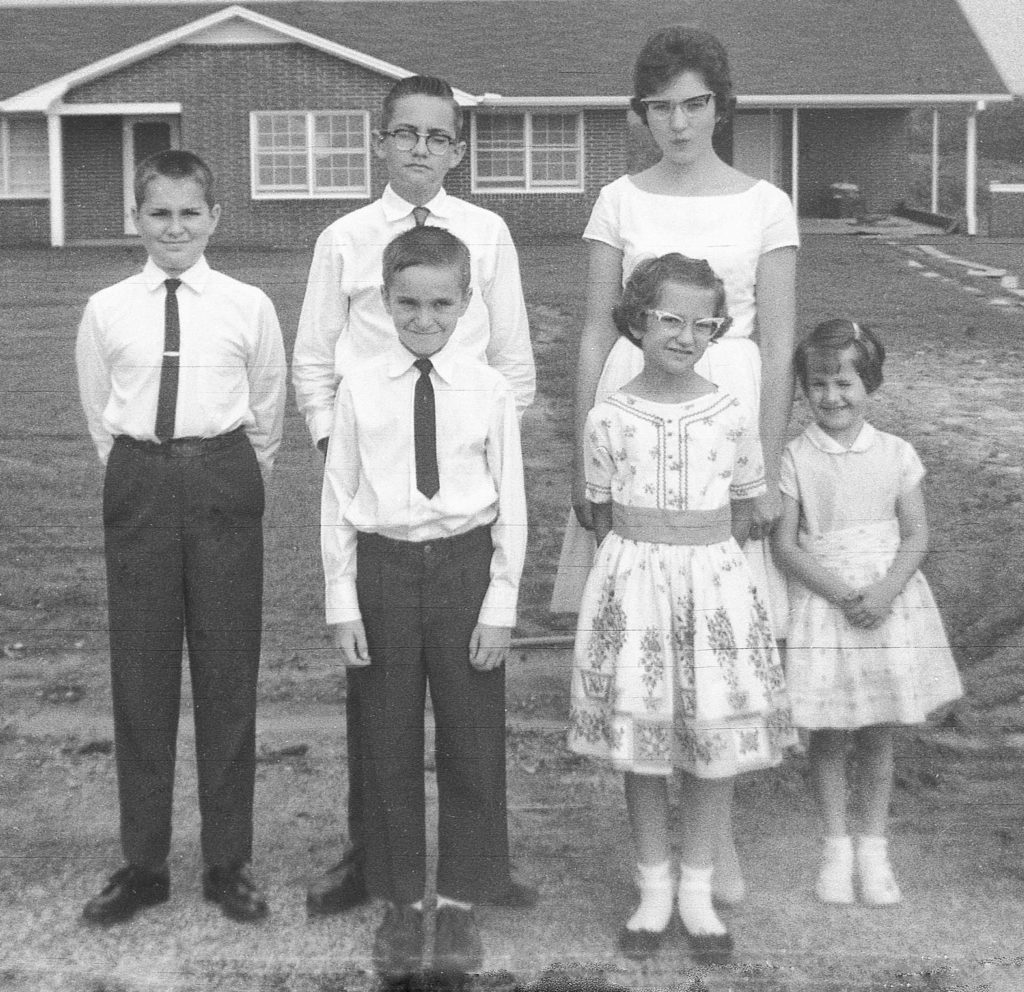
the Preacher’s kids look innocent to me
My oldest brother and his pals were notorious for practical jokes, many on the verge of meanness. Mr. Brown didn’t much care for those boys who were always stirring up trouble. For some reason Mr. Brown didn’t like kids shooting spit wads at him or throwing things. He would holler and call out threats to “whoever” was causing trouble.
There was one occasion (probably the only one) when the boys were actually innocent. On that particular day, the whole bus load of kids was in an uproar. I think all of them were laughing and pointing. There was an inch worm right on the brim of Mr. Brown’s hat. That little worm worked its way round and round the hat. Mr. Brown stopped the bus, turned around and yelled. His face turned blood red. He was so mad I knew he would keel over with a heart attack at any moment. He demanded to know why everyone was laughing. No one dared tell him it was only just an inch worm.
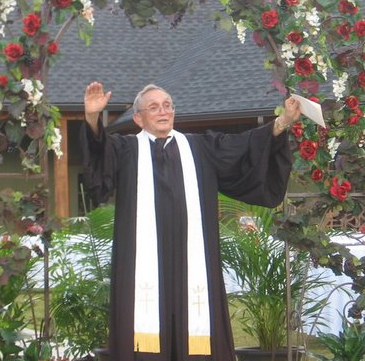
the Preacher
I’m pretty sure Mr. Brown was glad when the preacher moved.
Mama had us kids up, fed and properly dressed for Sunday church. Brother David probably even had on his second set of church clothes because he had messed up the first ones. We piled into the car and were off. Mama took a deep breath, thankful for at least a few minutes to sit before herding kids out of the car and into their prospective classes.
When it was time for the church service, we were seated and quiet. If we dared talk or wiggle too much an arm attached to my mother would find its way to our heads and we would get thumped.
After the singing came the sermon. I didn’t pay much attention to the preacher’s message. But when he said, “Brer Rabbit” or “Sister Ellen,” my ears perked up. Story time! Those were the Preacher Parables, his stories of illustration.
When the Preacher said, “Sister Ellen,” the whole congregation smiled. They had heard “Sister Ellen” stories before. It wasn’t long before smiles turned to laughter. When “Sister Ellen” came across the country to visit, it seemed that everyone already knew her. If they had thought the Preacher was making up stories, they soon learned that “Sister Ellen” was real as well as the stories told (with a bit of improvisation).
Church is where I learned much of our family’s history. That’s when I heard about the Brannin boys and the ranch. That’s where I learned about Daddy’s first baptism and of Mama walking three miles to school and getting caught in a blizzard. We heard tales of the kids thumbing their nose at Grandfather Ward, about Spider the horse, and Sister Ellen daring Sister Barbara to run to the outhouse as fast as she could and opening the door with Effie Bowlegs inside. That’s when I first knew of Daddy’s precious teddy bear and the funeral Sister Ellen conducted for her doll.
Somehow the Preacher always used his “Preacher Parables” to give practical illustrations and application. I have learned that in teaching, students remember stories and their applications longer than other portions of the lesson. I guess that’s why I like to tell stories.
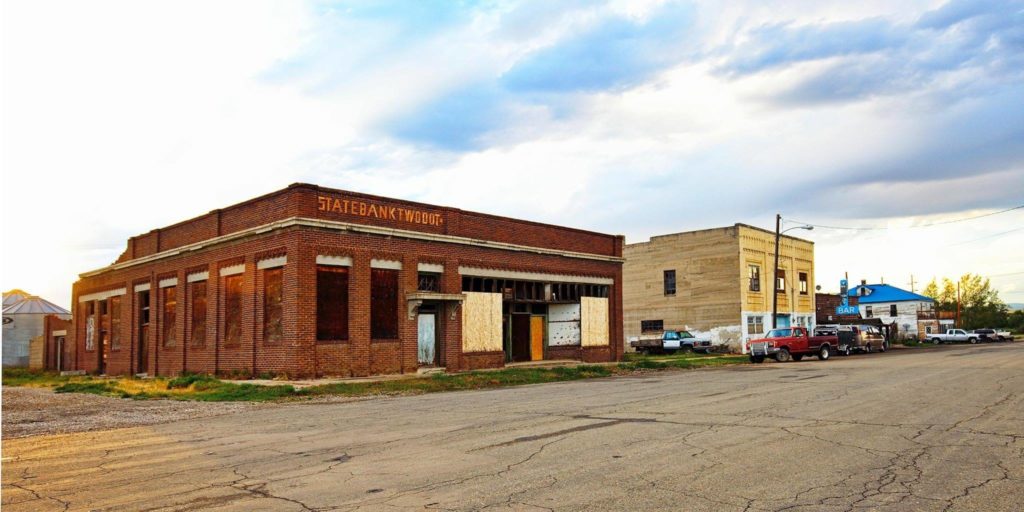
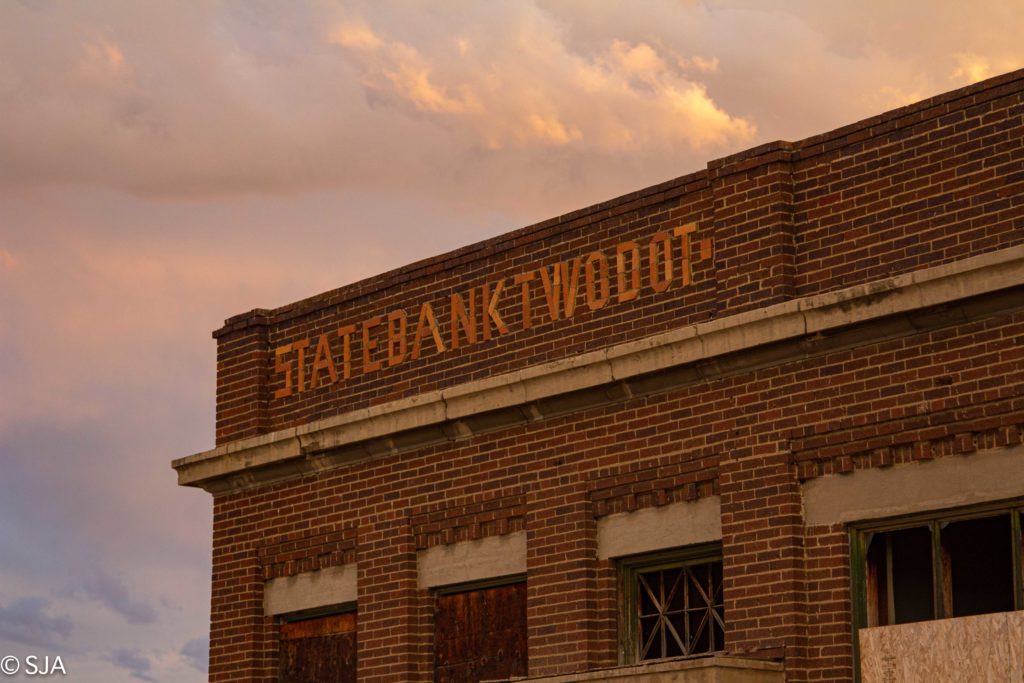
Two Dot is a cow town in Montana. It got its name from “Two Dot Wilson.” His given name was George R. Wilson. He was called “Two Dot” because his brand was two dots, placed side by side on each hip of his cattle. He donated the land for the town which was founded in 1900 as a station on the Jawbone Railway. It was part of the Milwaukee Railroad system that pulled up tracks in central Montana in the late 1970’s. The little town is somewhat of a Western legend and even made its way into the Country Music world through Hank Williams’ song Twodot Montana. In 1915 it was the site of one of the substations of the railroad’s electrification project. Ranchers drove their cattle to the railway station and loaded them on cattle cars to be shipped to other parts of the country. At its prime, the bustling town had two grain elevators, a lumber yard, a ball team, a hotel, a bank and other businesses. The hotel was always busy as passengers and railroad workers came through. The town is much different now, but that Western charm lingers.
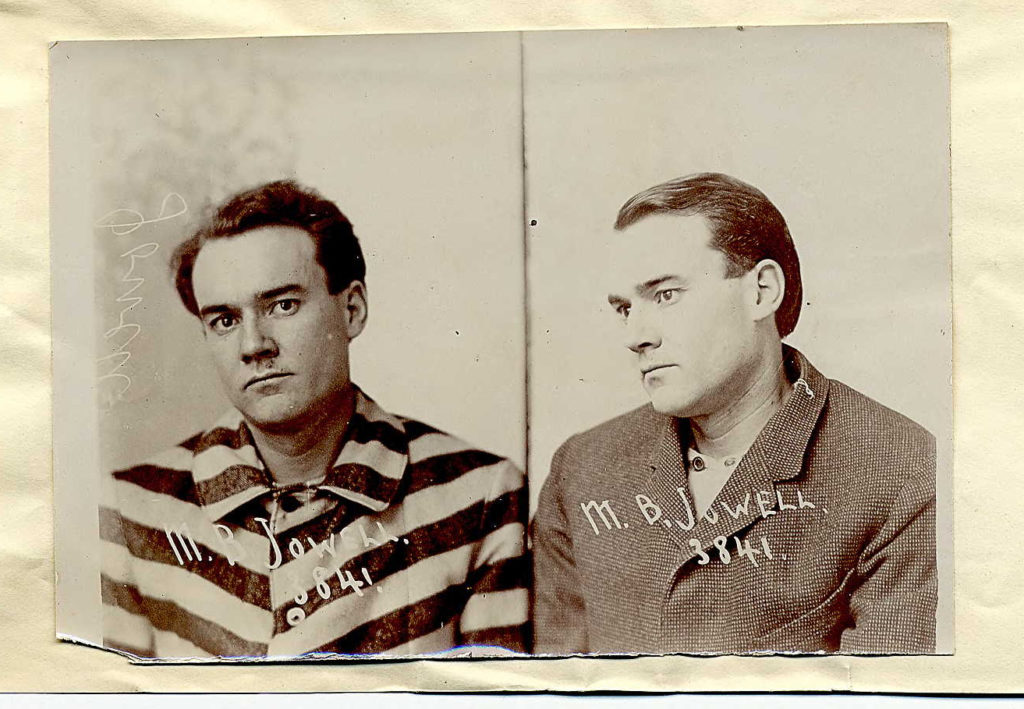
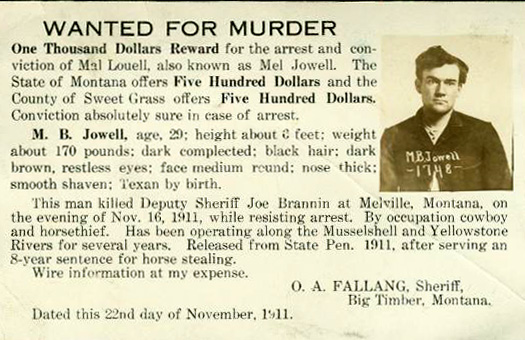
Though the streets of Two Dot are relatively quiet now, whispers of the past echo from the hills and the old buildings. Tumbleweeds were not all that once blew onto the dusty streets of Two Dot. In 1915, a cowboy by the name of Mel Jowell blew into town. He was described as a handsome cowboy of eloquent speech, but he was not exactly as he appeared, especially to the fairer sex. Beneath his politely mannered façade was a conniving scoundrel. He was a horse thief, a cattle rustler and along with a cousin, killed an ex-Sheriff in 1901 in Arizona. According to a newspaper article of April 1901, Jowell was suspected to be part of a gang of cattle rustlers and murderers who “cut a wide criminal swath through Southern Utah and Apache County” Arizona in 1899.
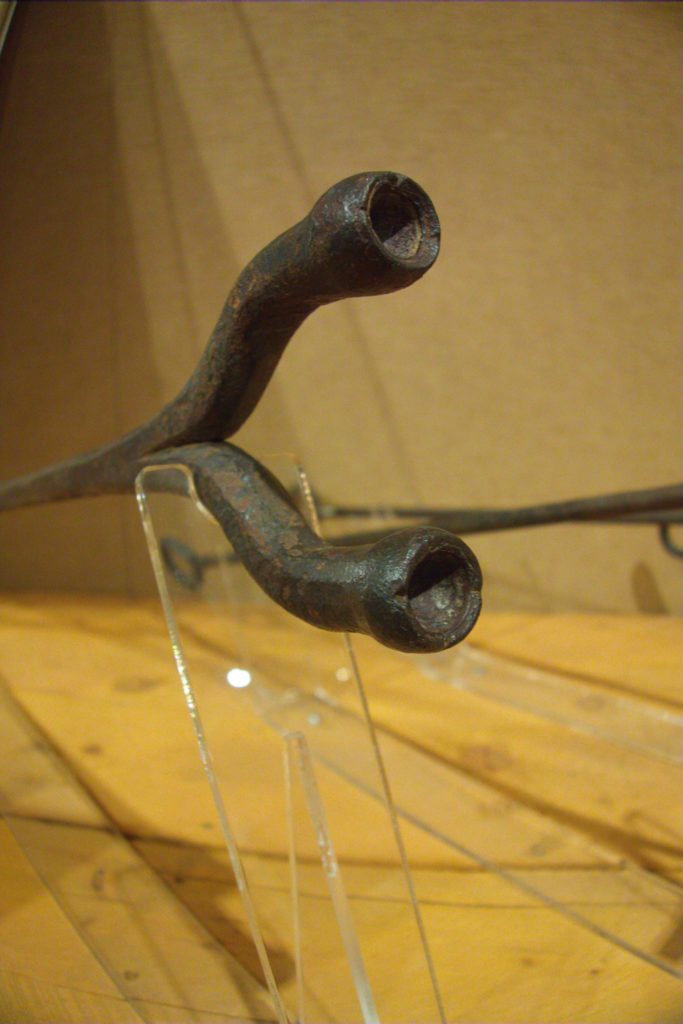
Jowell rustled Two Dot Wilson’s cattle and altered the brands. Rustlers used a running iron to forge brands. A few lines or curves could be made to turn someone else’s cattle as their own. It was bad news to be caught with such an iron. Jowell was eventually convicted of his crime and sent up to the Montana State Prison in Deer Lodge. After serving four years, Jowell was paroled. Seven months later he was arrested again when he broke parole and stole cattle again. He returned to Montana State Prison but only served about one year before he was released again.
Two Dot Wilson’s branding iron on display at the Montana Historical Society Museum
That wasn’t the end of the story. It was at Deer Lodge that Jowell (alias Rex Roberts and Dalton I Sparks) met George Ricketts, and Harvey Whitton (alias James Hall, James B O’Neal and Jim Ross), both convicted of murder. That alliance meant death for Deputy Sheriff Joseph Brannin. Ricketts assisted Jowell in the murder of the Deputy Sheriff on November 16, 1911. A few months later when Jowell escaped from a moving train after testifying at the trial of Ricketts, he was aided by Whitton who was using the alias of Jim Ross.
There is much more to that tale, but I wonder, “What if Two Dot Wilson’s brand had not been two dots that could be relatively easy to alter with a running iron? If Jowell had not formed an alliance with the other men in prison, would he have followed a path that brought the death of “Uncle Joe?” I guess we will never know.
So, the next time you’re in Two Dot, remember that Two Dot is more than just another Western cow town.
My Guest Author today is my Daddy. One morning, I gave him an assignment to write a story about harvesting ice from the beaver ponds and storing the huge ice cubes in the icehouse that lasted into summer. His assignments were to provide more detail on life in the mountains and served as therapy to keep his mind active as well as his writing skills. Here is his story:
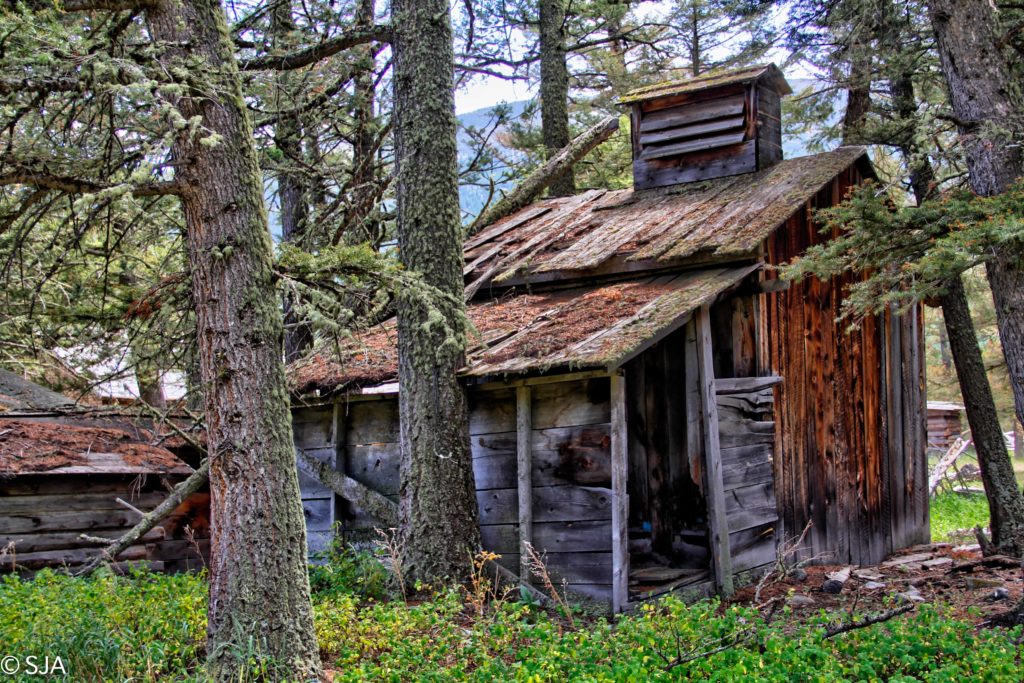
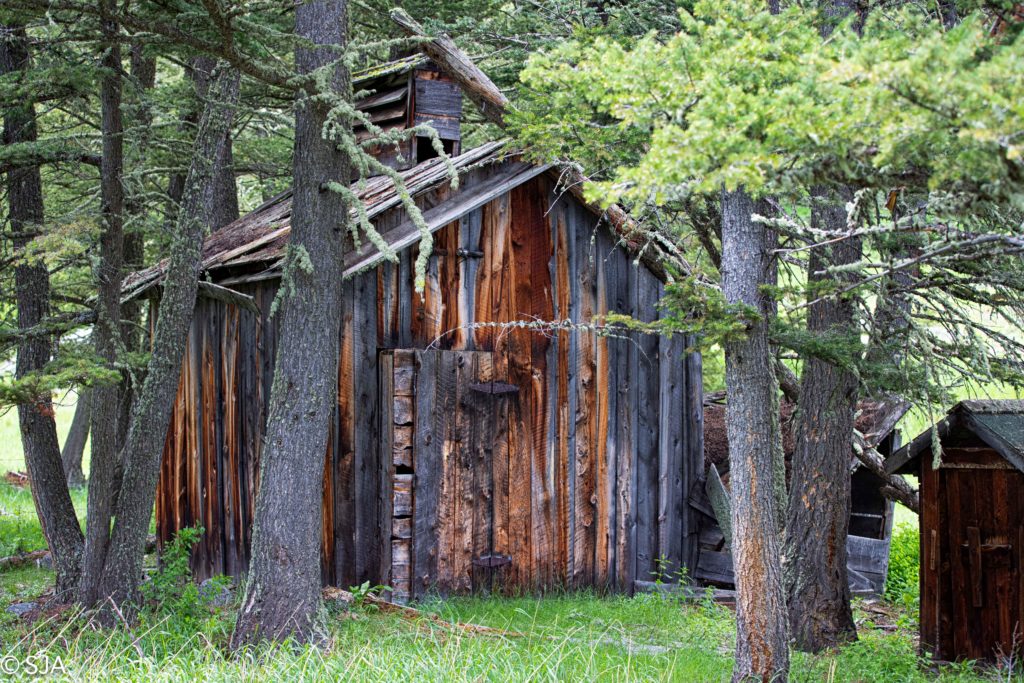
Almost every ranch had an icehouse. Ours was a frame building which leaned against the meat house. It was covered with inch boards, both on the inside of the studding and on the outside. The space between the boards was insulated with sawdust. Inside the building more sawdust surrounded the stack of ice blocks. Folks on the prairie used straw for insulation. If they were near a sawmill, they used sawdust, which looked better floating on the top of a glass of iced tea.
Getting ice was a neighborhood affair. February or March was a good time to put up ice. By then Dad could drive the International truck onto the Brannin beaver ponds. The ice there was thick and clean. It was sawed into blocks about sixteen inches wide and twice as long. Two husky men used a pair of ice tongs to pull the ice out of the water. The blocks were then dragged up a plank onto Brannin’s horse drawn sled or Ward and Parker’s truck to be hauled to the appropriate ice houses. There it would be buried until ice using time in July or August.
The ice kept well. A fellow down by Big Timber named, Lester Mack, had his icehouse burn to the ground. The mound of sawdust and ice blocks survived the fire and the Mack family dug out ice all summer.
We had missed the midwinter birthday party (for Sonny Tronrud), but we got to watch the men put up ice. This time they did it on a Saturday. On weekdays we had seen the men put the ice blocks into the icehouse. However, we had never seen them saw the blocks on the pond. We were anxious to see this. When our lumberjacks sawed down trees and cut them into logs, one worker would get on each end of the saw. They’d pull it back and forth while it ate into the wood. It always took two men.
We wondered about the ice sawing operation. We knew that one person would stand on top of the ice. We couldn’t imagine where his sawing partner would stand. “Maybe it’s under the ice!” Sister Ellen was hoping that the bowlegged hired man would be the fellow operating the bottom end of the saw!
Effie Bowlegs had the Winter Mopes. Not only was he cross, but he had also been doing things which brought no reward – like bossing Sister Ellen. Besides this he overate. No doubt a symptom of the Mopes. He had been reaching across the dinner table to get a third helping of navy beans before the rest of us could get seconds. He never even asked for them – just reached across the table without so much as a “Please pass,” “Thank you,” or anything. Sister was hoping he’d have to stand in water over his head and pull one end of the saw. When we got to the pond, they didn’t have a two man saw. Instead they had a saw with only one handle. There was no one down in the lower regions.
Effie Bowlegs, standing
Barney Brannin marked off the ice in rectangles. He was showing off for the schoolteacher. Her smile lifted him out of his winter doldrums. Uncle Gus had to work his off. He chopped a hole in the ice and started sawing. Soon the center of the pond looked like a big checkerboard with ice blocks floating on it. The next task was to get the ice out of the water.
One piece of ice had missed being cut in two. It was a monster block which floated among the other chunks. Father motioned to Billy Briner and Jimmy Hicks, who were the teenagers in the squad of workers. “Hook the ice tongs in it and pull the bloody thing out,” he said. “It will hold down our load.”
Ice tongs have two long steel legs which are fastened together like a giant salad server. The handle ends have large loops for handholds. The other end has sharpened points which are forced into the ice. The boys hooked the tongs into the block and pulled it part way out of the water. Mr. Bowlegs watched critically. Not only did he eat all the beans, he was also standing around with his teeth in his mouth telling others what to do, which goes along with severe cases of Mopes.
“You’ve got to submerge it first,” Mr. Bowlegs said. “Huh?” “Submerge it. Don’t you know what submerge means? Push the block of ice under the water. You’ve been watching us all day. And, when it bobs up, jerk it onto the top of the ice.”
The day was cold. Snow was sifting over the top of the pond. The teenagers pushed down, one on each end of the tongs. The block dipped into the water. They yanked as it bobbed to the top. The ice made it about halfway up and slid back. The boys held the tongs ready to give another try. “I can do it by myself.” Their self-appointed boss pushed the youngsters aside and grasped a tong handle in each hand. “Just shove her down,” he said as he ducked the block at the edge of the water coated ice. “Then yank her out like this.”
The supervisor braced his feet and gave a big tug. The block bounced up and the block sunk down again. Mr. Bowlegs’ feet slipped. The down pull did the rest. There were wild gyrations followed by a royal splash as Bowlegs demonstrated the finer points of submersion. When he surfaced, Father said, “Hook the blooming tongs in him and flop him out of the water.”
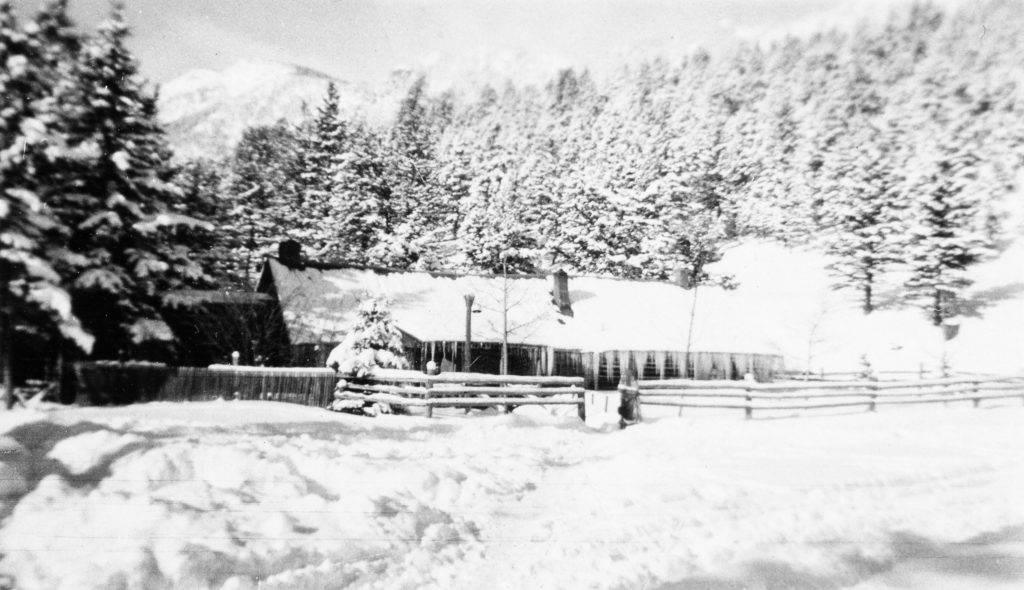
Winter at the Brannin Ranch
Before Billy could oblige, someone grabbed the swimmer’s sleeve and landed him. He hobbled back to the ranch house half a mile away! By the time he got there his clothes were frozen and he was clanking like a knight in armor. His teeth chattered until supper time and he didn’t eat but two helpings of beans. He even said, “Please pass,” for those.
People will tell you, Winter Mopes is a drastic malady. Drastic maladies are cured by drastic measures. Even clergy burn out might be cured by a mid-winter baptism in an ice pond.
As Uncle Dick says, “It’s a bad cure that don’t do no good.”
One of my fondest memories was having hot tea with my grandmother. She didn’t care for iced tea. She said it made no sense to take perfectly good hot tea, chill it, put sugar in to sweeten it and then put in lemon to make it sour. No, just hot tea with a spoon of sugar and a bit of cream was what she liked, and I liked it, too.
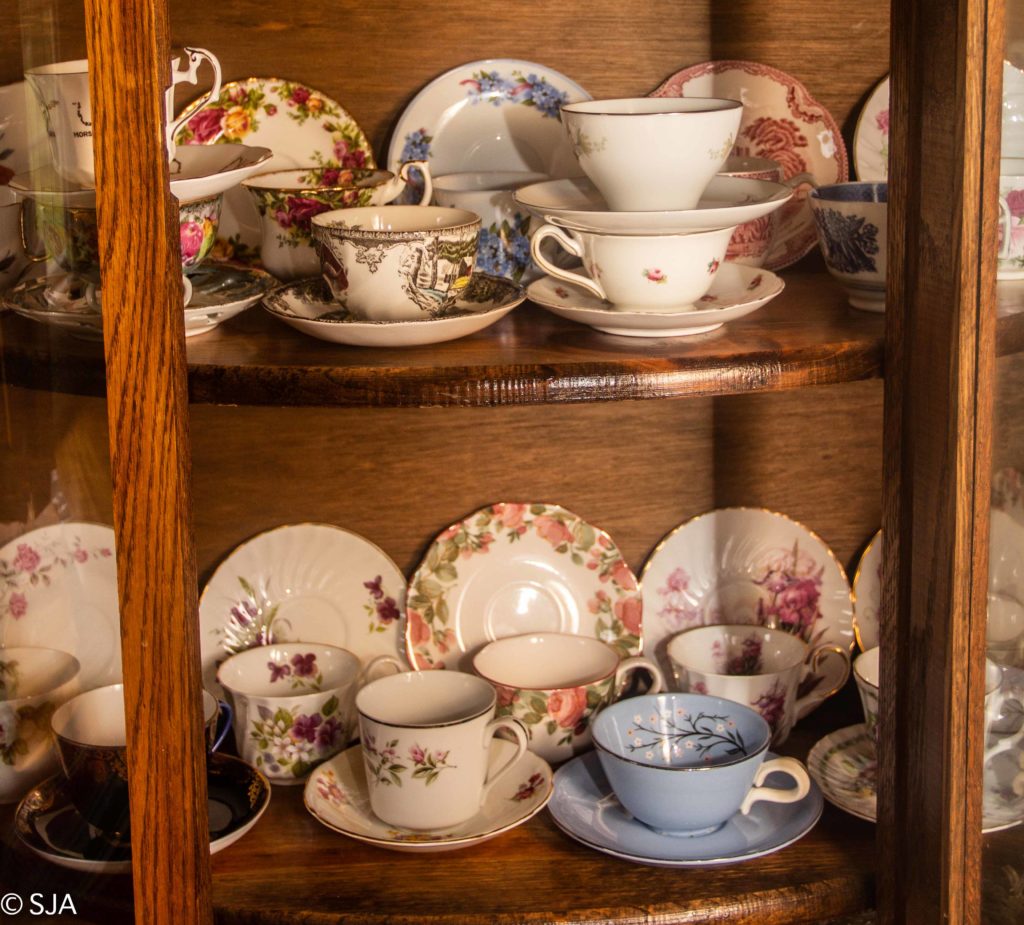
She had a built-in wall cabinet filled with her china and other pretty dishes. There was an ample selection of teacups, saucers, and tea pots. I loved to stand in front of the colorful fancy dishes and try to decide which cup I wanted to use next. It didn’t matter that I was just a little snotty nosed kid – she let me pick the cup I wanted to use. After selecting my cup, I set it on the round dining room table along with the cups already chosen by others sharing our teatime. Soon, a pot of hot tea sat on the table along with the sugar bowl and creamer filled with cream. She poured tea into the cups and then we each added a spoonful (or two or three) of sugar along with cream. The hot tea was good, but the time spent with my grandmother and those around the table was priceless.
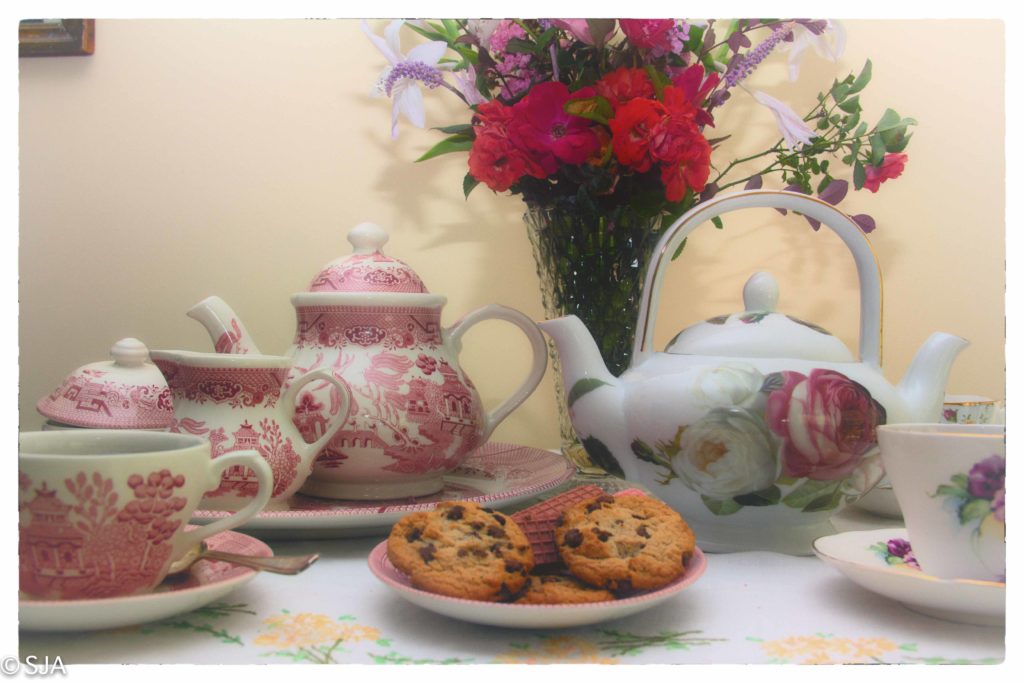
Having hot tea with my grandmother has stuck with me all these years. For one thing, it has instilled in me a love for hot tea – especially when it is shared with people I love. All my grandkids have shared hot tea with me. I have two teacup cabinets and numerous other teacups for them to select from, and believe me, I have a plethora!
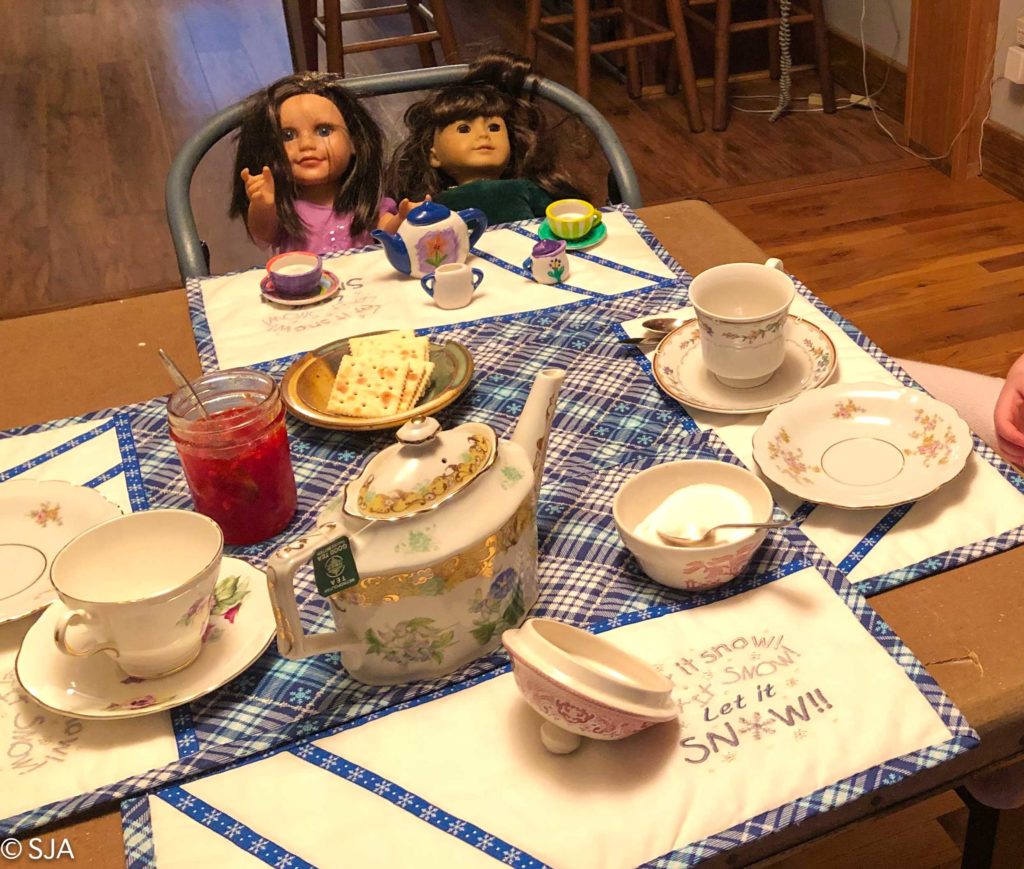
My littlest granddaughter is the biggest fan of sharing hot tea. When she comes to the house for any length of time, she often asks if we can have a tea party. She goes to one of the cabinets and picks out a teacup for me saying it’s my favorite, and then she picks one for her. Then we have a tea party. Sometimes her dolls join us, complete with their own miniature teacups, teapot, cream and sugar. She pours their tea, then after a sufficient amount of time has passed, she drinks it so she can pour them another cup.
My grandmother never seemed to cringe when little hands reached into her cabinet. I don’t ever remember her chiding me or even telling me to be careful. She never said, “I’ll get it for you.” Instead, she let us little kids open the cabinet and get our teacups or fancy plates ourselves. Little did I know that my grandmother taught me some lessons in the process. It was not about “things,” it was about family and friendship. Her philosophy was to use those special treasures to make lasting memories. That is the lesson I want to leave my kids and grandkids. They are more valuable than any breakable piece of china. I hope to continue making memories over a cup of hot tea.
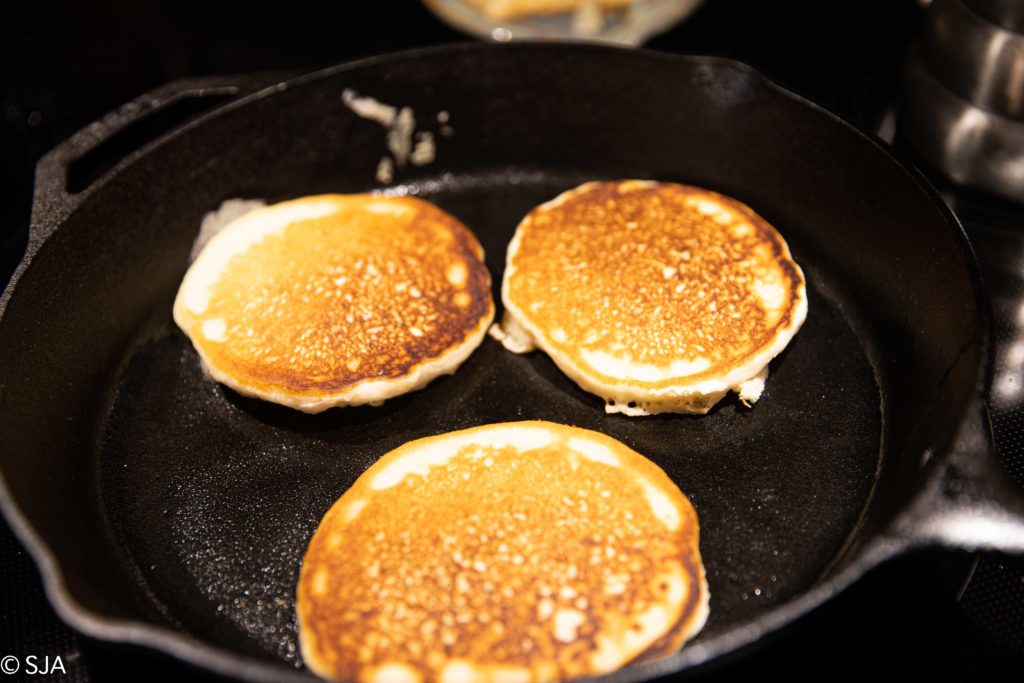
We ate hotcakes growing up. Some folks eat pancakes. Mama cooked hotcakes three at a time in a big skillet. We sat at the table, plate ready, with fork in hand, waiting for our stack. By the time we all got our hotcakes, the ones to get theirs first were ready for their next stack. I don’t know how many hotcakes she ended up flipping at one meal, but I imagine there were enough to construct a couple of tall towers.
Mama often made sugar syrup to pour over the hotcakes. She put sugar in a pan and heated it to golden brown. Then she poured in a bit of boiling water. The mixture would spit and sputter until it all melted together. With a bit of vanilla or maple flavoring, it was ready to slather over the stack of hotcakes. I would pour mine on each individual hotcake and let it soak in on top of the melted butter. Yum! If there was no sugar syrup, I liked buttered hotcakes with sugar sprinkled on top. When my Mom was a little girl, she took leftover hotcakes for lunch. She would put butter on them, sprinkle with sugar, roll them up like a cigar, and wrap them up to carry to school.
My grandfather told a tale about when he was “batching” and made hotcakes. His were made with “starter” that was kept to the back on the wood cookstove. A single hotcake was made first to test the heat of the skillet. That one was for the cat. One day, my grandfather had kitchen duty while his batching partner, John, was doing the outside chores. When John came in from doing chores, his stack of hotcakes was ready. He poured syrup over the top of the stack, started to take a bite, and saw something hanging out of the middle of the stack. He lifted the hotcake and there was a dead mouse that my grandfather had found that morning. I’m not sure, but I don’t think John ate that stack of hotcakes that morning, unless it was the ones on top.
Here is a recipe for Sourdough Starter & Hotcakes. I think it was my Great Grandmother’s recipe:
Sourdough Starter 3 ½ c. all-purpose flour 1 package yeast 2 c. warm water
Combine flour and yeast. Add warm water and beat until smooth. Cover and let stand for 2-4 days. To store, cover and refrigerate. Once a week, stir in equal amounts of all-purpose flour and warm water. Cover and let stand 12-24 hours. Use or cover and refrigerate until ready to use.
Sourdough Buttermilk Pancakes 2 c. flour 1 ½ tsp. baking powder ½ tsp. soda ½ tsp. salt 2 T. sugar 1 1/3 c. buttermilk 1 c. sourdough starter 1 egg, beaten 2 T. vegetable oil
Combine first 5 ingredients in a non-metal bowl. Add milk, starter and egg. Stir in oil. Cook on hot griddle.
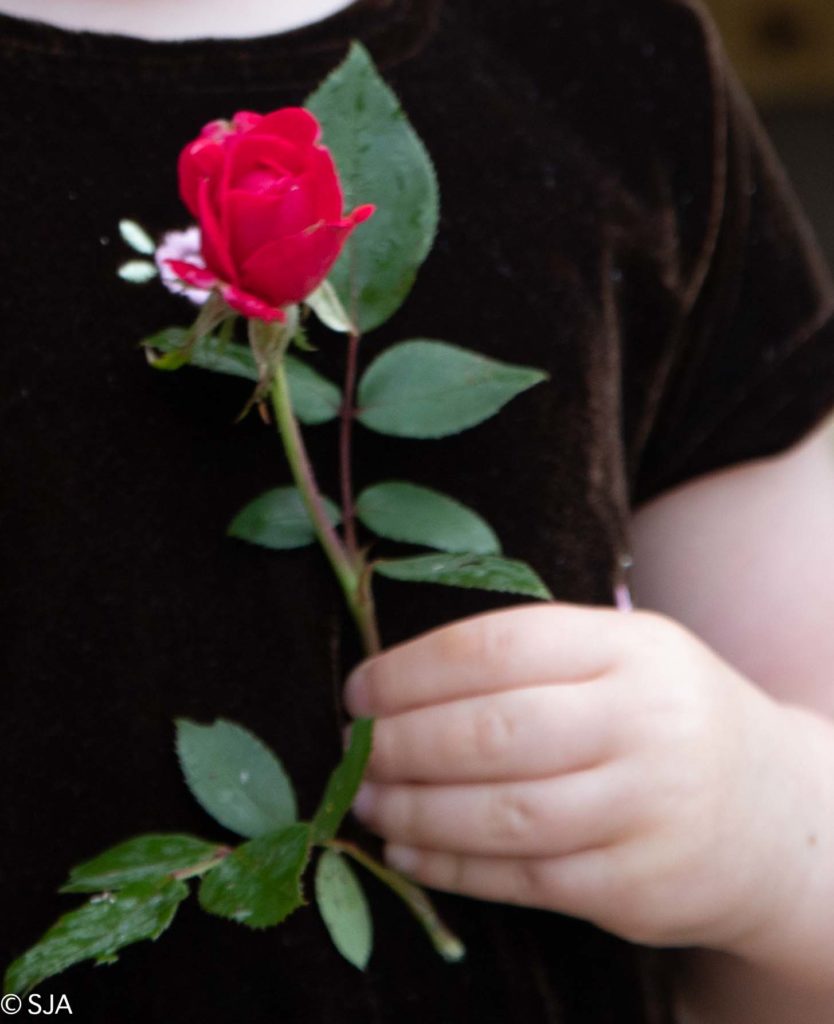
The Old Man reached out and picked up the rose that lay on the table. His eyes softened as he placed it in his big rough hand and gently caressed the petals of the red rose. As he stroked the petals, he was in awe of the softness of the rose. He marveled at that work of creation – how every petal was shaped and arranged in delicate layers and of the sweet smell that tickled his nose. The color amazed him along with every little detail. It was perfect.
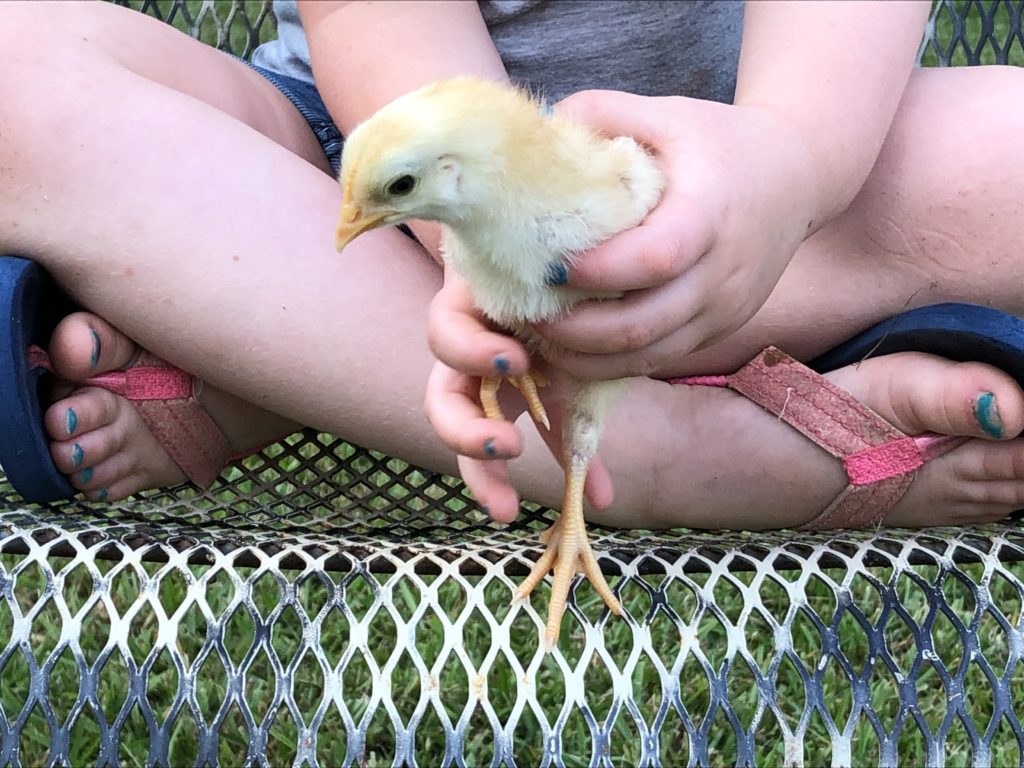
This man, who saw beauty all around him said, “Feel this rose. It feels like velvet. It’s almost as soft as a baby chick.” His face became solemn and suddenly he was overwhelmed with sorrow at the thought of one who never had the privilege of holding a baby chick.
What a joy to live life and see the beauty of God’s creation. A drive through the countryside brought the Old Man to life on days when it was clear his time was coming to an end. He didn’t miss a detail as he looked across fields of grazing cattle, passed over streams, or rode by a tall stand of trees. Those sights always brought a story, maybe of his “batching days” or his time working on the Long X Ranch, playing his fiddle for harvest dances, or snapping the heads off rattlesnakes on the prairie. Thinking of all he did in his life, and everything he saw, he still was in wonder of the perfection of a rose or the softness of a baby chick.
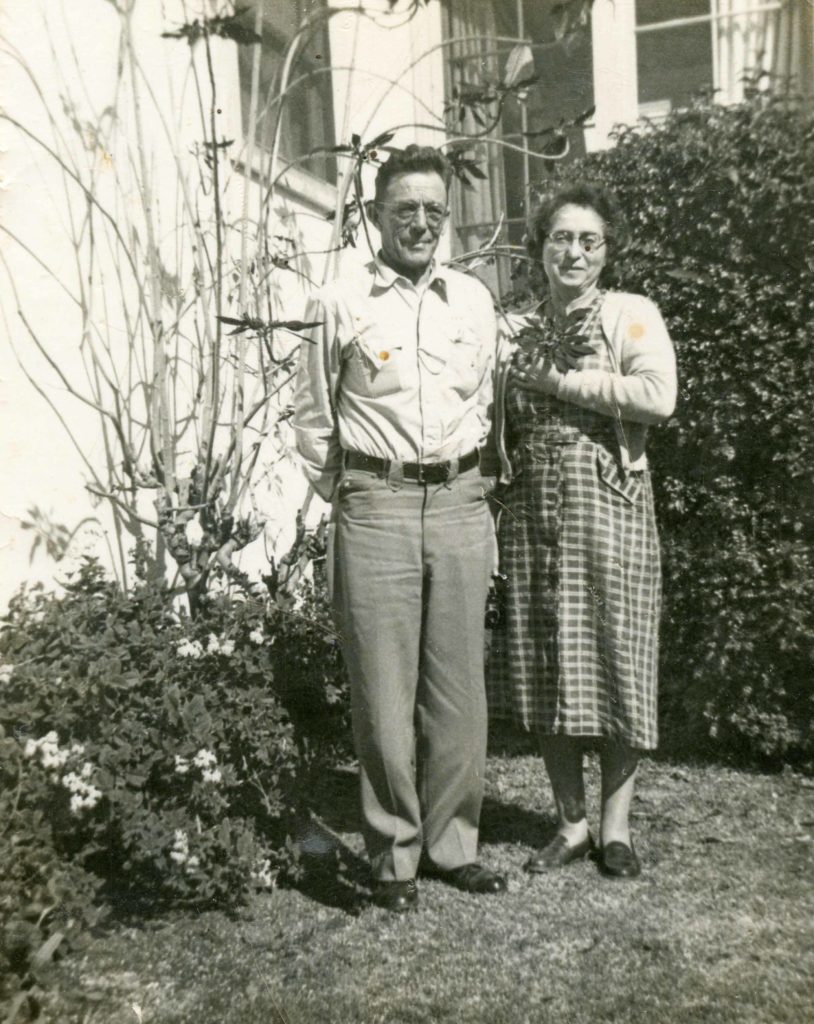
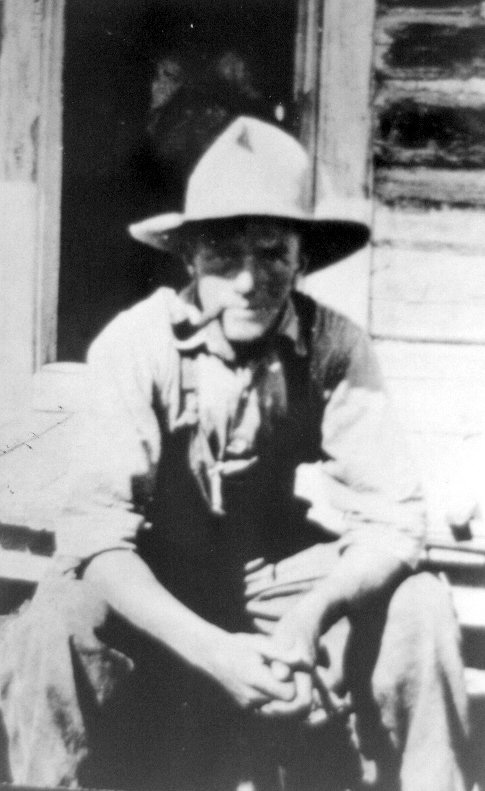
My Guest Author today is my sister. She is older than me so she has memories that I don’t have. My grandfather, Poppy, died just a month before I was born. I rely on my sister’s memories, photos and family stories to know him. (I would have been his favorite!)
Sister Margaret texted me recently to ask what I remembered about Poppy. (I was 8 and she was 3 months when we left Montana and living next to Gommy and Poppy.) From an 8 year old’s perspective, and some things I’ve thought about since, here’s Poppy.
Times at Gommy and Poppy’s were always special. There was a cheerful, calm hum to the log house.
Poppy and Ernest (his ranching/sawmill partner of Ward and Parker) would come in from evening chores, hang their coats and hats on the hat tree by the front door (stomping the snow off their boots if it was cold outside), and put another log on the fire. The stone fireplace was one they’d built from round stones from the Sweet Grass River that ran through the ranch. On either side of the living room, there were big picture windows where Poppy had red geraniums blooming year-round.
They’d turn on the radio that sat on its own special shelf in the kitchen, next to the doorway to the music room – where Poppy had his desk and Gommy had her piano and china. They always listened to the news evenings, and at lunch they’d listen to the farm report and stock market.
Then we’d have supper (cooked on the green and cream-colored wood range), sitting on benches around the long oak table with everyone’s brands carved in the corners. (Each person had registered their own brand for cows and horses, whether they had any yet or not.) Supper might be roast beef (from our own cattle), potatoes and gravy, homemade bread, fresh churned butter, jams, pickles, a vegetable, dessert, and hot tea. As an Englishman, Poppy liked his tea. But he didn’t understand why someone would add lemon to make it sour and sugar to make it sweet. He thought almost every meal should have meat and potatoes.
After supper, Poppy and Ernest would go sit by the fireplace in big oak rockers on either side of the warm fire. Poppy had a ritual of putting on his slippers, taking his pipe out of his pocket, cleaning it out with his pocketknife, nocking the loose tobacco out by banging it upside down on one of the rocks sticking out from the fireplace. He’d fill his pipe with tobacco, tapping it out from his red Prince Albert tin. He’d light it, puff a couple of times to get it going, and then lean back in his big rocker and relax. Ernest might light a cigarette (he smoked Camels) and read one of his National Geographics. There was a shelf, or two, or more on the yellow National Geos on Ernest’s side of the fireplace. Poppy might read. I imagine Gommy read when we kids weren’t around, setting down on the brown wicker sofa in front of the fire. The fireplace was lit year-round, too. It gets cool even in summers back in the mountains at a mile above sea level.
Sometimes Poppy would sit and bounce kids on his knee, especially the boys. He’d sing, “Bozo, Bozo, you’re no good. I’m going to chop you up for wood.” And they’d laugh and laugh.
Guest Author on the right
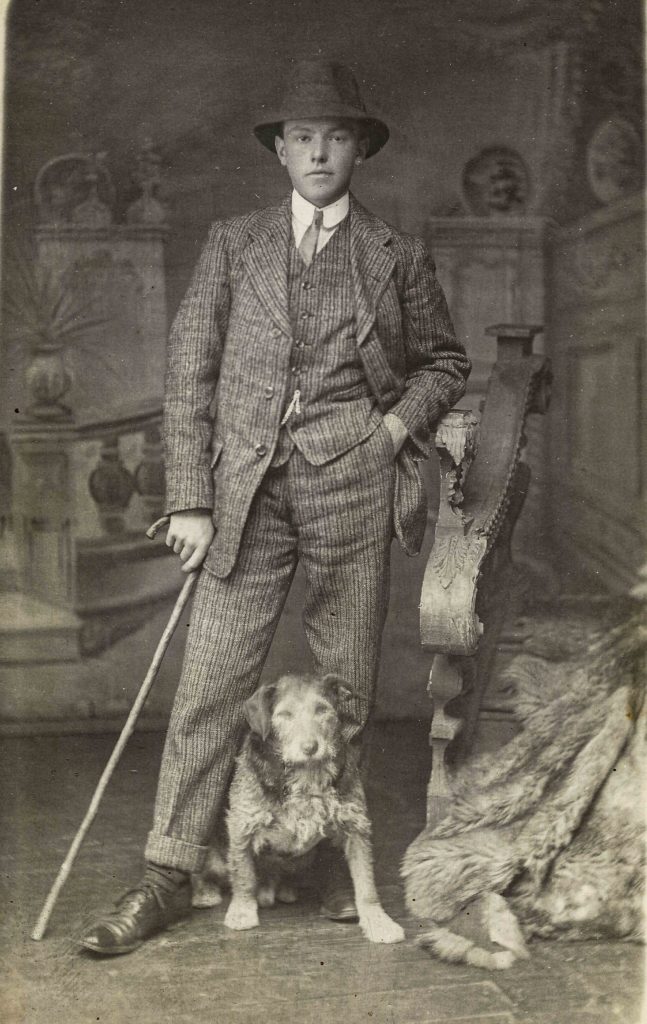
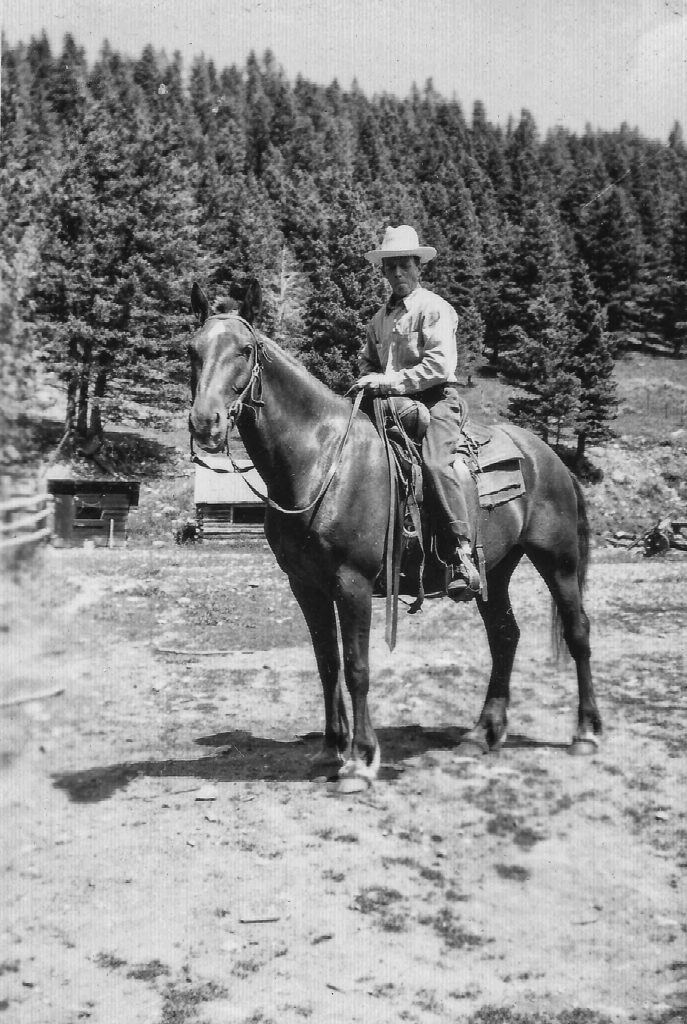
Poppy was a medium-sized man. He liked to stand with his feet spread apart and his thumbs tucked in his belt. (Brother Bee stands that way.) He liked to look good when he went to town. He’d wear a good jacket, shirt and tie, nice slacks, and his hat. (His rancher’s white forehead showed when he took his hat off.) I thought he was very good looking. One of the earliest pictures of him shows a young man very fashionably dressed in a 3-piece suit shortly after he left England and went to Canada. He was a dandy, full of youthful confidence!
Poppy’s desk was in the middle room. That’s where he kept track of his ledgers and maybe where he wrote his poems (or so I’ve heard. I don’t have any of his poems.). It was a mysterious place, one we kids weren’t allowed near.
Outside, on days the men worked in the shop welding and fixing things, his poetry came out in a blue streak. Mama would always whistle when she walked by, so the blue streak would stop for a minute. (Is it any wonder that Daddy Buck had learned to cuss in English, Spanish and Norwegian by the time he was 5 or 6? English from Poppy, Spanish from The Uncles, Norwegian because we lived in a Norwegian community.)
Poppy was pleasant, kind of quiet, smart. He was so proud when David was born! He had 3 granddaughters by then, but David was the first boy. Poppy wanted the Ward name carried on! I think he would be amused that out of all his 20 grandkids, 46 or so great-grands and 50+ great-great-grands, the ones with his initials (for Robert Carrington Ward) came through his second oldest granddaughter.
I know he would be proud of the whole crew! With a twinkle in his eye, he would bounce them on his knee and sing to them.
You may have crashed a party before, but have you ever crashed a whole town?
I wanted the girls to have a full Montana experience. Included in that were small towns that are scattered around the state. I love going through the little towns, some of which only have a Post Office, maybe a bar, and possibly a general store of sorts.
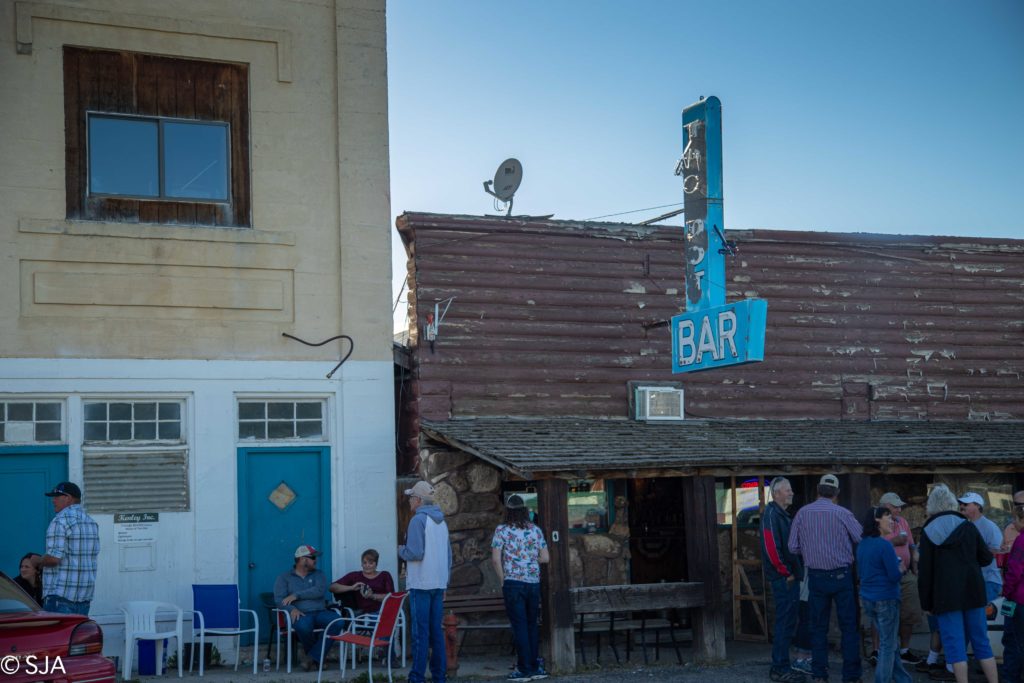
Two Dot Bar & Grill
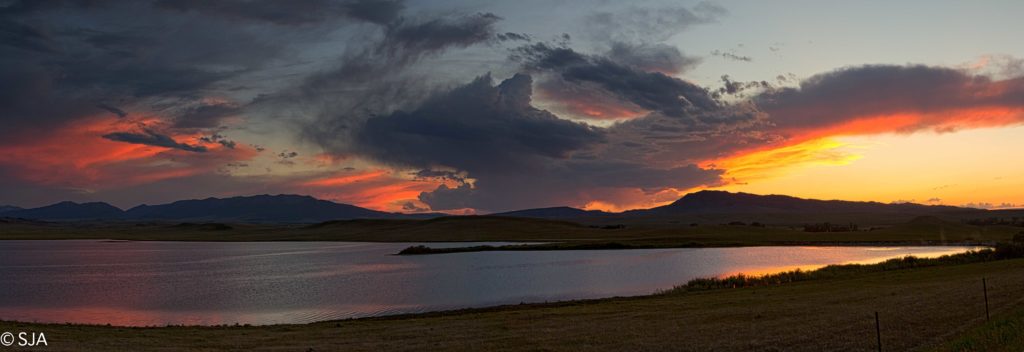
We took the back roads that wound behind Porcupine Butte and along Lebo Lake. As we came into the town of Two Dot, the street was blocked. I stopped, then whipped onto a side street (the only choice), took a left, and another left, and back onto the main highway. Two Dot is a big town. It has a population of 67. There is Two Dot Hwy., Main St., Second Ave., Third Ave. and Park St. I parked in front of Two Dot Bar and Grill. That’s where we planned to grab a bite to eat. We walked in and noticed the place was relatively empty, but the street life was hopping. I struck up a conversation with the girl behind the bar. They weren’t serving lunch because of the street dance and fund raiser for the Fire Department. About that time, a guy walked in, heard the conversation, and invited us to go to the Fire Hall. They were serving burgers as their fundraiser. The music had started and soon the dance would be underway. The girls weren’t too sure about crashing a dance and fundraiser and the whole town of Two Dot.
Lebo Lake
I was hungry and didn’t have any misgivings about being party crashers. As I accepted his invitation, the girls looked hesitant. Their eyes said, “no,” but their bellies said, “yes.” From our accents, it was obvious we weren’t from there or from anywhere close. The guy was kind and volunteered to buy our lunch. We must have really looked like damsels in distress. “That’s okay. We’re good. But thanks anyway.”
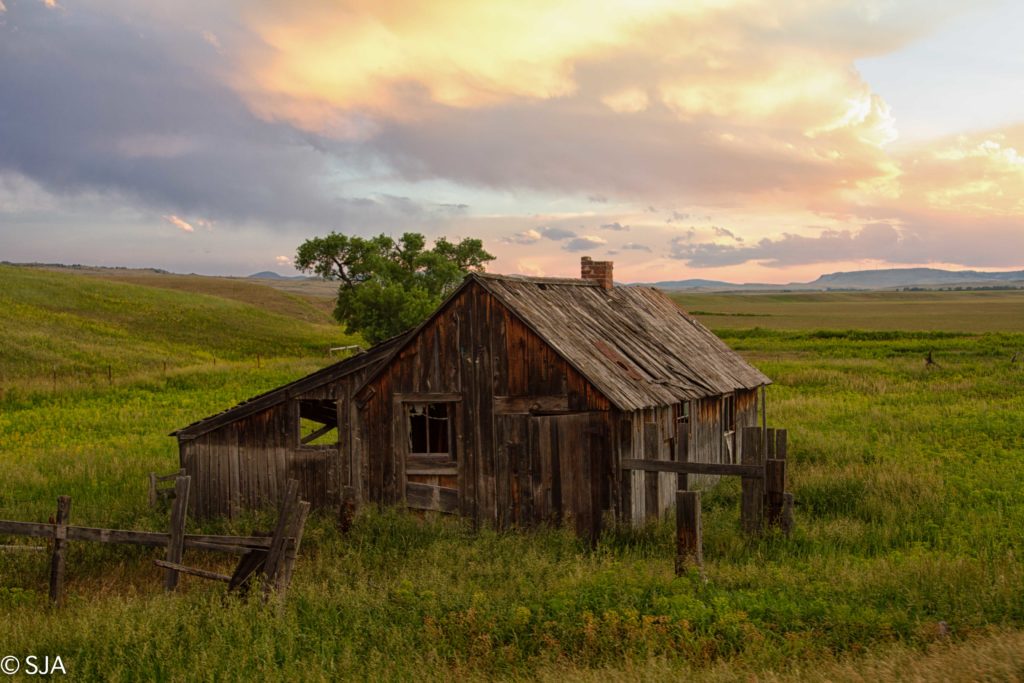
An old place in Two Dot
We got our plates and drinks and found a seat at the long tables in the fire hall. The guy kept eying us. It was clear he was a bit confused. How did three southern belles (as was obvious from our accents) end up in Two Dot? You only end up there on purpose or because you’re lost. It wasn’t long before he made his way to our table and said, “Do you girls know where you are?” “Yep. We’re in Two Dot.” “Do you know where you’re going? Do you need directions?” He assumed we were lost or had car trouble. “Nope. I know where we’ve been and I know where we’re going. We just came from Melville and will eventually go back to our little cabin on the Boulder.” He was still puzzled. I questioned him about where he was from and asked if he had family in the area. His grandfather was the mail carrier for years and drove that same road we had taken through the countryside. I asked his grandfather’s name. Ahhhh… Olson … “Was he the one who had a piece of property up Melville Lane?” It was. He was surprised when I told him that my grandfather had a piece of property in the same area, but he and Olson had swapped properties many years before. The guy’s eyes got real big. He finally understood that I really did know where we were, where we were going and a bit of his family’s history to boot! Small world!
Be careful about assumptions and beware of party crashers – especially those with an accent.