Dear Sister Ellen

                                                                             January 15, 2018

Hope you’re feeling good. I’ve been wondering about you.

Hahaha. I think Effie Bowlegs is after you – still after you –  and maybe you’re after him.

One summer he was having a hard time there. Every time he’d go to the bathroom you wanted to go. And one time you told Barbara, “I’ll beat you to the toilet.” And she ran around the old shop and pulled the door open and pulled him off the commode. Hahaha.

And then another time you had me get off there behind the new shop and throw rocks at the toilet when he was headed in. Bang! Bang! It seems like that year he left work early because he had stomach trouble. Hahahaha

You didn’t like the way he drove Nina & Dolly. I didn’t either.  You rode with him and put your foot on the lines so he couldn’t pull them up and swat old Nina to have her keep up to Dolly.

Do you remember the first time you were in jail? Uncle Ed let us sit in the jail cell that Betsy Bowlegs had used when she was his guest. We got to sit in jail early. We thought that was quite a treat.  Betsy Bowlegs had been in jail because it was just her time for that. Betsy Bowlegs was – I don’t know her name except Uncle Ed always called her Betsy Bowlegs. He would get a telephone call on weekends from the Big Timber city police. They would say, “Mr. Brannin, so ‘n’so is down here and we want you to come down and get her because we can’t handle her.” So he would come and she would call him,  “Yes sir,” and “no sir,” and “Mr. Brannin,” and he’d keep her in the jail. Sometimes it was overnight and sometimes two days. One time she got so bad he had to escort her to Warm Springs to the nut house and she stayed awhile. She wasn’t related to Effie Bowlegs. Aunt Dora was related to Effie Bowlegs. I don’t know if Betsy Bowlegs was bowlegged or not. She was the Big Timber extra work for the city police. Sheri asked, “Did she drink?” Oh yes, she drank, I expect she did. Well, she couldn’t have drank because alcohol was – the states were dry – wasn’t allowed to be sold or drank. Her sober spells were kind of special. But the city police couldn’t handle Betsy Bowlegs, whatever her name was, and they would call him and he’d come and lock her – put her in jail – and she had one cell he called Betsy Bowlegs’ cell. He let you and me sit in it. He even closed the door on us.

I hope you’re doing real good.

If one of us lives to be a hundred I hope it’s you and not me.

Much love,

Buck
The Accident

a tale of remembrance by my dad

Now I will tell you about a boy-girl problem and a horse wreck.  A horse wreck is something that happens to people who ride horses that buck, or people who drive horses that run away. 

But first I will tell you about my sister, Ellen. One day she said, “I wish I was a boy.” That’s when Cousin Billy said, “If a girl kisses her elbow, she will turn into a boy. And if a boy kisses his elbow, he can turn into a girl.”  

Ugh!

I’ll bet you didn’t know that!  

Sister Ellen wanted to play a boys game and couldn’t.  That made her unhappy.

Now my sister can do lots of things.  She can touch the end of her nose with her tongue.  She can kiss her wrist and her arm just above her wrist, but she can’t kiss her elbow.
(I hope you don‘t try this.)

Our neighbor has a hired man. He calls him, Slim.   This summer, Slim got thrown off his horse.  That is bad. Then the horse fell on him.  That is worse. And then the horse rolled over on him. I hope this doesn’t happen to you. 

Now Slim has four broken ribs and a broken leg.  His left arm was broken in two places and it fell across his chin.  

He is the only person I know of who could have kissed his own elbow.  But he was lucky and didn’t.  Otherwise, he’d have had a BAD accident!.

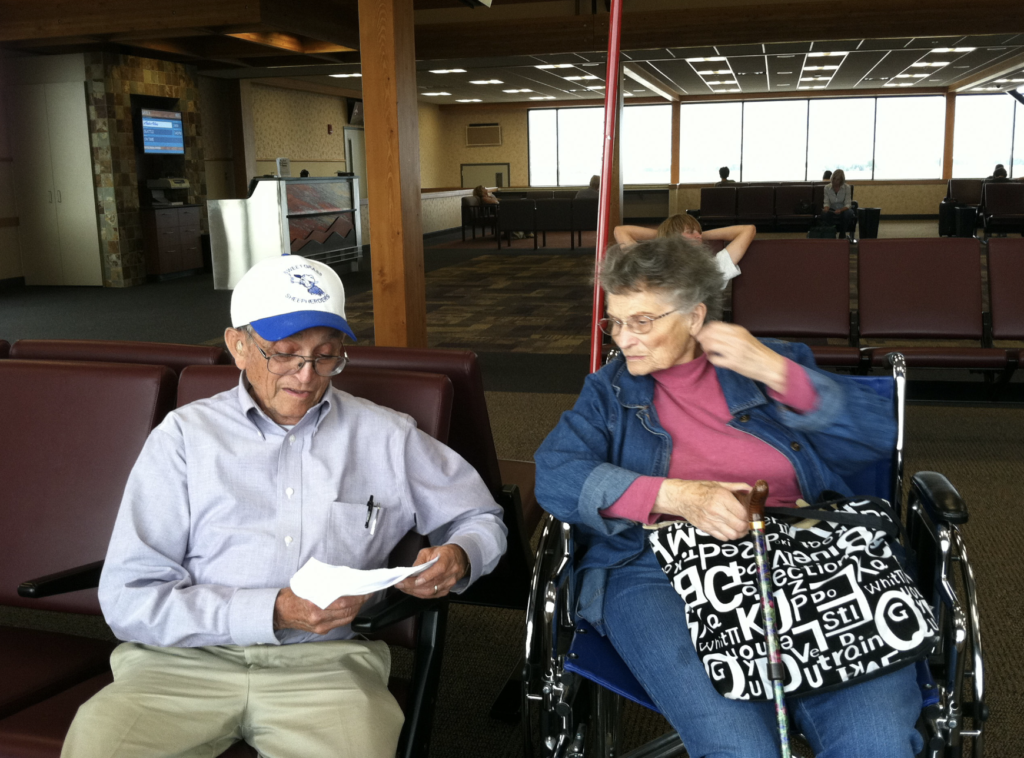
Sister Ellen & my dad

The Magic of Christmas

Colorful packages with ribbons and bows are piled under the tree that is decorated with twinkling lights that cast their dancing glow on the ceiling and walls. Shiny Christmas ornaments and balls show the reflection of those gathered around the tree, but the greatest reflection is seen the eyes of a child. It is the magic of Christmas.

The years go by and yet memories of Christmases long ago come to mind. One such time was a Christmas Eve when a newborn baby lay under the decorated tree in Bethlehem. The baby boy, just ten days old, kicked his legs, cooed, and smiled. His gray eyes glistened as they reflected the sparkling lights. He amazed all who saw him because he was so bright and alert. His smiles were contagious, and his coos brought laughter to all those gathered. 

We were given the gift of Christmas in a baby boy that brought such great joy.

A few short years later, on another Christmas Eve in Bethlehem, a three-year-old little boy smiled as he ran around and played, anxious to see what was in the bright packages under the tree. Another child, a baby girl, had joined the family. This little girl did not lay under the tree and smile. No, she cried with colic. Her eyes did not dance with the lights. She brought a different gift.

There was another visitor that year – Mrs. Hunt. One would have thought she was handed the world when she took a fussy little girl into her arms. The two of them, a matronly Southern lady and a colicky three-month-old baby girl rocked in the rocking chair as the runners squeaked and creaked.

There were gifts for all under the tree, but I think Mrs. Hunt got the best present of all – the unconditional love of a newborn baby – the gift that was wrapped in a blanket.

Now that’s a Christmas story!

The events of these two Christmases did indeed take place in Bethlehem – Bethlehem, Georgia. One of the highlights of our time there was the live Nativity complete with sheep, shepherds, Mary & Joseph, the wise men with their gifts, and even an angel who shown brightly atop the wooden stable under the star of wonder. It was a reminder of the gift that was given those many years ago in another Bethlehem, the magic of Christmas, a baby boy wrapped in swaddling clothes. 

The Longest Hours

Shortly before Mama died, she gave me a book to read, “90 Minutes in Heaven.” She said that I after I read it, I was to pass it on the other family members. Did she somehow know that in just a few short weeks her life would be snatched away from her in an accident?

The doors of the elevator clanked open. I stepped out. There was no sign of anyone. The empty halls echoed as it mimicked and taunted each of my footsteps. At one moment I was consumed with loneliness. That was the loneliest, before and after, that I have ever been. The walls seemed to close in on me sucking out every breath. I stopped, willed myself to be brave, took a deep breath, and said, “Okay, Lord, it’s me and you.” Slowly, purposefully, I walked forward knowing exactly what stood in my path in the darkened corridor beyond. At least I didn’t have to walk alone.

At the doorway to the Trauma Unit, I pushed the buzzer. In no time at all, a nurse came out. There was no need for her to ask who I was because I had just spoken with her not three minutes earlier. She led me to a small room with the walls lined with chairs. A table in the corner had inspirational pamphlets spread on top. The nurse asked if I was okay. I looked at her and said, “I guess I have to be.” She had seen others like me, those who felt swallowed up in the shadows of death and grief. “The doctors will be here in a moment.” As she turned to leave me briefly, her eyes surveyed me. There was compassion, and just maybe I saw a tear slip down her cheek.

I sat there alone for a few minutes when the door opened. The nurse along with several of the doctors slowly stepped in. They looked as if they didn’t know what to say or who was going to speak first. I wonder, did they see a frightened little four-year-old girl sitting by herself scrunched up in a stiff straight-backed chair? That’s what I felt like. Maybe they saw a woman who had a monumental job ahead of her. I don’t know, but I stood and spoke first, “I just want you to know that I know what you are going to say, and it’s okay.” One of the doctors said, “I’m sorry but we’ve done all we can do. Are there phone calls you need to make?” They each expressed their condolences and said they would continue to give Mama oxygen until the family arrived. The door closed behind them as they left the room. A mountainous task was before me.

After the calls were made, I rang for the nurse again. She ushered me into Mama’s room. That was my time. Though Mama gave no sign that life was still within her body, I talked to her. I sat by her side, rubbed her arm and hand. It felt as if there was moving bubble wrap under her skin, the trapped air and gases moving through her body. I told her thank you for putting up with all of us kids and that I loved her. I also made promises to finish the quilts she had started for graduation presents for the rest of the grandkids, and that I would care for Daddy and not let him remarry unless I approved. Yes, one day awhile before this event, with Daddy present, she said that if something happened to her, it was okay for Daddy to remarry with one stipulation – I had to approve.

The nurse had given the approval for me to bring in family members as they arrived so everyone would get a chance to have a private moment with Mama. Having said my goodbyes, I once again took a deep breath and willed for the strength to perform the task at hand. As time progressed, the doctor said, “We can’t wait any longer.” But Gary wasn’t there yet. Just as consent was given to remove the oxygen, he came in. 

Daddy was rolled in on his hospital bed and placed by Mama’s side. He took her hand, caressed it, and declared that she squeezed his hand. Then it was over. Mama was gone. She had told me time and again that if anything happened that stole her quality of life, she didn’t want to live. If she had lived, there would have been hours, days, and years of fighting for every breath as her broken body mended, and even at that, she would not have been the same. She went as peaceful as she could. As for the rest of us? There was still a battle ahead. Daddy had lost the will to live. He felt that he had fulfilled his duty, “’Til death do us part.” Yes, those, too were the longest hours.

Among the Tombstones

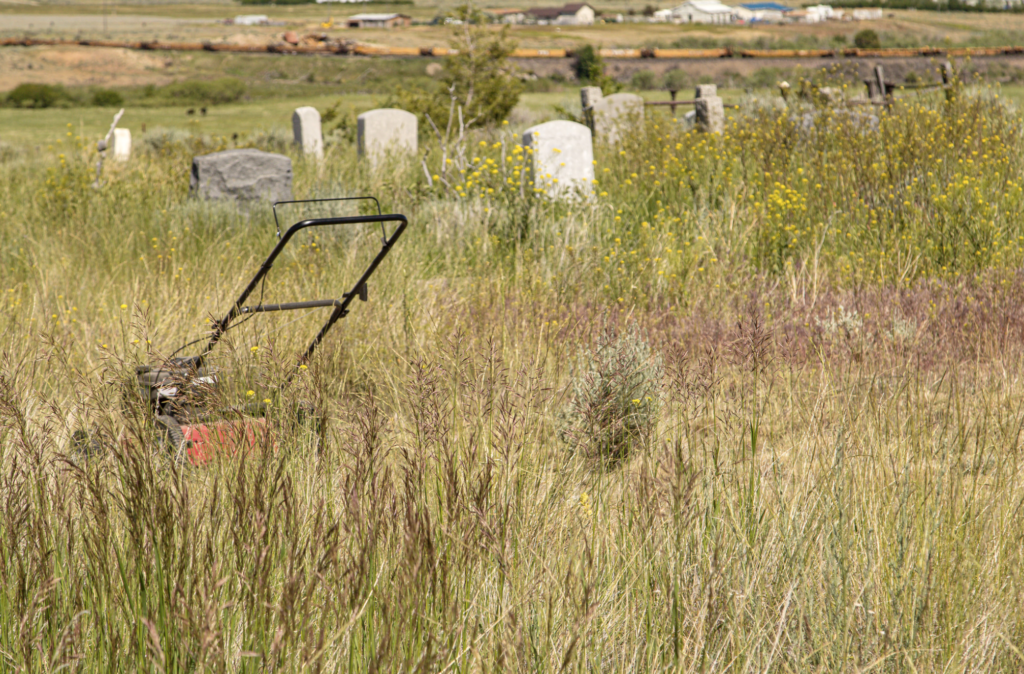
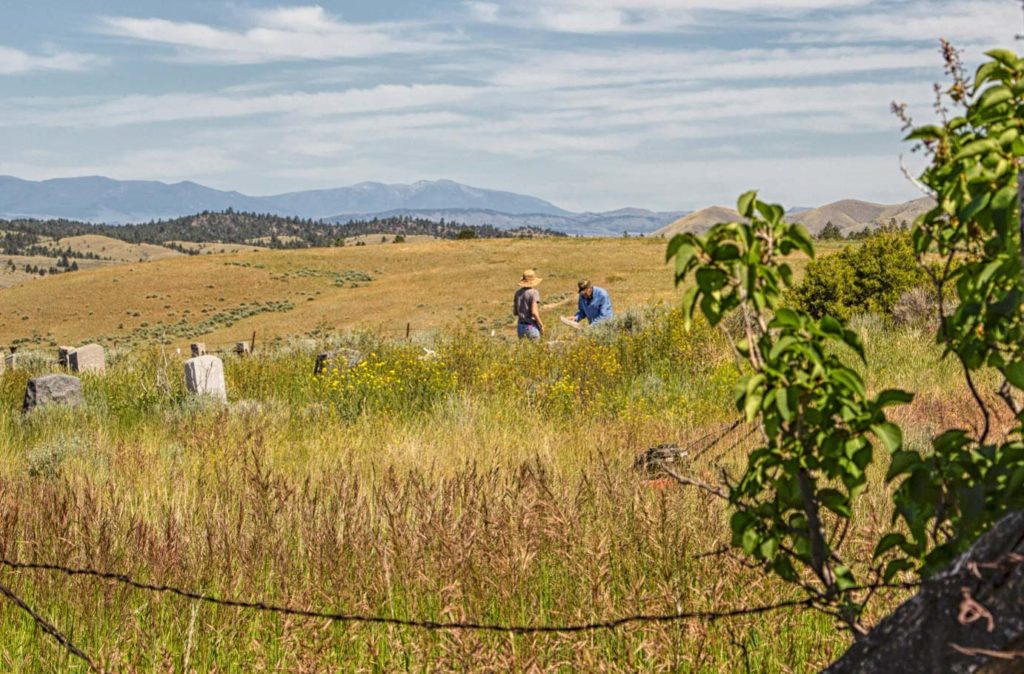
I stood on the hill among tombstones that hid in the tall grass and wildflowers of the old Silver City Cemetery. Helena could be seen in the distance just to the Southeast. Though the streets of Helena were busy with the comings and goings of all kinds of folks, the little town of Silver City wasn’t much more than a name. Had events taken a turn years earlier, she would have won the right of being called the capital of Montana. But that wasn’t to be.

The cemetery was quiet except for the sounds of the mower being pushed by the kind gentleman who was trying to clear the weeds from around the gravestones and markers of those who were buried there with their memories. With my boots on, I walked around and snapped a few pictures of forgotten names and stones that had been so worn away no inscription could be read. Sunken places in the earth whispered stories of those whose remains lay all but forgotten.

As I stood there pondering the tales that would never be told, wondering about the lives of those who had come to this harsh and beautiful land, a van turned up the trail. It slowly made its way to the top hill. A young lady got out of the driver’s seat, walked around to the other side of the van, and opened the door. Out stepped an elderly slightly stooped gentleman with a cap on his head. 

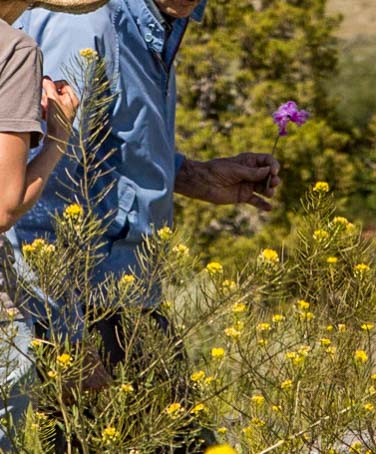
He was gently led by the young lady who held his elbow in her palm, her other hand on his arm. He spoke to the man who had turned off the mower, “I just came to put a flower on her grave.” In the elderly man’s hand, he held a purple flower on a single stem.

The lady guided him through the newly chopped clumps of grass and into the weeds yet to be trimmed. “Watch out for rattlesnakes, Grandpa!” They made their way to the grave of his beloved wife. He bent down, pulled a few weeds from the front of the tombstone to reveal her name, then stooped lower to place the purple flower on her headstone. 

A warm gentle breeze blew as the yellow wildflowers danced in the magic of the moment. I brushed away a lone tear that slid down my cheek as I turned and slowly walked away.

Note: The Silver City Cemetery is now maintained and has gained a place in the National Register of Historic Places in Montana. One of my great aunts is buried there as well as Old Moss – but that’s another story. You can read some of the history of the cemetery at these web links:

https://mhs.mt.gov/shpo/docs/NRnoms/SilverCityCemetery.pdf

https://historicmt.org/items/show/3221

A Stitch in Time

The howl of the wind sent a shiver through me just like the first time I heard coyotes’ eerie cries roll like tumbleweeds across the prairie. As the cold breeze whistled outside, I knew winter weather was on the way. 

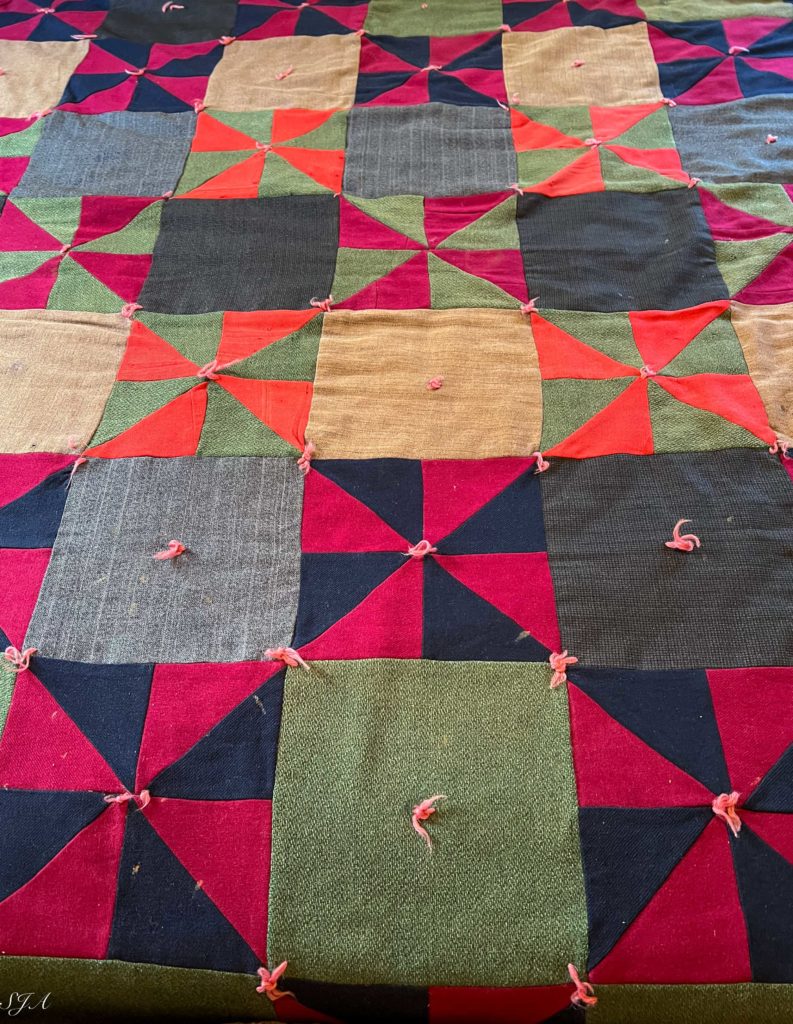
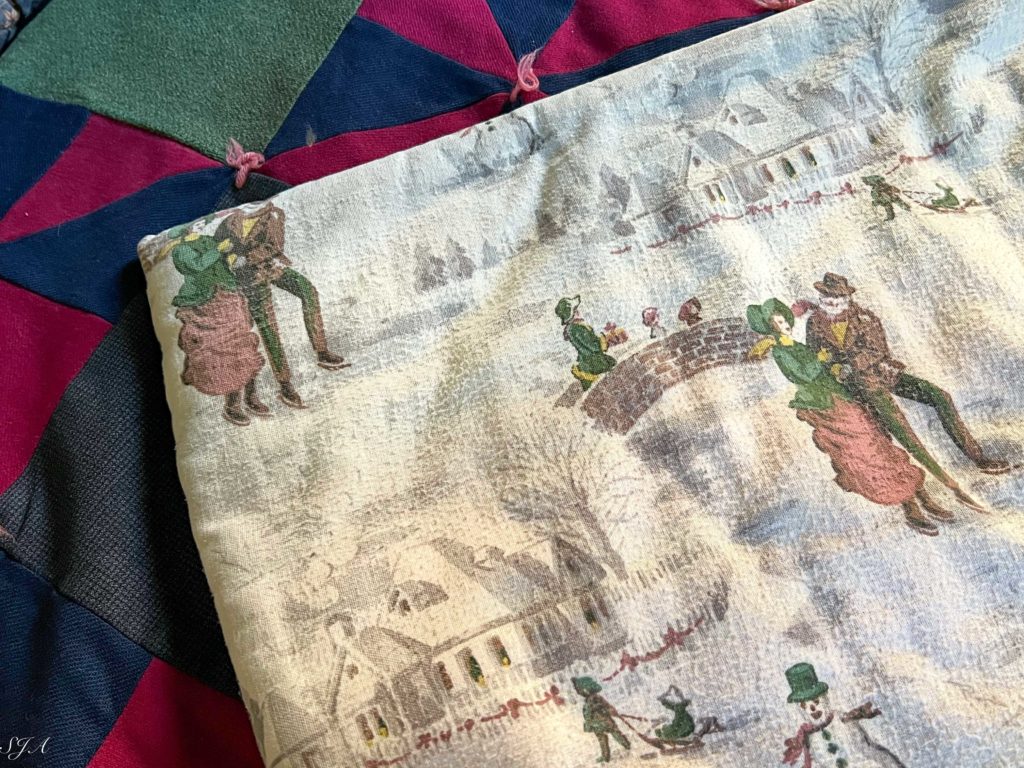
It was time, time to pull out the heavy wool quilt. Carefully, I lifted it from its container so as not to lose any of the memories and history tucked within the folds. The quilt top was made of wool, obviously from woolen scraps of blankets and garments. Heavy batting remained intact even though a few pieces escaped before the worn backing was replaced with a new thick flannel sheet and retied with the original pink wool yarn.

The quilt began its journey 96 years ago when a stiff breeze blew across the prairie pushing a cold rain into Roundup, Montana. On that particular day, the 26th of October 1926, a young couple slid into town in a borrowed car slinging mud from their gumbo caked tires. The weather didn’t dampen their spirits. After all, it was their wedding day.

The dirty automobile pulled up in front of the pastor’s house. Reverend Ernest Fitzpatrick, a newlywed himself, welcomed the couple. The pastor performed the marriage ceremony while his wife, Nell, served as a witness to the event. 

As was common, after the couple returned home, family and friends greeted them with an unannounced chivaree. It was all in good fun, but knowing some of those who participated, I would say there was a bit of mischief, too, with a few “pay backs” specifically for the groom. Another tradition was for neighbors and family to present gifts to the newlyweds. One of those gifts was a wool quilt made by the mother of the groom.

For many years, the quilt traveled from place to place as the family moved from Montana to Idaho and back to Montana before making its way South. It became worn, with batting peeking through the rips in the backing. For a time, the tattered quilt seemed almost forgotten and was gently tucked away in a trunk. When the heirloom came to me, I decided it needed new life, so I mended it, and from then on, it has been on my bed on the cold days of winter.

The quilt lovingly made by my great grandmother was given to my grandparents as a wedding gift. No doubt their three children and grandkids slept under its warmth and comfort as well. 

When I crawl under the quilt, it is more than comfy, cozy, and warm, it is a cherished treasure. Though it has outlasted its creator and a couple of young newlyweds, it has returned full circle to the prairies of Montana. It remains part of a legacy, a stitch in time, and a testimony to those with a pioneer spirit. 

Beyond the Gate

The road to the old home place was not much more than a beaten path riddled with rocks and potholes that led into the mountains, and we managed to find every one of them. We jiggled back and forth when we forded the creek, the sound of stones crunching under the tires. 

History lived there in the trees and behind rock piles along the trail. We heard it whisper old tales as we passed by. Laughter sang through the boughs of firs and pines as images of children played outside the old schoolhouse that once stood in the woods. If one knew where to look, there might even be faint visions of children pulling on the reins of the horses that stomped their hooves and swatted flies with their tails. Kids hid behind sagebrush while one rode an imaginary horse that looked like a dried-up stump. In the distance was the sound of the shrill whine of a sawmill. Smoke rose from the chimney as a greeting to any that made it that far into the heart of the mountains.  

Though no one had lived at the place at the end of the road for some time, memories still lingered. As we pulled into the yard, we were greeted by Quaking Aspens waving their shimmering leaves in the summer light as if anxiously awaiting our arrival.

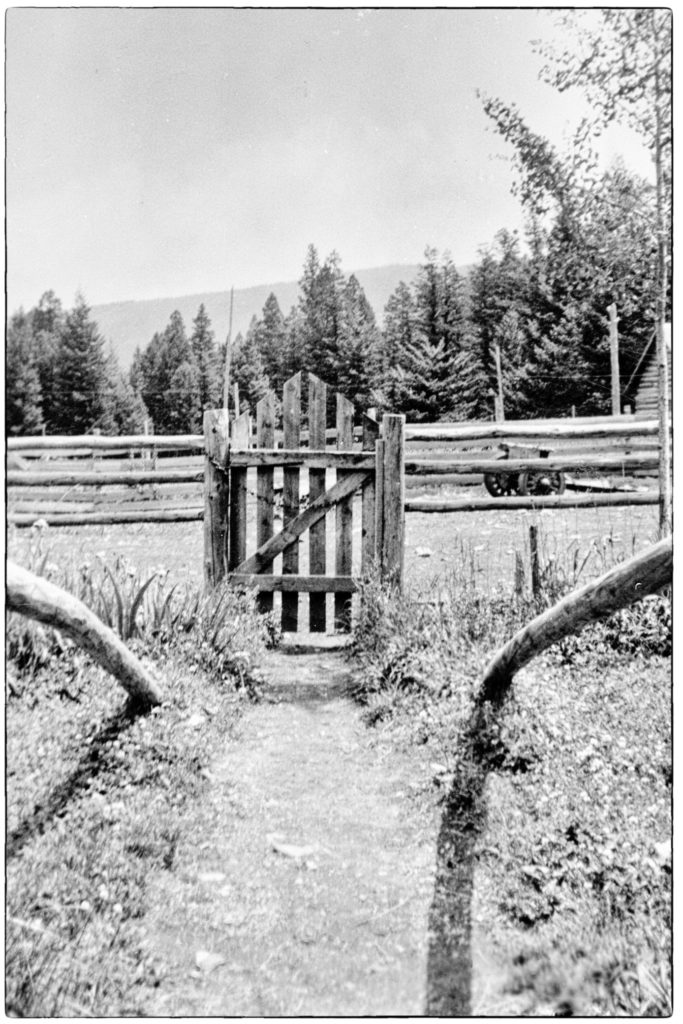
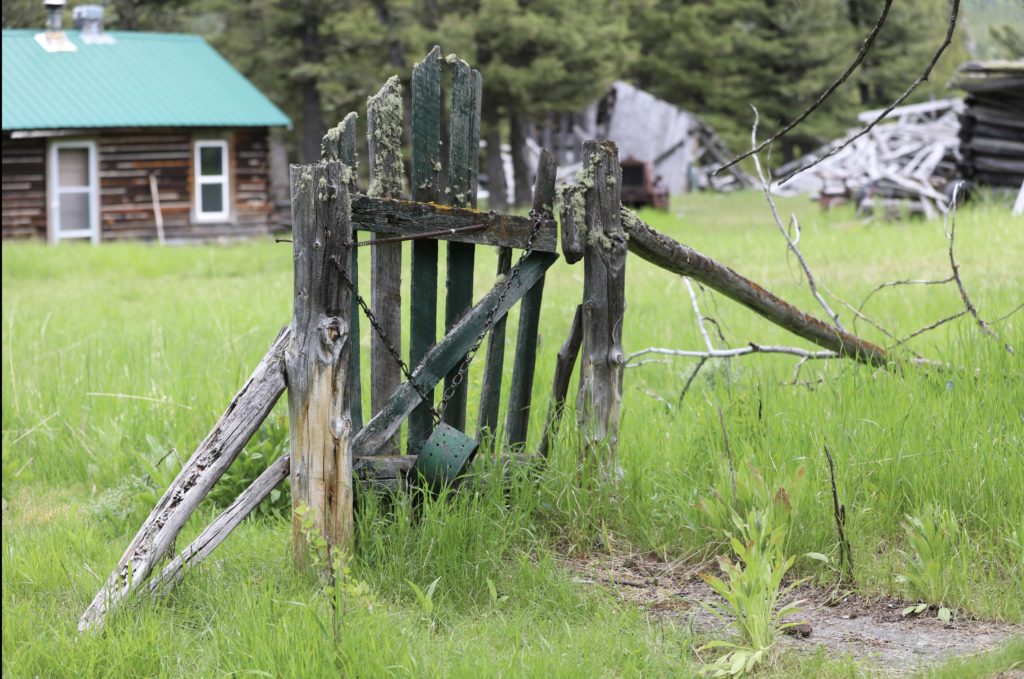
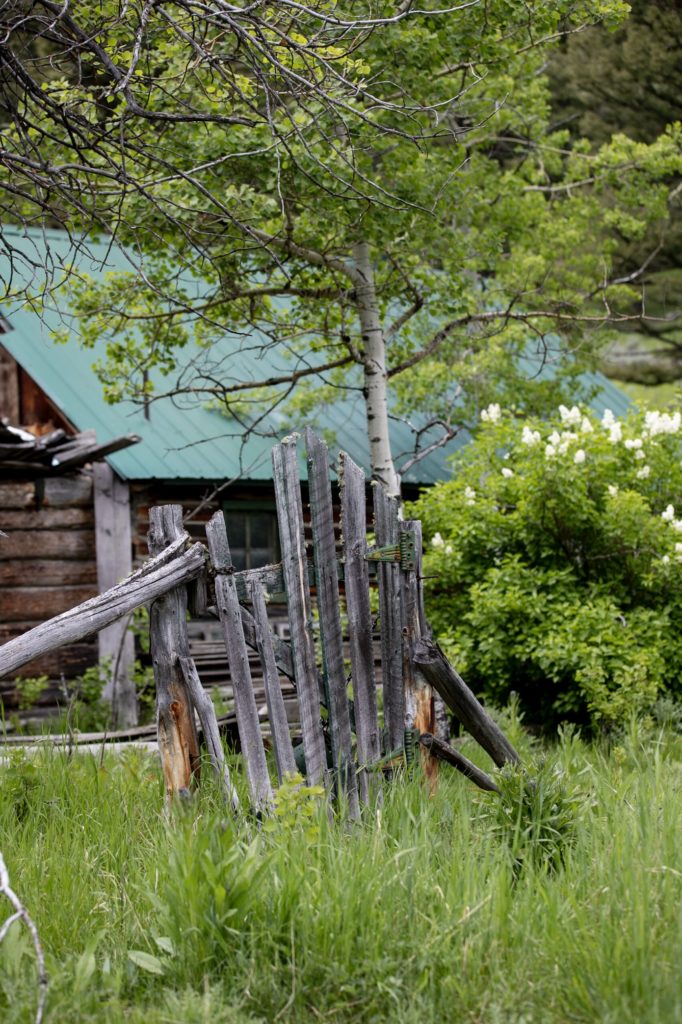
An old fence that at one time surrounded and protected the log cabin was all but gone except for a few worn pieces of wooden rails scattered on the ground. A weathered gate cheated time and stood defiantly in its place. Its rusty hinges gripped tightly to the posts that held the gate. Patches of faded green paint clung stubbornly to the brittle slats. A round piece of old machinery chained to the gate hung heavily to keep it closed and to signal the comings and goings of family and friends. Though I could have easily walked right past the gate, I opened it anyway and was not disappointed to hear the clang clang as it slammed behind me. 

I stepped onto the walkway that led to the sagging door of the cabin. As I entered the doorway, a light breeze stirred remembrances along with the dust and dirt that danced across the floor with a breath of the wind. Memories came to life. 

Thoughts and images flashed before me and soon the chill in the air dissipated. I looked around and was amazed at what I saw in my mind’s eyes. The wood cookstove was fired up and the cabin filled with warmth. On the kitchen floor was a washtub filled with hot water where a teenaged girl had just soothed her aching muscles after her trek in the mountains. At the sound of the clank and clang of the gate, weary backpackers trudged down the walkway into the house to be relieved of their burdens and greeted with the aroma of meat and potatoes cooking on the old stove. After dropping their packs and other gear, some plunked down on the long wooden bench and rubbed their aching feet. Some backed up to the crackling fire under the watchful eyes of the old deer mount that surveyed the scene with the shifting eyes of a sentry. At another glance, I saw little girls sipping hot tea out of fancy teacups with their grandmother. The slam of the gate caught my attention again as kids ran in and out of it as they played. 

I think those who went through the gate just liked to hear that resonating tone, for you see, it signified something greater than just a clanging clanking noise. It symbolized hospitality, an ever-encouraging word, family, friends, love, laughter, and tales of life in the mountains. It meant safety, and protection from the rest of the world.

All too soon, it was time to go. The gate clapped one last time as it closed behind us. With one look back at the place in the mountains that had once teemed with life, I knew that on another day, we would make that journey again.

Though the green wooden gate no longer stands in the mountains, it remains a portal to a place of serenity, a place to recharge, and a place to visit in my memories when all else in the world seems wrong. 

Shorty Brannan

a real tale by my grandfather, Bee Knapp

The Missouri is a slow river and the ice freezes real deep. My cousin liked to load a sleigh full of folks and go to the UL ranch for a couple of days to dance. He had his horses sharp ice shod. He liked to drive four horses.

In June the water would come out from Three Forks and the Little Rockies. It would cover the ice. That which got under at rapids and waterfalls made a lot of pressure and the ice would blow. Ice jams would be heard 20-25 miles away.

One of the Missouri River ‘steaders was a little Irishman named Shorty Brannan. One time he got caught by a vicious hailstorm. There was a high wind and hail the size of goose egg.  The only shelter he found was a coyote den.  Brannan crawled in headfirst as far as he could go. He saved his life, but couldn’t sit down for some time.

Shorty had a homestead on the south side of the river. He had to boat to or swim to it in the summer. In winter he could cross on the ice.

The Missouri didn’t seem to dampen his spirits or interfere with his instinct to be a gentleman.  Brannan wasn’t sloppy.  He wore a suit, a white canvas suit. He kept it neat. Shorty rode a small, tough horse named Snookums. He kept the horse neat, too.

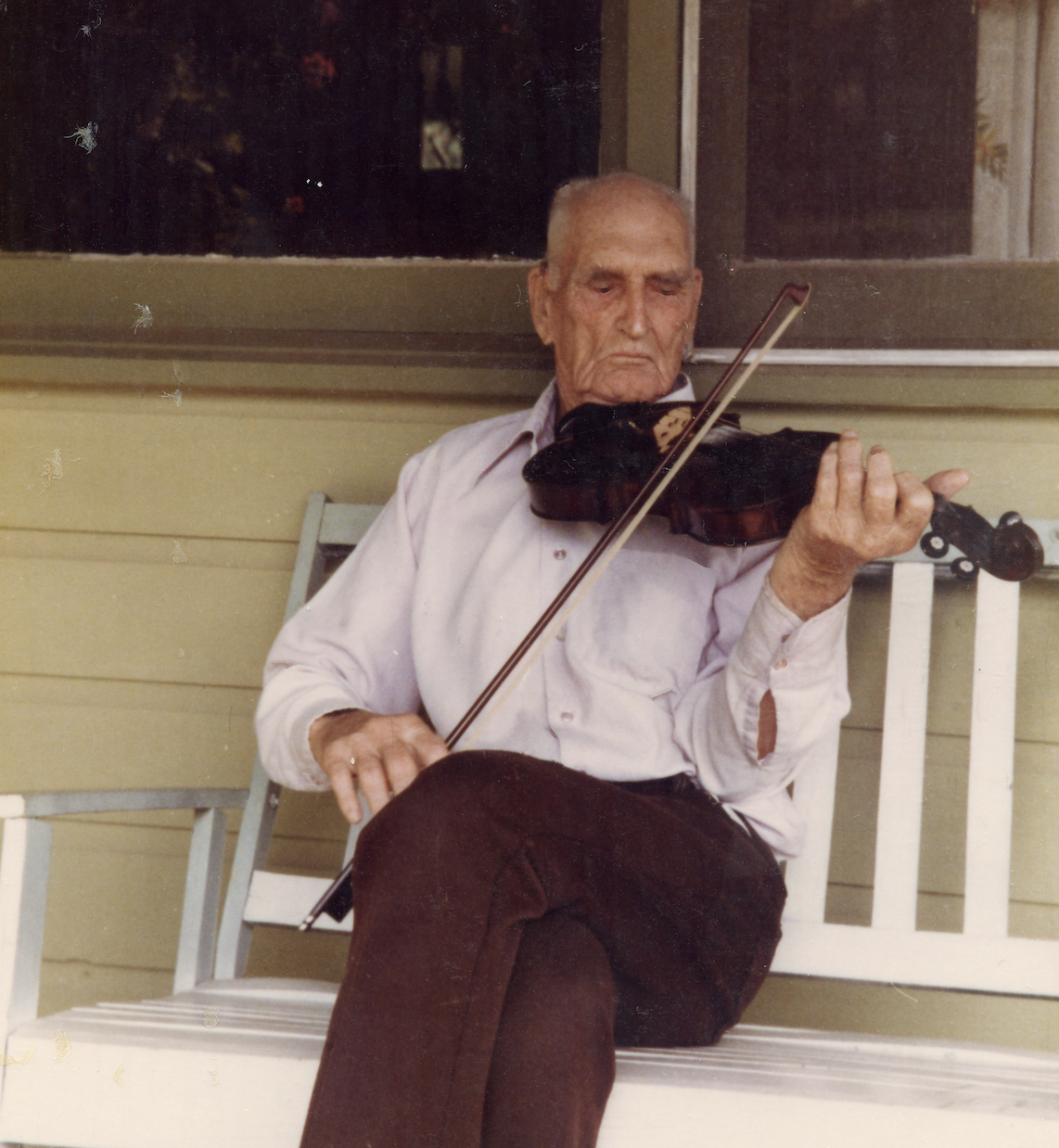
I was working for one of the Sun Prairie ranchers. That was the bachelor named Gus Tank. He homesteaded north of the river in the Lairb Hills. My father was a fine fiddler. Gus’s mansion was small, only one room, but the neighbors were aching for a party. Two of those pretty, half-breed Reynolds girls came down and said that they were going to have a dance and I was going to be the fiddler. They moved the bed and table outdoors and made a cake. The Sun Prairie people turned out with their jugs, and they danced all night. After breakfast the next morning some of the partiers had to get back to their own homesteads.

One girl, who had a homestead, was a “Blackdutch,” dark haired, single lady. I told her I’d get someone to ride home with her. Then I got Al McNeil aside and told him that Bertha sure needed an escort. The two left on what was the first step toward the hitching post.

Some of the others at the cabin decided they needed to stay around a little longer. They wanted to show off their riding abilities. Bill was a local cowboy who had taken a shine to my sister, Leone. He rode every bronc on the place and was chosen to bust out Gus’ six year old bull.

A couple of hands snubbed the big animal to a post and put a sursingle on him. Bill climbed topside and managed to stay there. The bull sunfished across the meadow but couldn’t get rid of his rider so he headed for the pond. He stopped in the middle of it. Only the bull’s head, hump and rider stuck out of the water. Bill was spurring and waving his hat but to no avail. He had the wettest boots in the country and was hollering for a pickup rider. The bull was in a balk.

Shorty Brannan went to the rescue. He bragged that Snookums could handle any critter on the prairie. Shorty climbed aboard, white canvas suit and all, and urged his horse into the pond. He threw the rope, a perfect shot over the bull’s horns.  Brannan dallied a hitch around the saddle horn. When Snookums pulled out the slack, the bull flipped his head sideways and upset the horse. Shorty came dragging out of there, by golly. His suit was in disarray. He washed his clothes down, got on old Snookums. The last we seen of him he was riding over the hill without saying a word.

Bill sort of tarnished his record as a bull rider. He come out wet and muddy. It was just as well. Later on Leone married Charlie Sherod.

A winter or two later, Shorty Brannan was riding Snookums across the river. They fell through a blow hole on the Missouri ice and washed down the stream under the Ice.  They didn’t find them until the spring thaw.  

Old Gray Mare

by my guest author, Robert B Ward

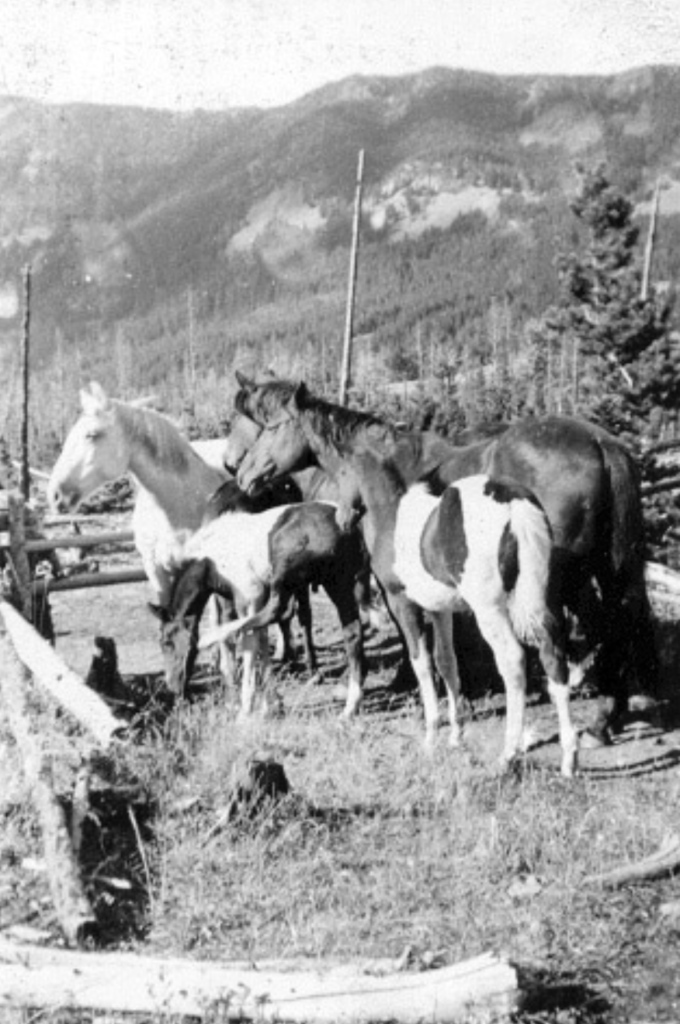
The senior citizen at the sawmill on the Sweetgrass was named Nina Bea after the Basin Creek School teacher. Her teammate was Dolly Grey. When Dolly died back in 39, the years started catching up on Nina – seventeen, eighteen, nineteen. That’s getting old for a horse, and the last years — well if you were part of a team, you’d know. The last years were lonely. When you’d stabled with your partner on your off side for fifteen years, pulled a wagon  with her on the off side, grazed together, keeping the same formation – then things just aren’t the same. Those younger ones didn’t have the memories, weren’t teammates. 

So it was Nina went into retirement.  

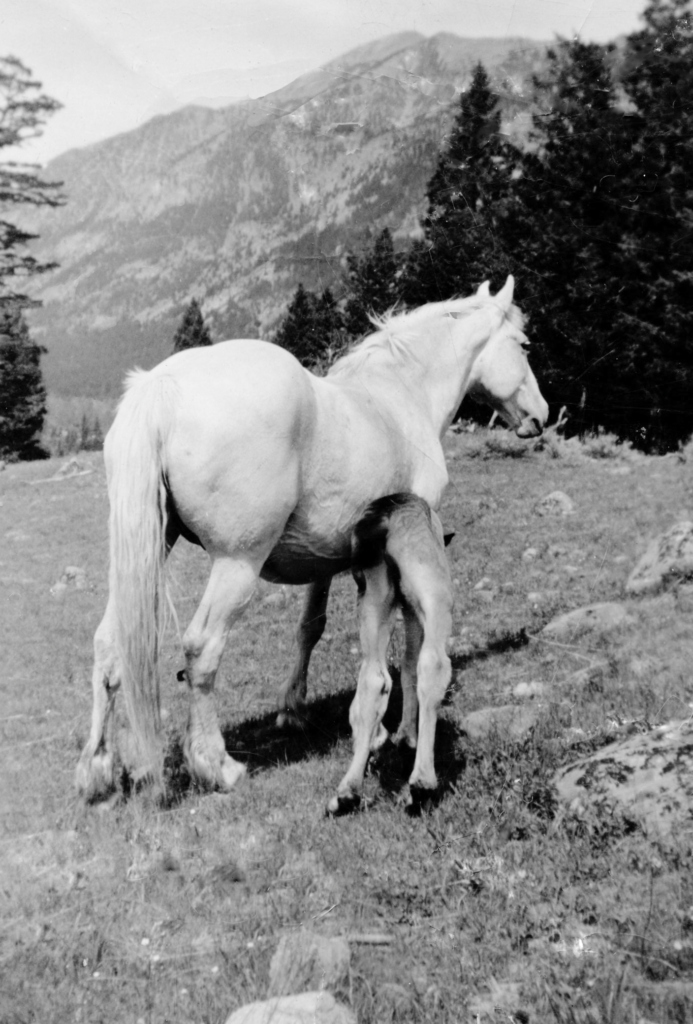
In late fall when the hill pasture was dried up, and the grass was short, the gray mare, now turned white, was put in the small field with better pasture, and then in the hay meadow after the hay was taken off. She gleaned with the milk cows until snow covered the ground, then she had her own rest home in the horse barn with fresh hay every night and a can of ground oats every day. That was the way a horse should retire after long years of service. Bud Ward kept her under special care. She whickered when she saw him and strolled toward the barn door in cold weather. Twenty years plus and heading for more.  

She’d been born black. Her father was a Percheron State Champion and a ton of horseflesh. First picture of Bud Ward’s team of mares shows Dolly brown and broad, and Nina, a rich dapple gray, some two or three hands taller. The dapples faded to white, and the white was whiter. That’s the way with dapple gray work horses.

Spring came, snow melting spring, not grass growing weather. Bud let the old girl in the barn and she ate the can of ground oats, walked out of the barn where she wouldn’t cause any disturbance taking her out, lay down flat and breathed her last. That was the right way to go. Bud Ward pulled the pipe out of his mouth and turned away. He felt like he was getting old, too.

The Crazies

by my guest author, Robert B Ward

For decades the land between the Yellowstone and Musselshell Rivers in Montana was the home of Crow and Blackfoot Indians.  They hunted in rolling hills carpeted with buffalo grass. They pitched their summer teepees in the shadows of snowcapped peaks which stretched fifty miles from valley to valley.

Today this range is spoken of as the Crazy Mountains.  The Indians had a better name.  They called them the Birdsong Mountains.  They believed that they were endowed with special powers.  Like the people of Old Testament times, the Redman turned to the mountains to seek spiritual guidance.  Young men fasted in sweat lodges by the shores of mountain lakes.  They climbed the highest ridges.  They climbed alone.  Night and day, and night and day again, they sat, without shelter and without food as they fought the elements to prove that they were men.  By day the wind blew upon them, and the sun beat down.  At night they stood on the spine of a mountain.  They stood amongst the stars.  Those on the far horizon were below them.  Above, beside and below – and their hearts leaped into their throats and out of their chest and rested among the stars.

The Redmen climbed Conical, Idings and Jack Rabbit Peaks – places where the wind only stops blowing to shift gears or change directions.  They scaled Crazy Peak topped by two pillars of granite 11,809 feet above sea level.  Here a Brave could have a vision which would shape his future.  “It is a great thing to believe in immortality,” Robert L. Stevenson said, “but first of all it is necessary to believe in life.”  On the crest of the mountain a Brave found a deeper dimension of life.

It was as if the Great Spirit stood astride the skyline and communed with those who seek him.  Northern neighbors (Pend ‘Oreilles) gave the Supreme Being a double name – Colon Suten; and the Absarokees (Crows) said “Ah-badt-dad-deah” (The-one-who-made-all-things).  The birds sang to his honor and young men searched for him hoping to discover what is and what ought to be.

In Biblical times long past, David, the shepherd boy from the Tribe of Judah, hard pressed by troubles looked to the heights and found a song.  “I will lift up my eyes unto the hills from whence cometh my help.”  Who can say but that music still echoes from mountain ridges for those with eyes to see and ears to hear.Mountains are for visions.  Not the visions of that which is hallucination, nor for the sight of that which is hallucination, not for the sight of that which is not, but for the voice of inspiration borne by whispering winds which say, “Be still and know that I am God”.  This is the vision of realness which underlies the visible world.